

 This is a subscriber-only article
 It looks like you're browsing in private mode



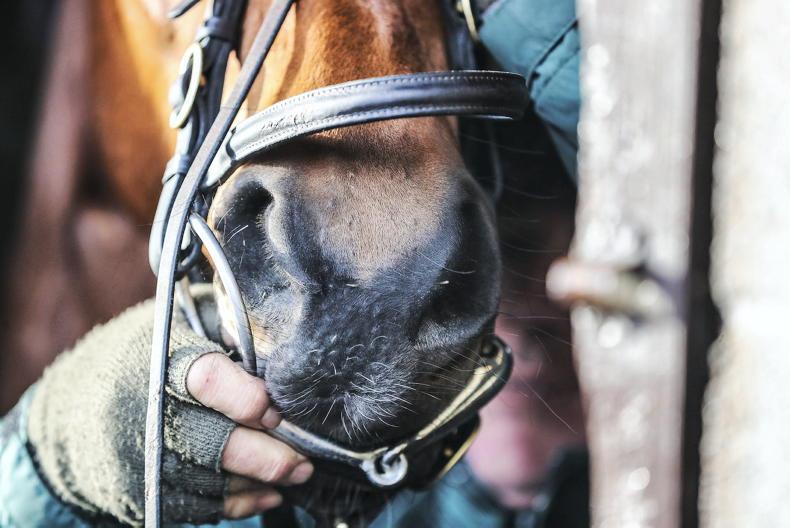
FROM the first time we apply pressure by hand/lead rope/ foal slip on a foal to ask them to stand still/step back or forward/ move sideways, we are availing of a type of learning that will be relied upon throughout that horse‘s life, in training, riding and handling. Operant conditioning (OC) is the title given to the learning involved when an animal does a behaviour (such as responding to pressure by standing still/ stepping back/ moving to the side) and, as a result, the pressure ‘goes away’. By connecting the behaviour with the outcome, animals learn early on how to relieve or eliminate pressures by carrying out a specific behaviour. The majority of training and handling throughout a horse‘s life, for the vast majority of horses, uses pressure, in the form of bridles, head collars, bits and reins, legs, etc.
The same type of learning (OC) is taking place when horses learn that a certain behaviour gets a good outcome, such as a food reward being delivered, when the horse has carried out a desired behaviour. If the reward is delivered within one-two seconds, the horse will make the association between the reward and the behaviour just performed.
Since humans began training horses, we have mainly relied on straps and equipment to apply pressure at locations on the horse’s body, which the horse would feel and attempt to reduce or remove. The use of the bit (usually metal) in a sensitive oral cavity is the most widely recognised device through which pressure is applied during training and riding. At basic levels of training, pressure applied through the bit asks the horse to turn, slow or stop and, when that behaviour has happened, the pressure is reduced or removed. Getting the cooperation of such a strong animal would not have been possible without the use of equipment.
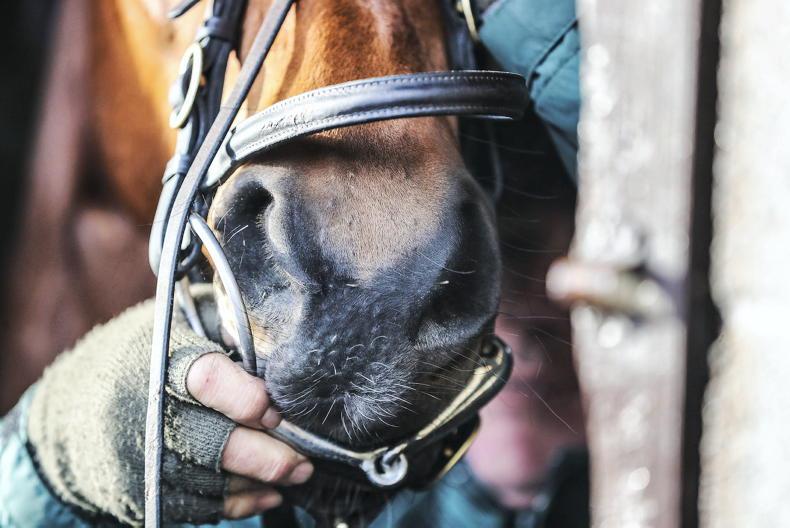
At basic levels of training, pressure applied through the bit asks the horse to turn, slow or stop, and when that behaviour has happened, the pressure is reduced or removed\ carolinenorris.ie
The technical term for the use of pressure/ release is negative reinforcement. The term refers to increasing or strengthening (reinforcing) a behaviour by removing pressure once the behaviour has been performed. In this instance, negative refers to the removal of the pressure.
The opposite, positive reinforcement, refers to the addition of something (a reward) after a behaviour has been performed, to increase the likelihood of it happening again (reinforcing it).
Improve our techniques
Equestrians are continually applying the above techniques, often without thinking about which technique is being applied. However, an understanding of the different methods of strengthening of behaviour can help us improve our techniques around horses and, in many cases, identify situations in which an undesirable behaviour has been strengthened through unintentional rewarding or release of pressure. For example, head shyness, where the horse strenuously avoids having the head/ears handled, often begins with a simple head-raising movement when the owner attempts to handle that area.
Given the horse’s height and length of neck, a simple raising of the head often results in the horse being able to remove the hand. Immediately, the horse has a good outcome from that simple behaviour. As a result, that behaviour is likely to recur, the next time a similar situation presents itself.
As the behaviour succeeds, each time, it escalates progressively, to the extent that, in some cases the horse can no longer have a bridle fitted/ teeth examined/ head brushed. In addition, the administration of eye/ oral medications, if needed, becomes increasingly more difficult, potentially dangerous and, in some cases, impossible. In future articles, we will address techniques to counter such problems.
Owners frequently deliver a voice reward accompanied by a pat on the neck, but for a reward to be effective, it must be of intrinsic value to the horse. Food, a scratch on the withers, removal of pressure, are all of intrinsic value. Verbal praise and a pat on the neck may not be, unless the horse associates it with something else good that happens for them at the same time, such as release of rein pressure.
Unlike in the training of dogs, where positive reinforcement is the most commonly used approach (e.g., asking the dog to sit, giving a food reward or pat on the head, which dogs do appear to value highly), most horse training relies on pressure and release (negative reinforcement). Lack of release of the pressure immediately after the desired behaviour has been performed is a lost opportunity for learning. Consciously monitoring the pressures we are applying, and ensuring that we reduce or remove the pressure as soon as a behaviour has been performed, facilitates best learning of the task we are teaching our horse.

SHARING OPTIONS: