


 This is a subscriber-only article
 It looks like you're browsing in private mode


THE World Anti-Doping Agency (WADA) was brought into operation in 1999 to develop, to harmonise and to coordinate anti-doping rules and policies across all sports and countries. A conceptual approach to gender equality within the World Anti-Doping Code states that all athletes, irrespective of their gender, are subject to the same rules and implementations. However, there is undoubtedly a case to be made for gender discrimination when it comes to the WADA ruling around supplementation of testosterone for elite athletes.
Equestrian sport is unique for many reasons. Prior to the addition of surfing at the Tokyo Olympic Games, equestrianism was the only discipline in which men and women competed against one another. Equestrianism also lends itself to longevity of career. Riders at elite level can continue to improve and to medal well into their forties, fifties and beyond. Whilst this is undoubtedly a huge positive, for female riders it does eventually bring into focus the inevitable consequences of reaching a certain stage of life.
Difficult and debilitating
Perimenopause means ‘around menopause’, and the term refers to the time during which the female body begins to make the natural transition towards menopause. Women begin perimenopause at different ages, and the onset of symptoms can occur from the mid-thirties onwards. Fluctuating oestrogen, progesterone and testosterone levels can cause a whole host of difficult and debilitating symptoms which may significantly impact daily life. These include low mood, lack of energy, problems with memory or concentration, anxiety, difficulty sleeping, headaches, loss of muscle, joint pain and irregular periods. A woman is considered to have reached menopause when she has not experienced a menstrual cycle for a continuous period of 12 months.
Many women choose to seek supplementation with Hormone Replacement Therapy (HRT) in order to alleviate the symptoms of perimenopause and menopause, and to replace what has naturally been lost through the passage of time. HRT can be life changing, greatly improving or even reversing some of the associated symptoms and allowing women to navigate menopause far more comfortably. HRT treatment includes the use of synthetically replicated oestrogen, progesterone and testosterone in the form of tablets, adhesive patches, creams and gels.
Lowered testosterone
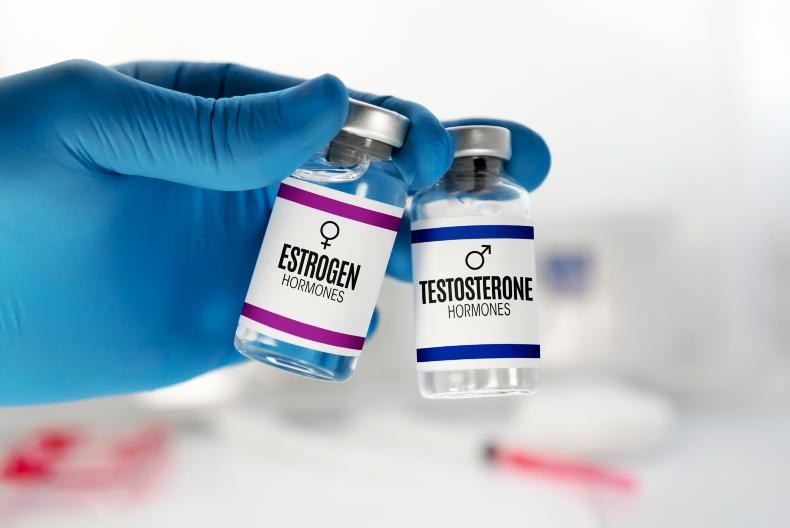
Female athletes are permitted to use oestrogen and progesterone as a method of birth control or for hormone replacement therapy when competing. However, testosterone supplementation is not permitted for use by females under any circumstances. The negative effects of fluctuating or lowered testosterone during perimenopause and menopause can be profound. Testosterone is traditionally thought of as a predominantly male hormone, but women actually have only 10% less testosterone than their male counterparts.
Testosterone is responsible for helping to maintain bone and muscle health, but it also plays a significant role in determining energy levels and quality of mood. Through this lens, it is possible to appreciate the many potential health and lifestyle benefits for equestrian sport competitors of supporting fluctuating or lowered testosterone levels throughout perimenopause and menopause.
Male athletes are not permitted to supplement with testosterone under any circumstances, EXCEPT in the case of a medical condition called Male Hypogonadism. Male Hypogonadism is classified as a clinical syndrome that results from failure of the testes to produce physiological levels of testosterone. Male athletes diagnosed with this condition are permitted to apply for a Therapeutic Use Exemption (TUE) for the supplementation of testosterone.
The WADA regulations however, state that “TUEs for Androgen (testosterone) deficiency should not be approved in women.”
100% of women
Hypogonadism and menopause are both naturally occurring phenomenon, but the statistical occurrence of each is significant. Hypogonadism is thought to affect between 1 and 10 cases per 100,000 male births. Menopause affects 100% of women who reach the appropriate age and stage of hormonal decline. The fact remains that men are permitted to medically compensate for naturally lowered testosterone, and women are not.
In light of this information, it becomes clear that even the perception of men and women competing on equal terms in equestrian sport is a misconception for women who reach the stage of requiring testosterone supplementation as a part of their HRT treatment. Whilst testosterone does naturally decrease for men over time, the rate of decline is thought to be around 1% per year after the age of 40. By the time a woman reaches menopause, her testosterone levels may have dropped by up to 50%. It seems inarguably unjust that perimenopausal and menopausal women must adhere to WADA rules during training and competition in order to be considered for team or individual selection, and thus must also suffer the consequences of this unavoidable biological process without adequate supplementation.
Given the known effects of lowered testosterone on cognitive and physiological function, it is a testimony to the inner strength and resilience of perimenopausal and menopausal women that they are often able to outperform their male counterparts on the world stage, despite having a metaphorical arm tied behind their backs.


SHARING OPTIONS: