

 This is a subscriber-only article
 It looks like you're browsing in private mode



IRELAND is celebrated across the globe for its highly-skilled personnel who work across the various facets of our world-renowned equine industry. Farriers are an important component of this skill infrastructure: it is one of the world’s oldest trades and one of its most intricate.
The Irish School of Farriery, located at the RACE Campus on the outskirts of Kildare town, is providing world-class training in farriery to both apprentices and practising farriers. The school was established to provide structured training for Irish farriery apprentices to a QQI-approved syllabus, thanks to the support of the Irish Farriery Authority and the Irish Master Farriers Association. Additional funding was provided by the National Development Plan supported by LEADER, the Irish Foal Levy, Horse Racing Ireland, Horse Sport Ireland, the Irish Thoroughbred Breeders’ Association and the Irish European Breeders’ Fund.
With SOLAS funding, eight farriery apprentices are accepted on each intake for a four-year apprenticeship, which leads to a QQI Level 6 Advanced Certificate in Farriery.
To be eligible for this SOLAS apprenticeship programme, you must be at least 16 years of age and have completed your Junior Certificate to ordinary level. The next step is to gain an apprenticeship with a qualified Master Farrier. The Master Farrier must hold a recognised farriery qualification, such as MF (IMFA), RF (BngC) or DipWCF, and trade in Ireland. On securing an apprenticeship the Master Farrier must register the apprentice with SOLAS. This apprenticeship consists of seven phases. Phases 1, 3, 5, and 7 are on-the-job and completed with the employing master. Phases 2, 4 and 6 (off-the-job) are completed at the school. Farriery Ireland has been actively promoting the apprenticeship to female candidates and the most recent intake includes two female apprentices.
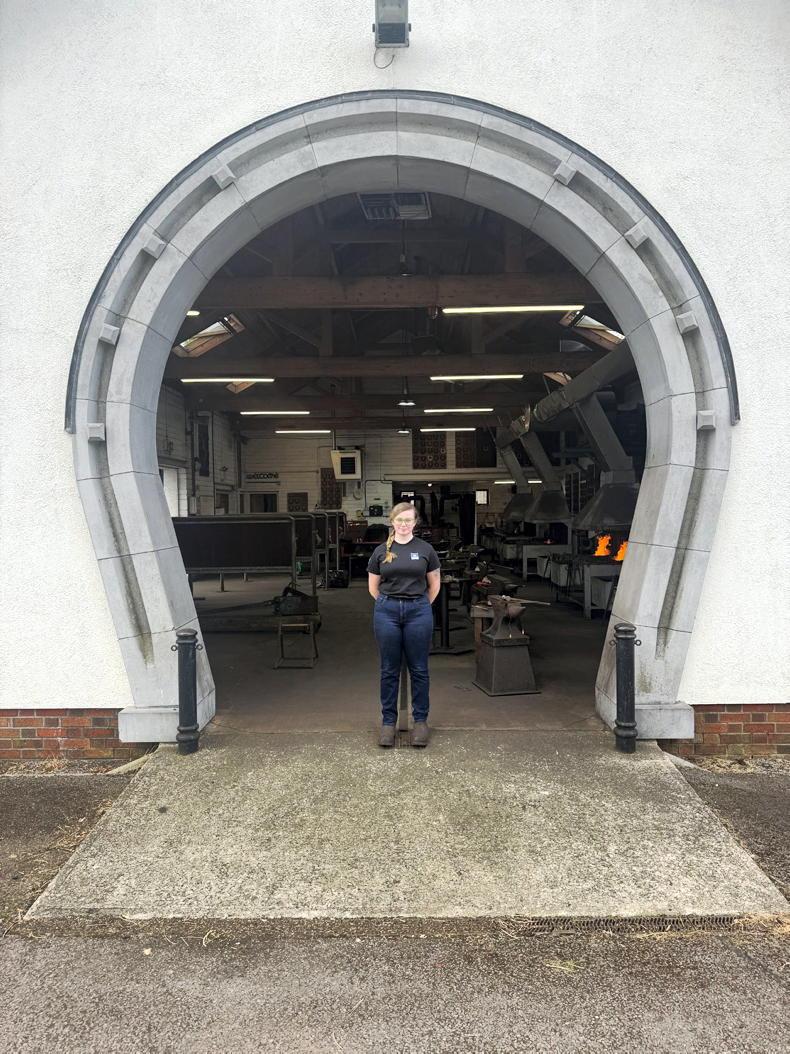
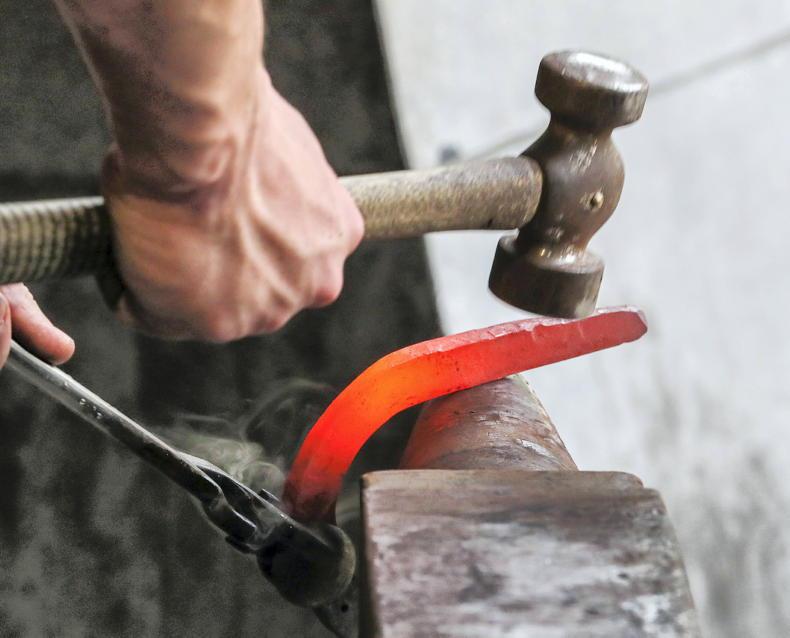
The purpose-built forge at the school contains eight solid-fuel fires and two welding bays. Lectures are held in a lecture room contained within the facility. Apprentices receive practical skills in forging, welding, horseshoeing and horse management while also learning equine anatomy and physiology, equine studies, computer and business studies.
Being a farrier is more than just a job, it’s a calling. It is a very physically demanding profession, which requires a degree of strength and fitness: apprentices also receive instruction on health, wellbeing and ergonomics.
Graduates of the school have already proven that they can compete with the best after securing medals at the Euroskills competition and competing successfully at International Horseshoeing Competitions. Many graduates are now running successful farriery businesses both in Ireland and abroad.
Caoimhe Winn
“I began Phase 2 of my apprenticeship in spring 2026. This phase is a 22-week taught semester at the Irish School of Farriery in Kildare. As a qualified blacksmith and welder, I’ve been fortunate to bring my existing skills into the practical parts of the course. I’ve really enjoyed learning from the tutors and sharing different ways of approaching challenges.
“I’m now looking forward to returning to my Master Farrier in Clifden, Connemara for Phase 3, where I can put my newly-gained skills and knowledge into practice.”
Ben O’Brien
“I am currently in Phase 3 of my apprenticeship at the Irish School of Farriery. During my time in college, I learned many valuable forging and blacksmithing skills thanks to the guidance of my tutors. I also gained a strong understanding of equine anatomy, especially the structure and function of the horse’s lower limb.
“One aspect I’ve particularly enjoyed is studying the different types of shoeing required across various disciplines in the industry. From racehorses to carriage horses, every area is covered, and each brings its own unique challenges and techniques.”


SHARING OPTIONS: