


 This is a subscriber-only article
 It looks like you're browsing in private mode



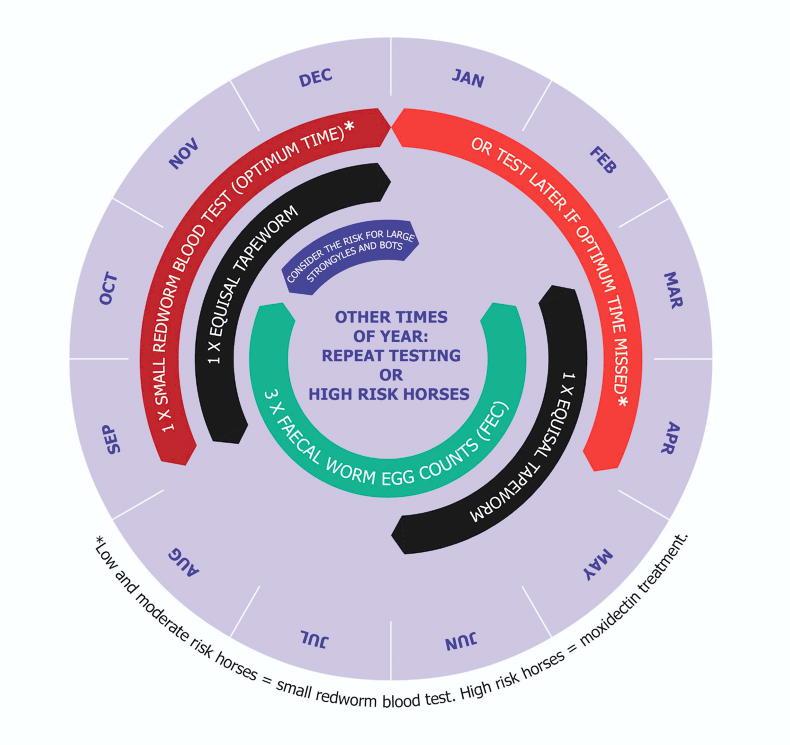
SMALL redworms (cyathostomins) are extremely common equine parasites and are increasingly resistant to all available worming medications, particularly fenbendazole and pyrantel, with emerging resistance to macrocyclic lactone wormers. Small redworm larvae can encyst in the gut wall for months, with high burdens leading to larval cyathostominosis, a serious, and sometimes fatal, condition.
To prevent clinical disease in horses that have received ineffective treatments, it is essential to maintain the effectiveness of the existing wormers. This involves applying evidence-based strategies that include assessment of infection risk, paddock hygiene, treating only high-risk horses and using tests to inform treatment decisions.
To help with assessment, an online tool “What’s Your Worm Risk” (whatsyourwormrisk.com) is available for owners and veterinarians. This calculates an individual horse’s infection risk based on answers to nine specific questions that span key principles of equine parasitology and parasite testing results.
After assessment, it is essential to take actions that reduce the risk of infection. To monitor the impact of the actions implemented and because risk levels can change over time, horses should be reassessed every three to 12 months, with more frequent assessments in high risk horses.
Management
To reduce risk of exposure to small redworm larvae, owners must implement measures that minimise paddock contamination, including:
Implementing effective paddock management can greatly reduce contamination so that most adult horses grazing such fields will have a low small redworm burden, with only a small percentage carrying the majority of the burden. Testing for worm egg excretion or overall burden can help identify the few horses that need treatment, thereby reducing wormer use.
Testing
Faecal egg count (FEC) tests are invaluable for reducing treatments. These estimate the number of worm eggs in dung. Since many horses, particularly adults, often shed few small redworm eggs, testing can greatly reduce treatments.
Egg shedding is affected by management, age, treatment frequency/effectiveness and season. Horses on more heavily-contaminated paddocks will have higher FEC. Higher counts are usually observed in spring and summer and in youngsters (1-4 years) and seniors (20 years+). If high counts are observed after recent treatments, resistance could be an issue, and a veterinarian should be consulted.
Testing should be conducted every eight to 12 weeks when grazing. Horses that graze year-round may benefit from late winter testing to monitor contamination and determine any necessary treatments.
Significant burden
Worm egg shedding does not correlate with small redworm burden in individuals, meaning that some horses show negative/low FEC results when they have a significant burden. For this reason, it was previously recommended that all horses receive an annual treatment to target small redworm encysted larvae in late autumn/winter. This increases resistance risk and, nowadays, larvicidal treatments should follow a risk-based approach.
Horses identified as high-risk should receive a larvicidal treatment; moxidectin or fenbendazole (daily for five days), keeping in mind likely resistance to fenbendazole. Low-risk horses may not require treatment. For owners concerned about withholding larvicidal therapy, the Small Redworm Blood Test (Austin Davis Biologics) can confirm whether a horse has a low burden that does not require treatment. This test measures serum antibody to proteins from the three commonest small redworm species, assessing burdens up to 10,000 worms. The test effectively reduces anthelmintic use in low-risk groups, with data showing that 62% of a sport horse cohort (n=981) had serum scores below the lowest 1,000 worm burden threshold, with only 19% exceeding the 10,000 worm burden threshold. Test results should be interpreted for each individual, considering their specific risk. Horses should not be tested until four months after their last worming.
Appropriate risk assessment combined with improved management and testing can assist owners in applying sustainable approaches to small redworm control.
The Small Redworm Blood Test is available via the Irish Equine Centre, samples are sent weekly to Austin Davis Biologics for testing. Blood is collected in a plain blood tube and submitted to the IEC by your veterinary surgeon for processing. The EquiSal tapeworm saliva test and serum tapeworm test are also available via the IEC - for further details, contact the Clinical Pathology department 045-866266 or visit www.irishequinecentre.ie



SHARING OPTIONS: