

 This is a subscriber-only article
 It looks like you're browsing in private mode




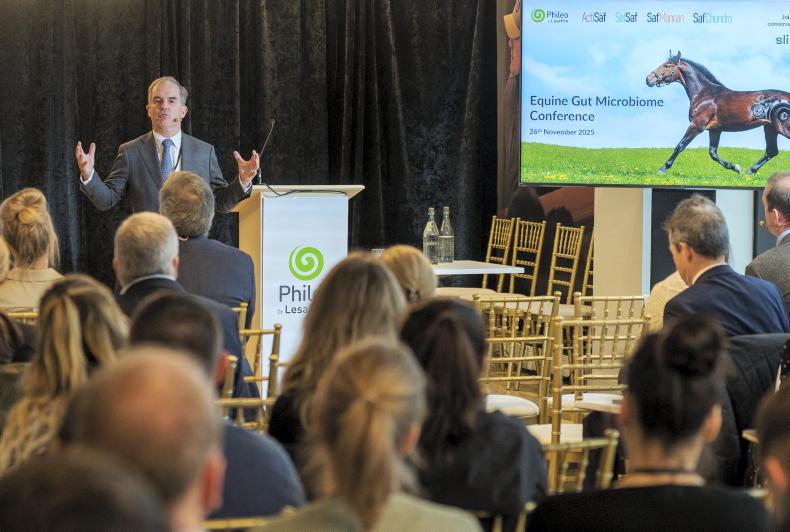
IF you ever needed reminding that the biggest forces shaping a horse’s health might be the ones we can’t see, the inaugural Equine Microbiome Conference, presented by Phileo by Lesaffre, delivered it in spades.
Opening proceedings was HRI’s Director of Equine Welfare and Bloodstock, John Osborne, who invited delegates to reconsider everything they thought they knew about feeding, management and equine performance. And he did it with trademark warmth, candour and a wickedly funny reference to his own recent gallbladder surgery.
That anecdote was no throwaway line. The horse’s digestive engine, he reminded us, is not just different from ours; it is radically different, and the tiny organisms that run it may hold answers to some of racing’s biggest welfare and performance questions.
He urged the industry to step beyond the old “fuel in, power out” mentality and to reframe feeding as a behavioural, metabolic and welfare cornerstone. Horses are grazing animals; everything about their psychology and physiology depends on a near-constant trickle of fibre. “Stable staff already know half this science,” he said. “They read a horse’s manure, appetite and demeanour better than any lab.” The task now, he added, is to bring cutting-edge microbiome research and centuries of horsemanship together, one not replacing the other, but strengthening both.
Crucial anchor
During a lively Q&A, Osborne also tackled the thorny issue of public perception. While a vocal minority will never be persuaded of racing’s ethics, Ireland’s wider public remains broadly supportive. But reputational tipping points can shift fast. “Once approval slips towards 30%, it can collapse almost overnight,” he warned. The route forward, he argued, is not reactive defensiveness but visible care: positive storytelling, real improvement and steadfast support for the grooms and riders who deliver welfare on the ground every day.
On research funding, he admitted Ireland lacks the kind of dedicated scientific investment available in Britain through the Racing Foundation. The Irish Equine Centre remains a crucial anchor, but blue-sky research, microbiome science included, needs far greater backing.
APC Microbiome Ireland’s Dr Gerard Moloney then widened the lens, reminding the room that the microbiome isn’t just “gut bacteria” it’s an entire universe of microorganisms living in and on us.
In humans, this invisible ecosystem shapes digestion, immunity, inflammation, drug metabolism, mood and even cognition. And, while horses are not humans, the underlying principles and the technologies to study them are shared. Microbes, it turns out, chat constantly with the brain through immune signalling, chemical messengers and the vagus nerve. Early-life factors; birth mode, feeding, maternal health, set the microbial blueprint for life.
If Moloney set out the theory, Professor Chris Proudman delivered the equine evidence. The WellFoal study, run from the University of Surrey, followed 52 top-class thoroughbred foals from birth to three years, generating one of the richest microbiome datasets ever collected in horses.
The headline finding was stark: foals with greater gut bacterial diversity at just 28 days old enjoyed better health and better racing performance. They suffered fewer respiratory problems, earned more prize money and achieved higher ratings. Conversely, early-life antibiotics reduced diversity and were associated with more respiratory disease and poorer earnings.
This is still correlation, not causation, but the pattern is impossible to ignore. Proudman believes the first month of life may be a “critical window” during which the foal’s gut sets the trajectory for future resilience. His team is now testing probiotics and prebiotics in a lab-based equine hindgut model, studying how mares seed their foals’ microbiomes, and identifying horse-specific bacteria that could form the next generation of equine probiotics.
Critical pinch points
Kevin Doyle of Phileo by Lesaffre traced how our understanding of microbes has evolved. Focusing mainly on ruminant models but with clear parallels for horses, he described gut health as a balance of diet, microbiota and gut integrity. When the mucosal barrier is damaged and “leaky gut” develops, toxins enter the bloodstream, driving costly systemic inflammation that diverts energy from performance, reproduction and immunity. He highlighted the gut’s close links with lungs, liver, mammary gland and brain, and stressed early life, transition periods and stress as critical pinch points for protecting gut function.
Christine Campbell of Phileo by Lesaffre, brought the conversation firmly into the stableyard. Hindgut dysbiosis, she said, is far more common than most owners realise and often driven by everyday stressors we barely notice: transport, competition, high-starch feeds, abrupt routine changes. When stress elevates cortisol, fibre-fermenting microbes drop, lactic-acid producers surge, gut integrity suffers and inflammatory cascades begin.
The fallout? Potential impacts on performance, demeanour and behaviour from girthiness and napping to aggression and stereotypies like cribbing. Early research even hints that certain bacteria influence neurotransmitters, such as serotonin and dopamine, opening the door to future “psychobiotics”. But for now, she emphasised, the fundamentals matter most: fibre, consistency, stress reduction and viewing each horse as a microbial individual.
By the close of the conference, one message rang clear: the next revolution in equine welfare and performance may not come from genetics, training or even nutrition as we know it but from the microscopic world powering the hindgut.
As Osborne said in his opening remarks, “The most important part of the horse may be the part we’ve never really seen.”

SHARING OPTIONS: