

 This is a subscriber-only article
 It looks like you're browsing in private mode



SLEEP is often overlooked in horse management, yet new research suggests it may have a significant impact on both welfare and performance. A recent study published in Scientific Reportsfound that horses receiving less rapid eye movement (REM) sleep showed reduced motivation and persistence when faced with challenging learning tasks. Horses that achieved more than around 30 minutes of REM sleep per night were more likely to keep working through difficult exercises, while those with shorter REM sleep tended to give up sooner, despite being otherwise healthy and showing no obvious sleep problems.
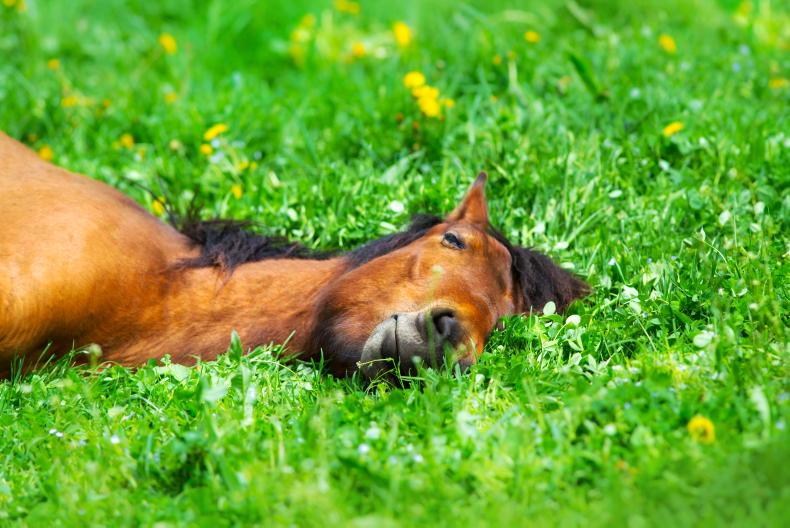
Like people, horses rely on sleep to support brain function, mood and learning. While they can doze standing up, the deeper REM phase, associated with memory, learning and neurological recovery, only occurs when the horse lies down. Adult horses typically sleep for just two and a half to five hours in total each day, with only a small proportion spent in REM sleep. That makes the quality of their rest particularly important.
Slow-wave sleep
Studies of equine sleep patterns show that horses experience two main types of sleep: slow-wave sleep and REM sleep. Horses can enter slow-wave sleep while standing, thanks to a specialised system of tendons and ligaments known as the stay apparatus, which allows them to relax without falling. However, REM sleep, the stage where full muscle relaxation occurs, requires the horse to lie down.
If horses are unable or unwilling to lie down, they may develop REM sleep deprivation. Research published in Applied Animal Behaviour Science has shown that sleep-deprived horses can experience sudden episodes of drowsiness and partial collapse as the body attempts to enter REM sleep while standing.
Stressful surroundings
One of the biggest factors affecting sleep is the horse’s environment. As prey animals, horses need to feel safe before they will lie down. In the wild, herd members often take turns resting while others remain alert. Domestic horses kept alone, or in busy and stressful surroundings, may therefore struggle to relax fully. Providing companionship, whether through turnout with other horses or neighbouring stable mates, can help horses feel secure enough to rest.
Comfortable bedding is another important consideration. Horses are more likely to lie down in stables with deep, dry bedding that cushions their joints and allows them to rise easily. Straw is often preferred because it provides warmth and softness, though well-managed shavings beds can also work effectively. Hard or poorly bedded floors may discourage horses from lying down altogether.
Turnout also plays a key role. Horses living in groups at pasture tend to lie down more frequently than those kept stabled for long periods. Regular turnout allows horses to move, relax and express natural behaviour, all of which support healthy sleep patterns.
Management practices
Owners should also watch for signs of poor sleep. Horses that appear unusually tired, reluctant to lie down, or that have unexplained scrapes on their knees may be experiencing sleep deprivation or collapse episodes. Reviewing management practices and consulting a veterinarian may be necessary.
Ensuring that horses feel safe, comfortable and able to lie down when they choose is a simple but powerful step in supporting their well-being. Good sleep, it seems, is not just restorative; it may also help horses learn, cope and perform at their best.



SHARING OPTIONS: