

 This is a subscriber-only article
 It looks like you're browsing in private mode



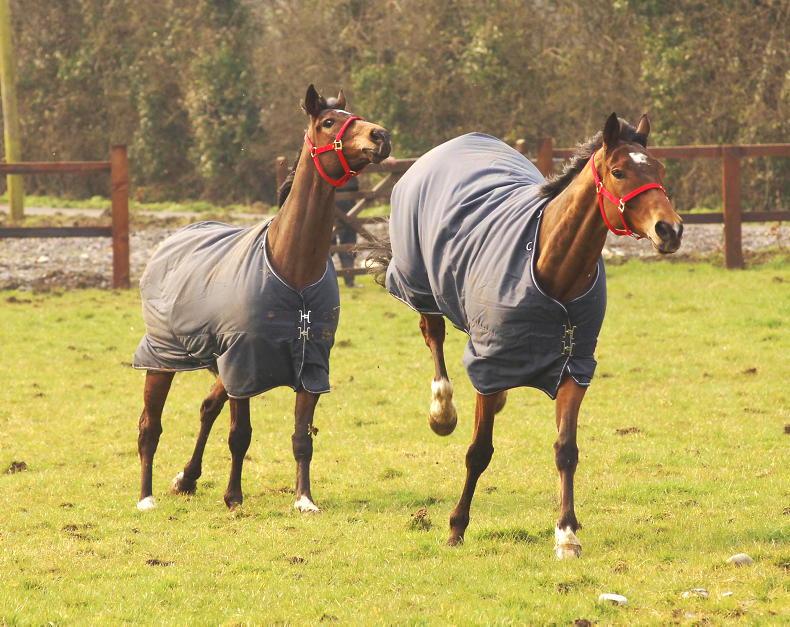
OUR new paper ‘Striking a balance: stakeholder perceptions of risk in horse racing’ was recently published in the Equine Veterinary Journal (the full paper is available open access: https://doi.org/10.1111/evj.14561).
In this article, we’ll talk about the background and purpose behind the research, and discuss the findings.
The research started as an idea to look into how various horse racing and equestrian sports’ governing bodies around the world use scientific research. For example, were any of them using research to help reduce risk of injury to horses?
If they were, had they talked about it publicly? We refined the idea over several months of background research and discussions.
Eventually, we decided it would be really interesting to find out in detail how some high-ranking and influential stakeholders in the racing industry feel about risk to horses on race day. There has been lots of research done about public opinion about risk in racing, but very little research has looked into perspectives from within the industry.
We worked out that the best way to get this sort of rich detail was to have a real conversation with a small number of people, as opposed to, for example, sending an online survey to a larger number of people.
We planned to hold 12 of what are called ‘semi-structured interviews’. This is a research method that requires designing a question guide to use, while also making sure that participants can talk about what they want to talk about.
The goal of the research was to find out what people in the industry think, so it was absolutely crucial to allow participants the freedom to discuss what they thought was most important.
Jessie wrote the question guide and ran a few practice interviews before setting up the research interviews in June 2024.
She ended up interviewing 12 participants: four each from the regulatory, veterinary, and media sides of the British and Irish racing industries.
All of the participants were well-established in their respective area. As part of the ethical requirements for this sort of research, the participants’ identities are confidential.
Starting points
The starting points included asking participants to describe their background, what their understanding of the work ‘risk’ is in the context of horse racing, and how risky they think racing is compared to other sports.
They were also asked to discuss the influence of media coverage, what they thought of current safety measures and progress on safety, and how they viewed public perceptions of risk.
Finally, participants were asked about how they view efforts in the industry to educate the public and address misconceptions, and they were also given space to raise any other challenges that the industry faces in communicating with the public.
Research method
After the interviews were completed and manually transcribed, Jessie used a process called reflexive thematic analysis. This is a research method which makes no assumptions about what will be found during analysis.
Instead, the goal is to develop understanding of the themes and common ideas present in all of the interviews. This way, the focus is on reporting what participants said, as opposed to testing assumptions made by the researchers.
Jessie refined the themes over multiple rounds of sorting the ideas and sentiments expressed by the participants into key topics. She also reflected on her own perspectives throughout the process and consulted with the other researchers to assist.
The final three themes that are presented in the paper are a sincere reflection of what the participants chose to say during interviews. There were no latent assumptions from the researchers about what we would find - this research is all about what the participants think from their own individual perspective.
Eventually, the thoughts expressed by the participants were refined into three overarching themes: ‘Managing risk, or managing the message?’, ‘Balance between tradition and progress on reducing risks’, and ‘Attributing responsibility and the public disconnect’.
THIS theme included the range of views expressed by participants about the risks faced by horses during races. All participants acknowledged that risk is an inherent part of the sport, but there was variation in emphasis on different aspects.
Some participants focussed more on the risks on race day, others placed more emphasis on correcting public misconceptions about risk. Some participants emphasised that racing was a small part of the horses’ lives.
There were a range of views around the ‘inevitability’ of risk and striving to minimise avoidable risks.
Theme 2: Balancing
tradition with progress
on reducing risks
IN this theme, all participants focussed on proactive solutions to risk, but again there were a range of views as to what these solutions should be. Some participants felt that identifying and reducing avoidable risks was a priority. Other participants felt that the priority should be transparency around injury rates and what has been done, and is ongoing, to reduce them.
In all cases, they described that an industry culture rooted in tradition was often at odds with these goals. Discussions of progress and advancement were consistently anchored to the past.
Entrenched practices and reluctance to change were cited as hindrances to (what some participants saw as) effective risk management strategies.
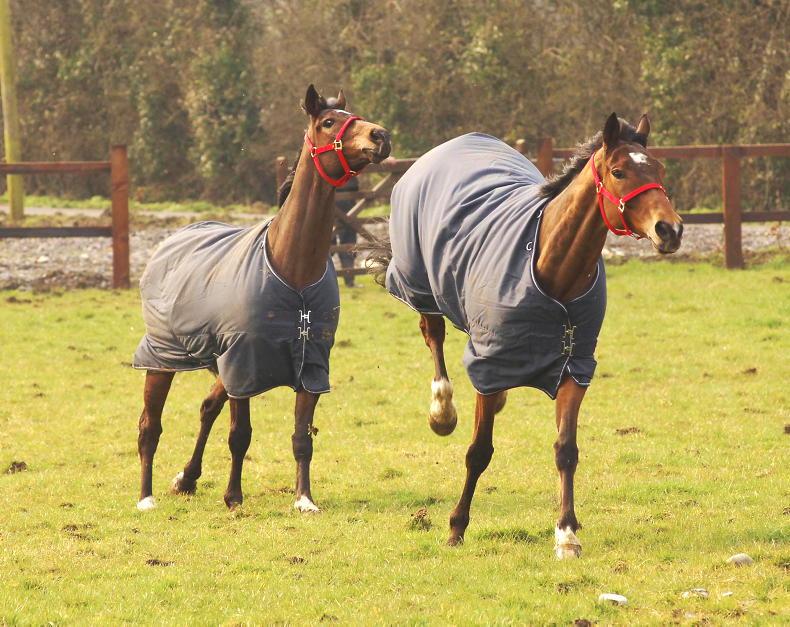
Are horses just as likely to be injured in a field as they are on the racetrack?
and the public disconnect
THE final major theme was all about how participants assign responsibility for race day risks.
For many participants, responsibility was directed elsewhere: to other industry stakeholders, or to public perception and cultural factors. Jockeys, trainers, owners, and even horses themselves were attributed with responsibility for race day injuries. Thoroughbreds were described as ‘fragile’, despite the industry frequently celebrating the ‘power’ and ‘athleticism’ of their horses. Industry regulatory bodies were assigned responsibility by some participants.
Overall, this theme was one of internal divisions in the industry. It also revealed divisions between the industry and public opinion. Some participants felt that public misunderstanding of racing was caused by wider cultural differences between e.g. rural and urban populations. Others pointed towards a wider cynicism of a public less willing to believe in institutions than was once the case.
At the start of the study, we suspected that there might be differences between the industry perspectives and the public perspectives reported in prior research. We were surprised by our findings that describe such a divided industry.
The differences in perspectives on risk, the tension between progress and tradition, and the variations in where responsibility is attributed, all point towards challenges that the industry will have to resolve in order to make progress in managing risk.
The division between industry and public perspectives was particularly interesting. What outsiders to racing see as a problem of reality was described as merely a problem of public perception, for some participants. Some participants expressed the view that horses are just as likely to be injured in a field as they are on the racetrack. This has been expressed elsewhere and was debunked by Pearson et al (2023) (https://www.mdpi.com/2076-2615/13/19/3137) who showed that, if the statement was true in relation to the Grand National, then any field containing 40 horses would have one of them experience a catastrophic injury approximately every 10 minutes.
Overall, the research found that racing industry stakeholders recognise risk in different ways. They described a slow pace of change and echo chamber dynamics which lead to a fragmented approach to safety.
While public opinion does play a role in shaping the future of racing, the responsibility and resources to action change lie with key industry stakeholders. This research highlights that, in order to move forward, the industry must address internal divisions, identify shared goals, and engage with science to safeguard horse welfare and maintain public support.
Jessie McCarthy is a final year veterinary student at the University of Surrey, and was a student on the MSc Animal Welfare Science, Ethics, and Law programme at the University of Glasgow at the time of the research.
Dr Heather Cameron-Whytock is a Senior Lecturer in the School of Veterinary Medicine at the University of Lancashire.
Dr Euan Bennet is a Lecturer in the School of Biodiversity, One Health, and Veterinary Medicine at the University of Glasgow.




SHARING OPTIONS: