

 This is a subscriber-only article
 It looks like you're browsing in private mode



MY Melbourne Cup experiences fit into two categories, the years before I was a press photographer and those years in which I was fortunate enough to work at the event and get up close to some great horses.
The first Melbourne Cup I attended was in 1973. Gala Supreme won that year, ridden by Frank Reys, an indigenous (Aboriginal) Australian, and so far the only member of his ethnicity to ride a Cup winner.
Amazingly this race was Frank’s last ride as a jockey. The presentation was a very emotional event, and affected many in the crowd.
I had been to Flemington a number of times before, but quickly realised that Cup day was different, mainly due to the size of the crowd.
I remember that day in ’73, the lawn was a sea of people. We arrived just as the first race began - the Cup Hurdle. Later there would be a Cup Steeple. These races were off the programme by the early 1980s.
We walked the entire Flemington straight and ended up in the North Hill Stand. It was standing room only, and when you got a good spot you stayed there!
Behind the Hill Stand the atmosphere was like that of a fair; tents and marquees, mostly selling drinks and a variety of foods. It was all just so different to the ordinary racedays. I was bitten by a bug to return!
In 1974 I returned, armed with a 8mm movie camera. In those days there were no rules about recording sports events yourself.
I remember filming a tic-tac man signalling odds from the top of the hill to the rails bookmaker but unfortunately I could not film the finish of the Cup, due to the crowd jumping about.
Think Big, ridden by Harry White and trained by Bart Cummings, won the race, and they repeated the feat in 1975.
Melbourne is known for its changeable weather and we certainly got that in 1976. It bucketed down, and it continued to bucket down.
Flemington is big, but it does not have much public shelter, not for the 80,000-plus spectators on the lawn or in the open stands! Most of the picnics were ruined. Everything was waterlogged. People started going home.
Up on the North Hill, a lake started to form along the back of the stand, where the betting windows were. The water had nowhere to go, until it reached a certain height, then it flowed over the barriers and cascaded down to the lower part of the course.
The electricity went out, leaving a queue of punters stood in water up above their ankles. The water still rushed down from higher on the hill. It was interesting to watch the women holding their purses, their long dresses and their shoes!
The race started near on-time and coming up the straight it was near impossible to tell what was what.
Kiwi mudlark
The race was won by a Kiwi mudlark named Van Der Hum, trained and ridden by two New Zealanders in Len Robinson and Bob Skelton respectively. The horse was backed into favouritism, at 9/2 and may have started a lot shorter if the Tote hadn’t broken down.
The next year, Bart won again, with Gold And Black ridden by John Duggan. It had been runner-up the previous year in the mud! That was my last Cup, where I didn’t have a camera in my hand.
At the start of 1978, Melbourne hosted the Inter-Dominion Championship for harness racing. I had been taking a few harness racing pics for a journalist school friend. He managed to get me a press pass for the Championship.
From this, I was offered a weekly job at the Australian Rules Football, shooting colour transparency film.
So, in 1978, I headed off to watch the Cup as a spectator. I bumped into a fellow sports photographer who asked me to keep a seat for him in the press area. When he returned to claim his seat, he had brought another camera for me to use. So began my racing photography career!
By 1980 I was shooting the Cup finish on the rail. I missed the 1982 Cup and have not missed another one, until this year, of course.
We had another very wet year in 1992, when the race was won by a little-known grey named Subzero. He was a very placid gelding and was later retrained as a clerk of the course horse.
His new owner Graham Salisbury soon realised that this horse was a very quick learner and almost human! Graham and ‘Subbie’ were to go on and visit pubs, schools, hospitals, and even Government House a sought-after duo on the celebrity circuit.
They were tireless workers for charity, and the promotion of racing. It is no exaggeration to say that Subzero was responsible for changing the public attitude towards racehorses.
Vintage Crop
Who can forget 1993, the year Vintage Crop won the race and began the international era.
When I visited the Irish National Stud in 2019, there on the wall was a beautiful portrait of Vintage Crop in the foyer. Our guide was shocked when I knew who it was. Well, I did back it!
Nine years later trainer Dermot Weld did it again with Media Puzzle.
In the 1990s, there was a real boom in horse racing, and the market became very overinflated. Money was splashed around freely. But when the bills rolled in, the money was not there.
Cummings burnt
The legendary trainer Bart Cummings was burnt by the collapse particularly badly and many of his assets were sold up.
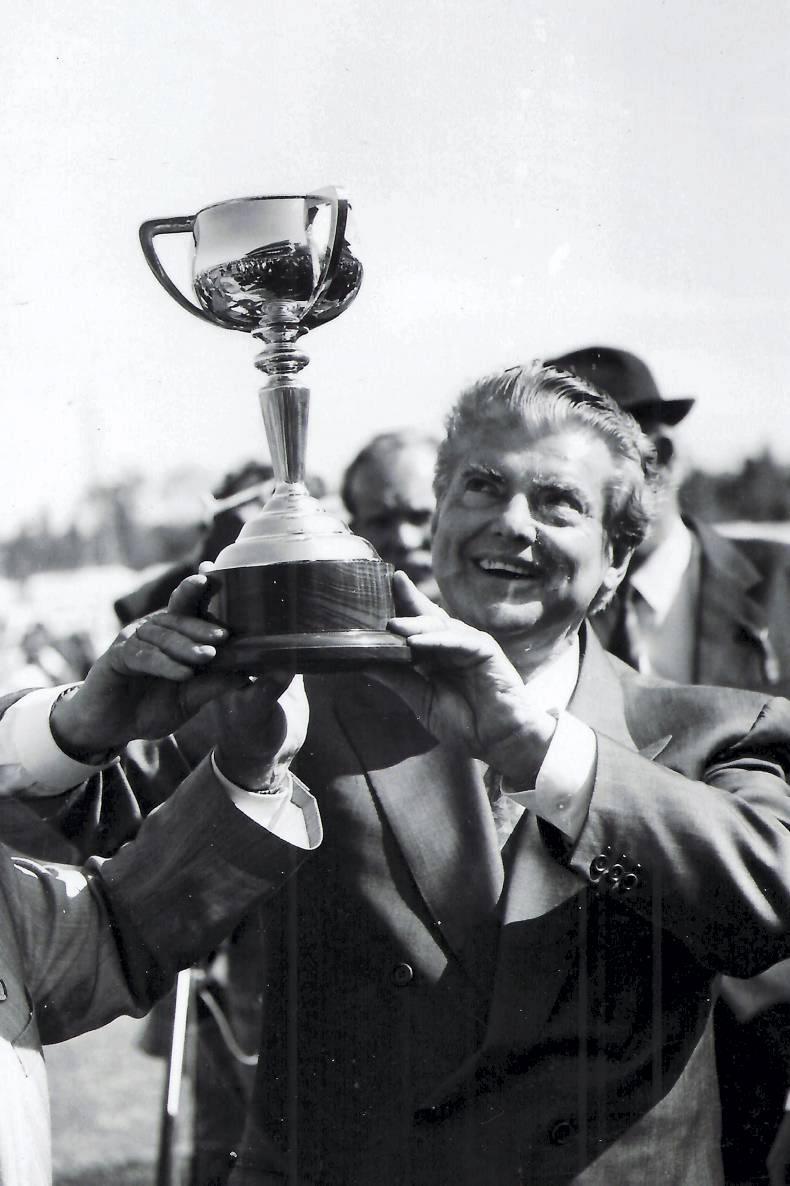
To a great degree he was rescued by his great friend for whom he had trained Think Big in the ‘70s. The man was named Dato Tan Chin Nam and he helped Bart come out the other end.
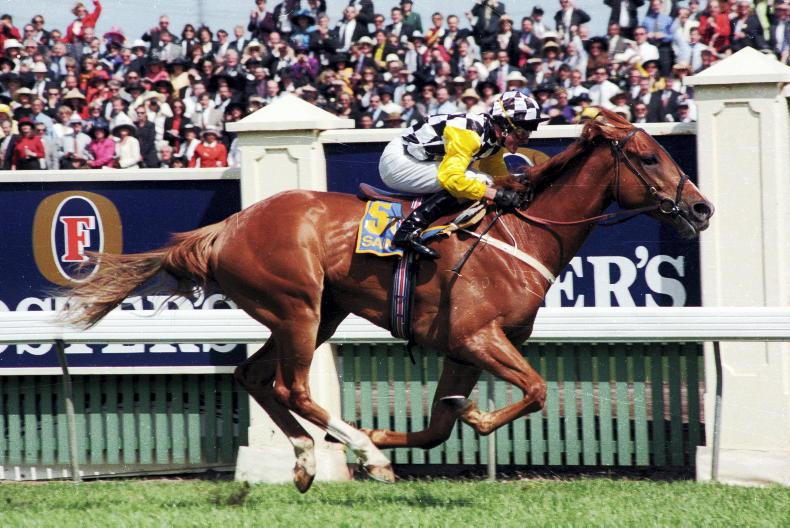
Bart had bred a horse named Saintly, ‘the horse from Heaven’ as he would be known. Dato took a half-share and Saintly went on to win races in Sydney, an Australian Cup, a Cox Plate and of course the 1997 Melbourne Cup.
This horse saved Bart. It gave him his 10th Cup winner and resurrected his training career. His Melbourne Stables were rebranded as Saintly Place.
Saintly was retired after an injury early the following year but every year the horse would return to Flemington a week before the Cup and be given a gallop around the racecourse. Saintly’s win is my favourite Cup!
Media Puzzle’s year was 2002 and what an emotional Cup that was. Winning jockey Damien Oliver had lost his brother Jason in a barrier trial fall just days earlier in Western Australia.
Damien had gone to Perth to be with family and really was not expected back in Melbourne for the Cup. It was an amazing show of courage and resilience.
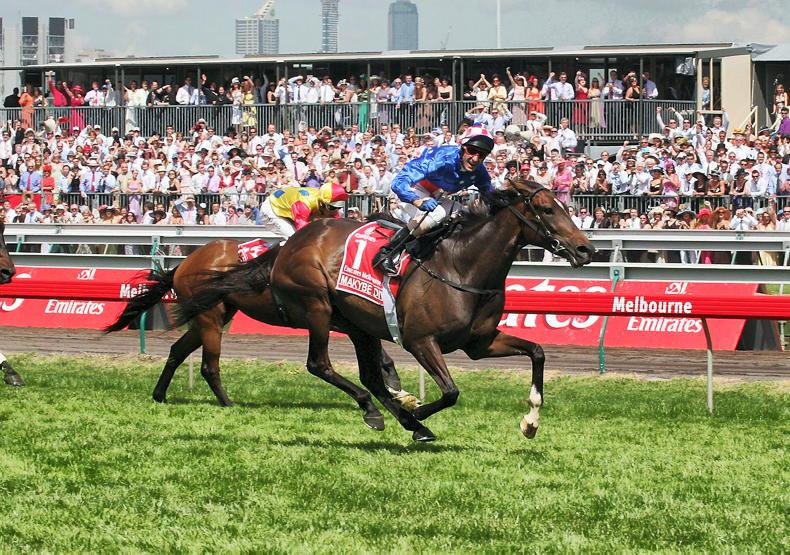
What do you say about the next three Cups, all won in different conditions, but all won by the mare Makybe Diva.
Her second Cup, 2004, was won after a storm blew in. The presentation was a wash out, as it bucketed down. My cameras gave out. Even my small pocket digital gave up.
A huge crowd turned out to see Makybe Diva make it three in a row in 2005. She was magnificent and in winning three Cups she had done the impossible. Glen Boss was on board each time but she had had two trainers, David Hall for the first year and then Lee Freedman, after Hall took a job in Singapore.
Over the years, more and more overseas horses came to attempt to win the Cup.
At first, the locals held their own, but slowly the oversea trainers learnt that they needed to select their runners more carefully. Local owners started buying the overseas horses they thought could win the Cup. This was successful, but other owners opted to keep their purchases with the overseas trainers.
In 2013, Fiorente won the Cup, again ridden by Damien Oliver by most importantly it was trained by Gai Waterhouse. Gai had won everything except a Melbourne Cup. She is the First Lady of Australian racing, and daughter of the legendary Sydney trainer, Tommy Smith.
After this historic win, the presentation ceremony soon descended into chaos. There were four winning owners but each of them seemed to have their own syndicate. There were well in excess of 200 people in the parade ring.
Eventually a picture of Gai and Damien was set up, and that’s when the mayhem started. Everyone wanted to get in the picture. In the ensuing crush, I was pushed into Gai and Damien, lost my footing, but remained upright! My cap fell off and then was placed back on my head.
The internationals have won three of the past five runnings. Joseph O’Brien has now won it twice for owner Lloyd Williams and in 2018 we finally had a Godolphin winner in Cross Counter, giving Sheikh Mohammed a long overdue success.
It felt strange this week sitting down to watch the race at home on the TV. Covid has really ruined the spectacle, the 120,000 people who attend, plus many more thousands who never leave the carpark. No colour, no noise as they come up the straight the first time.
I suppose we are lucky to have continued racing and we should be grateful. But you can bet I will be back there next year, with or without a camera.
Colin’s three favourite Cups
1973: Gala Supreme - you never forget your first Melbourne Cup.
1997: Saintly - the horse from Heaven who saved Bart Cummings.
2005: Makybe Diva - the three-time winner achieved the impossible.


SHARING OPTIONS: