

 This is a subscriber-only article
 It looks like you're browsing in private mode



I ONCE rode a four-year-old 19 miles to an autumn hunting fixture. He was what Pat O’Brien, then whipper-in to the Tipperary Foxhounds, tactfully referred to as ‘an active young horse’. Pat had ample opportunity to cast his expert eye over him on the previous morning’s hunting, when he twice caught him for me after the gelding had bucked me off. Tacking him up at five in the morning and riding him across half of South Tipperary in the starry pre-dawn was admittedly drastic, but he was nicely settled by the time we found ourselves standing on a hillside in the golden morning light, listening to hounds rattling up and down a furzey valley below.
Autumn hunting is for the education of the young - boisterous newly entered puppies; fidgety, green young horses; keen boys and girls who think nothing of rising before the sun in the hope that they’ll be invited to do a bit of whipping-in. It is an aspect of the hunting year whose charms are lost on many life-long fox hunters, but those charms can be very great indeed.
Climbing sun
An early harvest usually means an early start to autumn hunting, but however the year falls most huntsmen like to have entered last year’s puppies by late August. A perennial conversation-opener among hunt servants meeting at the Dublin Horse Show is, ‘Have ye started yet?’
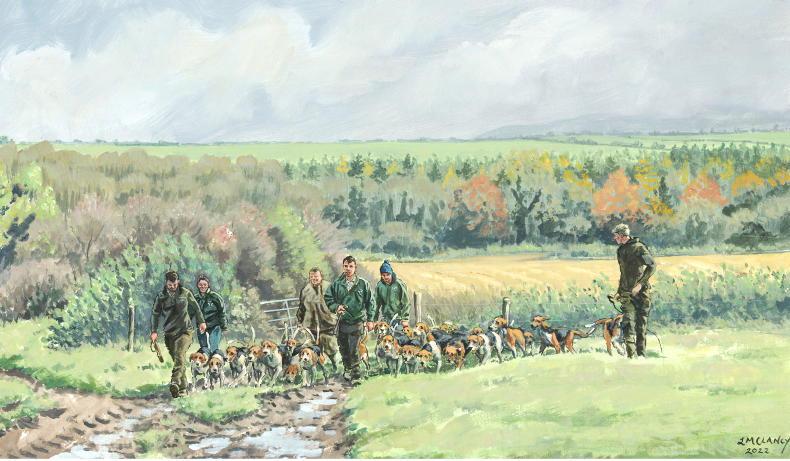
Those first mornings in August and September tend to be subdued occasions, with hounds unboxed before the climbing sun has had time to burn the scent off. They will be ushered into a carefully-chosen covert, be it a neat field of maize or a steep-sided valley overgrown with gorse and hawthorn, and the few hardcore followers will dispose themselves at strategic points around the edges to encourage both foxes and hounds to remain within.
Young hounds must first learn to keep their heads down and carefully work the line of their fox in covert if they are to produce the good runs of January and February. What hunting there is is often desultory and inconclusive, and by mid-morning the hounds will be back in their trailer and the followers will be huddled around the huntsman’s jeep, leaning on thumbsticks, drinking tea from thermos flasks, discoursing on hunting and farming. Not even the most passionate sportsman could deny that the entertainment value of such mornings is limited, and yet everyone out is conscious of a sense of privilege at seeing a side of hunting that most people never do, of venturing into wild corners of the countryside at an hour when much of the population is only waking up. Siegfried Sassoon, war poet and avid hunting man, wrote evocatively of autumn hunting mornings with the Southdown in the years before the Great War: ‘Was it not something stolen from the lie-a-bed world and the luckless city workers?’
Mounted packs
Increasingly intensive farming practices have made it impractical to do as much autumn hunting on horseback as was once the case, but most of the mounted packs will try to put in a few days in October.
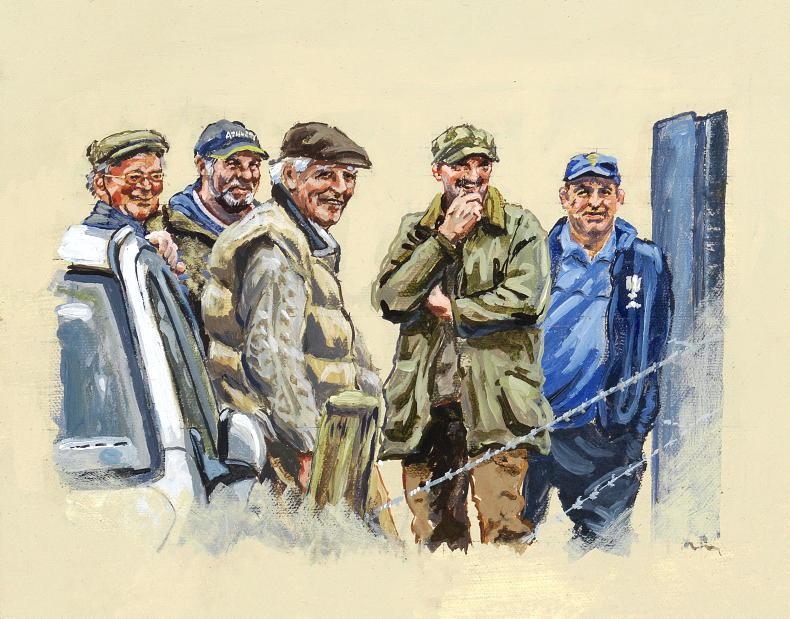
By then, scent should be more consistent, hounds will be fitter and better educated, and it should be possible to allow them to hunt in the open in pockets of country where coverts are close together and easily accessible. There will be larger crowds out by now; seasoned followers in ratcatcher on summer-fat hunters, hardy lads introducing wild-eyed young horses to their job, elderly car followers out to see what they can from the roadside.
The opening meet is looming, and excitement is growing among the hunting folk for the season that lies ahead. For the purists who rose in the dark, who endured soaking mists and biting midges, enjoyed splendid sunrises and enthralling houndwork, there is just a tinge of regret that a special phase in the hunting year is drawing to a close.

SHARING OPTIONS: