

 This is a subscriber-only article
 It looks like you're browsing in private mode




2006
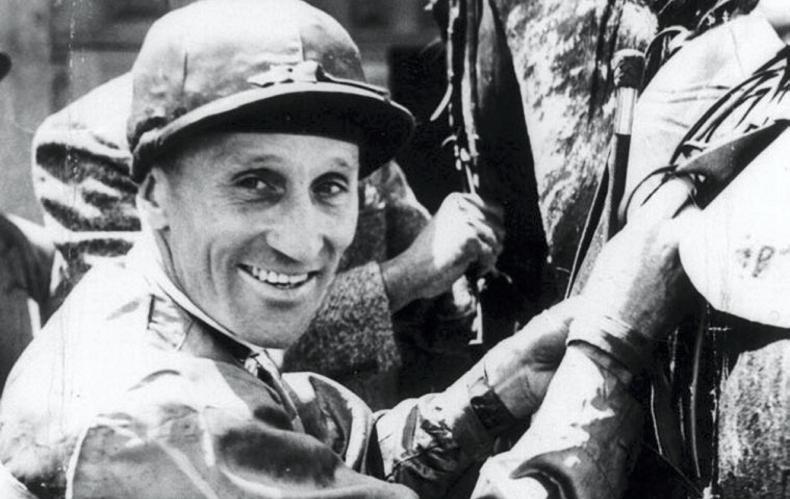
THE racing world this week mourned the loss of Australian jockey, Arthur ‘Scobie’ Breasley, who died after suffering a stroke at the age of 92.
Breasley was born in Wagga Wagga in 1914 and won five Caulfield Cups, two Epsom Derbys (Santa Claus in 1964 and Charlottown in 1966) and a Prix de l’Arc de Triomphe (Ballymoss 1958) in a career which featured 3,251 wins.
He rode his first winner when he was just 12 years old and, two years later, in 1928, he won his first metropolitan race in Melbourne. At the age of 15 he rode in the 1929 Melbourne Cup against Australia’s most famous horse, Phar Lap.
Breasley dominated Melbourne racing during the war years, and four of his five Caulfield Cup victories came in successive years, 1942 to 1945, with Tranquil Star, Skipton, Counsel and St Fairy. His record of five wins in Australia’s second most-famous handicap still stands today. His burgeoning career took full flight when he moved permanently to Britain, shortly after his fifth Caulfield Cup win on Peshawar in 1952.
Away from home he rode 2,161 winners and won four English jockey titles, in 1957 and from 1961 to 1963. He was a dominant force in the saddle for a decade, notching over a century of winners every season from 1955 to 1964. He retired in 1968 and took up training. That career took him to England, France, the USA and Barbados, before he returned to Melbourne for his retirement.
Apprentices to benefit
1981
IRISH racing apprentices will be among the first in the world to have the benefit of a specially-prepared manual to assist them in the act of horsemanship.
An instruction manual for apprentices, the first in the English language, has been published by the Racing Apprentice Centre of Education, Kildare. A copy of the manual was presented to Mr Dukes, Minister for Agriculture, by the committee and apprentices of the centre on Monday last.
This manual is a completely new departure for the racing industry, and will complement the practical training that apprentices receive in the stable yard. Although countries like Japan and France already employ such an approach, the RACE annual is the first of its kind in the English language.
It has been adapted specifically for apprentices in the racing industry, and will provide a single source of reference for them as they progress through their careers. The manual will be provided to each future apprentice on signing indenture papers.
The new publication covers the main aspects of a racing apprentice’s work – namely stable management, veterinary science, breeding, the theory and practice of flat racing, and the rules of racing.
Norwegians stock up in Ireland
1931
THE Norwegian horse-buying commission, which has spent some time in Ireland, has now completed its requirements by the purchase of 21 lots of horses in various parts of the country.
It is likely that the commission will return in the course of the next few months to inspect in foal mares, for the commission visited several stud farms, inquiring as to the racing performances and the bloodlines of stallions to which certain mares were believed to be in foal.
A bill legalising the totalisator system of betting has passed through the Norwegian legislature, and we hear that a new racecourse is being constructed at Oslo. Up to the present, trotting has been in greater favour in Norway than racing, but its popularity is declining and that, quite likely, racing will surpass it.

SHARING OPTIONS: