

 This is a subscriber-only article
 It looks like you're browsing in private mode



WHEN we hear of a horse dying suddenly on the gallops of a “heart attack” do we assume this is the equine equivalent of the coronary condition in people? In humans there is generally a connection with the build-up of dietary fats, hardening of coronary arteries and heart muscle failure due to an impaired blood supply.
We think of blood tests and imaging scans as critical to prevention in humans. In horses with their very different diet, arteriosclerosis is very rarely the underlying condition. Instead we must speak of physical issues with aorta or heart valves, or electrical faults in its wiring scheme – a broken heart, one may say!
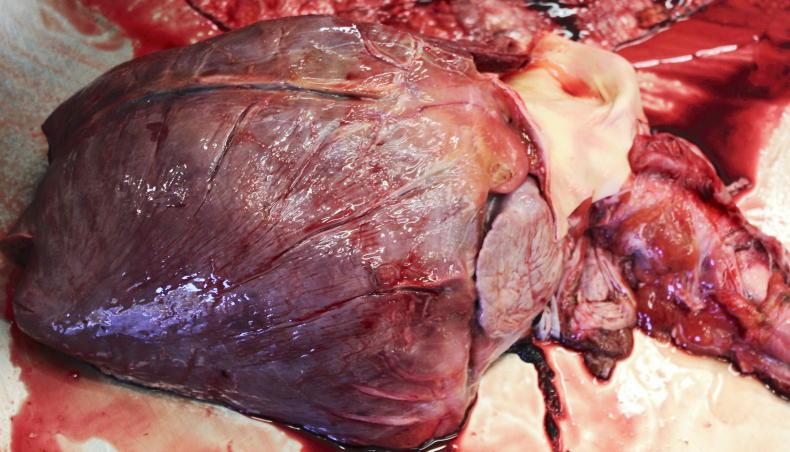
Several times when examining horses that have met their demise suddenly while in strong exercise I have found the chest or abdomen to be full of blood. Horses’ hearts generate huge pressure in the pipework in response to strenuous exercise. Sadly, sometimes the aorta cannot cope and instead ruptures.
The same may happen to the strings that hold heart valves in their normal place. Pre-existing weakness may be suspected and vets get asked whether this might have been detected before death. Difficult, I say!
An aneurysm may sit hidden and largely symptomless in-situ until that fateful moment in time when the heart makes a maximal effort.
Though ultrasound examination of horses’ hearts has become more sophisticated in recent times there are still physical barriers to overcome in imaging it and associated structures in their entirety. These horses generally die without previous warning and our own hearts sink.
Wiring malfunctions
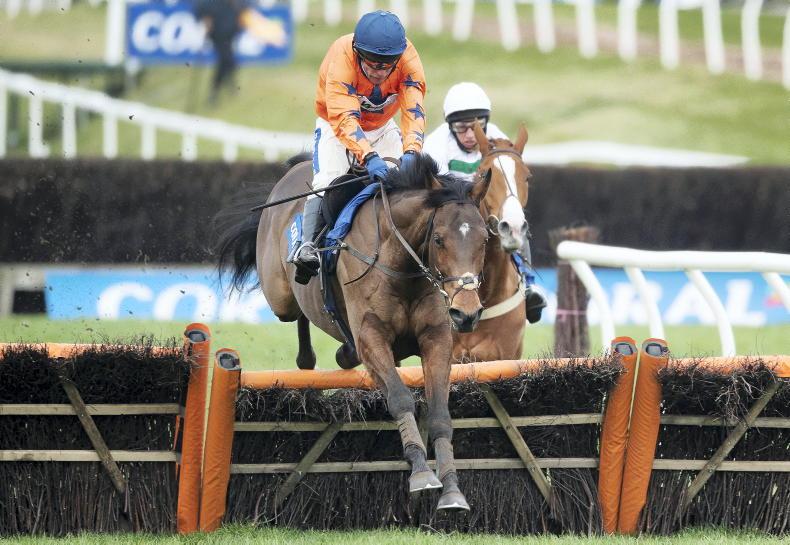
Those horses that suffer a wiring malfunction may give hints to this effect – typically a fall-off in expected speed or endurance. We hear of cases of atrial fibrillation reported to the stewards as a reason for poor racing performance, for example. These horses are generally the larger steeplechase types with exceptionally large hearts – Denman springs to mind.
The very largest heart with thickened, heavily muscled walls and a slow resting heart rate is prone to upsets in the rhythm with which it beats. These arrhythmias have their origin in disruption to the wiring running through the heart.
Electrolyte imbalances (sodium, chlorine, calcium, etc.) play their part too, so no surprise that the stress and sweating of strenuous exercise may precipitate an attack. This loss of co-ordination between the four heart chambers will impair the efficiency with which it functions.
Hopefully only moderately so that we can do something about it: detect the defect with careful auscultation (listening) and electrical monitoring (ECG), then medicate to return the heart to its normal rhythm. Sometimes, these electrical faults result in sudden death, as very sadly sometimes also happens with young people on the playing field.
Human families
Genetics may well play their part too: certainly some of the conditions I speak of here are known to run in human families, why not in horse ones too?
Genomics as a science will certainly cast further light on this subject over time: we might be better able to predict which horses are at increased risk and pay particular attention to them.
It’d be hard to justify echo-cardiography (ultrasound) and electro-cardiography (ECG) for all horses in training as a priority over other elements of preventative health-care. In humans, screening tests for serious disease have their place and health-monitoring devices are certainly gaining traction.
Hopefully technology continues to provide innovative solutions to the early detection of life-limiting conditions in horses as well as humans. It gives cause to pause when a magnificent athlete dies seemingly needlessly in full flight, moments we could all do without.

SHARING OPTIONS: