

 This is a subscriber-only article
 It looks like you're browsing in private mode





Hi Orla,
I believe my pony exhibits a classical conditioning behaviour. He is very fearful of being clipped to the point where he has to be sedated. Interestingly, he has become increasingly quieter each year since I have owned him and had him clipped for the last three years. I assumed due to perhaps a more relaxed environment and gentler handlers? Would you recommend anything I could do to help him further relax? He is 26 years old and very easy to do anything else with.
Kind regards,
Laura.
Dear Laura,
Thank you for your query. You are correct in suspecting that your pony has come to fear the experience of being clipped through classical conditioning. Often, horses are simply restrained while the job is being carried out, despite showing signs of fear, and may quickly come to associate (through classical conditioning) being clipped with the fear that they felt. This association can persist for many years, resulting in the use of sedatives and strong methods of restraint, to ‘get the job done’.
It is good to hear that your pony has become increasingly quieter during clipping in the three years that you have owned him. This is indeed most likely due to your more relaxed environment and gentle handling. Well done!
Some further approaches that might help: If your pony is by now, reasonably relaxed during clipping, delivering small food treats (chopped apple, chopped carrot, handfuls of concentrates, commercial treats) throughout the clipping process can change the horse’s mental attitude from one of fear to a more positive emotional state. By inducing this positive emotional state during the process of clipping, the pony will come to associate (through classical conditioning) the process of being clipped as something pleasant.
Systematic desensitisation
We often don’t think much about the clipping process until we need to get it done. However, some time spent well in advance of when the pony needs to be clipped, carrying out some desensitisation, will pay dividends when the time comes to actually clip the pony.
Systematic desensitisation is an approach that uses classical conditioning to reduce fear. It involves exposing the horse to a low enough level of the previously ‘scary’ situation that the horse is not scared. Then, very gradually, the level of exposure can be increased. If carried out alongside offering food rewards (an approach called counter-conditioning), fear can quickly be replaced with a non- fearful, positive emotional state during clipping.
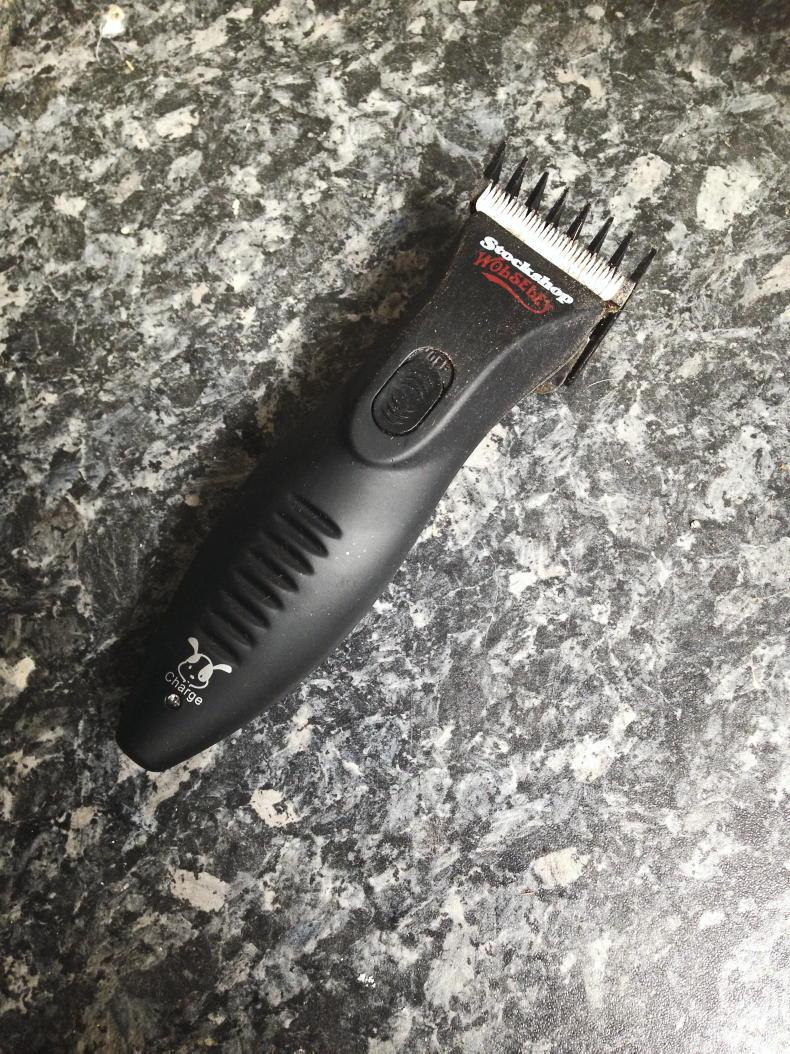
Several aspects of clipping are thought to cause fear: the noise of the clippers, the feeling of the clippers vibrating against the skin, the sight of the trailing cable crossing the stable floor, the unfamiliar scent of the oil and motor of the clippers, and the sight of clumps of hair falling to the ground. By introducing the horse to as many of the above components as possible, individually, during which they experience something pleasant (food treats being the most reliable), through classical conditioning, each of these components of clipping can lose their potential to cause fear and become non-threatening.
Begin to habituate
Overshadowing is the name given to an approach developed in recent years, which leans on the knowledge arising from research by Pavlov showing that horses cannot concentrate on more than one thing at a time and, if they are exposed to a number of different cues simultaneously, they will concentrate on the most noticeable (to them at that time), but importantly, while this is happening, they begin to habituate (get used to) the other cues. This less known aspect of Pavlov’s research (he was also responsible for the discovery of classical conditioning) informs an approach where the horse, having previously been taught to understand and respond to simple lead rope cues (applying pressure to ask for simple responses such as stepping back, stepping forward, lowering the head, raising the head) is then exposed to clippers - at a distance.
If the horse is frightened by the presence of the clippers, their responses to lead rope cues will be poor (heavy, delayed, absent). However, if the handler continues to ask, once the horse begins to respond, the horse is now concentrating on the handler cues, and is habituating to the clippers. Using this approach, on a gradual basis, the clippers can be brought closer to the horse, as long as the horse remains light in responses to the lead rein pressures. Scan the QR codes for insightful videos on clipping and overcoming fear.
Good luck with your pony!
Orla.

SHARING OPTIONS: