

 This is a subscriber-only article
 It looks like you're browsing in private mode



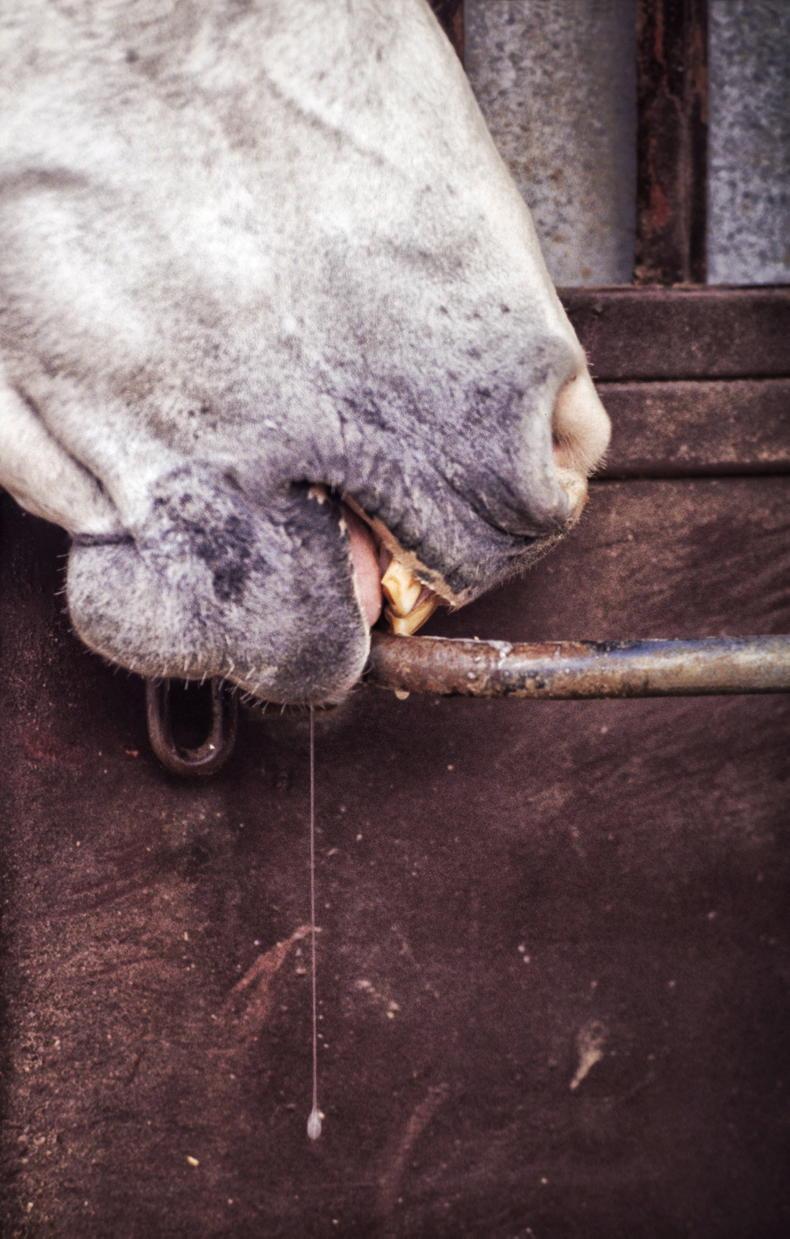
THE term ‘stable vices’ refers to some behaviours most commonly seen in the stable, including box-walking, weaving, crib-biting and wind-sucking. The scientific name for this group of often repetitive, and apparently pointless, behaviours is ‘stereotypic behaviours’, otherwise known in humans as obsessive compulsive disorder (OCD).
Why do they happen? These complex behaviours have been closely studied, and research shows that most of these behaviours are caused by stress, largely due to frustration building as a result of the horse being prevented from carrying out behaviours, which they are strongly programmed to do.
Horses normally spend most of their time (60 to 80%) grazing. While grazing, horses are continually moving forward, covering significant distances daily. When horses are stabled, their forward movement is limited by the space allowed, and the amount of time spent eating is limited by the amount and type of food being fed. Concentrates take less time to eat, so a high concentrates diet with limited roughage (hay, haylage) is finished sooner, leaving more time during which the horse cannot carry out the behaviours they are highly motivated to do.
Strong drives
Research shows that horses at pasture, or stabled with access to forage, do not fast voluntarily for longer than three to four hours, even during the night. If a horse finishes their feed by 7-8pm and is not fed until 7-8am the next morning, the 12-hour interval during which the horse has no access to food results in increasing motivation levels to eat, which are frustrated.
Frustration of these strong drives causes these repetitive behaviours to develop, as the horse walks around the stable, attempting to find food. This explains why most of the common ‘vices’ that we see are either related to eating (crib-biting, wind-sucking) or to walking (box-walking, weaving).
The stressfulness of early weaning has been linked to box-walking, crib-biting and wood chewing in foals. Occasionally, if a horse is fed immediately after performing a stereotypic behaviour (such as door kicking), this reward may cause the behaviour to be performed more. Chronic crib-biting results in the release of endorphins (natural painkillers) in the brain, which may also reward and strengthen the behaviour.
Impact: Stable vices are seen as a problem and reduce the value of a horse, partly due to the widespread belief that other horses may copy them. So far, there is NO evidence that horses can learn a behaviour by observing another horse carrying out that behaviour. However, in situations where other horses in the yard began to carry out a behaviour, it is more likely as a result of current management practices that they also find stressful.
Stereotypic horses may experience significant wear of the incisor teeth (crib-biting) or excess strain on ligaments, tendons, and joints (box-walking, weaving).
Daily turnout
What can we do to prevent or treat such problems? The most effective approach is to allow the horse carry out those behaviours for which he is strongly motivated, ie, ensuring that the horse gets to eat and to move during significant portions of the day. Keeping horses at grass immediately provides this environment. However, ensuring daily turnout goes a long way towards addressing these needs. Where this is not possible, a combination of high roughage diets and slow release feeders can help ensure that the horse’s need to forage throughout most of the 24-hour period are met.
Where stereotypic behaviours have been performed over a long period of time, permanent brain changes occur. In such cases, if addressed as above, horses may continue to carry out the behaviours, but only at times of high excitement such as before feeding time or turnout.
On purchasing a horse, it is vital to manage them in such a way as to minimise the stressfulness of transport, new environment, different routines, etc, as these may result in stereotypic behaviours developing. Individual horses vary in terms of their genetic predisposition to developing stereotypic behaviours and therefore managing transitions carefully will help prevent the development of stereotypic behaviours. Providing turnout, ideally with compatible companions will help a horse adapt to a new environment more quickly and with lower stress levels.

SHARING OPTIONS: