

 This is a subscriber-only article
 It looks like you're browsing in private mode



AFTER a dry summer, followed by warm September rain, fields across the east are green again. But appearances can be deceptive, and horses standing in apparently plentiful grass may still need supplementary forage.
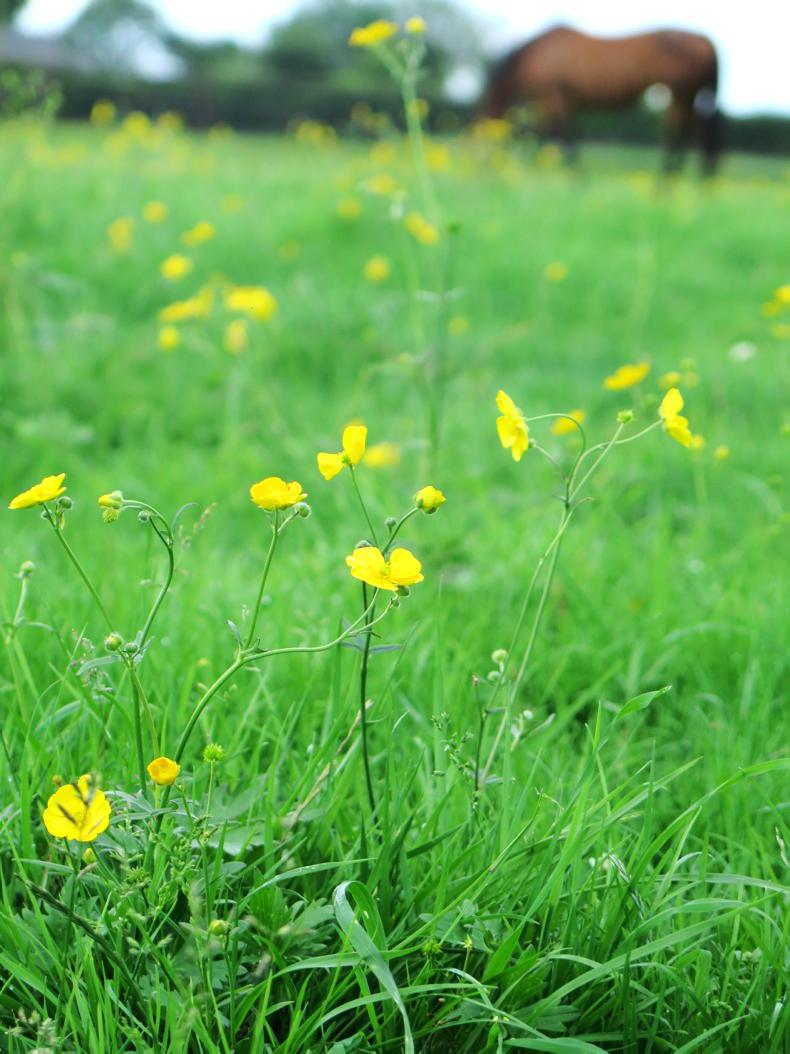
Drive through Kildare this September and many fields look remarkably green. After prolonged dry conditions, rain and warm soils have triggered an impressive recovery in grass growth. For horse owners, however, green does not necessarily mean well-fed.
Figures from Teagasc and PastureBase Ireland illustrate just how unusual 2026 has been. By early September, PastureBase farms had grown an average of 9,219kg of dry matter (DM) per hectare, 412kg below the five-year average, 1,148kg behind 2025 and 1,072kg below the 10-year average.
Eastern counties were among those particularly affected by drought. The Carlow-Kilkenny-Laois-Kildare region recorded the lowest conserved-feed availability in Teagasc’s September data, at four months.
National grass growth
Rain has since transformed the view from the roadside. By mid-September, national grass growth exceeded 60kg DM/ha/day, with Teagasc reporting that growth rates had doubled since August 11th, as moisture returned to warm soils.
Kildare demonstrates the paradox particularly well. An Irish Farmers Journal report from Athy on September 2nd recorded 55mm of rain and rapidly greening fields, yet grass growth was only 40kg DM/ha/day and average farm cover of just 200kg DM/ha.
For horses, the critical words are dry matter.
Current Teagasc measurements put grass dry matter at just 12% at Oak Park, Carlow. In other words, fresh grass at that measurement is approximately 88% water. A paddock can therefore look lush without necessarily providing the quantity of dry feed its appearance suggests.
What can owners do?
Don’t wait until a horse looks noticeably poor. Body condition score regularly and use a weigh tape every one to two weeks, keeping a record so that gradual changes are easier to identify.
Where grass supply is questionable, introduce good-quality hay or haylage before significant condition is lost. A 500kg horse should generally receive at least 1.5–2% of its bodyweight as forage dry matter daily, equivalent to around 7.5-10kg DM. Remember that the weight of forage fed is not the same as its dry-matter contribution, particularly with wetter haylage.
Forage analysis can also establish what supplementary protein, energy, vitamins or minerals may be required. A balancer may be sufficient for some horses, while those with higher requirements may need additional concentrate feed introduced gradually.
Looking ahead, owners should begin monitoring pasture and body condition from late summer, calculate conserved-forage requirements early and start supplementary forage, while horses are still in good condition. Avoid expecting horses to compensate by grazing increasingly short pasture.
Finally, don’t automatically blame the grass. Continued or unexplained weight loss warrants investigation of teeth, parasite burden, feeding competition, pain and underlying disease.
This autumn’s lesson is simple: manage the horse according to what it is consuming, not according to how green the field looks.

SHARING OPTIONS: