

 This is a subscriber-only article
 It looks like you're browsing in private mode



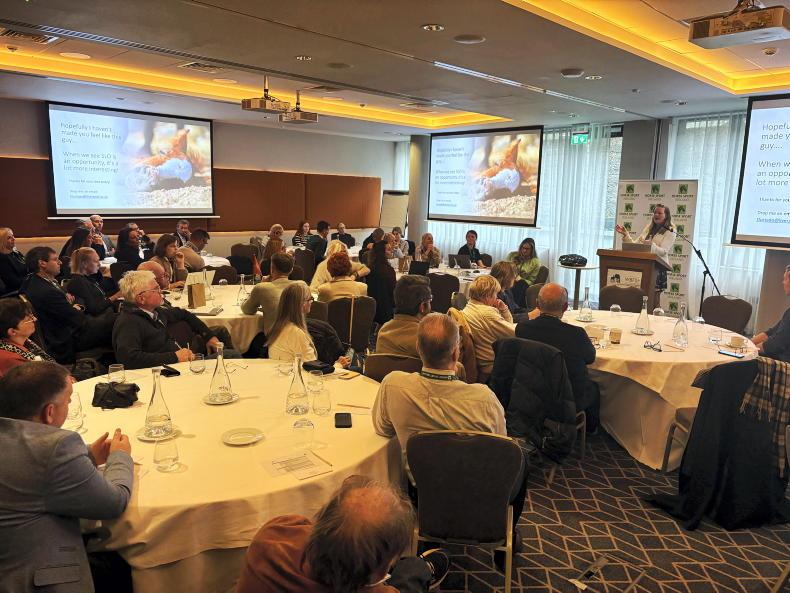
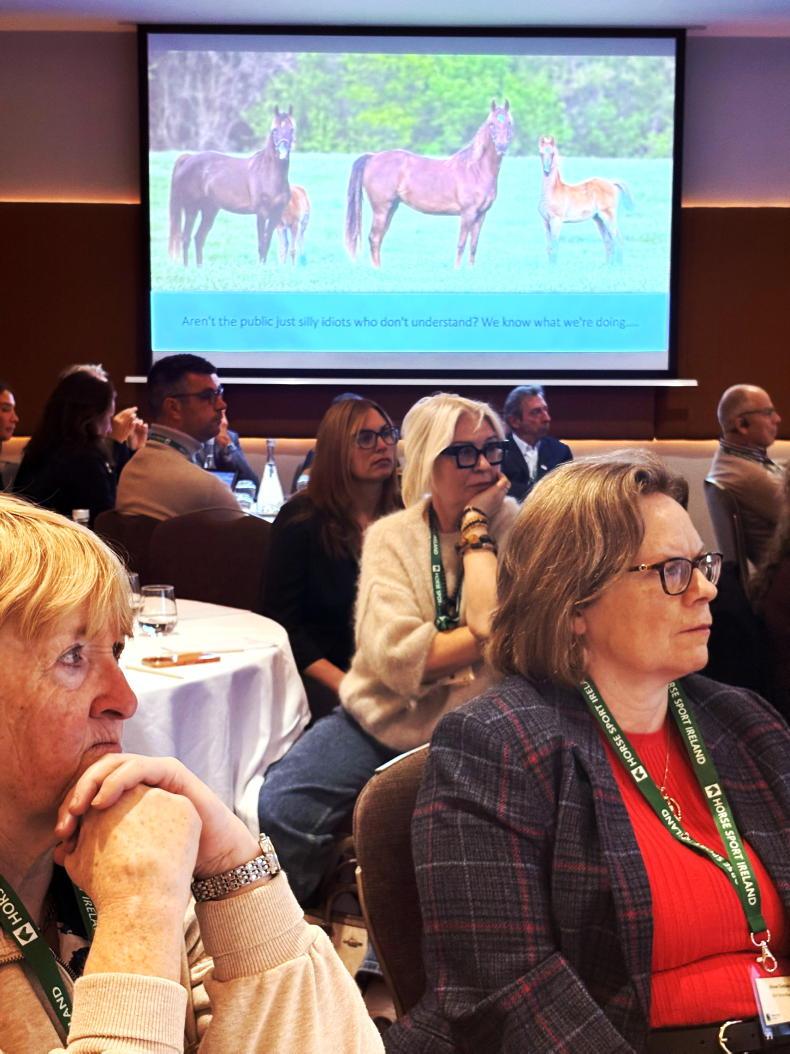

GENE doping represents a “real risk” requiring sustained investment in research, Dr Lynn Hillyer told delegates at the World Breeding Federation for Sport Horses (WBFSH) General Assembly held in Dublin this week and hosted by Horse Sport Ireland.
The Irish Horseracing Regulatory Board’s chief veterinary officer outlined how racing’s approach to integrity, testing and traceability could inform the wider equestrian sector. Responding to a question about gene doping (gene doping involves manipulating a horse’s genetic material or gene activity in an attempt to enhance performance or recovery) she confirmed that detection methods exist and testing has been undertaken, while stressing that there is currently no evidence of gene doping or gene editing in racing across the jurisdictions with which the IHRB works.
Nevertheless, she warned that maintaining the research needed to identify emerging threats requires conviction and commitment from those funding it. Experience with earlier anti-doping research demonstrated how scientific work undertaken decades previously could subsequently become essential to detecting and prosecuting breaches.
Discussion and collaboration
Her presentation formed part of a wide-ranging programme examining how breeding organisations can respond to scientific advances, changing public expectations and the practical demands of protecting horses throughout their lives.
Welcoming delegates, Horse Sport Ireland’s Dr Sonya Egan highlighted Ireland’s breeding heritage and the contribution of its horses across international sport. She encouraged discussion and collaboration between studbooks, drawing on the Irish expression “Ní neart go cur le chéile”, meaning there is no strength without unity.
That collaborative approach ran through sessions covering welfare and social licence, assisted reproductive technologies, biosecurity, genomics, artificial intelligence and the federation’s proposed data project.
Dr Tamzin Furtado, from the University of Liverpool, explored welfare through the human perspective, considering how people understand horses’ needs and why changing established behaviour can be difficult. Her presentation invited delegates to reflect on the relationship between scientific knowledge, everyday practice and public acceptance of horse sport.
The discussion extended beyond explaining existing practices to considering how the industry evaluates them, responds to concerns and earns public trust.
Hartpury University’s Professor Jane Williams and PhD candidate Molly Macbeth presented an update on welfare research undertaken with the WBFSH, including a new focus on assisted reproductive technologies. The work will examine current practices, their drivers and their implications for horses, with transparency, traceability and evidence-based guidance central to its aims.
The potential consequences across the horse’s lifetime, including health, welfare and career longevity, formed part of that broader research agenda.
National preparedness
Practical horse health was addressed by Alan Creighton of the Irish Equine Centre, who outlined the importance of disease surveillance, diagnostics and preventative management.
His presentation connected national preparedness with decisions made on individual premises, including hygiene, ventilation, stocking density and environmental management.
Genetics and genomics also occupied a substantial place in the programme. Horse Sport Ireland’s senior geneticist, Dr Jennifer Doyle, outlined the transition towards SNP-based DNA testing and its applications beyond parentage verification, including inherited conditions, genetic diversity and breed information. An international panel consisting of Dr Jennifer Doyle, Bérengère Lacroix (SBSF), Arancha Rodriguez Sainz de los Terreros (ANCCE), Dr Andre Hahn (IAFH) and Paul Flynn, head of research and development at Weatherbys Scientific, considered the experience of studbooks adopting this technology, providing an opportunity to compare progress and discuss the practical challenges and costs of moving between testing systems.
Behavioural data
Artificial intelligence brought another dimension to the technology discussion, with a presentation from Dr Jan Govaere of the University of Ghent, examining its potential in breeding and horse management. Camera systems, wearable sensors and the interpretation of behavioural data were among the areas considered, alongside the importance of validating what these tools can reliably tell users.
Meanwhile, consultation on the WBFSH equine data project was introduced by Stephanie Palmer, CEO of Equine Register (a company who manage the UK’s Central Equine Database), and prompted some rather frosty questions about its purpose, costs, data ownership and the information breeders and studbooks actually need. Delegates were encouraged to contribute to shaping a proposal intended to connect breeding and sport and support better-informed decisions.
Across the presentations, the recurring challenge was how to turn expanding scientific knowledge into practical benefits for breeders and horses, while maintaining confidence in the industry’s decisions.
In next week’s edition, Horse Sense will explore the individual presentations in more detail and share the relevant advancements for Irish breeders.


SHARING OPTIONS: