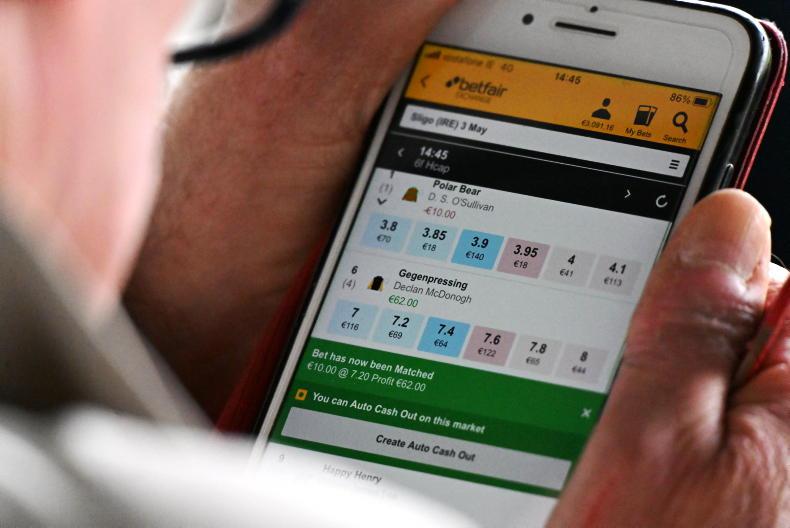
News that British betting companies will be obliged to ask high-staking customers for proof of earnings has been described as having "severe financial implications for British racing" by the British Horseracing Authority [BHA].
The BHA issued a strongly-worded statement on Tuesday afternoon, following confirmation by the UK's Gambling Commission that it intends to implement affordability checks on bettors in the United Kingdom.
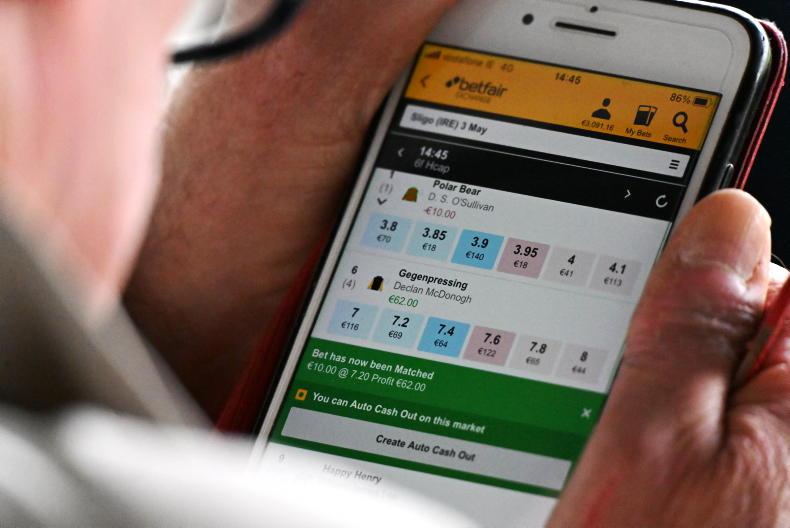
According to the Gambling Commission, punters who spend more than £1,000 online in a 24-hour window will have to undergo a financial risk assessment. This will also apply to anyone spending over £3,000 in a rolling 90-day period. There will be lower thresholds for those under 25.
Reacting to the news, Brant Dunshea, BHA chief executive, said: "We are hugely disappointed that the Gambling Commission will implement affordability checks which will have severe financial implications for British racing and the UK economy and subject racing bettors to unwarranted levels of intrusion.
"Over a number of years, and through several consultations, British racing has engaged in a spirit of huge goodwill to honestly advise the Government about the potential impact this policy would have on our sport and its fanbase.
"These concerns were shared by the betting industry, politicians, campaigners and policy makers, who warned of devastating unintended consequences on two major industries that are worth billions of pounds to the UK economy and employ more than 200,000 people across Britain. We understand these checks have been proven by the Gambling Commission’s own pilot to not be ‘fully frictionless’ as originally promised by successive Government ministers.
"Rather than protecting consumers, these checks will have the opposite effect: driving more customers to the illegal market – which puts them at much greater risk of gambling-related harm – and starving the Treasury of much needed tax revenue.
"Objective evidence from across the globe makes clear that this decision is one of self-harm on an immense scale that will have damaging economic and societal implications.
"For this decision to be taken unilaterally by the Gambling Commission shows a clear abdication of duty by the Department for Culture, Media and Sport, which has failed to grip this process or properly consider the damaging consequences of the decision. A policy decision of this magnitude needed to receive parliamentary scrutiny, especially when other policies from the 2023 Gambling White Paper were passed via legislative routes.
"Sadly, this is the latest in a long chain of events that shows how little the DCMS has done for the country’s second-favourite sport. This includes its failure to reform the Horserace Betting Levy, despite clear evidence that demonstrates British racing needs a higher annual yield to remain internationally competitive. This has all been at a time when we see other Governments around the world committing significant effort and resource to promoting their horseracing industries.
"Perhaps most concerningly, this policy has now been signed off for implementation without key stakeholders in racing and betting being able to see vital evidence such as the NatCen’s independent review of the pilot. Members of the implementation working groups – which the Gambling Commission are setting up in advance of the first stage of the checks being rolled out – will not even be privy to this evidence given that the Commission are not publishing its full consultation response on the pilot until the autumn.
"The pilot has highlighted issues that must be resolved, including Credit Reference Agencies producing different results for the same customer. Unambiguous guidance also needs to be provided to operators, so they do not need to take an overly cautious approach once a customer has been flagged.
"No attempts should be made to implement affordability checks before these glaring issues and processes have been worked through.
"It is also essential that the Commission significantly improves its communication with stakeholders as this policy now moves forward to the implementation phase as there has been a distinct lack of information provided throughout the latter stages of the process.
"We would like to thank racing supporters for time and again lending their voice to campaigns against this deeply unpopular policy. A very clear message was sent through petitions, rounds of letter writing campaigns, as well as dozens of political and official meetings secured by British racing, that this policy should not be introduced.
"We will now seek to work with the DCMS, the Gambling Commission and the betting industry to find ways to mitigate the worst impacts of this policy. The former have repeatedly insisted that this policy, in light of the severe loss of turnover that British racing has already experienced due to ongoing document checks, will be better for our industry. It is very clear that, once implemented, an independent evaluation of this policy will be required to see whether that has indeed been the case."
How will this affect Irish racing? More on this story in The Irish Field next weekend


This is a subscriber-only article
It looks like you're browsing in private mode


SHARING OPTIONS: