

 This is a subscriber-only article
 It looks like you're browsing in private mode


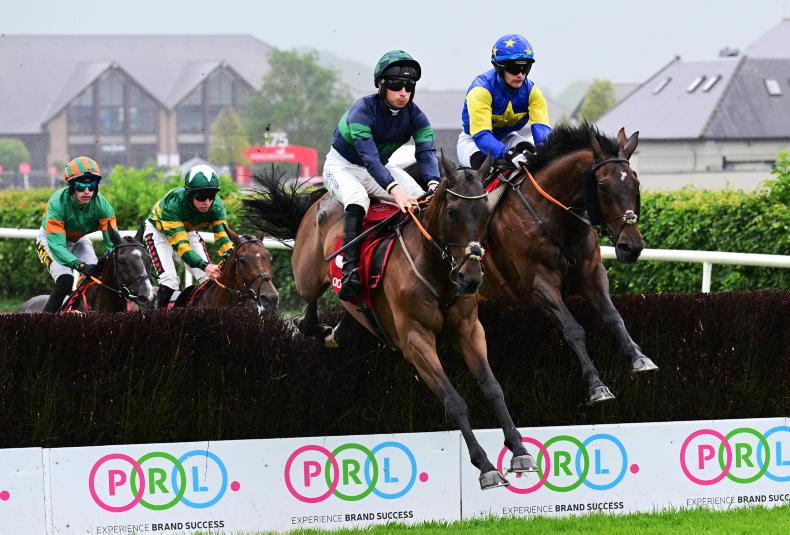
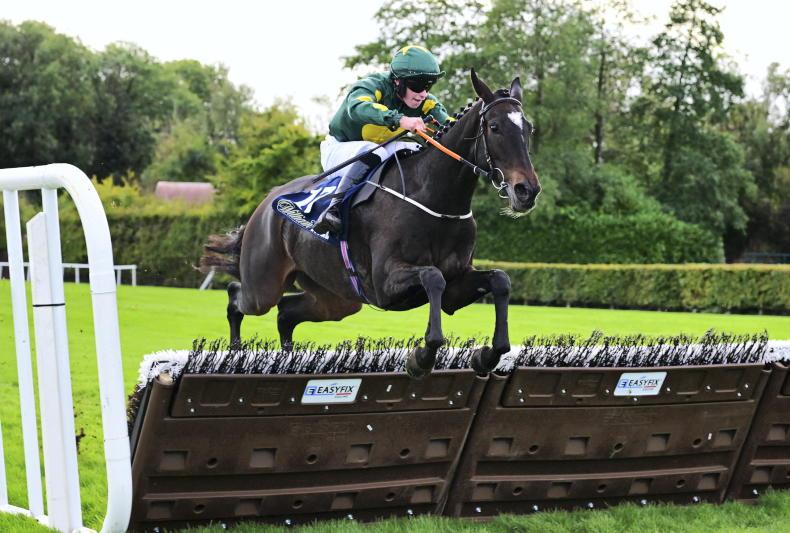
ON a card sponsored by Ladbrokes, with the exception of the bumper, there were doubles for trainers Ross O’Sullivan and Gordon Elliott, as well as for jockeys Ricky Doyle and Kevin Sexton, on the first day of Punchestown’s two-day fixture last weekend.
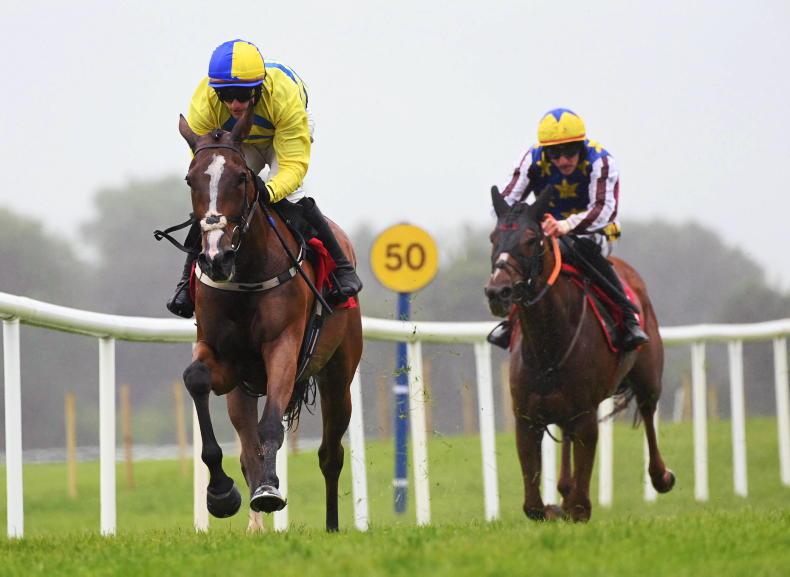
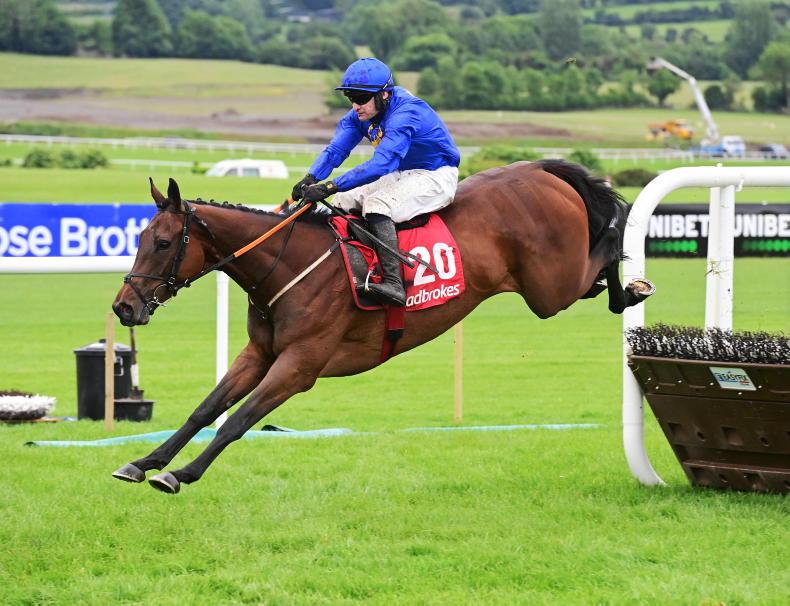
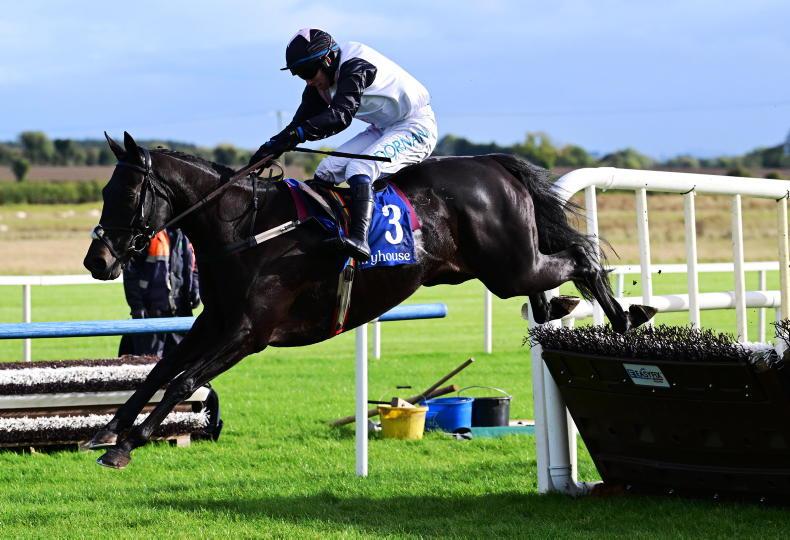
Switch From Diesel (3/10) completed the first leg of a double for Ross O’Sullivan when making all under Ricky Doyle to land the two-mile novice hurdle, scoring by a comfortable four and a quarter lengths from Playtime in the colours of owner/breeder Paul Mullins.
“She’s progressive and we’ll maybe see if there is both a good flat handicap in her and a good jumping handicap in her,” said O’Sullivan.
More to come
The first division of the two-mile maiden hurdle saw Rosie’s Wings (6/1) complete O’Sullivan’s double and that of Ricky Doyle, for whom it was a second brace in consecutive days.
Third on stable debut last month, Mrs Geraldine Devine’s home-bred Wings Of Eagles gelding led approaching the last to beat Firebrand by an eased-down five and a half lengths.
“He’s a big raw horse; a fine-looking horse,” said the winning trainer. “He’s a horse that should keep improving and he’ll have no problem jumping a fence.”
LIZZIE Twigg (13/2) was an emphatic winner of the second division of the two-mile maiden hurdle for owner/trainer Gordon Elliott. The Poet’s Word mare led after two out on her hurdle bow and drew clear under Kevin Sexton to beat the O’Sullivan runner Coolishael by eight and a half lengths.
Elliott said: “She jumped well and we’ll look for some blacktype now, that would be important. She’s for sale and is a nice mare going forward.”
Brother Walfrid (7/4) had solid form in the book ahead of the maiden hurdle over two miles and three furlongs and duly completed the Elliott/Sexton double.
The Brendan Scully-owned five-year-old was produced to challenge longtime leader Frankie’s Freebie on the run to the last and stayed on well to score by a length and a quarter.
“I shouldn’t have run him in a bumper at Ballinrobe the last day, it was just that the owners were going, so we said we would,” the trainer explained.
“It was a good performance; they pulled well clear of the third. He’s a big three-mile horse in the making; he jumps and stays well.”
Staying power
The three-mile handicap chase was a strongly-run affair and turned into a searching test of stamina on rain-softened ground, with Le Grand Vert (18/1) coming from off the pace to score under Carl Millar.
The French-bred 10-year-old, owned by the All Play & No Work Syndicate, hit the front after the last and held the staying-on A Year Older by two and three-quarter lengths.
“He probably just needs a staying track and the softer ground suited him,” said trainer Noel Kelly
“He’s not fast and he’s probably not that genuine, but he can plug away on slow ground. We bought him out of a claimer and he’s won three for us, so we can’t complain.”
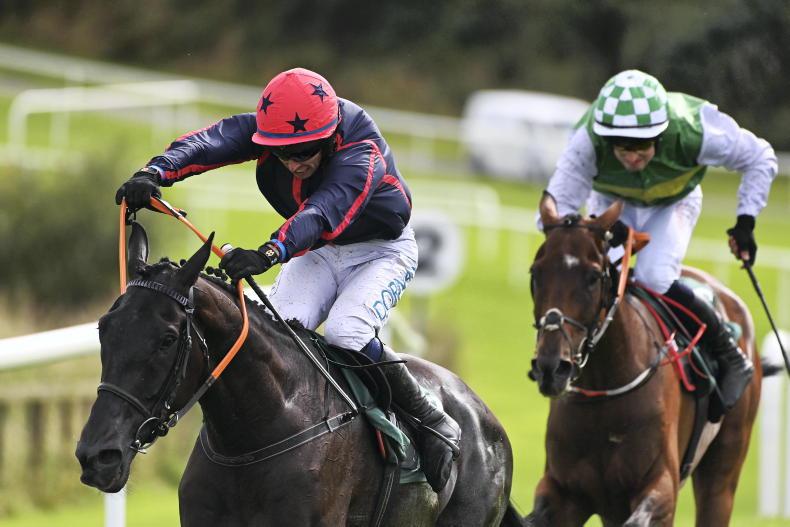
JOHN Ryan’s 10-year-old Gaelic Arc returned to form in the feature two-mile handicap chase, making all under Harry Sexton to win at odds of 16/1.
The Arcadio gelding, recording the sixth win of his career, was pursued on the approach to the straight by 9/4 favourite Park That. A slight peck on landing from the latter at the second-last handed the initiative to Gaelic Arc, who kept on to score by three and a quarter lengths.
The winning trainer said: “His first run back didn’t go according to plan, but I’d say he would have won in Kilbeggan, only he got a terrible fall.
“He seems to have come alive again. In fairness to Tom Westropp Bennett and Mark Fleming, they were gutsy enough to leave Harry on him. I think Harry is a good kid, I like him. He kept a bit up his sleeve and finished well.”
“Maybe it wasn’t the strongest race in the world, but it’s great to have a winner at Punchestown.”
Class and stamina
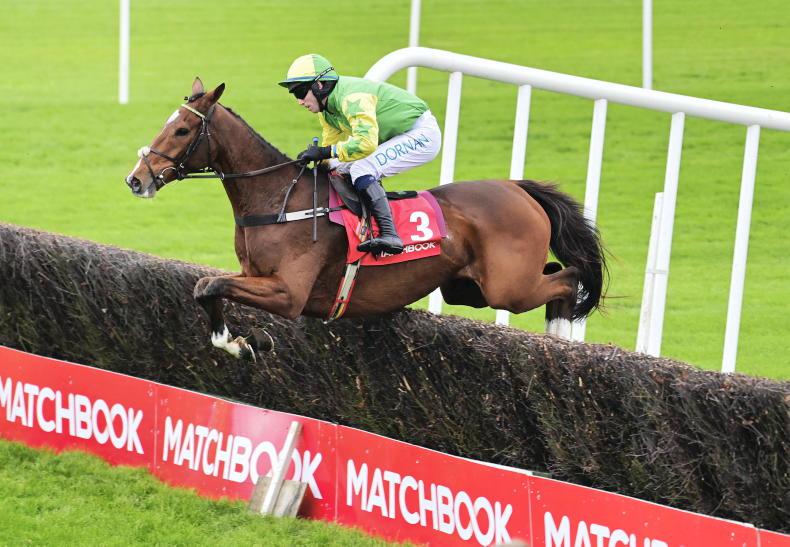
Grade 3-placed hurdler Quantum Quest (5/2f) made a winning start over fences when outstaying his rivals in the three-mile beginners’ chase.
Trained by Henry de Bromhead for Simon Munir and Isaac Souede, the Idaho gelding looked held when ridden in third entering the straight but saw the trip out well to score by a length and three-quarters from Da Capo Glory.
“His hurdles form is good, he was running in high company,” said jockey Mike O’Connor.
“He was a good stayer over hurdles and we always thought a fence would improve him.”
Miracle winner
The Castlestone Holiday Homes (Pro/Am) Flat Race produced a surprise 50/1 winner in the shape of Dee Bee Zed who came from off the pace under Eoghan Finegan to make a winning debut.
A son of Glenagles out of a Dubawi mare, the five-year-old led over a furlong out to beat Which Flannerys by two and three-quarter lengths.
Winning trainer Tom McCourt explained “This time last year I didn’t think he’d survive, he had a bad stomach problem and was on the verge on being put down. The vets didn’t think he’d come right.
“Peter Jordan (owner) threw him out in the field and tried to get him eating again, he just fell away to nothing. It’s incredible that he’s here.
“He’s bred in the purple and is a lovely, big, galloping horse. He was still a bit green and will improve plenty from that run.”
Advertisement
If you’ve ever stood by the parade ring at Leopardstown or Punchestown, you’ll know that horse racing is as much about the silence of study as it is about the roar of the finish line. There’s a specific kind of focused energy when a crowd is looking at a sheet of paper, tracing the lineage of a three year old making its debut on the turf. But lately, that scene has changed. While the focus remains on the horses, the tools in our hands have shifted from crumpled newsprint to sleek smartphone screens.
We are currently witnessing a fascinating blend of heritage and high-tech. It’s a world where the centuries-old science of bloodstock meets the cutting edge of digital design. It’s what I like to call the "Pedigree and Pixels" era, where the deep, technical knowledge of the sport is being reimagined through gamification to make it more accessible, engaging, and frankly, a lot more fun for the modern enthusiast.
Foundational Form: The Role of Pedigree and Bloodstock Data in Understanding Horse Racing
To understand where we’re going, we have to respect where we started. For anyone serious about racing, pedigree isn't just a list of names; it’s a blueprint. When you look at a horse’s sire and dam, you aren't just looking at its parents. You’re looking at genetic tendencies toward stamina, speed, and even temperament.
In the professional world, bloodstock data is the bedrock of any logical wager. If you’re looking at a heavy ground race in the middle of a damp November in Kildare, you want to see names in that pedigree that suggest the horse can "find a leg" in the mud. For decades, publications like The Irish Field have been the go-to source for this level of granular detail. Their analysts can tell you why a certain cross of Galileo and a fast sprinting mare might produce a middle-distance champion, or why a specific sire's offspring tend to peak in their four year old season.
This technical journalism provides a level of depth that casual observers often miss. It’s about more than just who won the last race. It’s about why they won. Was it the wind? The distance? Or was it the fact that their grand-sire won over the same course thirty years ago? This "foundational form" is a science, and for the professional, it’s the only way to cut through the noise of the betting market. Many of us have spent hours poring over these tables, trying to find that one piece of data that the rest of the market has overlooked. It’s a rewarding, if sometimes exhausting, pursuit.
However, the barrier to entry for this kind of knowledge has traditionally been quite high. To the uninitiated, a pedigree table looks like a complex mathematical equation. This is where the digital revolution has stepped in, taking that dense, technical data and translating it into something that fits the lifestyle of a 21st-century fan.
The Digital Migration: Analyzing the 20-30% Growth in Mobile-First Sports Consumption among Irish Enthusiasts
It’s no secret that we’re living through our phones, but the scale of the shift in the Irish racing world is quite something. Recent data suggests a 20-30% growth in mobile-first sports consumption among Irish enthusiasts over the last few years. This isn't just about people checking scores while they're at the pub; it’s a fundamental change in how the sport is consumed from top to bottom.
Why has this happened so rapidly? I think it’s down to the "anywhere, anytime" nature of modern life. We don’t always have time to sit down with a broadsheet newspaper and a highlighter. We’re consuming sport in the gaps of our lives; on the train, during a lunch break, or while waiting for a friend. The Irish racing public, traditionally seen as quite conservative in their habits, has embraced this digital migration with surprising speed.
This shift has forced the industry to rethink how it presents information. If you have a 6.5-inch screen to work with, you can’t display a massive pedigree chart in the same way you can on a printed page. You have to be smarter. You have to use visuals, interactive elements, and intuitive navigation. This migration isn’t just a change in hardware; it’s a change in the psychology of the fan. We now expect information to be instantaneous, accurate, and easy to digest.
The UX Revolution: How Gamification and Themed Environments are Redefining the Modern Punter's Toolkit
This brings us to the most exciting part of the "Pixels" side of the equation: the User Experience (UX) revolution. For a long time, sports betting interfaces were quite clinical. They were basically spreadsheets with buttons. But the modern fan wants more than that. They want an environment that feels alive and engaging.
Enter the concept of the "Modern Punter’s Toolkit." Today, your toolkit isn't just a pen and a form book; it’s an ecosystem of apps and platforms that use gamification to make the experience more immersive. Gamification isn't about making things "childish," it’s about using design principles from the world of gaming to make complex tasks feel more natural.
One of the key concepts here is "interface efficiency." When you’re following technical news or a late-breaking pedigree tip, you need to be able to act quickly. A clunky interface is the enemy of a well-placed wager. This is why platforms like Monopoly Casino have become so popular. By creating a themed, highly intuitive environment, they allow for a level of interface efficiency that traditional sites struggle to match. It’s about being able to move from a piece of technical news to an executed wager in just a few taps, without feeling like you’re battling the software.
These themed environments do something else, too. They reduce the "cognitive load" on the user. When an interface is well-designed and familiar, you spend less time figuring out how to use the site and more time thinking about the actual sport. It makes the whole process feel less like a chore and more like a hobby.
Please gamble responsibly. 18+ only. For help and support, visit BeGambleAware.org.
Where Data Meets Design: Bridging the Gap Between Technical Journalism and High-Engagement Sportsbooks
The real magic happens when you bridge the gap between that high-level technical journalism I mentioned earlier and the high-engagement sportsbooks we see today. In the past, these two worlds were quite separate. You’d read your technical analysis in one place, and then you’d go somewhere else entirely to place your bet.
Now, we’re seeing a strategic synergy. The data from the form guides is being fed directly into these modern platforms, often in a way that’s much easier to understand. You might see a "power rating" or a "speed figure" that’s derived from complex pedigree data, but presented as a simple, colourful bar chart.
This synergy allows the modern enthusiast to benefit from professional-grade logic without needing a PhD in bloodstock. It’s a democratisation of knowledge. When a sportsbook like Monopoly Casino integrates these sleek, high-speed elements, they’re essentially providing a bridge. They take the "Pedigree" and turn it into "Pixels" that we can actually use in real-time. This makes the experience of being a fan much more cohesive. You’re no longer jumping between two different worlds; you’re staying within one seamless experience.
Future-Proofing the Industry: The Evolution of Sponsorships from High-Street Shops to Digital Themed Platforms
We can’t talk about the digital shift without looking at the business side of things. If you walk down any high street in a British or Irish town, you’ll still see the traditional betting shops. They’re a part of the landscape. But look at the shirts of your favourite teams or the hoardings at the racecourse. The names have changed.
The evolution of sponsorships is a clear indicator of where the industry is heading. We’ve moved from the brick-and-mortar era to a "hybrid consumption" model. Sponsorships are no longer just about getting a logo on a wall; they’re about creating digital partnerships.
The industry is future-proofing itself by aligning with platforms that understand the modern consumer. Digital-themed platforms are leading this charge because they offer something the high street can’t: a tailored, personal experience. A site like Monopoly Casino isn't just a place to see odds; it’s a brand that people recognise and feel comfortable with. This shift toward high-engagement, themed environments is helping the sport reach a broader audience, ensuring that the traditions of racing don't fade away but are instead adapted for a new generation.
Bringing it All Together
It’s an interesting time to be a racing fan, isn’t it? We’ve got one foot in the past, respecting the incredible complexity of bloodstock and pedigree, and one foot in the future, enjoying the speed and creativity of digital platforms.
I find that the most successful modern punters are those who can balance both. They still value the deep-dive articles and the technical data, but they use modern UI/UX to make sense of it all. They know that a gamified interface isn't just about bells and whistles; it’s a tool that helps them navigate the information-dense pedigree tables that might otherwise feel overwhelming.
By turning those complex columns of data into something interactive and visual, platforms are helping us make better, more informed decisions. It’s about taking the expertise of the old world and delivering it through the efficiency of the new. Whether you’re a seasoned professional or someone just starting to take an interest in the "sport of kings," the synergy between pedigree and pixels is making the game more accessible for everyone.
As we look toward the future, that blend of technical journalism and high-speed, themed digital environments will only get stronger. And honestly, if it means less time struggling with clunky websites and more time enjoying the thrill of a close finish, then I think we’re all onto a winner. Just remember to keep that balance—honour the data, but enjoy the technology that makes it come to life.


SHARING OPTIONS: