

 This is a subscriber-only article
 It looks like you're browsing in private mode



AS the jumps season kicks into gear properly now, one topic has towered above most.
The rain may have finally deigned to make an appearance. That will alleviate ground concerns to an extent, but it comes after a challenging period and many of the concerns of the key stakeholders will remain.
And, of course, the change in climate trends means that the intensity of the precipitation provides more problems in itself, particularly when falling on bone-hard sod.
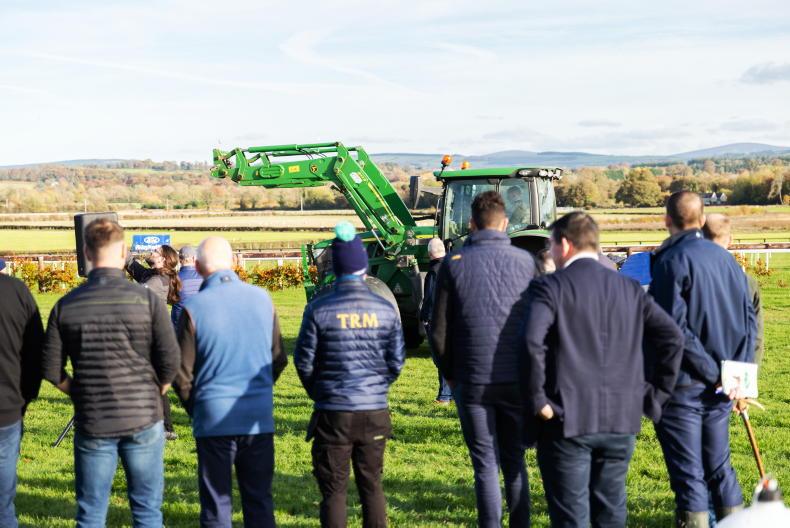
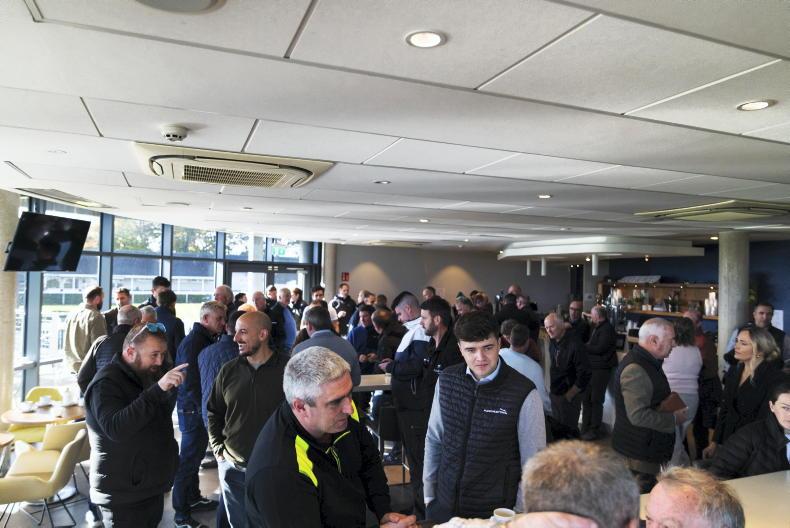
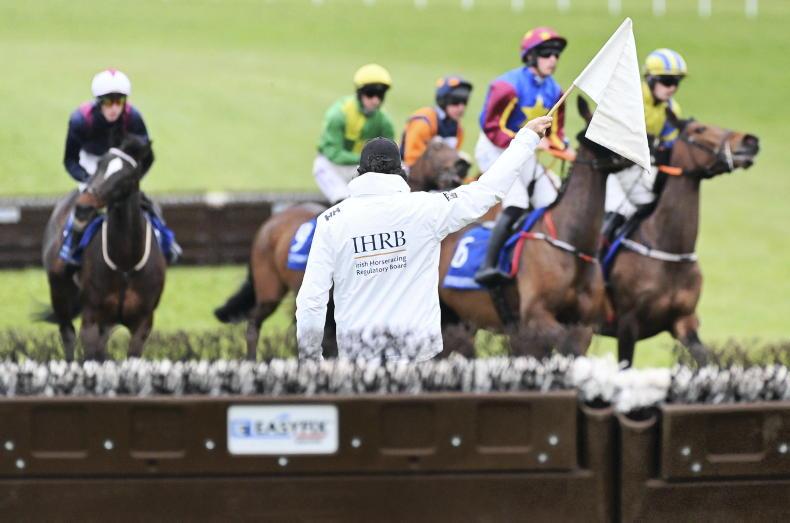
To that end, it was notable that the Irish Horseracing Regulatory Body hosted a seminar at Naas Racecourse at the beginning of the month, with representatives of all of the turf tracks including management, course foremen and ground staff, as well as the associations that speak for trainers, jockeys and racecourses, and, of course, the IHRB.
There was also a presentation by the vastly experienced agronomist, Richard Hayden.
Entitled ‘Racing on Changing Ground’, the seminar should be a first step in what needs to be a collaborative approach towards uniformity, in terms of agreeing what the goal is regarding appropriate ground for racing, and how best to achieve that. Budget and social awareness will undoubtedly be factors in the process, but as long as there is horse racing, it is incumbent upon those responsible to ensure that the ground is safe for horses and their riders.
The unprecedentedly warm summer and dry autumn was a boon for most of us, but threw a spanner in the works of those charged with maintaining the racing surfaces.
Jessica Cahalan was thrust into the spotlight as manager of Bellewstown, when racing had to be abandoned on two consecutive days towards the end of August.
The Tipperary native, who has since announced her decision to end her stint at the Co Meath track, spoke at the seminar to explain the sequence of events and the remedial work carried out to address the issues that emerged. She was joined by experienced track foreman Vincent Eivers and agronomist Trevor Norris, who worked on devising the plan for that remedial work and monitoring its progress.
The weekend prior to the seminar, Down Royal had more than 30 non-runners, due to the quickness of the surface.
Of course, matters are even more difficult in Britain, where Ludlow has had to admit defeat on hosting any fixture this season, while Kempton, Market Rasen, Wincanton and Exeter were others to lose at least a day’s racing.
The plight was highlighted by events at Cheltenham for their November meeting, with a proliferation of non-runners on Friday and Saturday (nine and 29) due to the unseasonably dry surface, and then an inspection required on Sunday morning due to surface water as a result of several hours of rain. That brought about 15 scratchings. That was 20% of declared runners. On Thursday, they announced that they are restricting field sizes for the upcoming December meeting.
In acknowledgement of this, the IHRB chose to be proactive and to bring Ireland’s key stakeholders under the one roof. And this is just some of what came up during the course of around three hours of discussion.
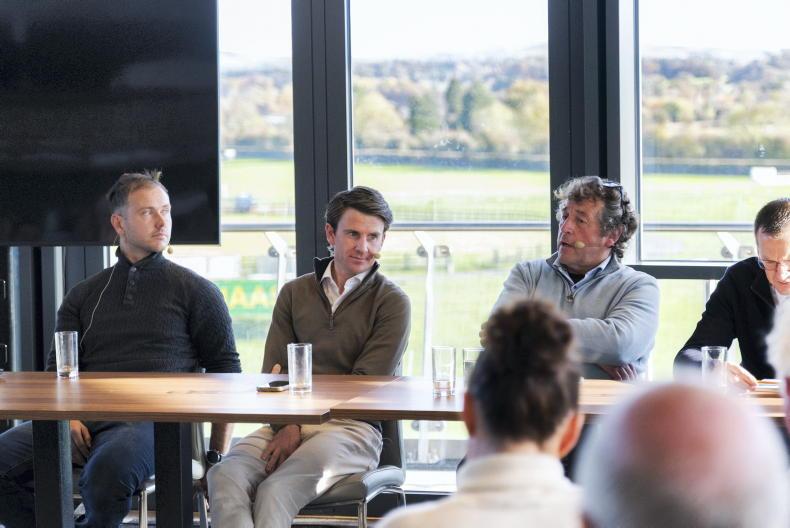
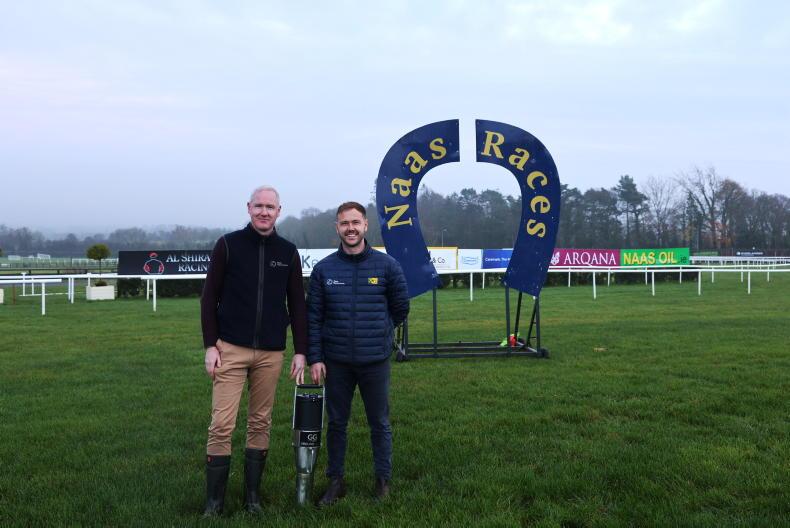
JENNIFER Walsh, the IHRB’s raceday operations manager, got proceedings under way, explaining that the idea for the seminar came to her during a conversation on ground conditions, during which she found that her own knowledge and understanding was insufficient. “We all work within the same industry, but we don’t necessarily understand the challenges, responsibilities and decisions that other people face every day. And sometimes without that understanding, it’s very easy to form opinions or make judgements without having the full picture. That was really the starting point for today. “I’ve always believed that racing is one big wheel and every single one of us is a spoke on that wheel. Every part of our industry has a role to play in keeping that wheel turning. “The point is that we all need each other and nowhere is that more apparent than when we talk about ground conditions. The ground affects everybody, but it doesn’t necessarily affect everybody in the same way… Each may be looking at the very same ground from a completely different perspective. And each perspective matters.” That is the nub of it. Agronomist view Richard Hayden’s input was certainly informative, as one would expect from someone who has consulted on global projects of the scale of soccer’s World Cup and European Championships, while on a domestic level he has been involved in preparing the RDS for the Dublin Horse Show for 20 years and, most pertinently, has provided his expertise on the Tipperary rebuild, Punchestown’s track redevelopment and at Naas itself. He talked about soil, and how it influences going, maintenance operations to improve consistency and safety, and finally, some of the tools for performance testing. “Soil is not the most interesting subject, but it affects everyone in this room and we all need to become better soil scientists,” he said early on. He revealed that when doing testing for the new Tipperary, they discovered six different textures of soil around the track. Punchestown was similar. “Just because you’re on one site, doesn’t necessarily mean that you’re going to have all the same soil.” That offers an insight into the challenges for ground staff, because of the acreage involved. It is not a one-size-fits-all solution for one venue, not to mention all venues. One interesting point was his advocacy for keeping to smaller machinery, so as to have as little impact on ground compaction as possible. His thoughts on the measurement of going were interesting. This was one of the themes of the day. How can we have uniformity, consistency, transparency? Soil texture, moisture, compaction, organic matter and grass height, density and species all impact the going, he explained. To give an indication of just how subjective this going determination can be, Hayden revealed that he always wore the same boots when testing, because different footwear would provide him with a different feel. Aeration conditions An example of the intricacies came in his qualified advocacy of Verti-draining aeration. It had to be in the right conditions. Not good if ground is too soft or too dry. Again, it’s about knowing your track, but also making full use of the machinery. “There’s a lot of different settings on these machines. I go down to (some) racecourses and I look at these things and I see all these adjusters and they’re rusted, ‘cos nobody is adjusting them. That machine is designed to be continuously adjusted in kick, depth and tine size.” He discussed a number of ground tools and revealed that, on the new surface he worked on that will be unveiled at the equestrian centre Wellington, Florida in January, he has someone measuring it 48 times daily with a POGO moisture metre, which generates a map of the site in terms of moisture distribution and a uniformity co-efficient, which would inform targeted watering. The going stick, as used in Britain, “relies on basing the entire measurement of the going from penetration and tear strength. It’s not perfect. It doesn’t measure cushioning, it doesn’t measure the agronomic condition of the grass or the density of the grass, but there’s a lot of data around for it and it’s a simple process of determining the going. It’s probably only a useful tool in conjunction with other things.” The Orano biomechanic surface tester is his favourite, as it measures cushioning, impact firmness, grip and responsiveness of the surface, which are crucial in terms of racing performance. “It’s mimicking a horse as it’s penetrating the surface. You can change the shoe, you can change the weight to reflect a National Hunt horse versus a flat horse.” He concluded on the topic of watering, noting how bends needed their own individual management programme, but sounded a note of warning given the increasing likelihood that members of the public will be on so-called water bans. Shortages are inevitable. “Water is the new gold, so we need to be thinking about water resources, water management, pumping it around the site and storing it. But we have a major water crisis coming down the line.” THE panel discussion was excellent, featuring Paul Murtagh (IHRB head of raceday operations), Paul Hensey (Association of Irish Racecourses CEO), Ado McGuinness (Irish Racehorse Trainers Association chairman), Emmet McNamara (Irish Jockeys Association executive secretary) and Shane Webb (Naas head groundsman and sports turf consultant). Early on, Hensey offered the suggestion that clerks should be at a racetrack more often, perhaps before entries and before declarations. “Whatever the system is, the relationship between the clerks and the ground staff is the most important relationship in racing,” said Murtagh in response. “They are so dependent on the information they are getting from the track. That flow of information is key. And that’s where I think some of the technology Richard talked about, that I wasn’t even aware of, might be of value. “Perception of ground has changed in recent years. What is good ground now is different to what it was. That’s just the way it is.” Jockeys’ contribution McNamara felt jockeys should be consulted. “I would like to think the riders have a big part to play (in the ground description), because they’re the soldiers out on the field, but not all riders’ ability to judge ground is great either. So from the clerk’s perspective, reach out to the riders, use their expertise, they’re the ones that are able to feel it. Canvas a lot of experienced, considered opinions and put it all into this decision support system,” said the former Derby-winning pilot. McGuinness declared that what irked trainers most were going descriptions they felt did not tally with reality. He did acknowledge the subjectivity of it all, however. “Our biggest problem is we’re getting wrong descriptions,” McGuinnes said. “We’re getting opinions from different people. Too many opinions. And when we get there, it’s not the right opinion. And that’s only my opinion then! “I think we need some sort of a digital reader to give us a description of ground in this day and age. Our members need some better class of information. “I could ask five jockeys coming back in after riding on the ground for a description of the ground and get four different descriptions. So that’s more opinions and that’s what we’re relying on most of the time. “I travelled one day to a meeting and it was the first time I’ve ever complained about ground. I got a wrong description and it was wrong. It was changed. I spoke to someone else on another day that left to travel two or three hours down the road and the ground description was changed and it wasn’t the weather that changed. So I think that’s what’s important.” That magic wand to measure what ground is and make the determination objective was a returning theme. Need for accuracy “I always believe what’s happening below the ground is more important than what’s on top of the ground, but I think as an industry, worldwide, we’ve yet to arrive on some machine or form of equipment that’s giving us a reading that we think is very accurate,” Hensey noted. “If I thought the going stick was the answer to everything, I’d use it,” Murtagh responded. “It’s a piece of data, but I don’t think it’s the answer to everything. It’s another tool and it might help, but the same person needs to use it on each track or you’re going to get different readings.” Webb, whose father Pat was the track foreman at Curragh Racecourse in Hensey’s time as manager of Flat HQ, has taken matters into his own hands and invented a device called the Ground Giver. Having used it throughout the year, it has now been adopted officially by Naas and earned the testimony of Aidan O’Brien, while also already attracting international interest. Webb and his racecourse manager, Aidan McGarry, believe it will provide consistency and help build a picture as the data builds up over time. The head groundsman gave a brief presentation that certainly made an impression. “You rest it on the ground and a powered probe inserts into the ground and gives a ground resistance value (GRV) reading that’s then mapped. When I know Brendan’s happy with the ground, whatever time of year, I have the figures myself and those are the figures I work towards. I have found it very useful. I’ve been using it since May. “The idea is that the figures would be transferrable, because it’s free from operator influence.” Removing all external variables, which are such a factor in the likes of the going stick, is the vital component that appears to make the Ground Giver a winner. “The more we can move towards objective measures, it has to be a positive step, because as much as anything else, it’ll give you an unbiased opinion but it will also take a lot of pressure off people. If the technology is out there, let’s move towards that,” McNamara offered. Watering There seemed a general acceptance that it was better to have overwatered ground than underwatered, for the safety of horses and jockeys. As McGuinness said, nobody wants to see horses killed or injured. And Murtagh reminded us of the saddest days, when the entire industry was left devastated. What was interesting about the Ground Giver was the visual software that indicated various hot spots, with the higher GRV indicating quicker ground that might need watering. And thus a selective approach can be adopted with watering. McNamara believes this could be useful for ground descriptions. The more information, the better, for everyone. “Good, good to yielding in places doesn’t necessarily tell you a whole pile,” the jockeys’ rep said. “It doesn’t tell you where the good to yielding is, where the good is.” It could, in fact, be slow down the back straight and good up the home stretch. It could be slower out the back, quicker on the home straight. “Tracks, if they can, need to be adaptable,” Murtagh opined. “And resource their staff. If there is something that you can see that would benefit your track and you can budget for it, if the management can see how you fund it, that’s better for the track. “Everything comes at a cost. From the IHRB point of view, the top priority is the safety of horse and rider and whatever we can do in that regard has to be of benefit to the industry.” A lively Q&A followed, with ground staff, jockey Danny Mullins, HRI’s Peter Roe, Naas manager Aidan McGarry and clerk Brendan Sheridan among those getting involved. This was a truly positive, inclusive affair. Hopefully, it leads to a beneficial collaboration. DURING the Bellewstown discussion, you would have to commend the three speakers for their transparency from the time of being “hit by both barrels”, as manager Jessica Cahalan described it. “The first race went off and it suddenly went downhill very quickly.” Agronomist Trevor Norris and clerk Brian Hamilton put a plan in place to have the track racing safely six weeks later. “It was heartbreaking that everything went pear-shaped. It was one opportunity to have 300-year celebrations, but the biggest thing is the work now that we’re doing with Trevor, and going forward and it’ll be now part of our maintenance plan. So we’ll adjust accordingly.” Trainers and jockeys galloped horses to secure their buy-in and raced without incident, albeit that the financial losses for Bellewstown were monumental. Track foreman Vincent Eivers detailed some of the unique traits of Bellewstown. “Watering the west bend was always a headache and still is a headache,” Eivers detailed. “It’s the camber of the ground and the water is running down and… there was just this one plot that didn’t get the watering - on either side of this plot was perfect. We never knew it was there. Now we do.” Norris wanted “to put numbers to a subjective opinion” and he continued taking measurements right through the process of carrying out the works he had identified as necessary. “In producing ground for horses, it’s almost on the outside of the parameters for good healthy turf grass growth, and it’s about how to manage this and creating a better understanding,” Norris concluded.


SHARING OPTIONS: