

 This is a subscriber-only article
 It looks like you're browsing in private mode


THE dreaded ‘standing start’ which has blighted a number of high-profile jumps races in Britain in recent years could be a thing of the past following a successful trial of new race-start procedures.
And the Irish Jockeys Association [IJA] has welcomed moves by both the British Horseracing Authority (BHA) and the Irish Horseracing Regulatory Board (IHRB) to improve race starts on both sides of the Irish Sea.
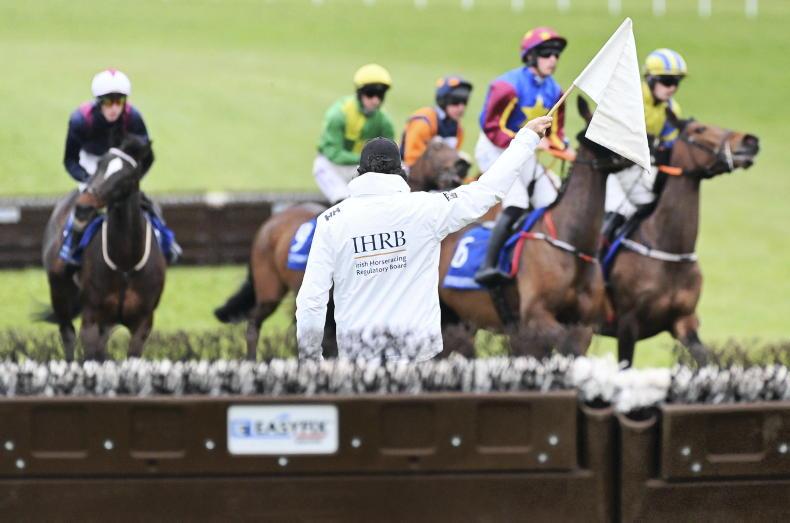
From next Monday, the new starting procedure will come into full effect in British jumps racing. Starting from a new set of marker poles 40 yards from the start line, runners must approach at ‘walking pace’ until the starter’s flag is dropped and the tape raised. If two walk-in attempts are aborted, the third attempt will be a standing start.
The BHA says that during the trial period there have been 12 false starts from 650 races (roughly half the previous rate) and no standing starts. No penalties were imposed for breaches of the new rules during the trial period but that will change from Monday.
Meanwhile, a trial of a new starting procedure for Irish jumps races which started in March continues, but the IHRB has placed “a renewed focus on strictly enforcing the agreed procedures” in recent weeks.
Consultation
A spokesperson for the IHRB said: “Since mid-March we no longer use flyaway tape at race starts. Instead we have marker poles about 20 yards back from the start. It began as a trial and was extended through the rest of the year, all the time in consultation with the Irish Jockeys Association.
“Following this extensive trial and continuous engagement, in recent weeks we have placed a renewed focus on strictly enforcing the agreed procedures.”
As well as the absence of the starting tape in Ireland, another subtle difference of the Irish rules is that runners are expected to approach the start “in a controlled manner”.
Emmet McNamara, executive secretary of the IJA, said their members have been kept well-informed by both the BHA and the IHRB of the new rules.
“The BHA has been very clear in its communications with stakeholders regarding the new starting procedures, both in advance of the commencement of the trial on October 5th and again ahead of the procedures becoming permanent next week. On both occasions, the BHA also proactively informed the IJA of the changes, which were subsequently communicated to all IJA members.”
He said that the feedback from Irish riders who have ridden in the UK since the introduction of the trial in October has been positive.
“Willing to adapt”
Asked if the different rules in either jurisdiction could cause confusion for riders, McNamara said: “It most likely could, but thankfully it hasn’t been an issue to date. Irish riders have demonstrated over the years that they are both able and willing to adapt their riding to comply with the rules of whichever jurisdiction they are competing in.”
He said the biggest test for the rules and riders will come at meetings like the Cheltenham Festival.
Britain is consulting on tougher penalties for start breaches in Class 1 and Class 2 races, aimed at the first quarter of 2027. McNamara said: “If the IJA were invited to contribute to that consultation process, we would be happy to offer our views.”
But he said jockeys here would not like to see a similar move in Ireland.
“Much like in Britain, we have had discussions with the IHRB regarding appropriate sanctions for breaches of the starting procedures. We are satisfied that the existing sanctions provide an appropriate deterrent.
“The IJA would not welcome any increase in the current penalties, nor do we believe that more severe penalties for the same breaches in higher-profile races would be appropriate.”
Asked about the IHRB’s “renewed focus” on eliminating rule breaches in recent weeks, McNamara said: “While there has been no change to the rules in Ireland since March, there has been something of a reset following discussions between the IHRB and the IJA in recent weeks.
“It was felt that some respect for the flag and marker poles had been lost, and both parties agreed that, as in the UK, the drop of the flag should start the race, with any efforts made by riders to anticipate that drop meaning they are in danger of being found in breach of the starting procedures.”


SHARING OPTIONS: