

 This is a subscriber-only article
 It looks like you're browsing in private mode



Performance optimisation using AI and data analytics
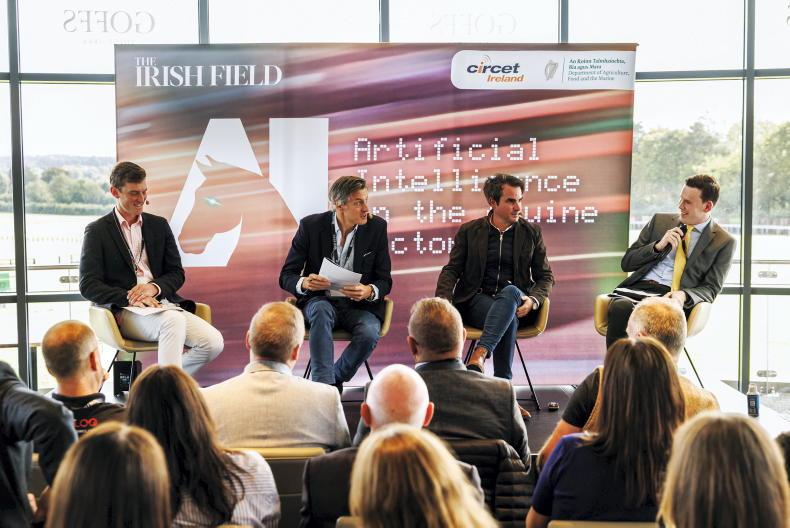
Panel: Mark Boylan (moderator), Will Duff Gordon (Total Performance Data), Patrick Harty (trainer), Valentin Rapin (Arioneo)
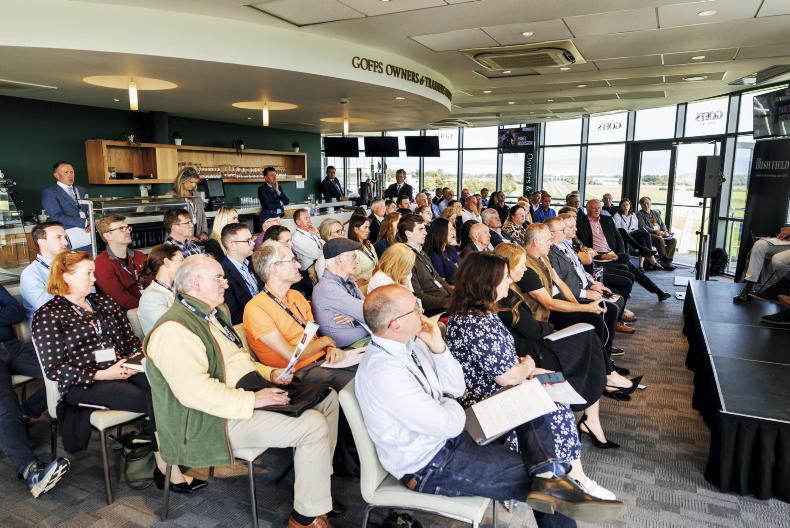
INTRODUCING the speakers for this session, Mark Boylan promised a very good insight into the “different elements of performance optimisation using AI and data analytics”, while noting that “everybody here is coming from a different perspective”.
Will Duff Gordon of Total Performance Data began the discussion by explaining “how AI can help owners and trainers and jockeys and fans get a kind of more realistic and faster sort of return on what they’re trying to do, make less mistakes.”
Though not installed on any Irish racecourses, TPD “have a huge data set that has been gathered by providing sensors on horses installed at 15 countries around the world, on every single horse, in every single race, in pretty much all the courses in those countries.”
And on the cost of this, he added that in recent times, “the onset of GPS made it possible to roll this out at very low cost everywhere.”
Noting that Australia is the latest jurisdiction to adopt TPD technology, Gordon said that the availability of this data to punters was driving more betting turnover.
“You can play in running on Ladbrokes from Flemington if you have nothing else to do at 3am, but the positive side is that’s introduced approximately $75 million of new betting turnover to the sport.”
He believes that adding new insights adds new engagement, which is key. “Our business model is very much we’re funded by the success of what we sell, as opposed to charging a fee for what we do. We’re completely motivated to provide betting, racing and bookmakers with products that they can use to make more money.
“Lots of racecourses around the world, Royal Ascot, Chester, even Hexham, are showing as soon as the horses cross the line, the key stats about what happened. So, when a horse has won a race, let’s really relish how the horse won that race, with a view to getting punters and racegoers going.”
Embrace new data
Trainer Patrick Harty has a long family history in the racing game and has begun to embrace the use of new data on the gallops, though he retains a healthy amount of scepticism too.
“We’re very interested in technology, in data, but with the caveat that you still have a horse in front of you that you need to train, and any amount of data won’t change that, it can only help.”
The Hartys have used heart monitors in the past, but discontinued the practice due to a belief that the data often conflicted with what their experience told them and clouded their decisions.
Harty also questioned some of the on-track performance data in relation to his own horses. “Sometimes the metrics don’t quite agree with what you’ve seen.”
Following a question from the floor about how morning glories sometimes prove bitterly disappointing on the track, Will Duff Gordon said: “We’ve got to celebrate the randomness. That’s why sport is so fascinating.”
Valentin Rapin from Arioneo, a company which provides wearable technology for thoroughbreds in training, got a glowing introduction from Mark Boylan, who said he had seen use of “the Arioneo product first-hand, and its depth is quite remarkable”.
Asymmetry of the horse
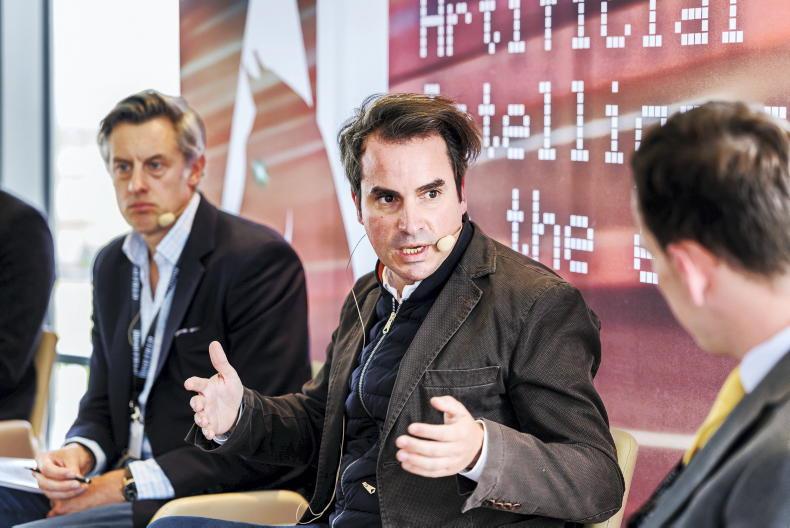
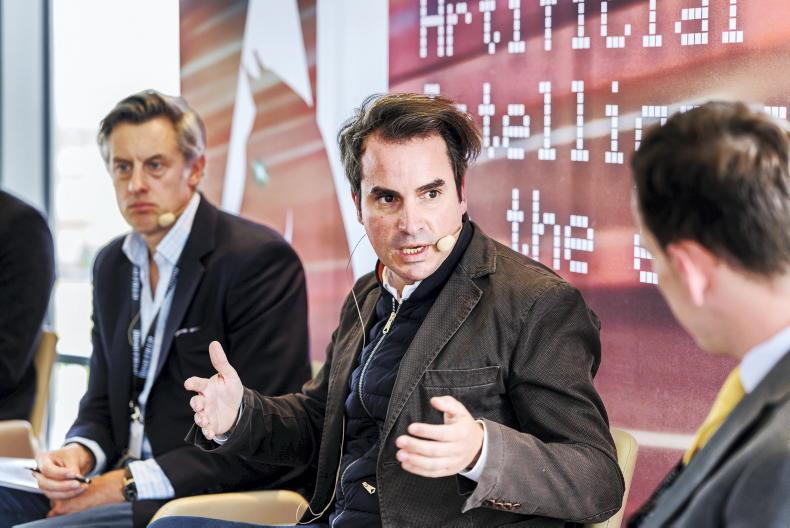
“We have two different products available on the market today,” Rapin said. “The first one is the Equimetre. A device that will go on the horse’s girths to gather some heart-rate, ECG, GPS and locomotive data. The other one is Equisym. It’s a tool, sensor-based, used to look at the asymmetry of the horse. It is used by over 1,000 trainers around the world.”
Arioneo products can potentially flag potential injuries or illness at an early stage, so that the horse can be treated before something serious develops.
Rapin said their products use AI, but “just at the moment for decision support... it will not replace human experience.”
In response to this segment, the question went back to the practical arena and Patrick Harty, who voiced what many were thinking. “What do we do with all the data? How do we make it relevant?”
The sheer volume of data which these devices can generate every morning on the gallops is overwhelming, prompting an interesting discussion on how much time you need to spend studying the results. Rapin revealed that their best customer is Australian trainer Ciaron Maher, who has up to 400 horses. He became a fan when an early trial indicated which horses should be stepped up in trip. When that proved successful, Maher expanded the trial and now employs data scientists to aid his decision-making.
A member of the audience asked if smaller racecourses and trainers could afford services like those provided by TPD and Arioneo. Gordon said TPD had a business model “which works from Venezuela to Churchill Downs” and Rapin said Arioneo has clients with as few as 30 horses in training.
It was a session that covered many areas, from using drones to give more accurate going descriptions, to betting companies using data to create algorithms that help set more accurate odds.
Overall, this was a comprehensive look at the development and transformation, in a short period of time, in just how much data we can access when making decisions in many aspects of racing, on track and behind the scenes.
The AI in Equine Conference was supported by the Department of Agriculture, Food and the Marine under the ETS Scheme.

SHARING OPTIONS: