

 This is a subscriber-only article
 It looks like you're browsing in private mode


I WAS born in the late ‘90s, a little while after the popularity of the television series, Cheers.
Growing up, I had often heard the famous theme song about wanting to go “where everybody knows your name”, without ever really knowing where exactly they meant.
Recently, I have come to the conclusion that they must have been talking about Lexington, Kentucky.
Somewhere between Keeneland mornings, farm visits and industry events, I realised very quickly that everyone knows everyone here. You can’t walk into a barn, sales ground or coffee shop without recognising someone, introducing yourself to someone new, or laughing over a mutual connection. The local thoroughbred industry seems to have reduced the usual six degrees of separation to something considerably more efficient.
There is an openness in Lexington that makes the industry feel both enormous and remarkably small at the same time. Everybody seems genuinely determined to get to know you. Within a few minutes of meeting someone, you usually know where they’re from, which farm they spent a summer working on 20 years ago, and how they accidentally ended up staying in Kentucky.
In fact, almost everybody seems to have a similar story: they arrived “just for the summer” and somehow never left. Having now spent five months here, I am beginning to understand exactly how that happens.
Secret to success
Early in the USA phase, Godolphin USA chief operating officer Dan Pride told us that success in this industry comes from being good with both “four-leggeds and two-leggeds.” At the time, I laughed because it sounded slightly too simple to explain an industry this complex. As it turns out, Kentucky has spent the last five months proving him right.
Fortunately, the Godolphin Flying Start programme has given us plenty of opportunities recently to put that theory into practice. What has stood out most to me during our time here has not just been the scale of the industry, but the people within it.
Whether speaking to farm managers, farriers, trainers, bloodstock agents or breeders, there is a genuine willingness to help young people engage with the industry. People here are generous with both their time and their knowledge, and there is a level of respect throughout the industry that’s impossible not to notice, towards both horses and humans alike.
That sense of community has followed us through every part of the programme. At Keeneland, mornings watching horses work as the sun rose over the Bluegrass, quickly became a favourite routine of mine, but equally memorable were the conversations beside the rail afterwards.
Derby week
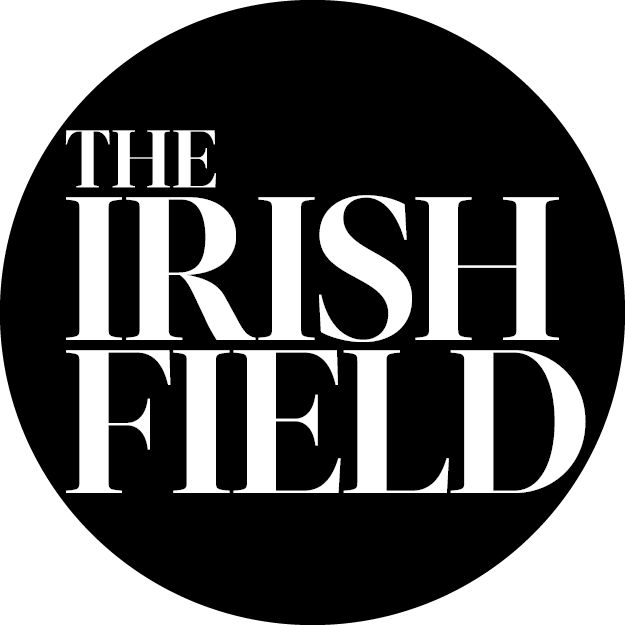
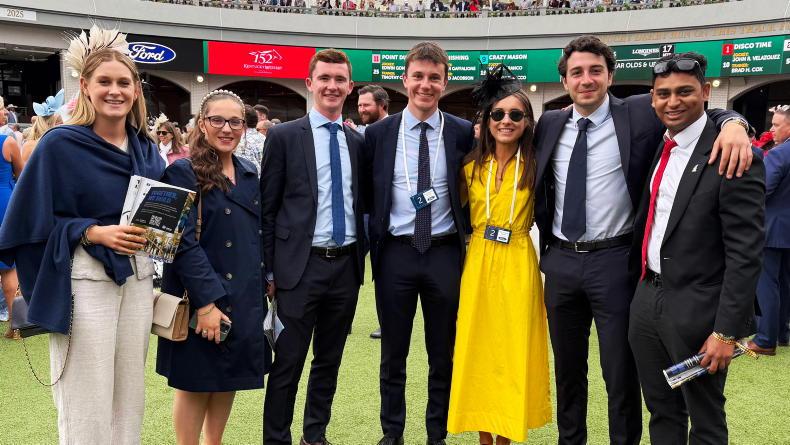
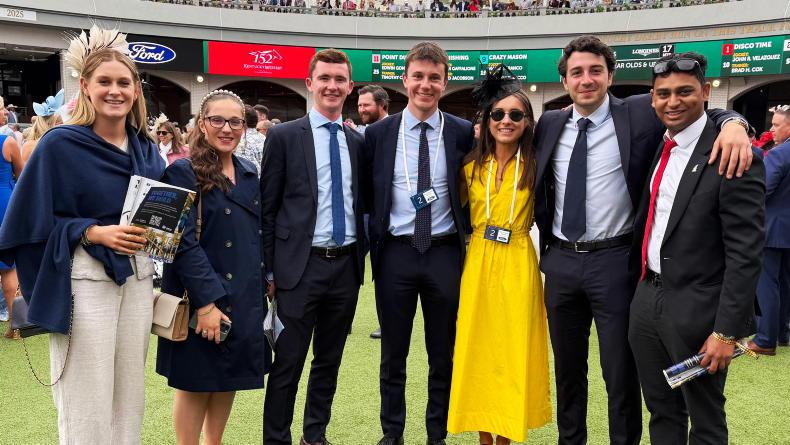
During Kentucky Derby week, Churchill Downs somehow felt both enormous and strangely personal at the same time. Everywhere you looked there were owners, trainers, breeders, media and racing fans all moving at full speed, yet somehow still finding the time to ask where you were from and work out a mutual connection. More often than not, there was one.
Our week at the Kentucky Horseshoeing School became another reminder of the skill and pride people bring to their work here. Watching experienced farriers at work makes shoeing horses look deceptively straightforward. Attempting it ourselves, however, quickly exposed the difference between watching and actually doing. By the end of the week, our appreciation for farriers had increased dramatically, while our collective upper body strength remained questionable.
Alongside all of this, we also hosted our USA conference, which brought together attendees from across the industry to discuss personal changes each of us can make towards bettering the future of our industry. It was another reminder of how passionate people within this industry are and how willing they are to invest time in the next generation coming into it.
Externships
That openness has continued into the beginning of our externships this week, with our group of 12 dispersing across stud farms, trainers, syndicates, bloodstock agencies and media outlets across several states. It has been exciting to see just how many different paths exist within the thoroughbred industry and how enthusiastic people are to help us learn more about them.
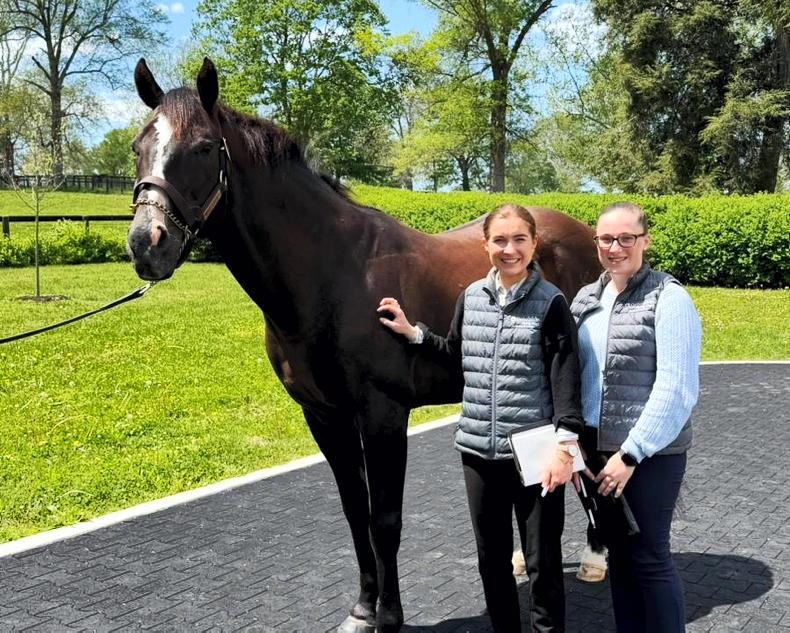
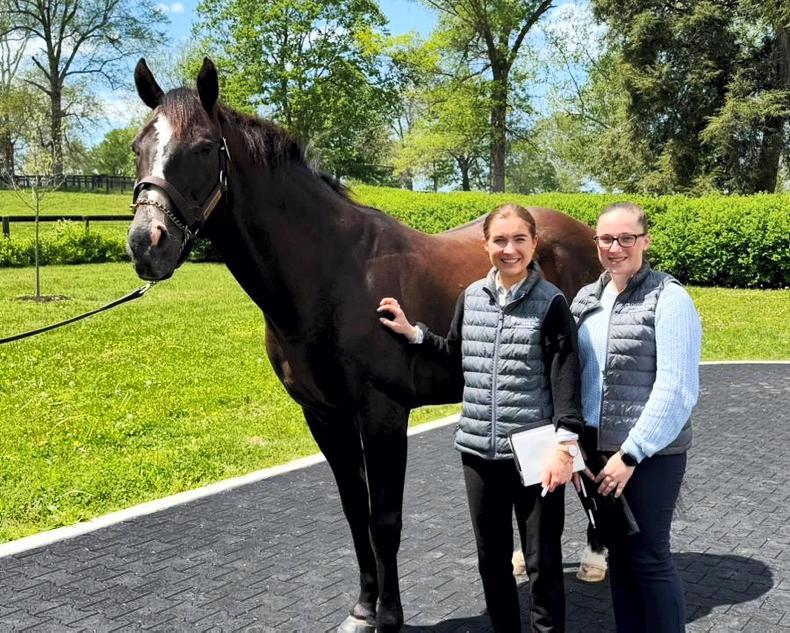
Tara Carroll and Emma Hunter with War Front at Claiborne Farm
Now in our final month here, the closer we get to the end of our time in Kentucky, the easier it becomes to understand why so many people end up staying. It is a place that becomes very easy to appreciate, not only because of the horses, but because of the people behind them.
Before we leave Kentucky, a huge thank you must go to Kathryn Banahan, our USA phase coordinator, and the entire Godolphin USA team for their support and the opportunities they have provided throughout this phase of the programme.
Who knows, if history continues to repeat itself, one of us trainees might be here in 20 years explaining to another group that we initially only came for six months. For now, we wait and see what the future holds.
And to that, I say: Cheers!
Find out more about the programme on godolphinflyingstart.com

SHARING OPTIONS: