

 This is a subscriber-only article
 It looks like you're browsing in private mode


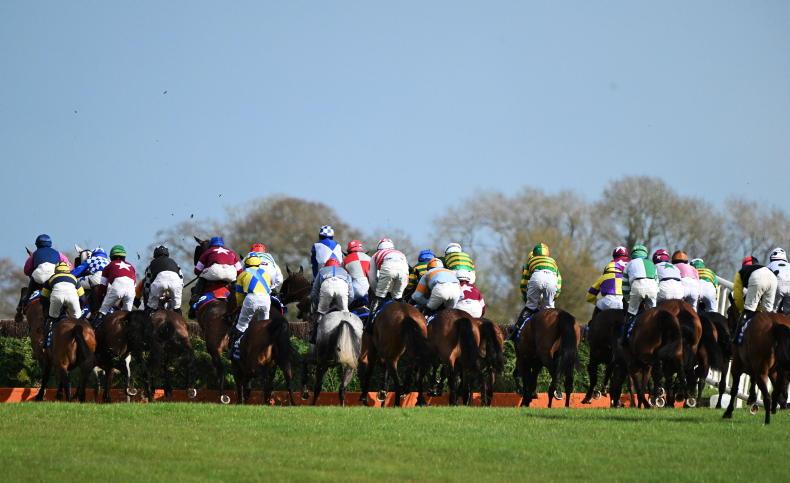
As we bring the curtain down on the 2025 Irish Grand National and another successful year, it might be easy to think the job is done and the showpiece of Irish racing is exactly where it needs to be. After all, the Fairyhouse Easter Festival is a thriving event. With a purse of half a million euros, the National is one of the most lucrative races.
However, if you ask anyone anywhere in the UK or Ireland about “the National”, they will default to the Aintree showpiece. Very few will point to the Meath festival and the Easter Monday race. With our country being a hotbed of racing talent and home to some of the best trainers in the industry, it’s a sad indictment of the promotion of the race.
Therefore, it’s hard to look at the Aintree Grand National and not think that there are huge lessons to be learned. The British equivalent to our National is a worldwide event that people flock to from all around the world.
Could those in Irish racing emulate their counterparts across the water to try to drum up even more interest in our own flagship race?
The British Grand National: Not Simply a One-Day Phenomenon
The Grand National Festival at Aintree is a huge event in its own right, but it’s not just the big day that makes it the cultural phenomenon and cornerstone of British identity that it has become. Instead, everything that surrounds it has cemented it as a part of what it is to be British, and a lot of that comes from clever marketing and licensing of products.
One area where this is obvious is the licensing of tie-in games. Online gambling has become a big industry since the 2000s internet boom, and a wide range of slot games with different themes have popped up. Among the lists of popular slots, you can even find a game called The Grand National Race of Champions.
This isn’t even the first time the Grand National has made its way to the world of gaming. In fact, the history of the race in digital game format goes all the way back to 1985. That year, a game with the same name was released for the ZX Spectrum, helping to inspire a new generation of racegoers who would eventually attend the festival.
Promotion as An Age-Old Tradition Helps Drive Attendance as a Status Symbol
The British Grand National is rapidly approaching its 200th birthday. It has now been held for 186 years, making it one of the oldest races to be continuously run. This is a big part of why it has become such a major event. It is seen as something of an ancient tradition, and one that allows attendees to be part of something so exclusive that it feels as if they’re at the centre of Victorian England.
The Irish Grand National isn’t much younger at 155 years old, and it’s got its own storied history. However, the difference is that this angle isn’t heavily used when promoting the race. There is naturally some crossover in the history of British and Irish racing during this period, but it would be sensible to use tradition as part of the promotion.
Placing a greater emphasis on its history and advertising the event as a cultural exhibit for global audiences would be a strong way to draw in audiences moving forward. On the official website for the Irish Grand National, they describe the event as attracting crowds from all over Ireland. This type of insular thinking isn’t helpful in a modern Ireland that welcomes so much inbound tourism.
Any Promotion Will Not Be a Quick Fix for the Irish Grand National
Ultimately, any new approach to promoting the Irish Grand National will not be an overnight fix. Instead, it’s about changing cultural perspectives and showing exactly what the biggest event on Ireland’s National Hunt calendar has to offer the world.
If those at the top of Irish racing can put their heads together and find a way to introduce the National to new audiences, we could soon be looking at a time when the question “Who do you fancy for the Grand National?” is answered with “Irish or British?”.

SHARING OPTIONS: