


 This is a subscriber-only article
 It looks like you're browsing in private mode





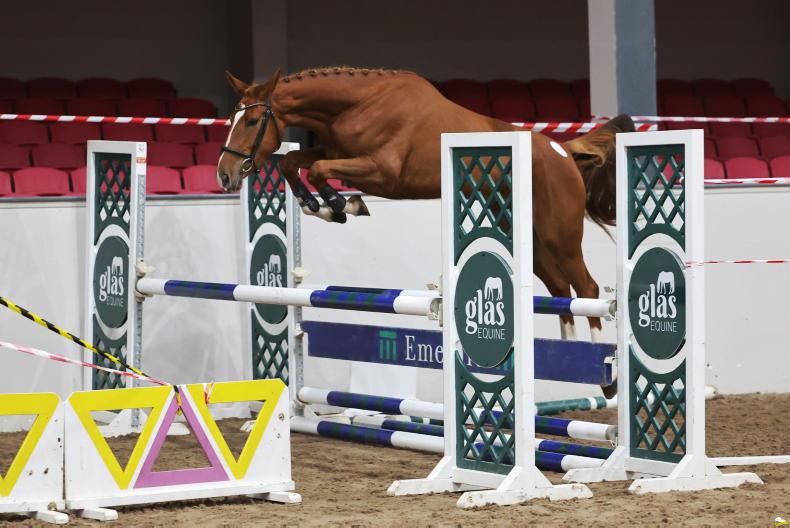
HORSE Sport Ireland brought the curtain down on its 2025 Foal Championship and three- and four-year-old Filly Loose Jumping Grand Final with great success at the Emerald Equestrian Centre, Co Kildare at the end of last month.
The event, funded through National Breeding Services with the support of the Department of Agriculture, Food and the Marine (DAFM), offered a wonderful celebration of young Irish breeding talent, delivered by Horse Sport Ireland (HSI).
In a welcome addition to proceedings, the Irish Equine Centre (IEC) joined HSI on the day to carry out valuable health screening for all entries.
Each foal and horse taking part was sampled for a faecal worm egg count (FWEC), while mature horses also underwent saliva testing for tapeworm. The IEC team was on hand throughout the day to chat with breeders, offering guidance on best practice for worming and parasite management. Dr Sarah Ross of the IEC told Horse Sense: “The take-home message from this exercise is that faecal worm egg counts and saliva tapeworm antibody tests are two highly accessible and non-invasive tests, which involve straightforward and user-friendly sample collections.
“Most importantly, they are extremely useful diagnostic tests which, when used appropriately, can contribute to safely reducing the overuse of dewormers in certain sub-groups of horses.
“As an example, seven of 10 mares tested at the event returned low scores for tapeworm antibodies in saliva, indicating that tapeworm treatment is not currently indicated in these animals. Furthermore, none of the 13 faecal samples from mares were indicative of high levels of strongyle egg shedding at this time.
“The results of these tests equip horse owners and their veterinarians with the information needed to make informed decisions on targeted treatments, facilitating a safe reduction in the use of dewormers, without increasing the risk of parasitic disease in the horses under their care.”
Sample population
In total, 41 animals were tested, with full individual reports now provided to each breeder and owner.
The sample population comprised of 12 foals, 13 mares and 16 three- and four-year-olds. In addition, saliva samples were collected from 10 mares for the purpose of detection of tapeworm infections.
Results for foals
Results for mares
Results for 3- and 4-year-olds
Scan the QR code below for a really useful webinar shared by HSI with Associate Professor in Equine Science, Nicola Walshe, of the University of Limerick, “Wormers aren’t the answer to worms - Equine Parasitology Webinar”.
For further information, to read the full report or for advice on FWEC testing, equine owners are encouraged contact the Irish Equine Centre at iec@irishequinecentre.ie.
From December 1, 2025, all horse wormers in Ireland become prescription-only medicines (POM).
The Irish Equine Veterinary Association (IEVA) has been very clear in its messaging: from December, antiparasitic treatments will require veterinary oversight, and wormers should only be used when there is a genuine clinical need, not “just in case”.




SHARING OPTIONS: