

 This is a subscriber-only article
 It looks like you're browsing in private mode


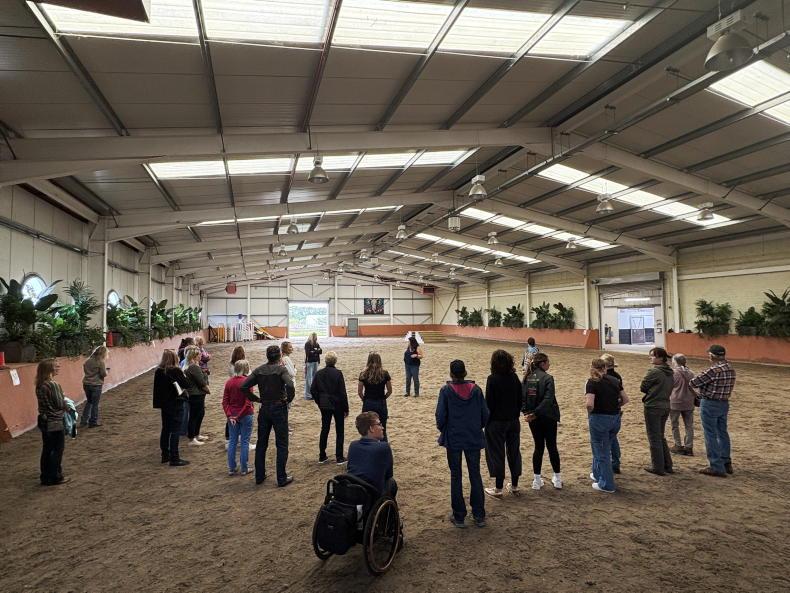
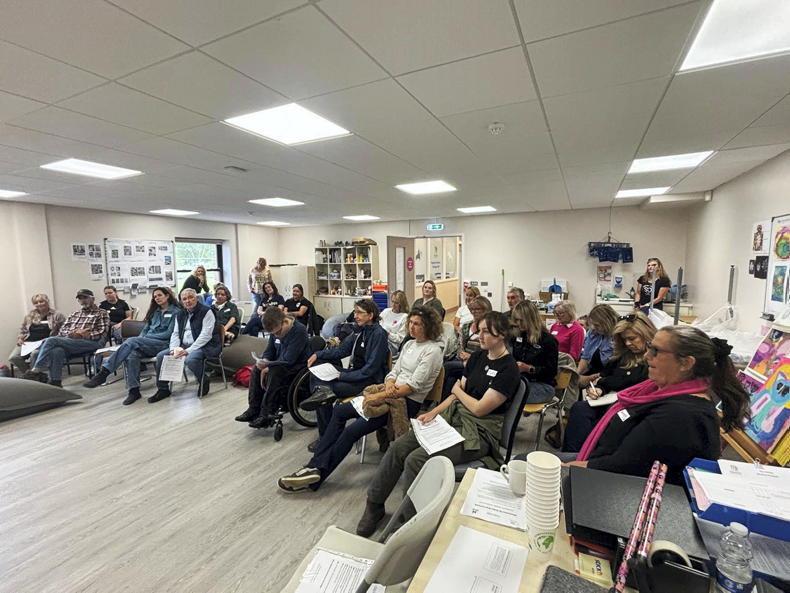
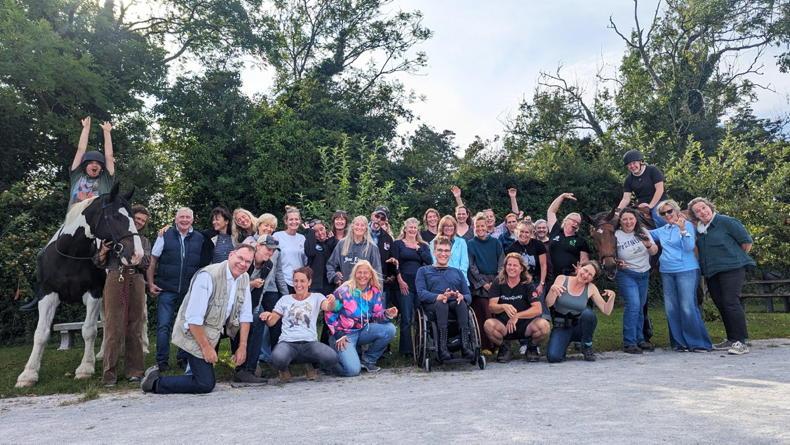
BY the time the first coffee cups were drained at the new state-of-the-art Stewarts Care Regional Equine Therapy Hub in Co Meath, the air was already alive with laughter, handshakes, and the unmistakable rhythm of hoof-beats from the arena beyond. Practitioners of the Horse Boy Method – some from just down the road, others from the far corners of the globe – had converged for a rare three-day gathering.
They came with stories, questions, and the shared conviction that horses have the power to open worlds for neurodiverse individuals and others. Over the course of three days, they would explore Horse Boy Method in Ireland, deepen their understanding of its ridden work, and immerse themselves in ground-based Takhin training – as well as tackling big conversations such as the role of thoroughbreds in equine-assisted programmes.
Day one: Ireland’s
Horse Boy landscape
The opening day was dedicated to Ireland itself – the centres already bringing Horse Boy Method sessions to families, and those yet to come. There was talk of windswept coastal arenas and quiet urban riding yards, of reaching children who had never sat on a horse before, and of building sustainable programmes that could thrive for decades.
What struck many was the diversity of settings – from small volunteer-led yards to larger therapy hubs – yet the common thread was unmistakable: a commitment to connection, dignity, and the horse as a true partner.
The day closed with a sense of forward motion, a shared vision for a stronger, better-connected network of Irish Horse Boy centres.
Day two: The ridden
method in motion
The second day was all about the Method in action. Founder Rupert Isaacson stepped into the arena with a local therapy horse and rider, showing the quiet art of adjusting energy, position, and rhythm to bring horse and rider into sync. Practitioners lined the rails, noting every subtle shift: a child’s posture softening, a horse’s breathing slowing, the atmosphere in the arena settling into something almost tangible.
Between demonstrations, Isaacson traced the roots of the Method back to his own journey with his son Rowan, explaining why joy, movement, and the sensory embrace of nature are central to its success. For many, it was both a refresher and a deepening – a reminder of why they do what they do.
Day Three: Liberty, thoroughbreds, and candid conversations
The final day began in quiet – the kind of quiet you get when humans match their breathing to a horse’s stride. Takhin, Rupert’s liberty-based approach rooted in indigenous horsemanship, is as much about listening as it is about moving. Watching practitioners shadow the horses’ steps in perfect synchrony was like watching two species share a single language.
From there, the tone shifted to an important and sometimes challenging discussion: the role of thoroughbreds in equine-assisted programmes. Representitives from Square Peg Foundation, Thoroughbred Assisted, and author and thoroughbred breeder Suzi Pritchard-Jones took the floor to highlight the breed’s extraordinary potential – and the realities that come with it.
They spoke of the thoroughbred’s sensitivity, athleticism, and generosity, but also of the current disconnect between racing and therapy sectors. The room engaged fully in the conversation about welfare-led, evidence-based transitions from the track to therapy work, and how both industries can do more to better understand and support each other.
By the close of the third day, there was a collective sense of community and of exhilaration. These were three days packed with learning, reflection, and, perhaps most importantly, connection – not only between people, but between humans and horses.
As the last horse was led into its stable and the yard settled into evening stillness, participants left with new techniques, new friendships, and the reassurance that they were part of something much larger than themselves – a global tribe united by the transformative power of the horse.
Speaking to the audience of Horse Boy Method practitioners, founder and consummate educator, Rupert Isaacson explained the thinking behind his Takhin method of groundwork and why it has transformed both horses and people in Horse Boy centres such as ChildVision, Stewarts Care Regional Equine Therapy Hub and the Liskennett Equine Therapy Centre
The epiphany, he says, came when he realised his service users could also be the horse trainers. “It’s not that hard to learn to lunge well, work in-hand, or long rein,” he said. “These are the very people who’ve been around our horses for years – of course they can do it.”
Takhin, named after the Mongolian word for “honoured one” and inspired by classical dressage principles, is built on three pillars: muscle, balance, and rhythm. Horses are conditioned from the ground through lunging, long-reining, and in-hand patterns, making them physically capable of “three-dimensional” work – collected, supple, and responsive.
But the Takhin method is as much about people as it is about horses.
Adults with autism, veterans, or those recovering from trauma, gain marketable equestrian skills and a sense of genuine purpose. “You’re not making up empowerment – you’re asking them to help put a horse back together so it can serve the next rider,” Isaacson explained.
The approach, he said, avoids the tension and frustration that often come from teaching advanced work solely from the saddle. “Ground monkey, sky monkey – one on the ground, one on the horse – the horse learns with ease,” he said pointing to where the humans are with a grin. And the payoff? Horses that are sounder, happier, and, as Isaacson put it, “actually joyful about their work.”
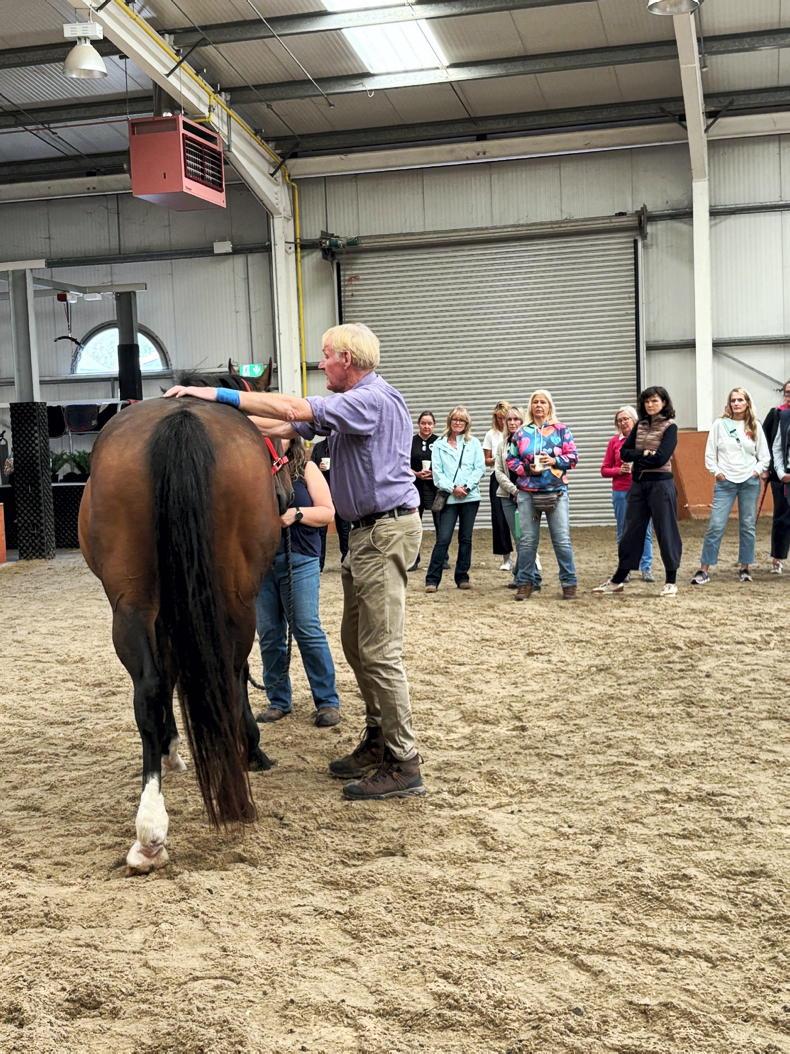
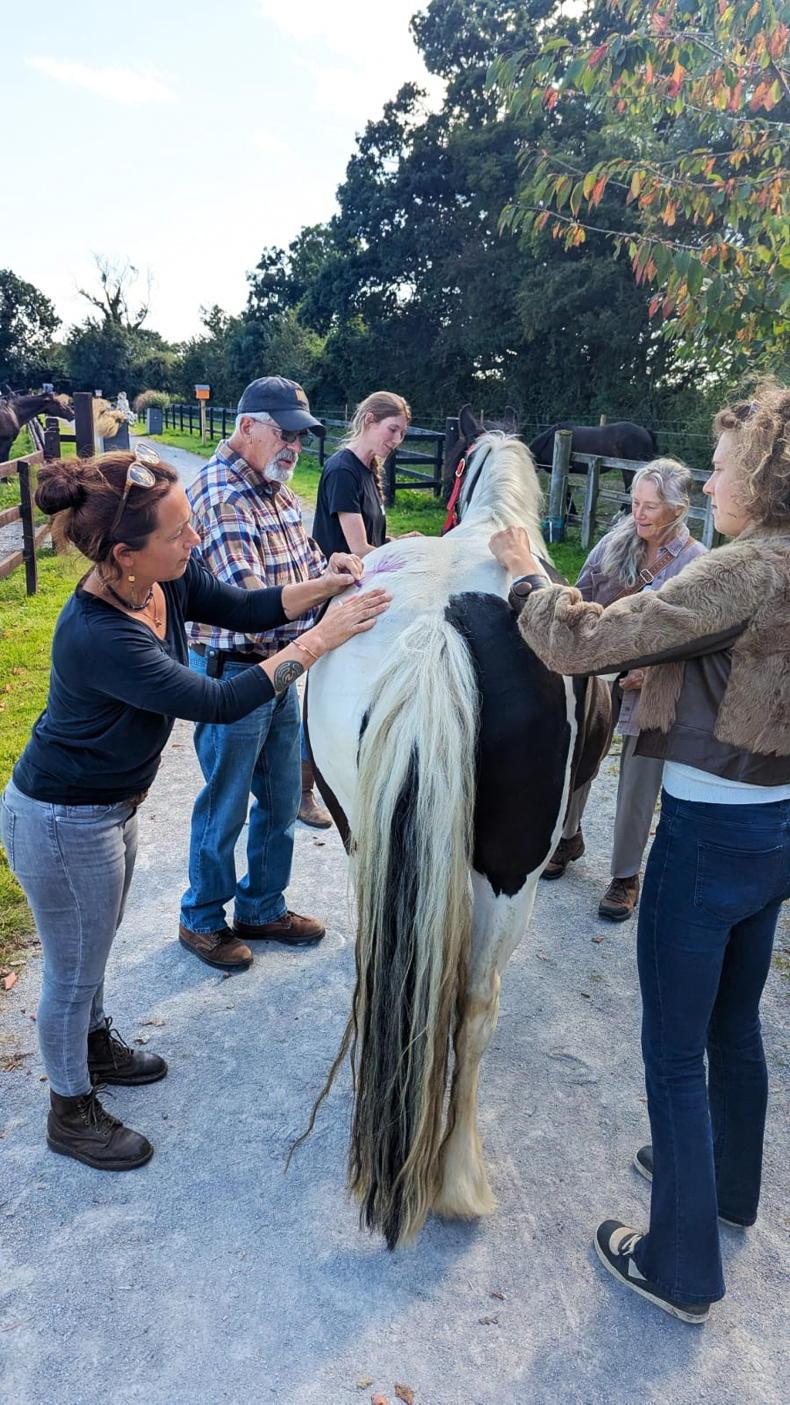
Renowned Irish equine chiropractor Ted McLaughlin gave a practical demonstration on the importance of skeletal alignment in horse welfare, explaining why “structure first” should be the guiding principle before any other therapy.
McLaughlin, who works with sport horses, racehorses, and therapy horses, across Ireland, began by assessing the horse’s movement. “You can see he’s drifting from right to left and short-stepping behind. That tells me something in the spine or pelvis is out,” he explained.
Using quick, precise adjustments to the poll, neck, pelvis, and sacroiliac joint, McLaughlin corrected misalignments that can cause asymmetry, crookedness, and performance issues. “If the bones are out of line, there’s no point doing physiotherapy or massage until that’s corrected – you’ll be chasing the same problem over and over,” he said. He highlighted the knock-on effects of poor alignment: poles down in the show jumping ring due to incorrect strides, unnecessary veterinary injections, and even rider back pain from sitting on a crooked horse.
Demonstration
The demonstration also included tail stretches, spinal mobilisation, and stretches to improve flexibility and reduce compensation patterns. “Once the structure is right, then the physios, massage therapists and acupuncturists can do their work to maintain it,” McLaughlin said.
He stressed a collaborative, holistic approach, with vets, chiropractors, and bodyworkers all playing their part. “Every horse benefits from being checked – whether they’re a Grand Prix jumper or a therapy pony. Correct structure is the foundation for everything when it comes to horses.”
Speaking with warmth and candour, Sammy Leslie of Castle Leslie in Co Monaghan, shared her journey from a childhood shaped by dyslexia and life on the Northern Irish border to her current mission of creating a new all-Ireland hub for equine-assisted services in Glaslough.
“I’m the least qualified person in the room,” she joked, before outlining her ambitious plan to build a cross-border centre that would train practitioners, prepare therapy horses, gather research, and share knowledge freely. Her vision is rooted in frustration with disjointed systems north and south of the border: “We just do not join up the conversation, and so many people suffer as a result.”
Drawing inspiration from Singapore’s “Enabling Village,” Sammy aims to create meaningful employment pathways for people with additional needs, pairing them with designers and businesses to develop marketable products. The proposed hub would act as a feeder and support network for centres nationwide, with a strong emphasis on research and shared best practice.
Her message was clear: don’t wait for government change. “It takes the bold and the curious to go out and break the mould.”
Richard Moore of the One Equine Trust outlined a pragmatic strategy underscored by a deep commitment for growing equine assisted services in Northern Ireland. His three priorities: affordable access to professional services, practitioner training within the region, and world-class research.
He acknowledged the challenges of fragmented provision and competition between practitioners but stressed the value of collaboration. “Stories don’t move commissioners – measurements do,” he said, underscoring the need for rigorous, comparable and shared outcome data.
One Equine Trust’s flagship initiative funds among other things, horse programmes in special educational needs schools. The trust has five more projects awaiting funding. A 2026 goal is to present a dossier of outcomes to policymakers, backed by teacher and parent advocacy.
Manager of Liskennett, David Doyle, a true pioneer of equine assisted practice in Ireland, emotionally recounted how a life-changing autism diagnosis for his daughter in 1998 set him on a 25-year path of innovation in services for people with autism. At the time, the advice was simply to “take her home and love her” – there were no tailored programmes or supports.
Seeking solutions, he travelled across the UK, Europe, and the USA, discovering key elements that would form the Liskennett Centre’s approach: equine therapy, music as an emotional regulator, immersion in nature, and environments designed for independence. “It’s not about the horses or the movement – it’s about giving the person a better quality of life,” he said.
Today, the Liskennett Centre delivers 14,000 sessions annually, working with 86 schools and 10 other organisations. Saturdays are open to any family with a child with autism, with up to 110 families attending for riding sessions together in a day. The centre’s 28 horses are selected for varied attributes and roles.
Expansion is underway, with a new facility in Kanturk, Cork, to relieve demand and provide respite and residential services. Plans include Ireland’s first autism-specific family holiday centre, offering 25 apartments, an indoor pool, and on-site riding.
Doyle, a great pioneer and mentor to others in Ireland and beyond, sees these large centres as anchors in an all-Ireland network, supporting smaller practitioners and riding centres and ensuring services for those with more complex needs. “It’s about going beyond what we do now,” he concluded. “We need to give the people we serve a quality life – that’s the only goal.”


SHARING OPTIONS: