

 This is a subscriber-only article
 It looks like you're browsing in private mode


What was your impression of Treo Eile before you applied for the role as CEO?
In my background in veterinary, I would have been more involved with the racing industry and the breeding industry, than the equestrian side. Probably like a lot of people, I would have thought that Treo Eile just rehomed racehorses.
I didn’t really understand that we’re more of an organisation that supports and promotes thoroughbreds and their retraining, rather than being involved in the rehoming specifically ourselves. We’re trying to get that message out there as to what exactly we do and what we’re trying to achieve.
How would you describe Treo Eile’s role in thoroughbred aftercare?
Over the next three to five years, we’re trying to develop a viable marketplace for retrained racehorses, to try and support people in retraining them, and then to promote the thoroughbred as being suitable for other careers.
I think where we can help the most is to develop the competition pathways for thoroughbreds, because they make really good sport horses and, if you add value to retired racehorses, then they’ll almost rehome themselves.
There are profiles of former racehorses on the Treo Eile website, which serves as a stepping stone between the racehorse owner and the future end user.
The horses on our platform tend to be retrained horses that are for sale to an end user. But where the difficulty is at the moment, is connecting horses coming out of training with people who are retraining and producing them.
We’re looking for trainers and retrainers to reach out to us and let us know what we can do to support them. It can be difficult for people to find retrainers or a home for horses coming out of training in what is often a tight time period.
In my experience, owners often want the bills to stop once they’ve called time on a horse’s racing career, but you can’t just rehome a racehorse with a click of your fingers.
It can take a couple of weeks to find a new owner or somebody to retrain the horse. We’re hoping to expand the platform on our website so that people can list if they’re looking for horses, and for trainers to put horses on the platform that are looking for a new home or looking to be retrained. We also have a list of retrainers on our website, but we would like to expand that list and we encourage anyone who’s involved in the process of retraining horses to connect with us.
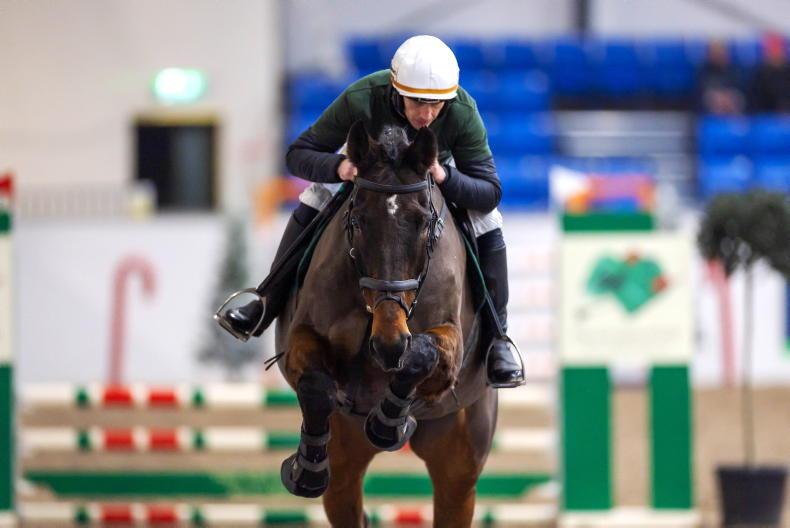
One of the ways that we’re trying to really help in our support of thoroughbreds is that we’re trying to make it more affordable to use retired racehorses for second careers. For 2026, we’re launching a €50,000 package with Eventing Ireland.
The Irish EBF are generously sponsoring €25,000 prize money across a number of classes including arena eventing, the Treo Eile league, thoroughbred-only classes at Ballindenisk and Millstreet, and at a number of the national one-day events.
We’re also putting a €25,000 package to support reduced entry fees and reduced registration fees, to make it more cost effective for people to compete thoroughbreds. I think that will help the market; it will help the market for producers, because they can build experience with those horses in a more cost-effective way, and it will also help the purchaser of retrained thoroughbreds.
Would you say that there’s room for more people to get into retraining racehorses?
I think so. There are a number of people who are doing it at the moment and are engaged in a very healthy trade of retrained racehorses. We’d love them to register with us. One of the benefits of people registering the horses with Treo Eile is that it gives us a database of the retrained horses in Ireland.
We’re working quite closely with Weatherbys, HRI and the Department of Agriculture to improve traceability of those thoroughbreds when they’re retired from racing. Retired racehorses are quite a vulnerable group of horses, so complying with the traceability rules will safeguard them in their second careers.
Would you say that the UK is further ahead of Ireland in terms of developing the market for retired racehorses?
The RoR (Retraining of Racehorses) has been there for over 20 years, so they have had quite a long time to build up numbers of retrainers. They also have a lot of competition networks and prize money, so we’re working very hard to increase the competition pathways and prize money here.
There are a lot of horses that travel from Ireland to the UK to get retrained there, but Treo Eile want to encourage more of those horses to stay and be retrained here, before being sold or exported. One of the dangers of horses being exported to the UK and the continent straight from racing, is that while they may go into really good hands and go to excellent retrainers, they could also end up with inexperienced people who don’t really know how to retrain racehorses, or maybe don’t have the patience or the understanding that they’ve literally just left racing.
Thoroughbreds are very hard-working horses, they’re courageous, they’ve a very nice temperament. In my experience they are very friendly horses, they tend to respond very well to training, and they make excellent riding horses, but it just takes them a little time to change their outlook, from the mindset of being in training to that different mindset needed for sport horse activities.
Irish people are famously good at producing and selling horses, so we’d like to develop and support a network of people that are doing that in this country.
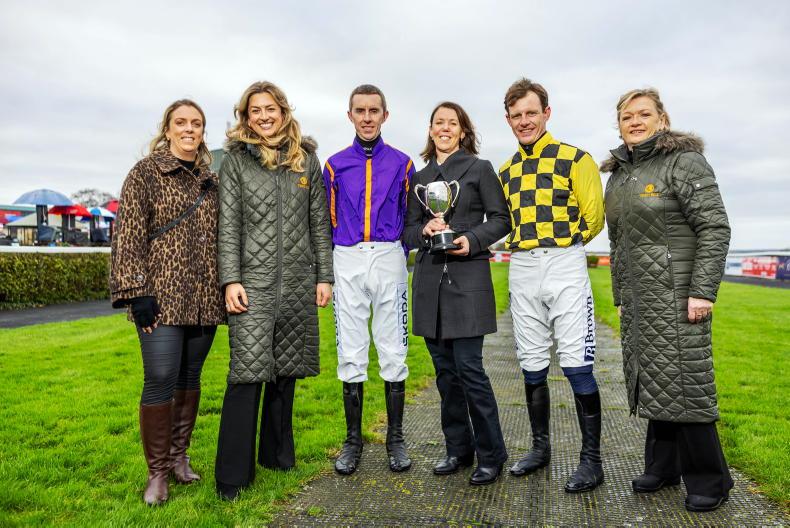
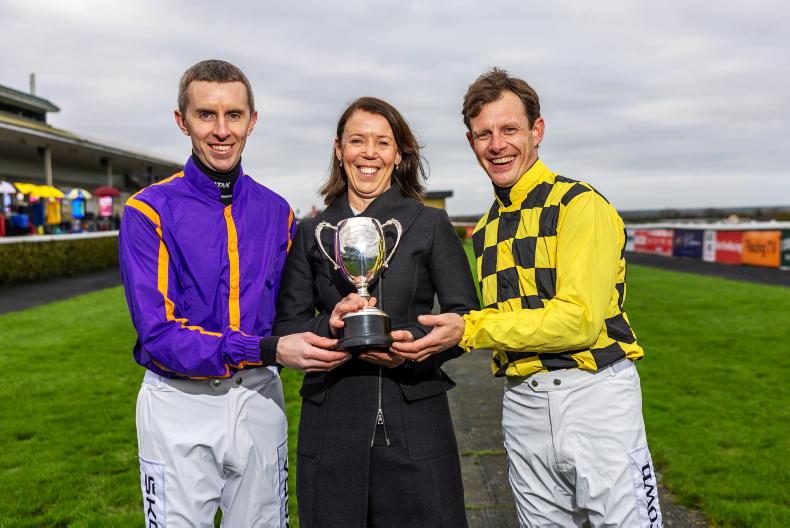
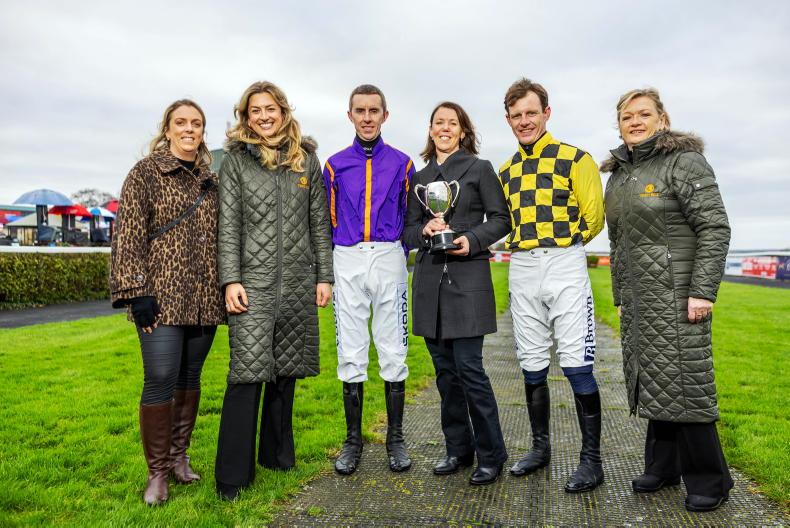
Siobhan Griffin from HRI's welfare department, Treo Eile's Melanie Young, Mark Walsh, Andrea Ryan, Paul Townend and Treo Eile's Anne O’Connor launch the Treo Eile Christmas Show \ INPHO/Morgan Treacy
While retraining racehorses can be time-consuming, in my experience, you can also be pleasantly surprised by how well racehorses take to a new role, including those that were considered buzzy, or unlikely to make a good riding horse.
I completely agree. Thoroughbreds are very adaptable - I’ve seen that throughout my career. I think another important thing to remember is that all horses are individuals. Some of them will immediately enjoy their second career and, for others, it could just take them a little bit of time to understand what’s now being asked of them.
They go from a very high-energy environment, so what can be really nice for them is to have a few weeks off. It’s often a big help if they have that little bit of downtime before they go for retraining, but providing they’re sound and have a tractable temperament, which most of them have, I think pretty much all retired racehorses are suitable for another career, because there’s such a variety of careers that they can do.
They’re naturally very well suited to eventing, but they also do very well in showing. Last year’s Tattersalls showing pathway series demonstrated how easily they’re able to show. A lot of thoroughbreds are involved in dressage, show jumping and polo. I had the opportunity to visit Liskennett Equine Assisted Activity Centre down in Limerick a few weeks ago. There are some thoroughbreds doing great work there, along with other horses, in equine-assisted services for autistic children.
What about rehoming horses that aren’t sound?
I think if a horse is not sound for riding, but is paddock sound and a suitable home as a companion horse can be found, then that’s great when that works out. But in the real world, it doesn’t always happen that way.
There are horses with chronic issues, or that have a temperament that just isn’t suitable for another career, and in those situations, we feel that the best option for that horse is euthanasia, done in a compassionate way.
But for the most part, the majority of racehorses are suited to a second career. If their soundness issues are temporary, then a period of rehabilitation can usually correct those issues.
Euthanasia is often a difficult conversation to have. Do you feel that your background in veterinary helps in that regard?
I think that’s a good point. I suppose vets are very used to having that conversation and people do tend to trust vets when they talk about euthanasia. There are certain situations, and it’s not just for racehorses - for any horse - when they get to a point in their life where they don’t have a good quality of life, then I do feel it is the compassionate and responsible thing to do.
Let’s rewind to your background – how long did you work as a vet before taking this role?
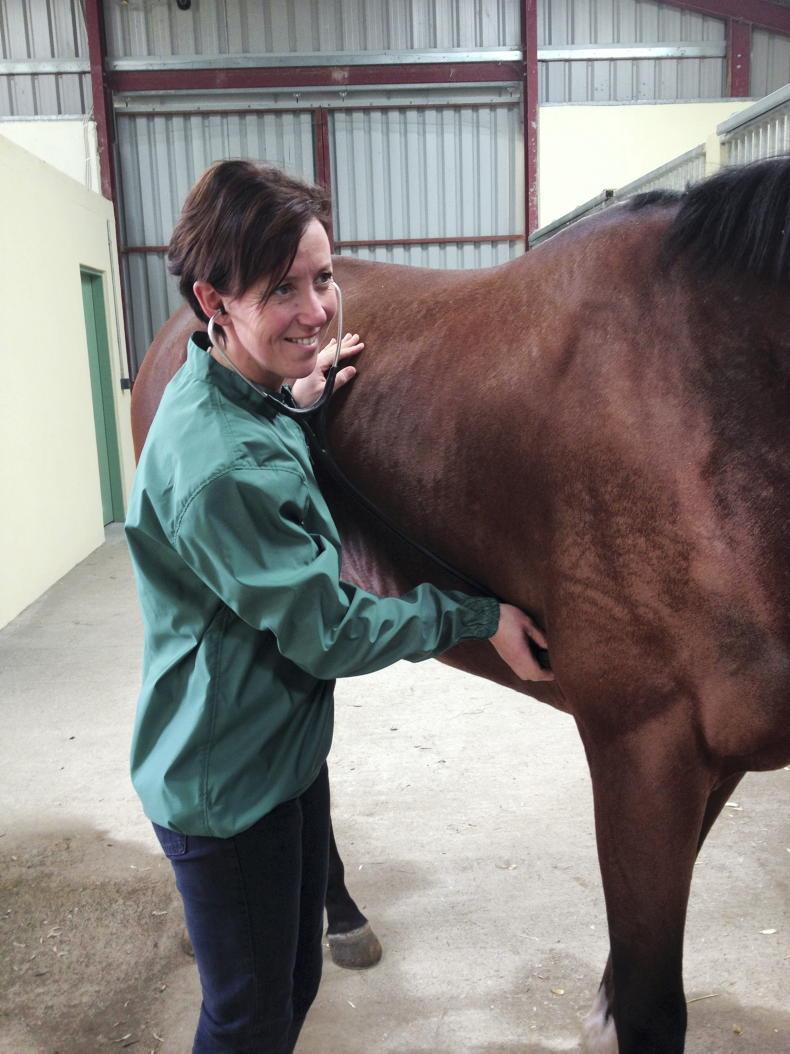
I have been working as a vet for over 30 years, and I just started this role in September. I worked very closely with horses over those years, primarily in the breeding industry and in the sales side of things, but also in the racing industry.
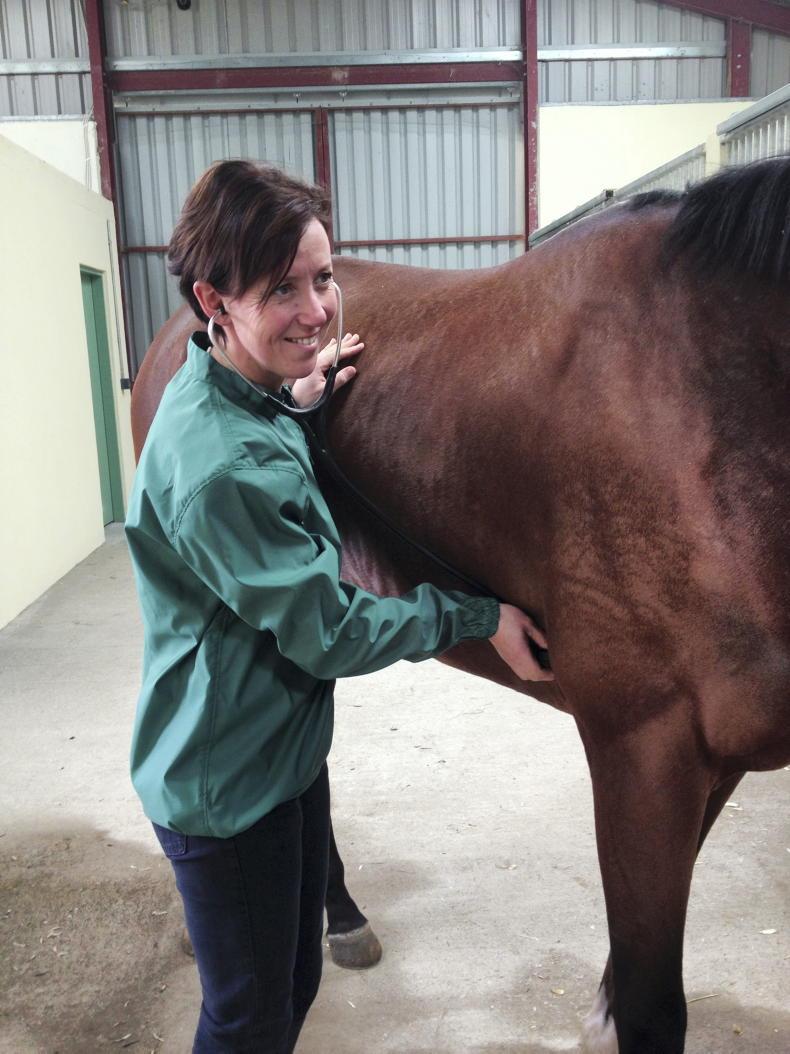
Having worked in practice, I see some of the difficulties that trainers have with trying to rehome racehorses. I’m a rider myself as well, I’ve done a bit of eventing and just general riding over the years, so I also see it from the equestrian perspective.
You mentioned the breeding industry. Is there a different path for a failed thoroughbred broodmare?
I think it probably depends a little bit on the age of broodmares. For flat mares that might finish their career reasonably early, I think retraining for a second career is a very viable option. For National Hunt mares, they may be in their late teens by the time they would finish their breeding career and then probably at that age, it would be difficult to retrain them and so going to new home as a companion is probably the best option for them.
At Treo Eile, we don’t differentiate between horses that have been in training and horses that have not been trained. So, whatever first career a thoroughbred has had, they’re all still eligible for the Treo Eile supports and prizes in their second career. There are a small number of prizes that are specifically for raced horses, but the majority of prizes and supports are for all thoroughbreds, once they have a Weatherbys or equivalent passport.
I’ve sometimes encountered the belief that thoroughbreds are highly strung and therefore unsuitable to alternative disciplines. Do you find that sometimes the sport horse world is not on the same page as us?
When I first qualified, I worked in New Zealand, and virtually everybody rode thoroughbreds over there. They evented them, they show jumped them, they hunted them, they raced them. Thoroughbreds were used for all equestrian sports.
In the past in Ireland, particularly in the field of eventing, thoroughbreds were used very prominently. I think here, a lot of people do have a foot in both camps, so there is a quite a bit of crossover between the racing and the equestrian worlds.
Some people who are not familiar with thoroughbreds might think they are a bit flighty but I think that really comes down to when you get a horse out of training first, it may just take a little bit of time for the horse to realise that it is no longer in ‘go faster’ mode.
In your new role, have you found any challenges when it comes to dealing with different bodies, whether it be seeking financial support or collaboration?
I suppose I’ve joined at a good time, because the Department of Agriculture are doing a lot of work on traceability at the moment. They’re also happy to work closely with us, which is great.
I think it’s relatively straightforward to support horses, and we have - we’re lucky to get funding from HRI and other sponsors to do that, and we also work closely with the welfare department of HRI. It’s not difficult to promote thoroughbreds either, because they’re doing so well in their various careers that they promote themselves.
But the Connect part of our strategy is probably the one that’s going to take the most work. I am looking forward to the opportunity to meet with those stakeholders; with trainers, owners and people who are retraining, to try to come up with solutions together. I would love to get input from owners and trainers as to how best we can help them and support them to find new homes for racehorses.
The industry has had bad press at different times, but there are plenty of people in the industry who are passionate about thoroughbred aftercare. Do you think that maybe horse racing has an unfair reputation?
I think it’s human nature that the negative story always gets way more attention than the positive story. There are so many people in the racing industry and in the sport horse industry that are working so hard on trying to retrain and rehome racehorses. In general, owners and trainers care about their horses and do try hard to find suitable homes for them and their efforts are not always recognised.
There’s a lot of goodwill in the racing industry. We get a lot of support, both financial and in terms of people helping, particularly for our Christmas Show coming up. There’s a lot of people coming together for that and really trying to promote the retraining of racehorses.
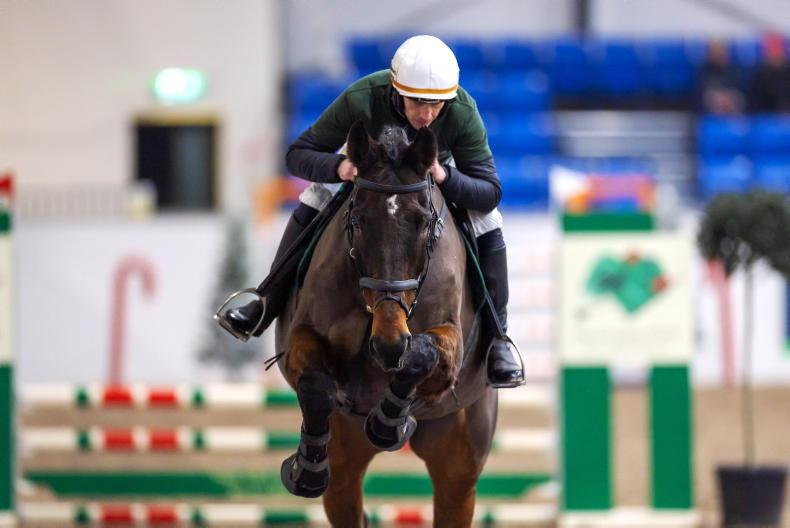
The Treo Eile Christmas Show takes place at the Emerald Equestrian Centre on Thursday, December 11th. How would you describe the day to anyone interested in attending?
It’s a real celebration of thoroughbreds; it brings together the racing industry, the sport horse industry, Treo Eile riders, professional riders - it brings all sectors of the horse world together, which is really unusual. It doesn’t happen in many other situations.
The horses jump over a fairly small course, which keeps it really fun. Some horses are very high profile, others not so much, but they’re all on a level playing field at the Christmas Show.
I think that’s the great thing about Treo Eile; these horses don’t know whether they’re famous or not, and when they go into their second career, they all start from a level playing field. It really gives them a chance to do something else that interests them and excites them.
Horses like to work, they like to compete, they like to be with other horses, and they really enjoy their new careers.
That touches on something we spoke about before this interview - how those thrilling finishes at Punchestown last weekend showed horses’ competitive nature and their will to win. That’s something I think we need to tell the general public, when others are trying to give racing a bad name.
I think you’re right. I think anybody who’s ridden a horse will know how much they like to compete, whether it’s a thoroughbred or not. When my children were young and just hacking out on ponies, the ponies would all be busting to get ahead of each other.
I do absolutely agree that thoroughbreds like to race. When I was at Navan the previous weekend, there were four retrained racehorses back at the races. One of them was a 20-year-old, and he was still so excited to be back at the track.
Who do you think the responsibility lies with regarding a racehorse’s second career?
My thought is that the responsibility lies with everyone who’s touched that horse’s life up to the point at which they retire from racing. For sure, the owners do have a responsibility, but they are not the only people who have owned these horses, and without owners, there is no racing industry.
I think that as well as owners - breeders, consignors, trainers, sales houses - all people involved in the lifespan of that horse really do need to have input into their aftercare. I think it’s really important to try and get engagement from all those different stakeholders and, in fairness, I think in Ireland there is an appetite for engagement.
There have been suggestions that there should be a levy paid to create a fund for thoroughbred aftercare. What are your thoughts on that?
One of the challenges to creating funds for thoroughbred aftercare is the potential for those funds to be abused so we need to carefully consider any such levy and how it should be spent. At the moment, we do get some central funding from HRI, including from the foal levy, which breeders contribute to. We get prize money sponsorship from the Irish EBF, which the stallion owners contribute to. We are also very grateful for sponsorship from industry sponsors.
It’s difficult to figure out what the best process is. Having been in this job a couple of months, I think that the best way to create a sustainable future for racehorses is to add value to them. I think by providing competition pathways, by supporting people who are retraining them, by promoting them, by helping trainers to find those new homes, that is the best way. Whereas, if you just have an aftercare fund attached to a horse, it can be very open to abuse because that horse doesn’t have the agency to choose how that fund is spent.
Do you think there needs to be a conversation early on with new owners regarding what happens if their horse doesn’t work out on the track?
I think a huge part of that is education throughout the racing industry; for owners, trainers, and all the stakeholders. I do think the narrative is changing. I think people now need to think when they’re breeding horses, when they’re selling horses, when they’re training horses, when they’re buying horses; about what happens when the racing career is finished.
I would love over the next few years to see the entire lifespan of the racehorse be considered. Horses naturally live a long time beyond their racing career and that needs to be factored into the decision-making whether you’re buying a horse or breeding one.




SHARING OPTIONS: