

 This is a subscriber-only article
 It looks like you're browsing in private mode



Smart Data, Safer Horses: Reducing injury risk through analytics
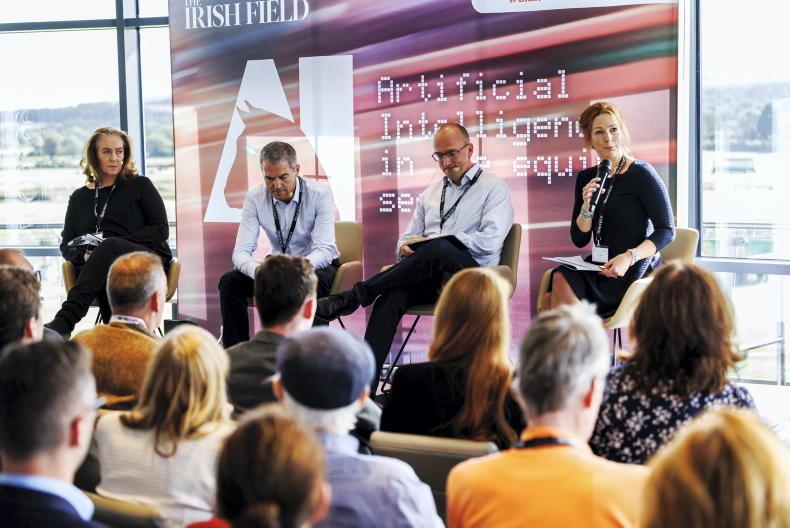
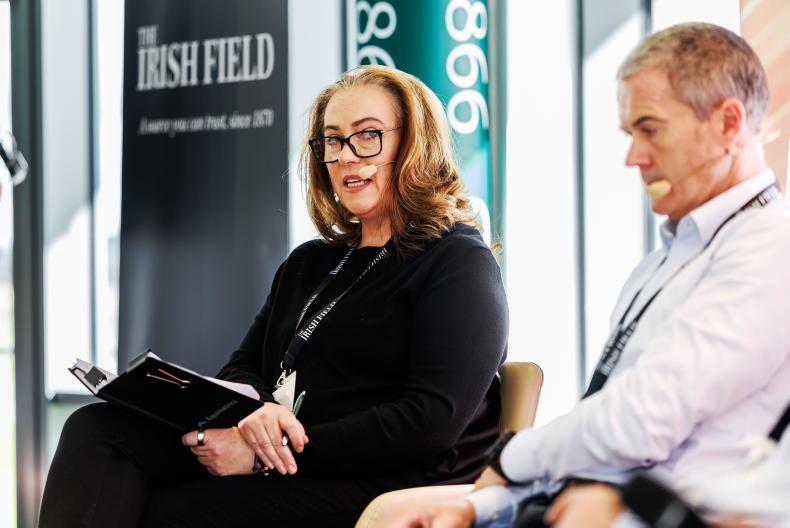
Panel: Dr Lynn Hillyer (moderator), Rob Sheppard (Ellipse Data), Marcus Swail (veterinary surgeon) and Annemarie O’Brien (Equimetrics)
LYNN Hillyer, Senior Veterinary Officer with the Irish Horseracing Regulatory Board, introduced this session with a wish that AI will “make our job better, safer, faster”.
All three panellists spoke about AI-powered products which are doing just that - generating data and insights which allow the user to identify potential physical problems in high-performance horses.
Rob Sheppard is product director at Ellipse Data, the company which provides Racing TV with all the in-running data from every Irish race via trackers carried in the saddlecloths of every runner here.
Primarily, the data is there for punters to decipher and deepen fans’ engagement, but it is also very useful to owners and trainers. For example, Sheppard spoke about how they measure how well (or how badly) horses jump fences and hurdles.
However, he emphasised the importance of having an experienced rider help create the metrics and interpret the results. “AI works best when it amplifies that human expertise, rather than replacing it,” he said.
Technology advancement
Marcus Swail, long-time vet to Team Ireland’s equestrians, documented how he uses the Sleip app to help him in orthopedics and lameness. “It would be fair to say that technology has significantly changed the way that I work in the main in the advances in imaging, particularly digital radiography, ultrasound, MRI, CT, so that that technology advancement in that space has significantly changed our ability to do our job better.
“I spend most of my working hours looking at lame horses… historically, gait analysis was always driven through sensors. And, while I always really liked that as an idea, I could never really properly engage with it.
“I came across a Swedish group, who had developed an app (Sleip) that read the symmetry of movement of the horse from a video that you would take with your smartphone using AI.”
In one of many questions from the floor, Swail was asked if he thought young veterinarians were effectively being de-skilled by these tools.
He replied: “I tend to employ it in cases where the lameness is more difficult to see. In terms of younger colleagues, I think that rather than saying to them ‘just go with whatever the AI tells you, you have to say to them ‘Go out and look at that horse, and you tell me what you see. And, in a way then, it’s a training tool for them. If you use it the right way, it confers advantages, not disadvantages.”
Equimetrics
Annemarie O’Brien’s company Equimetrics already has one product on the market for veterinary use. This piece of wearable tech is called V-Pro and it generates a wide range of clinical data on the horse 24 hours a day, notifying the owner or the vet directly if the horse’s metrics go outside normal parameters. A new product, S-Pro, is close to launch and is aimed at trainers. This saddle-pad sensor captures speed, stride and heart rate data.
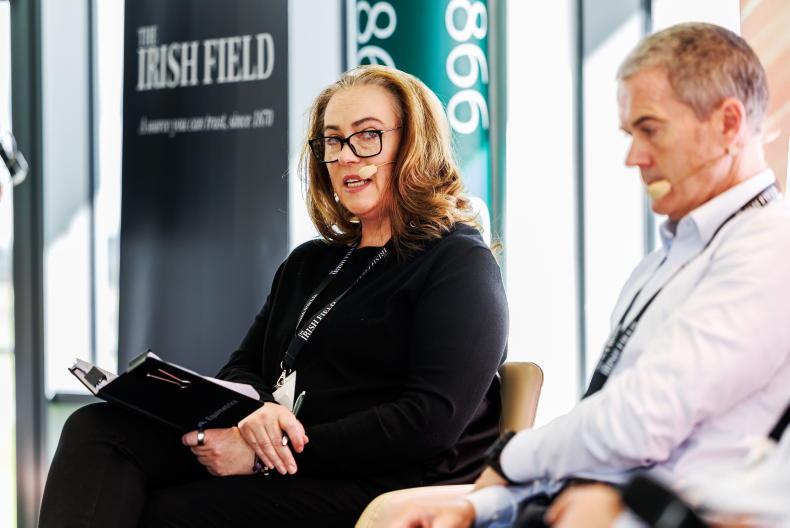
O’Brien said: “We’re all trying to achieve the same thing: can we use technology to provide us with information that allows us to do the best job we possibly can for the horses that are in our care?
“Can we use technology to help us identify early possible illness or injury? Can that then allow us to intervene earlier and provide better outcomes for the horses that we’re looking after?”
“AI won’t replace humans, but the people who use AI will replace the people who don’t.”
That was the first message delivered by Shaymus Kennedy, Chief Technology Officer with Horse Racing Ireland, at The Irish Field’s conference on Artifical Intelligence in the Equine Sector this week.
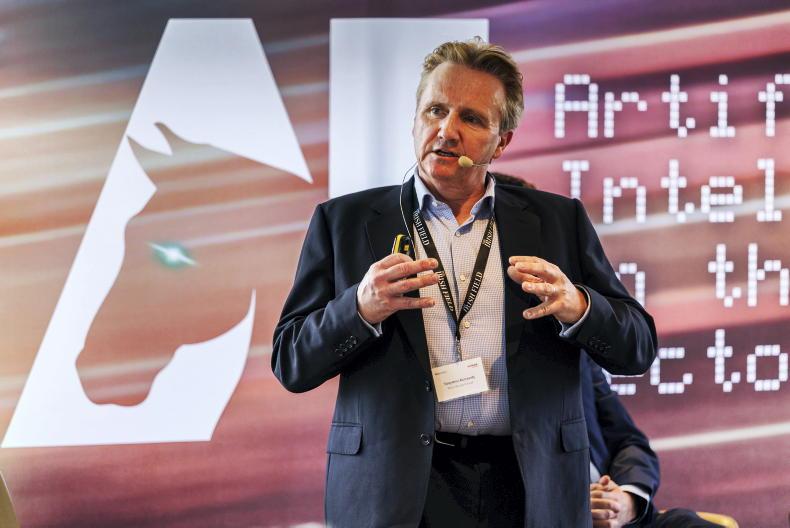
If you wanted a handle on the potential impact of AI across all aspects of the equine industry, from racing to data processing to veterinary science and research, Naas Racecourse was the place to be for this sold-out conference, sponsored by Circet and supported by the Department of Agriculture’s ETS scheme.
Over four sessions, 18 speakers gave a flavour on what the next few years may look like, as technology and data collection moves at a rapid pace.
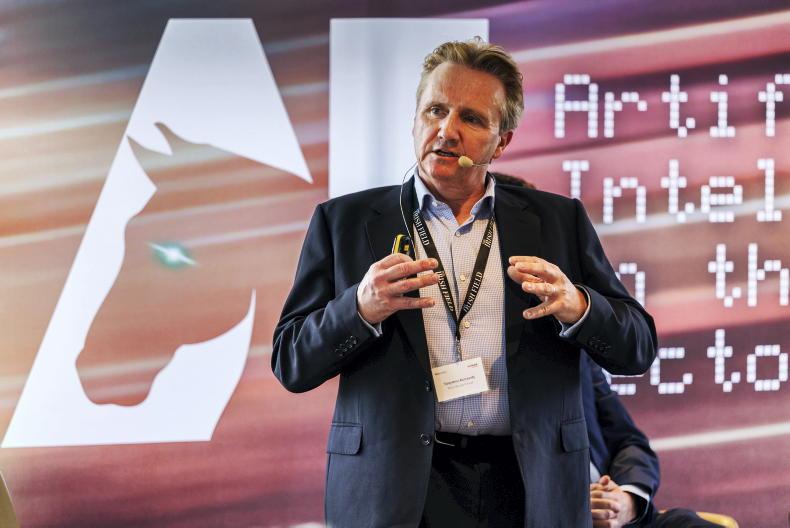
Kennedy began by delivering the keynote address: Digital transformation and data in Irish racing: priorities for 2025-2030.
“We are going to see more changes in the next three years than in the last 30 years,” he said.
“How do we prepare for that? By 2028, 25% of our daily decisions will be done by agentic AI.”
He noted that already today around 20% of all bets in America are placed by global syndicates using AI applications to exploit market inefficiencies.Turning to those who work with horses every day, Kennedy said: “Horse are data-generating creatures so that data can be used for positive or negative results. How do we use that data to protect and enhance our industry?”
He spoke about how Horse Racing Ireland is working hard to keep abreast of the latest developments and he expressed a desire to offer free cybersecurity training to industry stakeholders in the coming months.
Delivering one of the best lines of the day, Kennedy said: “AI won’t replace humans, but the people who use AI will replace the people who don’t.”
The AI in Equine Conference was supported by the Department of Agriculture, Food and the Marine under the ETS Scheme.

SHARING OPTIONS: