

 This is a subscriber-only article
 It looks like you're browsing in private mode



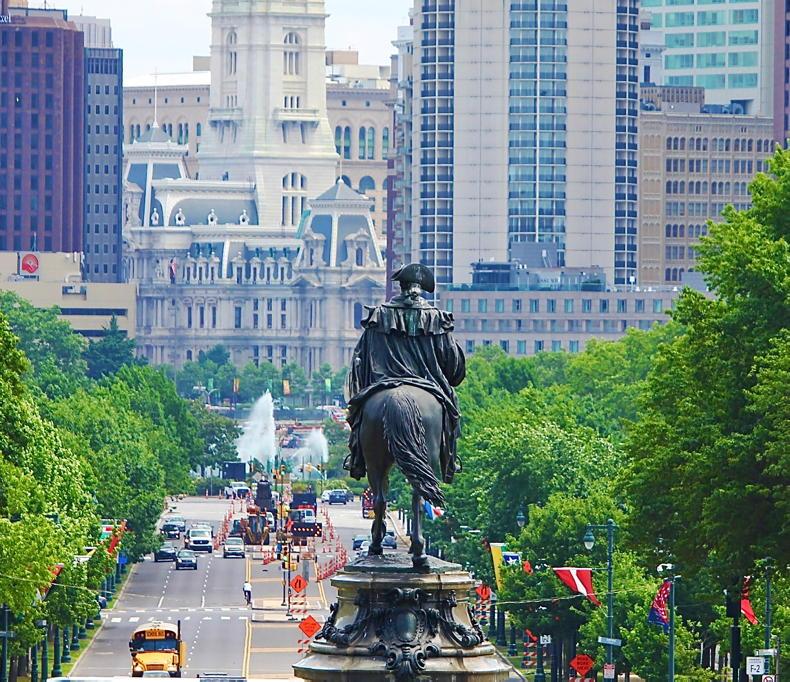
THE Black Friday sales flag was raised this week for bargain hunters world-wide, but where did the phenomenon start? The name was first used in the early 1960s in the first capital of Colonial America, Philadelphia, several centuries after the first Thanksgiving gathering when a harvest feast was shared between 53 Pilgrim settlers and 90 Wampanoag Indians in Plymouth in 1621.
This ‘rejoicing’ tradition continued among New World settlers and was always held on a Thursday, a day the Puritan colonists believed separated the festivities from the Sabbath. In 1789, America’s first President, George Washington, declared Thursday, November 26th as the country’s first official Thanksgiving Day. Then, in 1942, President Roosevelt declared the fourth Thursday in November as Thanksgiving. Friday became a bridge day between Thanksgiving and the weekend. One suggestion about Black Friday’s origin is that workers were often absent that day with a mysterious ‘flu. Somehow, this didn’t prevent the absentees from starting their Christmas shopping early. A more plausible origin suggests the term was coined in an early 1960s Philadelphia newspaper report. Between shoppers and fans travelling to the traditional Army-Navy football game, downtown Philadelphia ground to a halt and the city centre traffic jam was described as ‘Black Friday’.
Philadelphia store owners complained to the Police Commissioner about this headline, believing that Black Friday discouraged shoppers. The Commissioner’s office issued a press release the following year, describing the day instead as Big Friday. It never caught on.
What caught on instead was shopping fever, compounded by the rise in internet shopping. Global Black Friday sales now top $79 billion, while Cyber Week accounts for $334 billion.
Racing ahead
Horses played an integral part in Philadelphia’s history. Pennsylvania was named after William Penn, who chose Philadelphia (Ancient Greek for ‘brotherly love’) as the name for the city where the Declaration of Independence was signed on the Fourth of July, 1776.
Penn also laid out the city’s street grid system. Sassafras Street, named after a native tree and where he raced his imported English horses, was renamed Race Street in the 1850s, after its former nickname. Although such informal street races took place, horse racing, along with ‘riotous sports’ and gambling, was officially banned in 1820 by the Quaker city rulers.
One go-around was to race standardbreds and trotters, as they were regarded as work horses. The sport became hugely popular and the first dedicated track was opened in the city’s Hunting Park. Wealthy racehorse owners and breeders relied on the neighbouring states of New Jersey, New York and Maryland to pursue their sport before Pennsylvania resumed horse racing in 1959. The first Pennsylvania racetrack - Meadows Racetrack and Casino - opened in 1963 and the most recent addition is Presque Isle Downs (2007).
Today, there are two Philadelphia-area racetracks: Parx Racing in Bensalem and Harrah’s Philadelphia, near the city’s international airport, for thoroughbred and standardbred racing, respectively. Philadelphia racehorse owners are associated with several legends, such as Samuel Riddle, a wealthy textile manufacturer. His Saratoga yearling purchase was none other than racing fans’ favourite Man O’War or ‘Big Red’. His son War Admiral, the 1937 Triple Crown champion, was also owned by the Riddle family.
Avant-garde
Horses are now a rare sight in a city which once had over 5,000. The carriage-horse trade was reintroduced for the city’s Independence Bicentennial 50 years ago. Ironically, it was banned this summer during the latest America 250 commemoration.
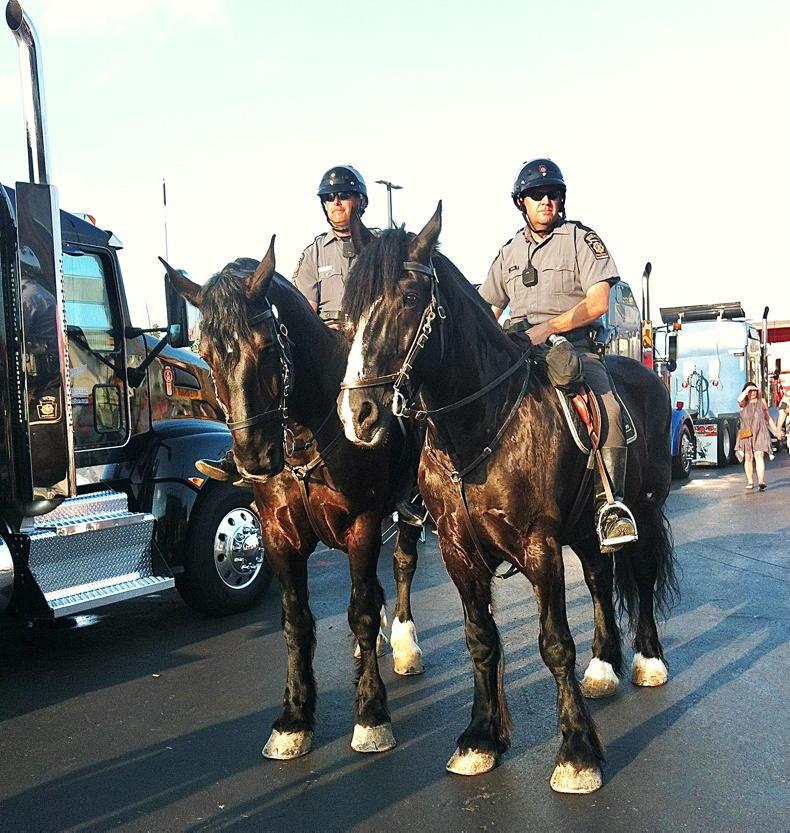
That leaves the Philadelphia Police Mounted Patrol Unit, which operates from a $1.2 million base in Fairmount Park. The Unit proved its worth this summer on crowd-control duties during the six matches played in Philadelphia for the FIFA World Cup and the America 250 celebrations.
City centre department stores have become a rarity, due to the rise of suburban malls and online shopping. In March 2025, the Macy’s branch on Market Street closed. It was housed in the iconic seven-storey Wanamaker Building, now being redeveloped for apartments and retail.
The Wanamaker family are synonymous with both their Philadelphia department store chain and the unique Devon Horse Show, first held in 1896, on the city’s outskirts. William Wanamaker was one of Devon’s founders and a feature showring - the Wanamaker Oval - was named after him.
John Wanamaker was an avant-garde advertising and customer service genius. Price tags, return policies and home deliveries - horse-drawn, of course - were just some of the innovations the department store founder brought to the retail world. Nor could employees be chastised by their superiors in front of customers. One of his most famous quotes was: “Half the money I spend on advertising is wasted; the trouble is I don’t know which half.” Wise words, as are, ‘A bargain is not a bargain unless it’s a bargain.”
Something to remember during the Black Friday shopping frenzy.
Did you know?

SHARING OPTIONS: