

 This is a subscriber-only article
 It looks like you're browsing in private mode


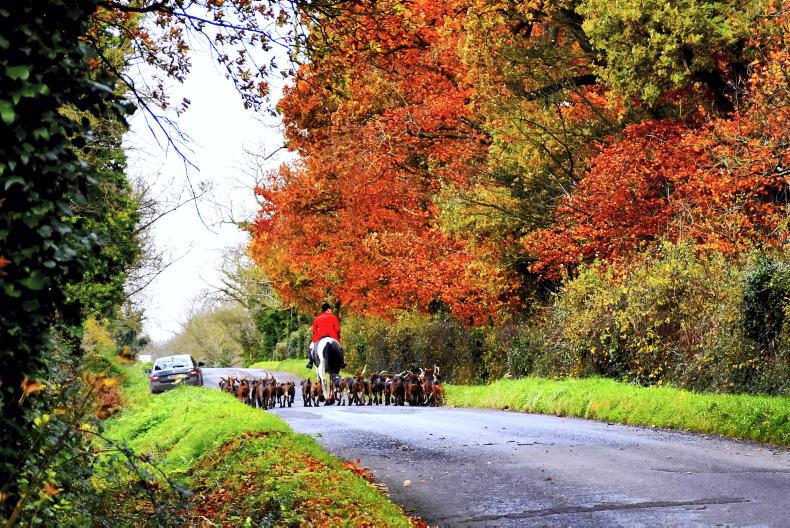
THE Louth Foxhounds meet was at John and Sabine Butterley’s farm, where Philip Rice was parking all the horse boxes in an orderly fashion, while the hosts laid on some welcome tasty refreshments. The couple are tillage farmers, but have a connection with hunting, as Sabine hunted with the Louths when Michael McKeever and Terry Grant hunted the pack, and recalled some terrific days hunting but, more importantly, the fun they had at the time. I met John McKinney on the way and he is a true hunting man and a great help to the hunt. Drogheda is now encroaching into the hunt country, as the population has increased in recent years from 25,000 to 60,000. But it is a wonderful time of the year to be in the countryside, especially this area with all its Autumn elegance, with trees golden and rustic colours, and the woods and gorse a haven for wildlife.
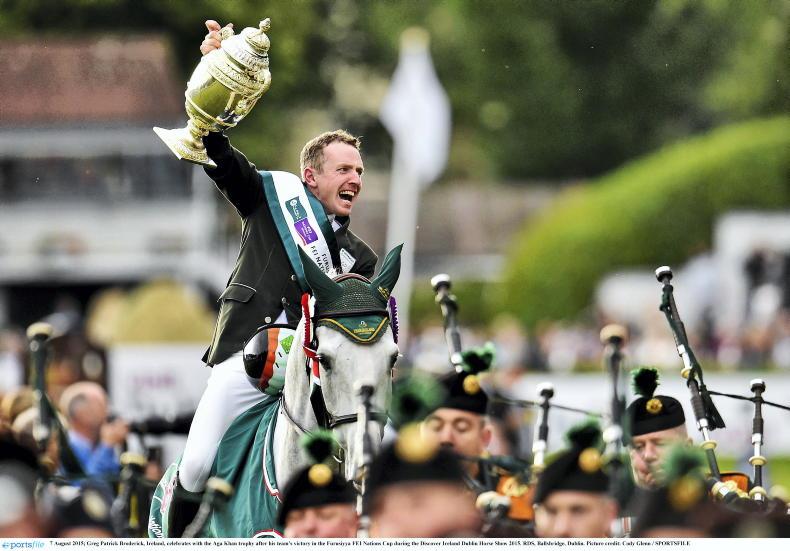
The Butterley farm is near Beaulieu House Estate and there is yet another equestrian connection, as the Waddingtons of Beaulieu played an important role in the thoroughbred and show jumping field. The highlight, as we all know, of the Dublin Horse Show is the Aga Khan Nations Cup. The stands are packed and the Army Bands escort all the teams into the Main Arena, and the President of Ireland later presents the trophy to the winning team. But people often wonder how did His Highness Sir Sultan Mohammed Shah Aga Khan III come to sponsor the famous trophy? He was well-acquainted with Ireland, purchasing his first stud farm Sheshoon Stud in 1923. Over the years, the Aga Khan and his family had a number of Irish tutors, Mr Gallagher, Mr Kenny and Mr Lawrence, with the association originating in Bombay, India. Nesbit Waddington of Beaulieu House on the Boyne Estuary was stud manager for His Highness Aga Khan III. Previously, Charlie Waddington was Principle of Mayo College in Ajmra in India, who taught many of the Aga Khan’s family. Charlie Waddington continued as tutor to Prince Aly Khan when he moved to Britain. When the Aga Khan heard that Ireland were hosting a Nations Cup in 1926, he offered to put up a cup for the event. Six countries competed for the first Aga Khan Nations Cup in 1926, Switzerland, Ireland, France, Holland, Belgium and Great Britain, which the Swiss won with Ireland second. The Irish team were Dan Corry, Ged O’Dwyer and Cyril Harty. In 1927, the Swiss won again with Ireland fourth. But in 1928, Ireland won for the first time with Dan Corry, Ged O’Dwyer and Cyril Harty. The Irish Army team then won a remarkable four Aga Khan Nations Cups in a row from 1935-38.
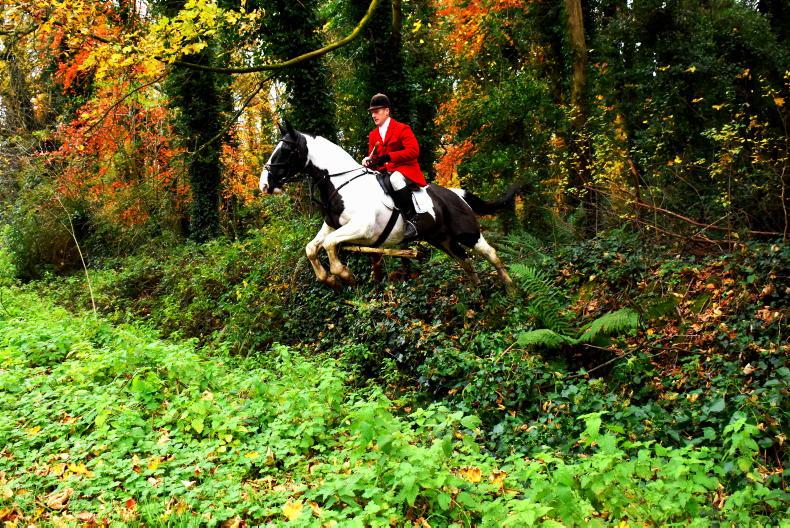
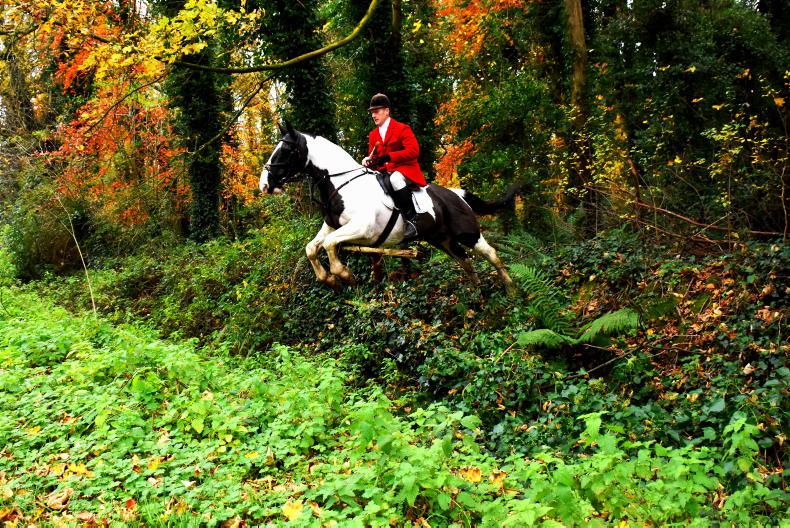
Louth huntsman Lloyd Parr in full flight at the Louth Foxhounds meet at Butterley’s \ Noel Mullins
Hunt Staff
The Louths have a long tradition of legendary huntsmen, with Billy Filgate, Billy McKeever and Michael McKeever, who whipped in and hunted hounds for over 50 years. They have a wonderful kennels and walled garden perfect for the comfort of the hounds and are known for their beautiful pack of Old English Hounds, one of the finest in Ireland and indeed abroad. They keep them traditional black, tan and as little white colour as possible and have voice and drive to match.
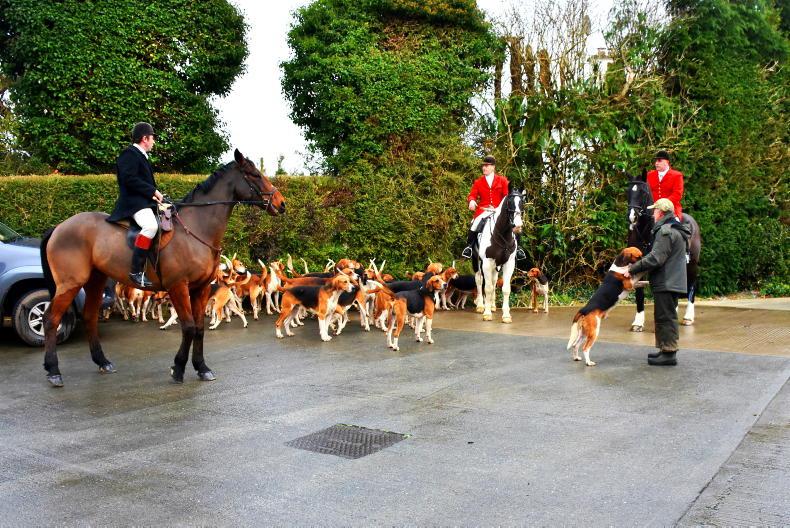
Lloyd Parr, who hunts the pack, follows in that tradition and he has in a short time earned a reputation for hound breeding and runs a remarkable efficient and spotless kennels. He was countryman for the Louths in the past, so knows the hunt country really well. He whipped in to Ryan Carvill of the South Tyrone, another great hound breeder and a fearless man across country. Lloyd stole the show at the National Hound Show in Stradbally, winning four Doghound classes and a Championship, including the Best Two Couple of Doghounds in the Open class, which I don’t think Old English hounds achieved before now. At HANI (Hunting Association of Northern Ireland) and the Meath Hound Show, they won another host of red rosettes. Lloyd travelled over to the premier hound show in Peterborough in Britain, where his hounds also collected a ribbon. In the kennels and hunting, he has great support from his family; his brother Tommy and son Lloyd Junior, and also whippers-in Cathal Tuite, Oisin Duffy and kennelman Sean Kelly.
Followers
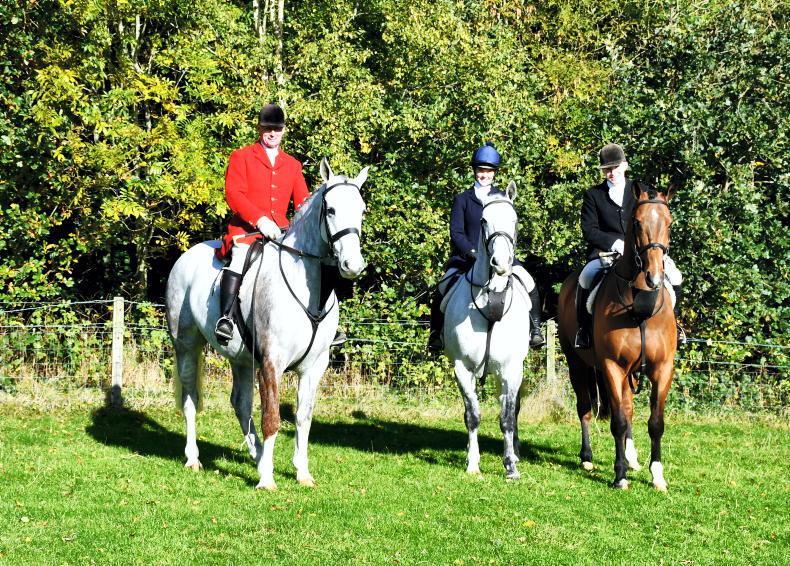
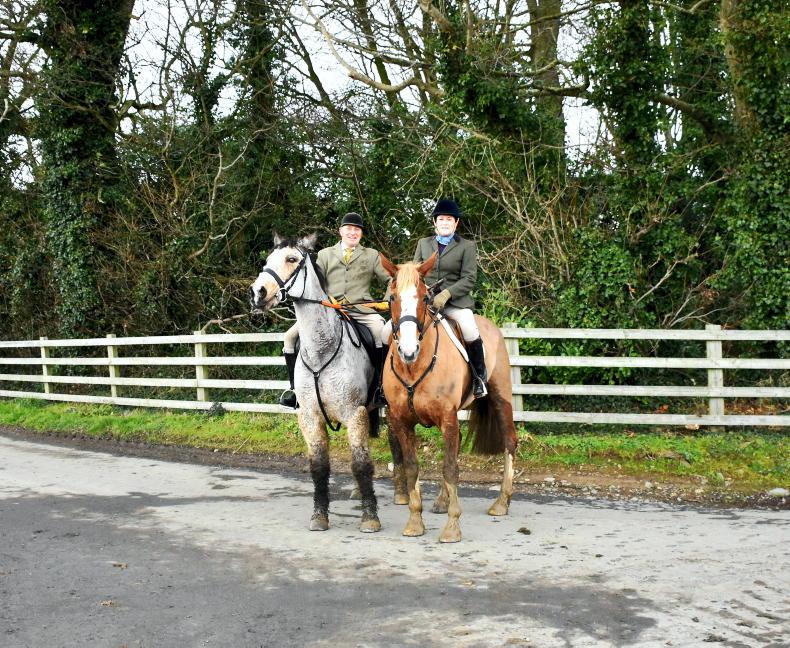
Joint masters Gerry Boylan and Joe Callan were hunting, but as it was mid-week, fellow masters Eamonn McGinn, Edmond Mahony and Kieran Ryan were otherwise engaged. Gerry was riding a 17hh warmblood that looks the spitting image of an Irish Draught it has so much bone and he looks useful cross-country. Marnie Crearer was on yet another young horse, a smashing four-year-old Irish Sport Horse by Road to Happiness, just ready for sale - as are all Marnie’s charges. Others included Lola Europa; John Sullivan, who with his wife Lindsey have produced so many thoroughbreds and hunters that have gone all over the world. Lindsey spent a while in the US race riding and knows all the main players. Tommy McKenna was riding Aidan Hand’s hunter. Aidan recently completed the Dublin Marathon for Motor Neurone Disease and raised over €3,500, and he is not finished, as he is running another marathon in Spain. In 20 weeks of training, he ran 2,300km.
Local farmer, Dominick Hartigan, followed for the day, as did Helena Williams, Christy and Mary Murphy, Noel Norris, Olivia Williams, John McKenny, Brian Meegan, Donna Corcoran, Martin Cromwell visiting from the Ward Union - he found deer hoof marks and he could tell it was a hind. Also following were Sean Neilan, who hunted with Billy Filgate and Tommy McKinney.
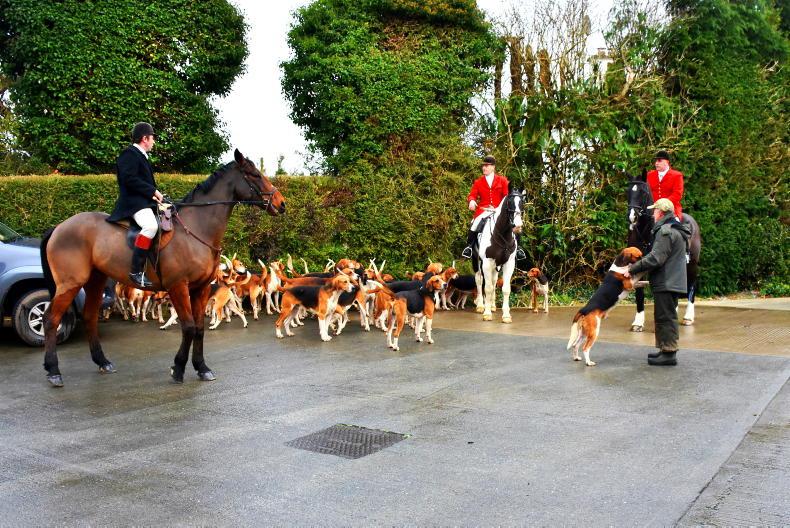
Louth huntsman Lloyd Parr with Cathal Tuite, Tony Hartigan, Oisin Duffy at the Louth Foxhounds meet at Butterley’s \ Noel Mullins
Hunting
This is beautiful countryside, with trees at their golden best and a variety of natural coverts of furze and spinnies, perfect for wildlife with pheasants and snipe in flight at every covert. But the sight of pheasant feeders often means that the area was shot to protect the chicks from foxes.
The first draw was just around the corner from Butterley’s. It was a pleasure to see 19 and a half couple of the most superbly bred Old English hounds go in to draw and they soon had a customer on the move. The dead leaves interfered with scent, so the huntsman and his hounds had to work hard to stay on the line, as he gave them a quick tour of the woods and to ground. As they went on to the next draw, Tommy McKenna took a short-cut across a wide drain onto a bank and fortunately he just made it!
The woods opposite Beaulieu House normally hold, especially around the small lake. Hounds opened and hunted a patchy line, which might have been a stale line, so the huntsman blew them up and jumped out over the bank and across the road behind the house to the Decoy Bog, where they found again and the pack were on song, eventually marking this customer to ground.
As they moved on to draw Dominick Hartigan’s, hounds found in the thick cover and this fellow did a few loops, but was reluctant to go away and worked his way onto the Mill Field, where there are two small coverts and they eventually marked there also.
Then the huntsman put the pack in to draw across the stream in Sean Drew’s and on towards the Rock Field, which is across the road from Baltray Golf Club, where the local Louth National Trust patrol the beach as the Little Tern, Ireland’s rarest sea bird nests in the shingles between May and July on the beach. One member told me that foxes have been a problem, as they have destroyed eggs and more have been taken by stoats. Meanwhile, the pack had no luck in the first cover in Drew’s, but when they got to the long strip leading down the valley, hounds were on song again and the followers had to jump a ditch with a vertical take-off, with only one faller. This fellow ran in a loop, heading back to Beaulieu, but turned back again in another circle and, with scent so patchy at this stage, the huntsman blew for home.
This was another smashing day, where the foot-followers could stay in touch and experience what the Louth pack is best known for and that is sweet hound music.
History of the Hunt
The Louth Foxhounds were founded in 1817 and their hunt country stretches from County Louth east as far as O’Connell Street in Dublin.
Officers
Chairman – Sandra Cummiskey
Masters – Gerry Boylan, Edmond Mahony, Joe Callan, Eamonn McGinn and Kieran Ryan
Huntsman – Lloyd Parr
Whippers In – Christopher Rogers, Oisin Duffy, Townley Angel and Tommy Parr
Joint Honorary Secretary – Una Gunne and Aileen Gallagher


SHARING OPTIONS: