

 This is a subscriber-only article
 It looks like you're browsing in private mode



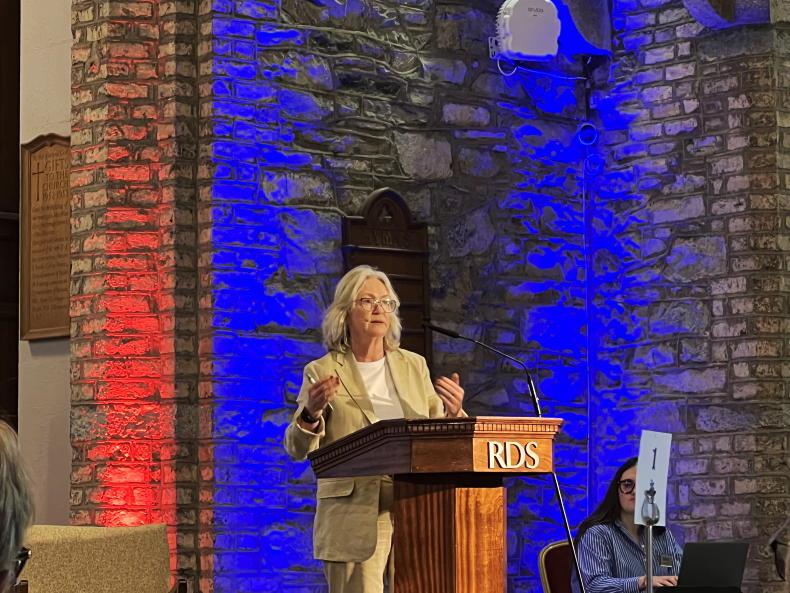
FESTINA Lente’s Dr Jill Carey highlighted the rising public interest and demand in Equine Assisted Services (EAS) and the need for coordinated efforts, shared language and better training standards.
The CEO of the charity was speaking at the RDS Coaching for the Future Symposium in Dublin last Thursday. Using the analogy of going to the dentist for a bad tooth, Dr Carey said a “clear sharp definition” of EAS is needed but we are not quite there yet in Ireland.
“I do have a mantra, which is the words create words and so it is really important that we look at the terminology, because it does matter.
“There are two distinct areas of Equine Assisted Services. One is where you use the natural movement of the horse which helps to improve muscle coordination and balance which then results in confidence. Primarily it’s around physical well-being for a rider, whether it’s a three-year-old girl with cerebral palsy or someone much older, we’re using the natural movement of the horse to produce certain outcomes,” Carey explained.
“The other piece, then is the topic of the equine system learning, where we’re using the natural behaviour of the horse to help people understand how their reaction to the horse in a particular situation is impacting on them.”
Dr Carey highlighted two cases where Festina Lente had a hugely positive impact on the lives of an adult and a child – the first from an associate professor at a university who had several mental health challenges. She spent an hour or two every week with the miniature ponies and credited them for getting her through her struggles - “they gave me both the courage and resilience to keep going”.
The second was a young wheelchair user who said:
“It’s the one time I can feel like I can walk and the one time I feel like the other children”.
Training
Some 500 people have been trained in EAS by Festina Lente which is currently located in Bray but is now recruiting staff as it prepares to move to it’s new 15.7ha site at Belfield House in Kilpeddar. The new facility will open up the services to an additional 200 people weekly.
“At the moment we’re talking to University of Limerick and UCD around micro-credentials so that we can elevate the level of the programme that we have because there’s so much more that needs to be taught to people about working with people and working with horses. There is definitely an opportunity for training innovation,” Dr Carey explained.
Welfare
A common theme of the day, Dr Carey places a big emphasis on equine welfare and the importance of integrating equitation science into Festina Lente’s training. “Of the 500 people that we have trained in our courses, I can say 99% of them have never heard about equitation science, which is quite stark.
“We must not forget that outside of sessions, the horses need to be turned out with continuous feed and they need to be with each other. From a social license point of view as an industry, we must not rest on our laurels.”

SHARING OPTIONS: