

 This is a subscriber-only article
 It looks like you're browsing in private mode


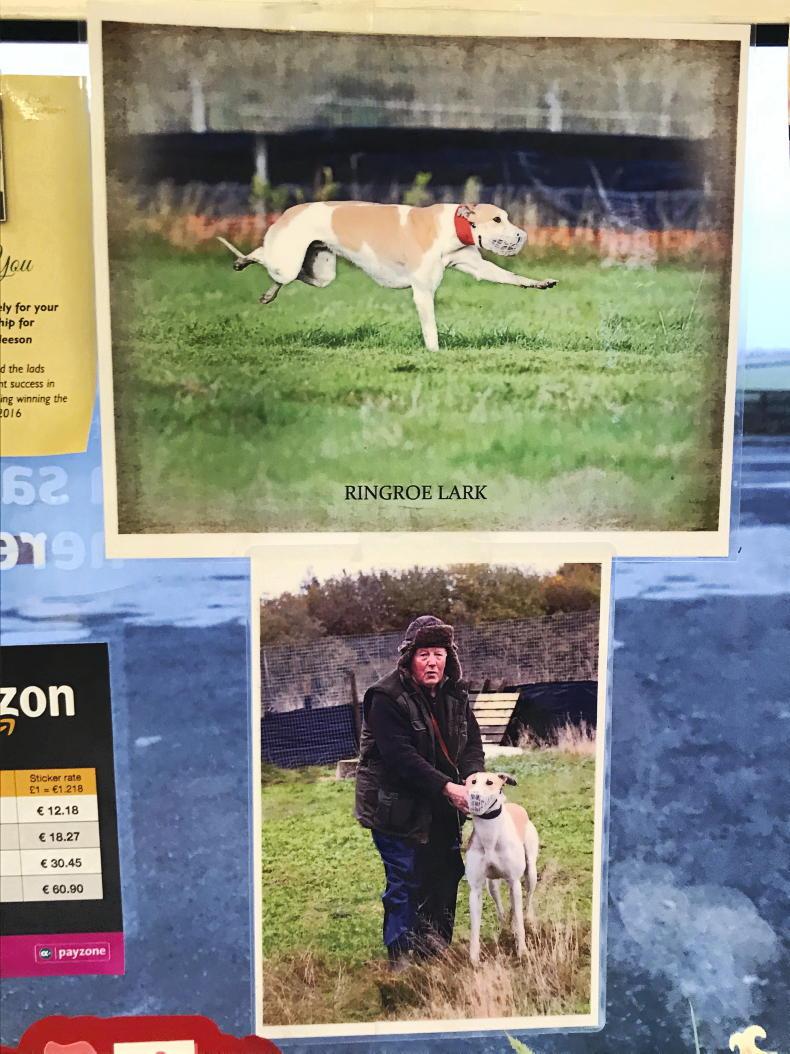
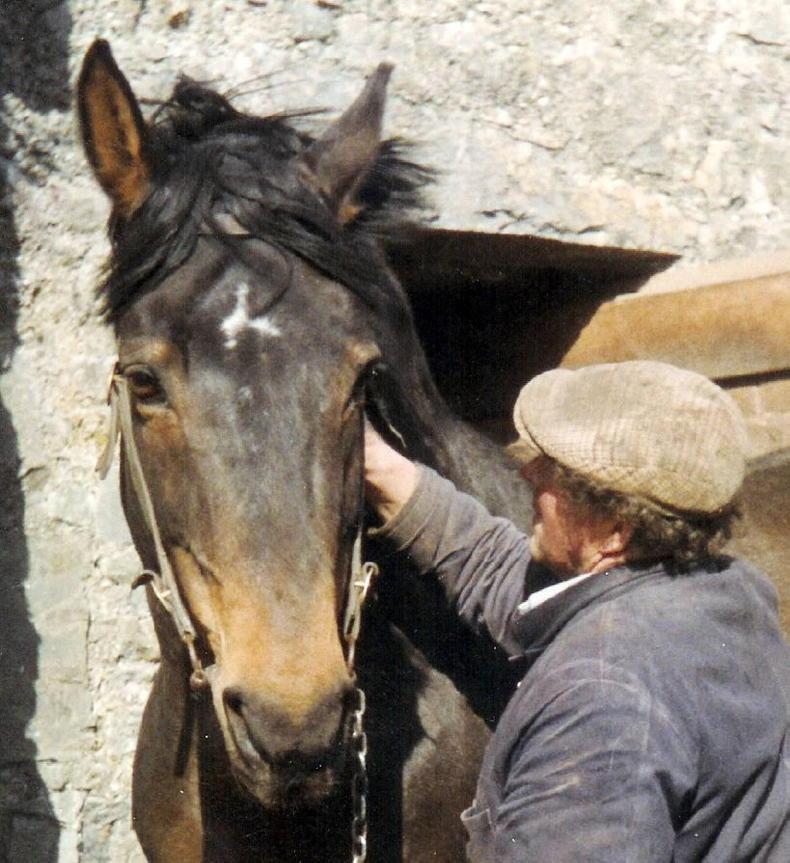
JANUARY 8th, 1931. It’s the birth date of Philip Heenan, one of the most extraordinary characters and gifted horsemen to have graced Irish country life.
There’s 10,001 stories waiting to be told about the enigmatic Heenan, his stallions and their progeny, often circling back to one theme: gratitude.
Take this story gathered from one breeder who, like Philip, has since passed away. “Just your typical small farmer with a couple of mares but then I struck it lucky with Clover Hill and Ballinvella. You’d take your three-year-old to Millstreet, jumping on a rope or sell out of the field. IR£15,000, IR£20,000, no problem. Real money back then.
“It put two of my lads through college in the 1980s. They got great jobs abroad afterwards [as their LinkedIn profiles shows] and it was only one Christmas, when they were home, that it hit me. They’d done well because of Philip.
“There was no way, no money, otherwise. They’d just be tipping around at home. So I went that very afternoon to Tipperary, tin of biscuits on the car seat, just as a token and I suppose, in a very clumsy, roundabout way, I tried to tell Philip that I was thankful to him and all he’d done for my family.
“He just smiled, you know the way Phil would smile? But I’d hope he knew the good he done for people.”
Another Ardcroney visit. This time it’s the bustling Sullivan’s shop at the crossroad on an overcast December afternoon. On a nearby hilltop, you can just see the yard, much of it gone back to nature, and the laneway leading to it. Although no-one knows exactly how many mare owners and visitors travelled up that lane, they all came away with a story.
Part of the reason for meeting up with Tim Heenan, Philip’s youngest brother, was having been contacted recently by Paddy Williams. Involved with producing the Cloughjordan Heritage books, first printed in 1985, one of the planned articles for the next edition is about the town’s famous horseman. And if it’s for Philip, then 3,500 words he shall have. More gratitude.
The other reason is – be it happenstance or coincidence. If there’s such a thing as a coincidence – Heenan’s name has spontaneously loomed large in recent features, from the Maher family to the Hickey brothers.
John Hickey even named his Swedish horse farm after his Clover Hill mare West Gate and gratitude is a constant of brother Jim’s coaching approach. “It’s an uplifting feeling when we give thanks for a lovely day. An attitude of gratitude is the best attitude you can have because what we think about multiplies. So, if we’re negative and giving out, that multiplies. If we’re appreciative and grateful, that multiplies.
“It’s a much better approach to life: just being grateful for the simple things and the more grateful you are, the more you get because what you think about, you bring about.”
Did John ever see West Gate’s sire? “Once! Philip asked me how many times I drove past the gate trying to find the place. It took three times but I did and even went into the stable to see Clover Hill.”
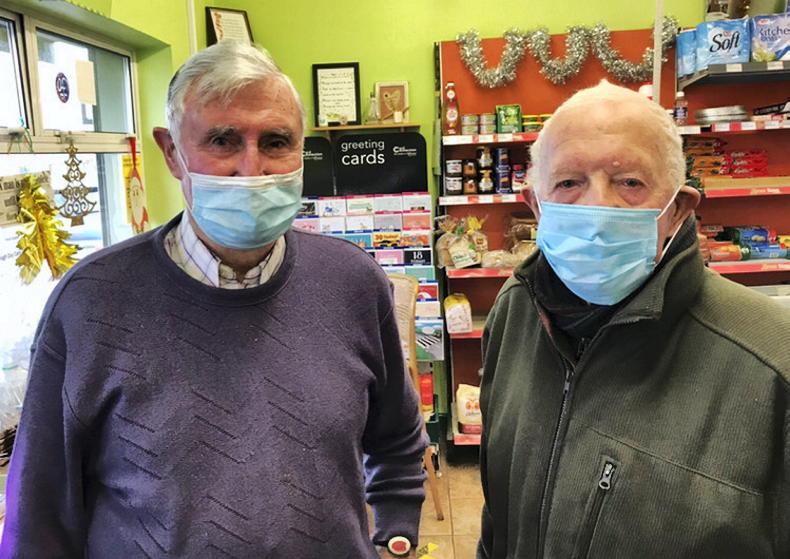
Waiting at the crossroads, to weave more strands of the story together, are Tim and longstanding family friend Len Gaynor. Many of the locals greet the pair as they pop into Sullivan’s, where bags of Emerald sweets, yoga class posters and photos of Tim’s greyhounds are part of the background.
Wingbacks
If horses were Philip’s love, Tim is the greyhound racing fan. “I only inherited the greyhounds when I retired from driving. Denis, my brother, was the dog man!”
For 40 years (“I started the 1st of October 1964 and I retired the last day of October 2004), Tim drove for Nenagh, now Arrabawn Co-Op. “I’d pick up the first load of milk at 4am and I’d have a load of almost 5,000 gallons into the creamery by half-seven.
“Philip and Denis would go to Ballinasloe for the Fair, I’d be on the milk round. Even when I was hurling, I did the milk round seven days a week.”
Hurling. Another Premier County passion.
Len, a member of three All Ireland winning senior teams in 1964, 1965 and 1971, remembers a gift from Philip. “He was a very gifted man. He could mend clocks, watches, make headcollars. Philip used to cut corn for all the local farmers with a binder and the binder wasn’t an easy machine to fix if anything went wrong, but he could fix it. He had that gift about him.
“He made my very first hurley. My brother, who’s older than me, came down to Philip to get a hurley made and he arrived back in our yard with his own and a small one for me. We had bits of hurleys before but this was the first real one I got and I never forgot it.”
Where did he play on the Tipperary team? “Wingback, same as Philip when he was young. Up to Covid, I would still train the young lads down here in Ardcroney where Philip would have hurled as a young lad. Philip gave it up young and went to the horses.”
School was also dropped by the age of 12 as local farmers were already sending difficult horses to Philip to train on the family farm in Ringroe. Even before then, he lived up to his name. The horse world is full of Philips, meaning ‘lover of horses’ and Tim recalls how his 10-year-old brother carried a newborn foal to safety from a bog where a mare, following behind, went to foal.
“There was a lot of unbreakable horses around and he got them all and trained them. He’d hunt two or three times a week and when he’d give the horse back, the horse was able to do anything. Ned McLoughney over there was a great man with horses, Philip rode a point-to-point winner for him.
“It would be his 91st birthday [today]. Philip was the fourth in the family,” Tim said, before listing his other siblings: John, Mary, Daniel, Denis and Pat. “I’m the youngest of seven and my mother [Margaret, nee Darcy] was the youngest of seven and I think there was seven in my father’s family too.”
Two intriguing anecdotes crop up; as a three-year-old colt, Clover Hill was almost sold Down Under, and the other is about Philip’s namesake father, a noted cyclist. Just as Eugene Maher pointed out about the number of Olympic show jumpers produced in the Premier County, Tipperary is equally noted for cyclists of the calibre of Sean Kelly and Sam Bennett and hurling stars.
The 1992 edition of the Cloughjordan Heritage book features a sepia image of Philip Heenan Snr. in 1920s racing gear on a bicycle.
According to this Volume III article, written by Canon Edward Whyte PP, he was born in Ringroe in 1882.
“In the early 1900s, he worked as a shop assistant at Corneille’s of Nenagh, a firm which supplied provisions to the British Army. He was invited to participate in the Garrison Sports and a sapper of the Royal Engineers lent him a bike for the occasion. That was Heenan’s first competitive race and from then until 1924, he had few equals on the grass tracks of Munster. In 1910 he won the 10-mile championship of Ireland at Birr, a very tough race, 40 circuits of a grass track,” the article continued.
Home from home
Then an opportunity presented itself. “The B.S.A. Bicycle Company presented him with a medal for winning a race on one of their bikes and wanted him to turn professional and ride for their team in England. He would have agreed but the folks at home dissuaded him. Heenan competed in hundreds of races and beat all the leading cyclists of the day. His last race was at Carney in 1924.”
Had Philip’s father emigrated, then this story could well be null and void. Instead his namesake son gradually built up to keeping 15 broodmares at the hilltop yard.
“My grandmother was Margaret Darcy and that farm belonged to her brother Denis Darcy and then my uncle John [Heenan] inherited it,” said his niece Mary Oakley, explaining how Philip, another uncle, was based there. “My mother’s name was Mary Heenan and she married Tom Oakley,” she added about another member of the team.
“I just have such beautiful memories of going up there during my childhood. We’d walk through the fields, there was so many mares and the birds would actually follow us. He [Philip] was so kind. He loved children, he was just a lovely gentle soul, I’d love seeing the goldfish in the tank and the dogs, it was like a home from home.
“Even though I was a child, he made me feel as special as the people bringing mares there. There was no hierarchy with him. He treated everybody, even a child, with the same respect. He was a lovely uncle,” Mary replied when asked about her memories of visits to the yard.
“I was only there in the evening, I’d feed the horses. I got to hold the toughest of mares when everyone was gone away. I was a sort of an all-rounder!” explained Tim, who found himself accompanying Philip when groups of mares were ferried over to the O’Mearas in Toomevara.
“Danny Flannery was the man, he did all the hauling around here. Going to Toomevara, myself and Philip would be in the lorry with the mares and the straw blowing around in the lorry would terrify the mares.”
More locals call in to the shop, including Irish Rail employee Jennifer Haverty, who chats with Tim about the era of horses being transported from Nenagh, the nearest station and the famous ‘CIE leather headcollars’ used in transit.
And then, more happenstance. Matthew O’Meara, whose father Jim stood Prefairy and Milestone, the local Smooth Stepper and Clover Hill of that time, drops in. His description of Philip Heenan as a “genius in boots” sums up the man.
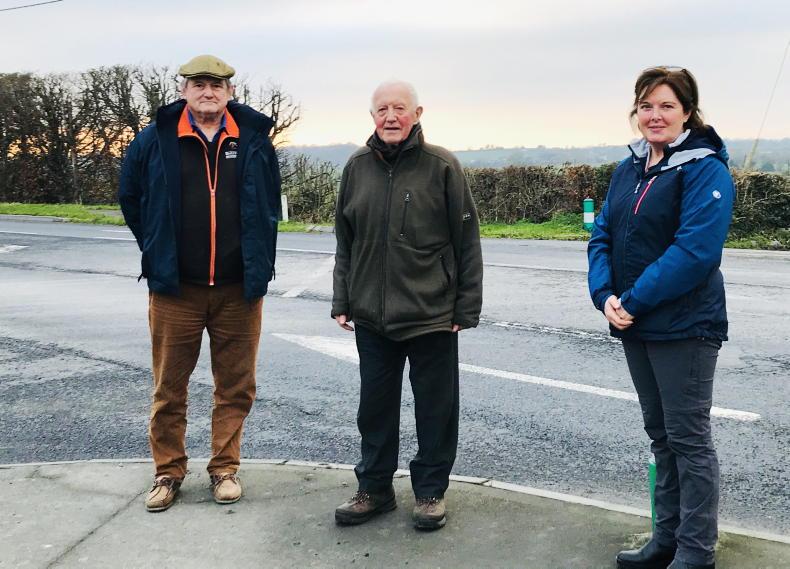
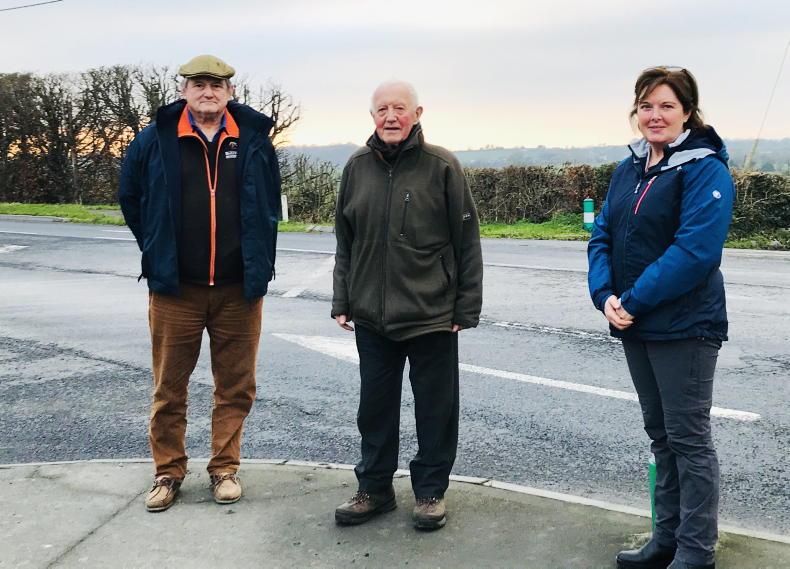
Matthew O'Meara, Tim Heenan (centre) and Jennifer Haverty at Ardcroney crossroads \ Susan Finnerty
“I remember Philip coming to Toomevara in the back of Danny Flannery’s truck and he’d stay in the back of the truck with the mares. If he said he’d be there at three o’clock, he’d be there at three o’clock!
“When I saw Milestone first, I thought he was a thoroughbred. He was very clean for a Draught horse,” recalled Tim, who often hacked one particular mare, a reformed character thanks to Philip’s care, to Toomevara.
“In the beginning, if you took her near a stable, she’d go mad. He found out she had reared up before, hit the roof and the whole wall came down. She was by a Clydesdale out of a thoroughbred mare and Philip would take her hunting. She was a great jumper and turned out as gentle a mare as could be.”
Good intention
Clydesdale blood was a legacy of the compulsory tillage era during World War II. “During the war, there was compulsory tillage. There wouldn’t be a green field around here for a 25-mile radius, you had to till for corn and sugar beet. It was only people with low land or callows that kept cattle and horses, all arable land had to be tilled.”
By the early 1970s, Philip had branched into owning his own stallions; the thoroughbred Nero and “John Meagher’s horse, a chesnut Irish Draught named Monanore, by Milestone.
“He went to Morocco, along with Nero, who we bought when he was a seven-year-old and never handled. He was with a flock of 20 horses, down near Carney Castle, and Philip went down one day with a rope, I don’t know how he caught him but he did and led him up there. He never left until he went to Morocco.”
The arrival of the Moroccan buying delegation, organised by Department inspector Dick Jennings, caused quite a stir in Nenagh as their visit coincided with the local show. “I remember that day, Jack Powell, Dick Jennings, two Moroccans and an interpreter in the showgrounds. They were after dealing with Philip for the two horses and Philip, as usual, was collecting at the gate,” Matthew recalled.
“Dick Jennings took them all over the country to look for stallions. Nero had a Prophets thumbmark on his shoulder and the Moroccans said they wouldn’t go without buying that horse,” Tim revealed. “They bought that horse for the King of Morocco and Monanore for the Moroccan Department of Agriculture.”
The departure of both stallions left Heenan in a fix. “Dick promised Philip that if he sold the two horses that within a week he’d have two new horses in the yard, so he went and bought Smooth Stepper in Newmarket. That was the first thoroughbred we got from Dick.
“In the meantime, we bought Light Brigade. He was a fiery horse when we got him but after about two days, Philip could go into the stable with him, no bridle on him, ask him for any of his four feet and he’d give it up to be cleaned. He got on great with him.”
Two thoroughbreds now in residence but the gap was there for a Draught stallion. And that was when the story snowballed with the arrival of a Golden Beaker colt.
Few, even Philip Heenan, could have predicted a pandemic. “We’re in completely different times now, we’re just minding ourselves,” said Len. “But we had great times, conversations and stories.”
“I remember one Sunday I was there when a man arrived with his horsebox and mare. Philip said to him, ‘Were you at Mass?’ ‘Well, I thought I was!’ he said. ‘I was looking for a church the whole way down and I came to Borrisokane and saw people going into Mass and thought ‘This is my chance.’
“So he parked the car and in he goes to the church. It was halfway through the service when he realised he was in a Church of Ireland church. The intention was good!”
Next week: Clover Hill




SHARING OPTIONS: