


 This is a subscriber-only article
 It looks like you're browsing in private mode



THE thoroughbred industry has entered an era where technology is transforming every aspect of how horses are bred, trained, and raced.
With vast amounts of data now being collected, the real challenge lies not in obtaining it, but in understanding how to use it effectively and how these insights will shape the future of the sport.
Whether you are a commercial or small breeder, owner, trainer, stud manager, regulatory vet or veterinary surgeon understanding data is becoming increasingly essential.
‘Data analytics’ is the process of using statistical and computational techniques to derive meaningful insights. This differs from simple ‘data analysis’.
While analysis often looks at past trends to inform decisions, analytics involves applying sophisticated models and technologies to predict outcomes, optimise performance, and enhance decision making for the future.
The Irish Field’s recent Artificial Intelligence in the Equine Sector event at Naas Racecourse highlighted just how much innovation is emerging across the industry. As Horse Racing Ireland’s chief technology officer Shaymus Kennedy aptly put it: “Horses are data-generating creatures.” It makes sense to compile this constant data generation and use it to our advantage and that of our horses.
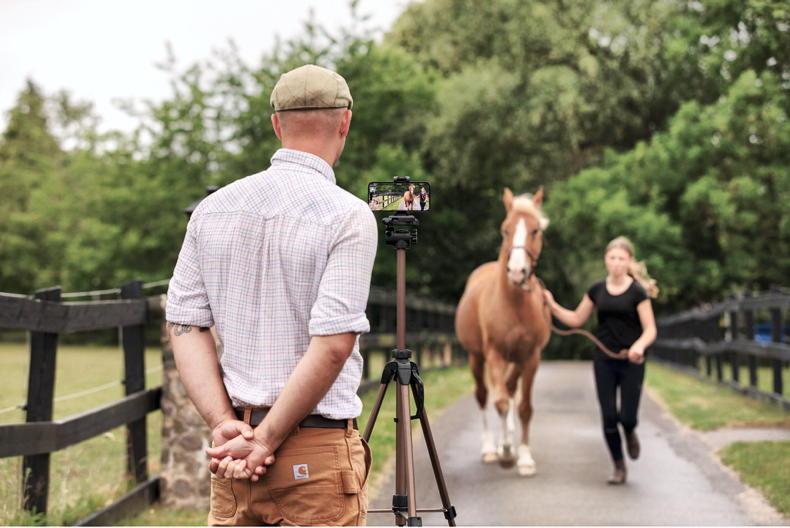
One of the more significant technological advancements is the measurement of stride length and the biomechanics of gait analysis, which allows experts to assess asymmetries and the quality of walk, trot and gallop in horses, for both racing and bloodstock applications.
RaceIQ stride data, for instance, provides information on average stride length, frequency, and sectional timing breakdowns which can be used to assess performance potential. There have been several companies founded in recent years that focus on racing data analytics. Tom Wilson’s racing2, founded in 2022, focuses on motion tracking for biomechanical assessments at sales as well as pedigree analytics. TrojanTrack, founded by Stephen O’Dwyer in 2021, has racehorse welfare at its core. His app is an advanced biomechanical analysis tool for injury prevention and performance optimisation.
Gait analysis
Implementing AI-based gait analysis systems in pre-race examinations could greatly enhance equine welfare and improve industry standards. Sleip is a gait analysis app that can measure a horse’s movement from a video taken on a phone. Sleip has the ability to store the data on stride analysis on individual horses, to measure consistency or inconsistency over time.
Recent studies underscore the importance of data-driven veterinary assessment. For example, research by Adelene Wong, Ashleigh Morrice-West, Chris Whitton, and Peta Hitchens (2022) examined changes in thoroughbred speed and stride characteristics across successive races and their relationship with musculoskeletal injury (MSI). The findings suggest that a decrease in speed and stride length over multiple races correlates with MSI risk, making continuous stride monitoring vital for early detection and prevention.
Innovations such as Equine MediRecord are improving welfare by providing racecourse veterinarians with access to a horse’s individual medical history. Combined with AI-powered tools like Sleip or TrojanTrack, these systems can help identify MSI issues earlier and reduce risk during races. Sleip has already been used in Saudi Arabia for domestic races and the 2025 Saudi Cup, and was trialled by the British Horseracing Authority (BHA) at Aintree.
The future of AI in the thoroughbred industry looks promising, particularly in advancing safety, veterinary care, and bloodstock evaluation. However, interpretation remains key.
As I learned while studying statistics, understanding the context behind the numbers is as important as the numbers themselves. AI cannot replace the judgment of individual trainers or stud managers but is a valuable additional tool in their decision making.
See godolphinflyingstart.com for more information on the programme




SHARING OPTIONS: