


 This is a subscriber-only article
 It looks like you're browsing in private mode


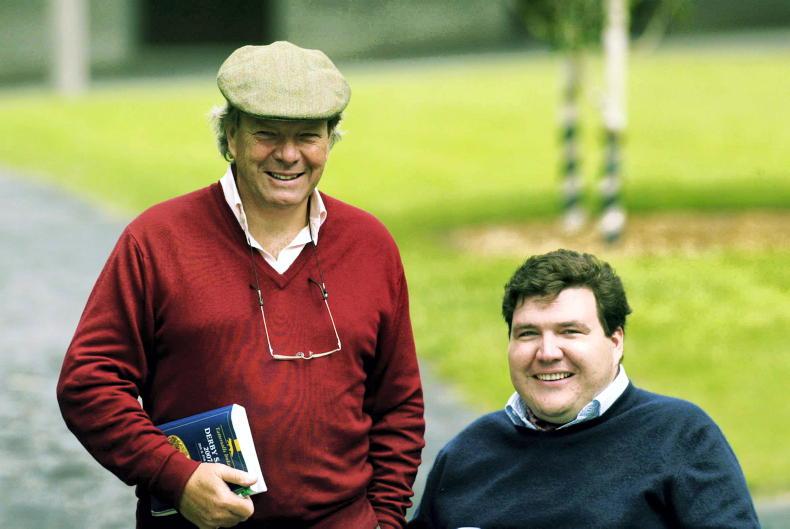
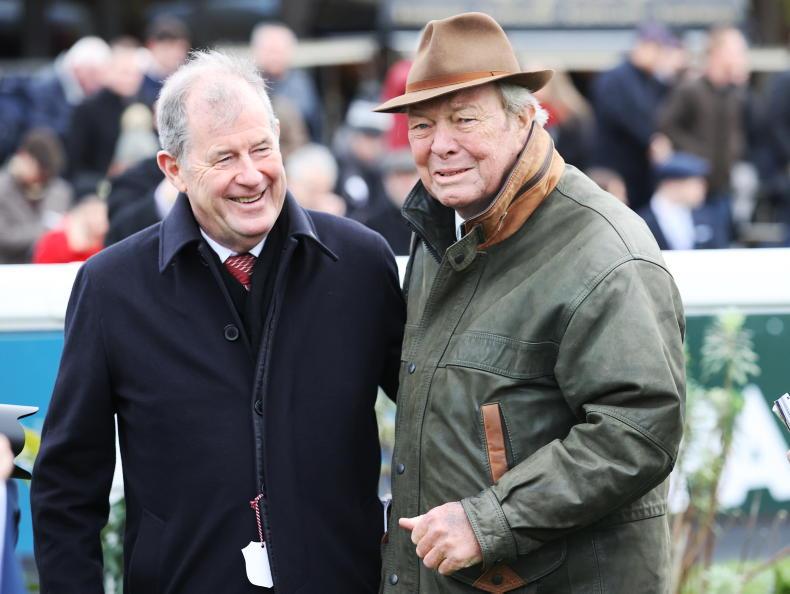
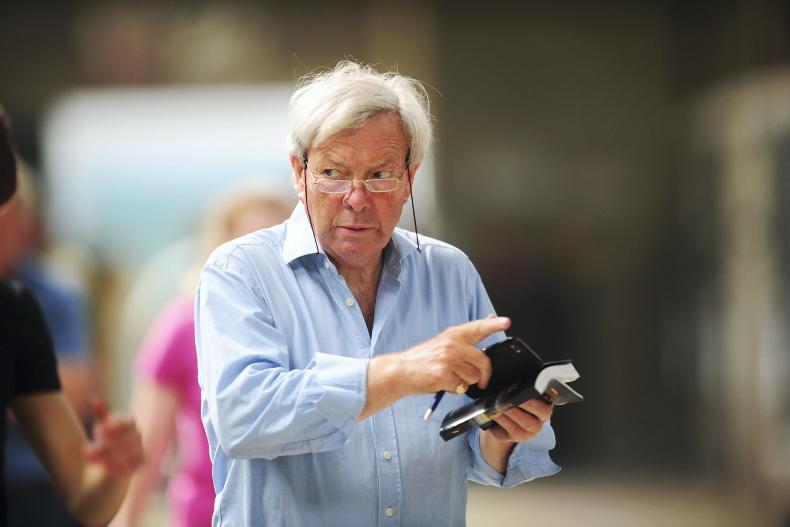
I imagine everyone who knew my father has an Edward O’Grady story. One that makes us laugh and remember him fondly.
There were some amazing tributes paid to Edward in the days after he passed away. But, for me, when I try to sum him up, I think of a complex man, navigating a complicated world, longing for a simple life.
Edward was born at the family home in 1949. Legend has it that, for the first few days of his life, his cot was fashioned from a kitchen. He was an only child, and while he was doted on by his mother, his father was determined that he take nothing for granted. “You were not born with a silver spoon in your mouth,” he would remind him, perhaps a little too often.
He cut his teeth with the newly formed Limerick Pony Club, founded by his aunt, the redoubtable Maureen Hogan, and as his skill and confidence grew, he graduated to riding top show ponies for Reddy Carroll, typically owned by Marjorie Mansergh.
In 1962, he was packed off to Blackrock College. It must have been a harsh adjustment, from the open fields of Ballynonty to dormitories of 40 boys and bathroom basins with ice to break for a morning wash. But his father’s briskness, it seems, had prepared him well, and young Edward bore it without lasting complaint.
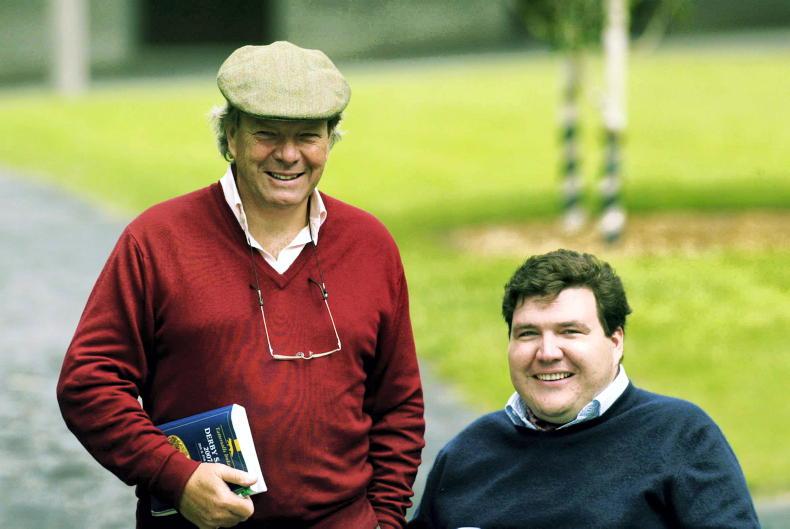
He would subsequently study veterinary medicine in Ballsbridge. Naturally, he represented the veterinary college at international show jumping events, organised by Iris Kellett, and fondly recalled riding at Fontainebleau during the student riots, and again in Munich the following year.
To say Edward enjoyed college would be something of an understatement. I don’t believe he ever passed an exam first time around. But when it came to the school of life, he was a quick study.
He teamed up with Peter Cunningham, who would later be his best man, and together they made a healthy living punting. With Dad’s deep knowledge of horses and form, and Peter’s razor-sharp mathematical mind, they formed quite a team. They landed a particular touch on a maiden hurdler, which inspired the following verse:
There once was a horse named I’m Happy,
Whose speed from the last was quite snappy,
The secret it seems,
Was not stout in his meals,
But a measure of creme de menthe frappe!
Gravely ill
In the summer of 1971, just as Dad was sitting his third-year exams, he received a phone call to say that his father, Willie, was gravely ill with pneumonia. There was no question of staying to finish his studies. It was time to go home and save the farm.
I can’t imagine what he came home to. His father had never been one for paperwork, and Mary had little to do with the business-end of things. It must have been a scramble. Old owners, old friends, looked warily at the young pretender and quietly moved their horses elsewhere.
When Willie died in January 1972, just 18 horses remained in the yard. And Edward didn’t even have the price of the feed bill.
He did, however, have an ace up his sleeve: Grandad’s headman, Timmy Finn. Together, they formed a powerful partnership.
Just a week later, Edward trained his first winner in his own name, naturally ridden by his cousin, Timmy Hyde.
In fact, over the course of the next month, he trained five more winners. It was a remarkable turnaround in such a short space of time, and for a moment it must have felt like things were finally starting to come together.
But fate had other ideas. Just a few weeks later, a mare he had sent to be covered returned to the yard carrying a then little-known virus, rhinopneumonitis. By the end of spring, the horses that hadn’t died were unfit to race. And so, it was back to square one.
For the first, but not the last, time, it was sink or swim. With Timmy Finn managing the yard with military precision, Dad came to realise that training horses was only part of the job. He was also in the entertainment business. It was his role to sell the dream, to talk about the next horse, the next race, and to never, ever let an owner go home thinking they’d had a bad day. By the following winter, there were 20 new horses in the yard.
In his book Kings of the Turf. Michael Clower tells a story about Stone Thrower, a horse owned and ridden by Dad in a bumper at Leopardstown in April 1973. The horse was given a gentle introduction, but Dad knew there was plenty more to come. He needed to sell the horse, and at a good price. Tom Cooper came to the rescue, agreeing to buy him on one condition: Stone Thrower had to win next time out.
A few weeks later, Dad entered him in Killarney. Coincidentally, Dad had a ride in that same race. As they turned into the straight, his own mount was struggling in mid-division, but he could be seen standing in the stirrups, scanning the field for Stone Thrower. When he spotted him in front and pulling clear, the other jockeys looked bemused as he let out a huge whoop of relief. “I was riding for the house,” he’d later protest.
Gay Future
Over the following months, the winners started to rack up, invariably favourites, and typically ridden by Mouse [Morris]. But even so, it was still something of a surprise when, the following April, he trained his first Cheltenham winner.
But it wasn’t just Mr Midland that made 1974 such a defining year. I am, of course, talking about the infamous Gay Future coup. Enough has been written about that episode without me going over it here. Dad had the good sense never to comment on it publicly. He didn’t need to. Everyone knew.
He couldn’t believe the price: 10/1. They were only expecting 5/2!
But thoughts of riches quickly evaporated as betting slips turned to dust and a national scandal erupted. Some of Dad’s more establishment owners took a dim view. He lost not only a considerable sum of money defending himself in the courts, but also several hard-won, and well-heeled patrons.
J.P. McManus
Thankfully, wounds healed. He scored again at Cheltenham in 1976 and 1977. He was crowned champion National Hunt trainer for the first time in ’77, and soon found himself on the shortlist of a promising young Limerick man named J.P. McManus.
They formed a unique bond. Dad was never really interested in betting. Needs must, sometimes, but he believed trainers made the worst punters. Too emotionally involved. What he loved was laying out a horse for the big day. That, I suppose, made him the perfect partner for J.P.
They recorded their first winner together in February 1978 with Jack Of Trumps at Punchestown. It was the beginning of a professional partnership and a loyal friendship that would endure to the very end.
What followed was a purple patch, a steady stream of big race wins and championship titles. For the first time, Dad was able to relax into his success. He invested in the farm, upgraded the house, and began to embody the image of success that he had long projected on far shakier foundations.
Amber, Lucy and I were infants at the time, but I still remember the atmosphere in the house. It was electric. It was full of possibility. Dad would always be on the phone. We’d come down to the kitchen early in the morning, and he’d be deep in conversation with Tim Finn. Then, after second lot, the kitchen would fill up, with owners, jockeys, and visitors just wanting to say they were there.
Mum would serve up eggs, home-made bread, and freshly squeezed orange juice. And the talk was of nothing but horses.
Then in the evenings, the parties were riotous and legendary. It was not unusual to see Trish Hyde ride the latest champion in through the back door of the house and out through the front, probably at around 5am, to the loud chorus of On Ilkla Moor Baht ‘at, led by Pip Plumley.
Family time
“Never let your stomach know what your pocket is feeling” was one of Edward’s favourite expressions, and he lived it to the letter. As success became more consistent, family holidays to far-flung places became an annual ritual. As hard as he worked, he seemed to do it all for those few treasured weeks surrounded by his family. Though going on holiday with Edward was never exactly straightforward …
First of all, there had to be a plan. There was always a plan. I’ve never known anyone who could do nothing for seven days, and yet still have it mapped out in hourly increments. It had to be somewhere hot. And most of all, somewhere far removed from anyone who might know who won the 3.30pm at Leopardstown.
But the location also had to present opportunities, the chance to bump into “the right sort of people.” He referred to them affectionately as “cannon fodder”, interesting, sociable, solvent characters who could split a restaurant bill, be regaled with romantic tales of horses and heroics, and, with a little luck, might one day take the leg of a horse.
It was a numbers game, but he was good at it. And over the years, many of these once-random holiday acquaintances were drawn into his orbit, and remained firm family friends for decades.
Hunting days
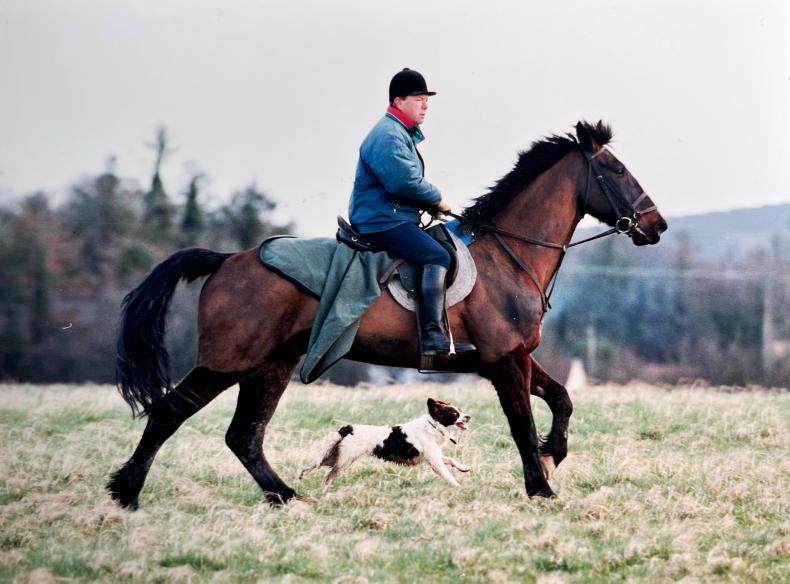
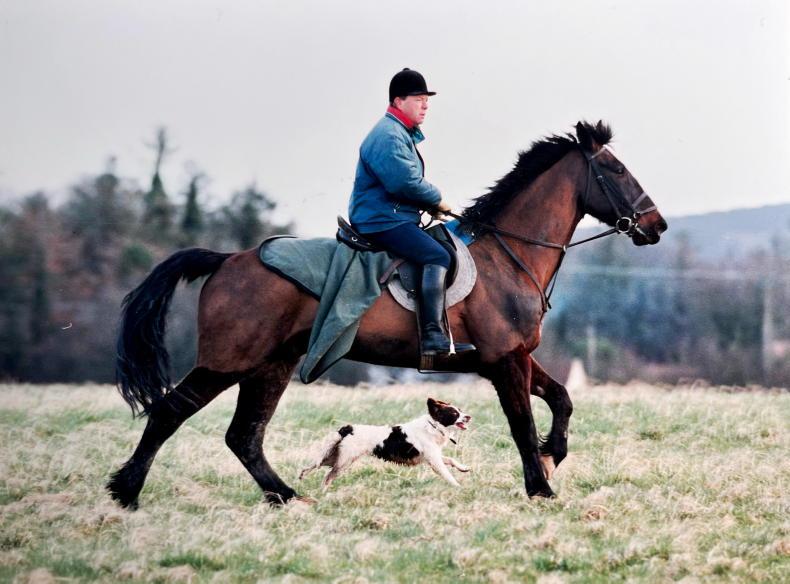
The latter part of the 1980s may well be remembered as “the wilderness years” on the track. But having more time in the winter allowed Edward to pursue his second great love: foxhunting. He became Secretary and Field Master of the Tipperary Foxhounds, and, together with his great friend Brian Duffy, played a key role in ensuring the continued success of that legendary pack.
He had a string of enviable hunters, including The Governor, a horse gifted to him by P.P. [Hogan]. He adored watching a good Master command a pack of hounds, probably remembering his formative summer with Ben Hardaway and the Midland Hunt in Georgia, just before vet school.
Always immaculately turned out, he cut a striking figure at visiting hunts. And on more than one occasion, he was among the last still with the hounds as they reached their quarry, while mere mortals watched on from scattered fields in the distance.
Those were decadent days, long hunting teas and pink-coated dinners with John O’Neill, Charles Hansard, Peter Curling, Mona Croom-Carroll, Tom Cleary, Betsy O’Connor, Vander Vater, Matty Ryan, the Romans, Claire Ryan, Michael Higgins, and all manner of characters the rest of the world thought belonged to a bygone age.
The hunting field was where he came alive, galloping to the sound of the horn, flying over what looked like insurmountable obstacles, showing not just his horsemanship, but his horse’s. It was, to him, everything.
In the early 1990s, I was driving home from some race meeting with Dad. After The Archers concluded on the radio, I asked him, rather innocently, why he didn’t have as many jumping winners as I remembered from my childhood.
I’m not saying I was the catalyst, but he reminded me of that question more than once in the years that followed. The flirtation with the flat was over. He was a man going back to his roots.
Thankfully, picking up where he’d left off was made easier by his loyal patron, J.P., who had continued to support him throughout the flat racing experiment.

In 1994, he announced his return in the biggest way possible, landing a double on the second day of Cheltenham. What’s often forgotten is that the day before, two of his fancied runners had come up short. Sound Man was beaten as favourite in the Supreme, and Gimme Five, also favourite for J.P. in the last, ran far too freely and was tailed off. In the heat of the moment, Dad was critical of Charlie Swan.
Let’s just say his patience was thin when it came to jockeys displaying human traits. In his mind, Their job was to ride it, also to perfection.
He was served by so many loyal and gifted jockeys over the years, but praise was never lavish. Either way, all was forgiven the next day. Charlie’s ride on Time For A Run became the stuff of Cheltenham folklore.
New beginning
The two decades that followed were, in many ways, some of the happiest of my father’s life. His marriage with my mother, Judy, came to an end, but not long after, he spotted a soulmate across the hunting field. He soon found himself with a new partner, a new family, a yard full of horses, and plenty of loyal owners.
We had a string of glorious holidays in the south of France, where Dad relished our increasingly riotous behaviour. And when Mimi and Rosie Mae arrived, he somehow found the cash for a stint in St Barts each January.
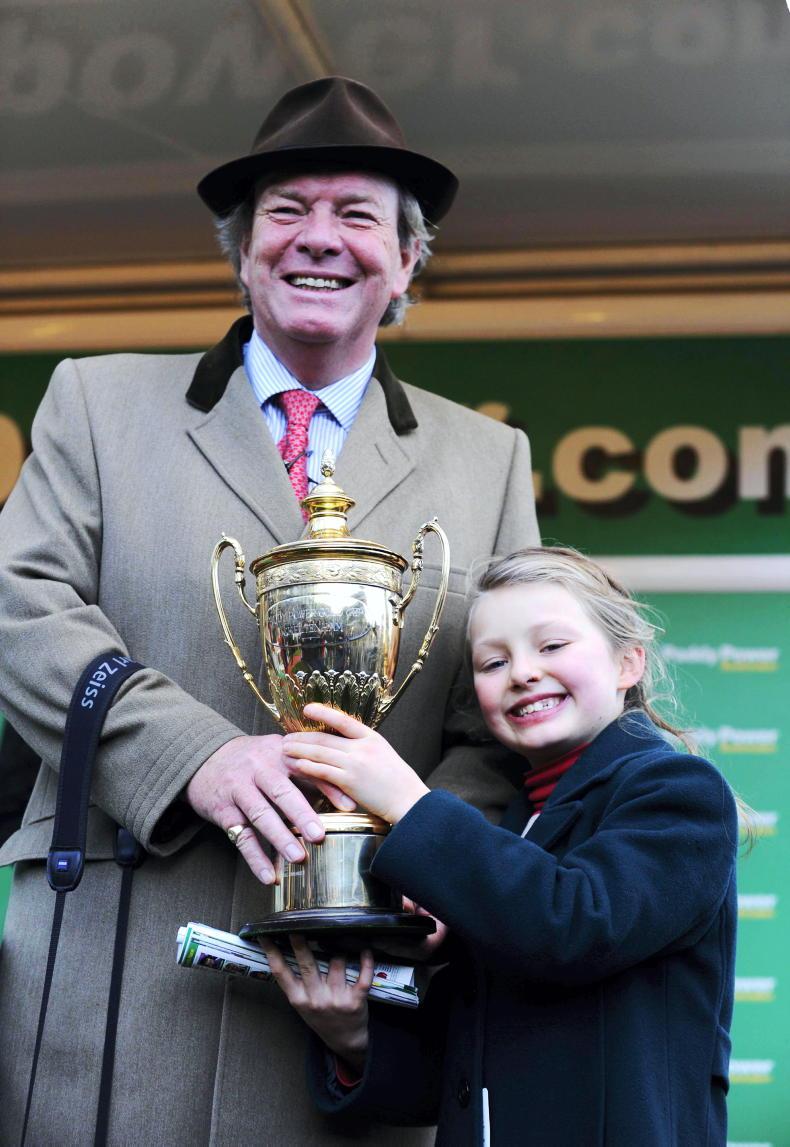
The house became more dilapidated. The car was replaced less frequently. But his family, and his horses, wanted for nothing.
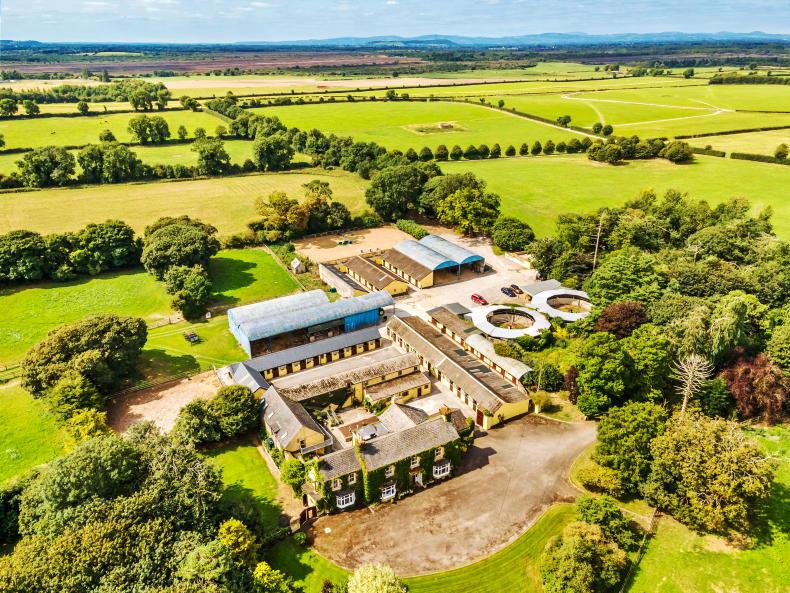
Over the years, for many sons of friends and acquaintances, a stint at Killeens became something of a rite of passage. Names like Jamie Spencer, Mark Wallace, Bas Nicholl, Killian Walsh, Archie St George, David Lanigan, Andy Slattery, Nigel Anderton, Tim Brown, Tom Busteed, and John Quinn come to mind, and more recently, Hugo Hunt, Fergus Gillard, Harry Wallace (Dad’s godson), Gavin Ryan, and countless others, all spent time under the tutelage of the old master.
While Edward was always the front man for Killeens, his success rested on the shoulders of a core team who kept the whole show running true. Dad knew the value of surrounding himself with loyal people who were absolute experts in their field. After Timmy came Tommy Ryan, one of the best jockeys ever to ride for my father, and a key figure during his resurgence in the ‘90s. Supporting him was a long line of stalwarts: Shakespeare, Jamie, Fabio, to name just a few. Not forgetting asking the unflappable Mrs Johnson, and her able sidekick, Miriam.
Fiercely loyal
All of them respected Edward to the nth degree. And more than once, he earned that loyalty in return. Edward stood by them fiercely. If you were one of his own, he looked out for you.
That same loyalty came to the fore again in his final years, when he stood up publicly in defence of Shark Hanlon, over what he felt was a gross miscarriage of justice. He had nothing to gain. But his moral compass, his sense of what was right, compelled him to speak. He wasn’t sure if it helped. But he was glad that he tried.
Those halcyon days came to a sudden end with Maria’s untimely passing. Edward was devastated. It was a wound he carried quietly, but it never healed.
The loss was compounded by his own diagnosis, a rare form of blood cancer, just months earlier. The initial prognosis was bleak, but Dad enrolled in a drug trial and managed to delay the worst of it.
I once asked him why he didn’t just retire, step back, take it easy. He looked at me, half puzzled, and simply said: “What else would I do?”
We were happy for Dad when he found companionship again, this time with Kay Russell.
Dad had always been the one to go out and get the owners. But turning up at every racecourse and every dinner party takes energy. And it was Kay who brought that energy back to him.
She was marvellous, not just in love and friendship, but in managing the practicalities of his declining health. Through countless blood transfusions in Waterford, through his battle with colon cancer, and ultimately through his final months, she was at his side. And though she may have got the rough end of the bargain, I don’t think, not for one second, that she would have traded a single day.
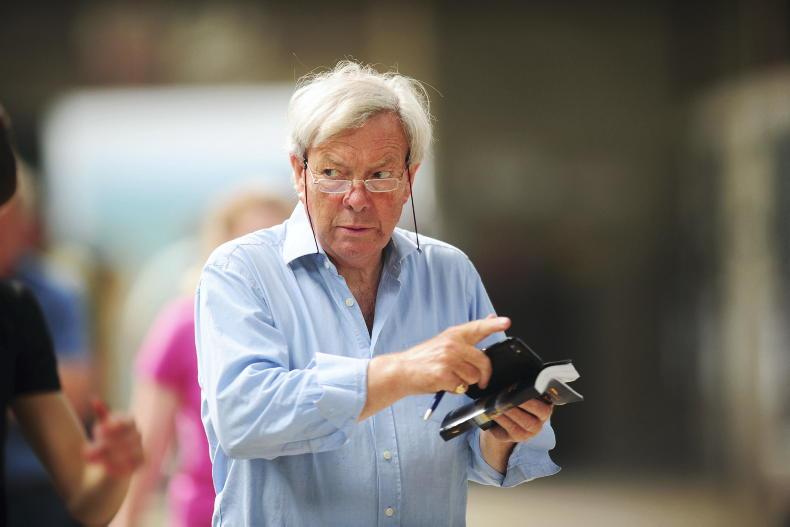
Romantic cowboy
Dad always used to say that, in another life, he would have liked to be a cowboy. I’m sure some of you are raising an eyebrow, wondering whether he didn’t already live that dream!
But what he meant was something deeper. He longed for that sense of freedom, of living without responsibility. He loved the image of riding in off the range on a Saturday, having a bath, a shave, a steak, a few drinks, maybe the company of a lively woman, and then heading back out onto the trail. A simple rhythm. A man and his horse and the open horizon.
The O’Grady family motto is Vulneratus non victus, Wounded, not conquered. And goodness, Edward was wounded many times. But he never let it conquer him.
Sometimes I wonder how he stayed so positive, how he kept going, always. But the truth is, he never looked backwards. For Edward, it was always about the next horse, the next race meeting, the next win.
And isn’t that what horse racing is really about? Hope over experience. One friend said to me recently: When Edward was training in the 1970s and 80s, there wasn’t a whole lot of hope in Ireland. Work was scarce. Emigration was high. People had very little to look forward to.
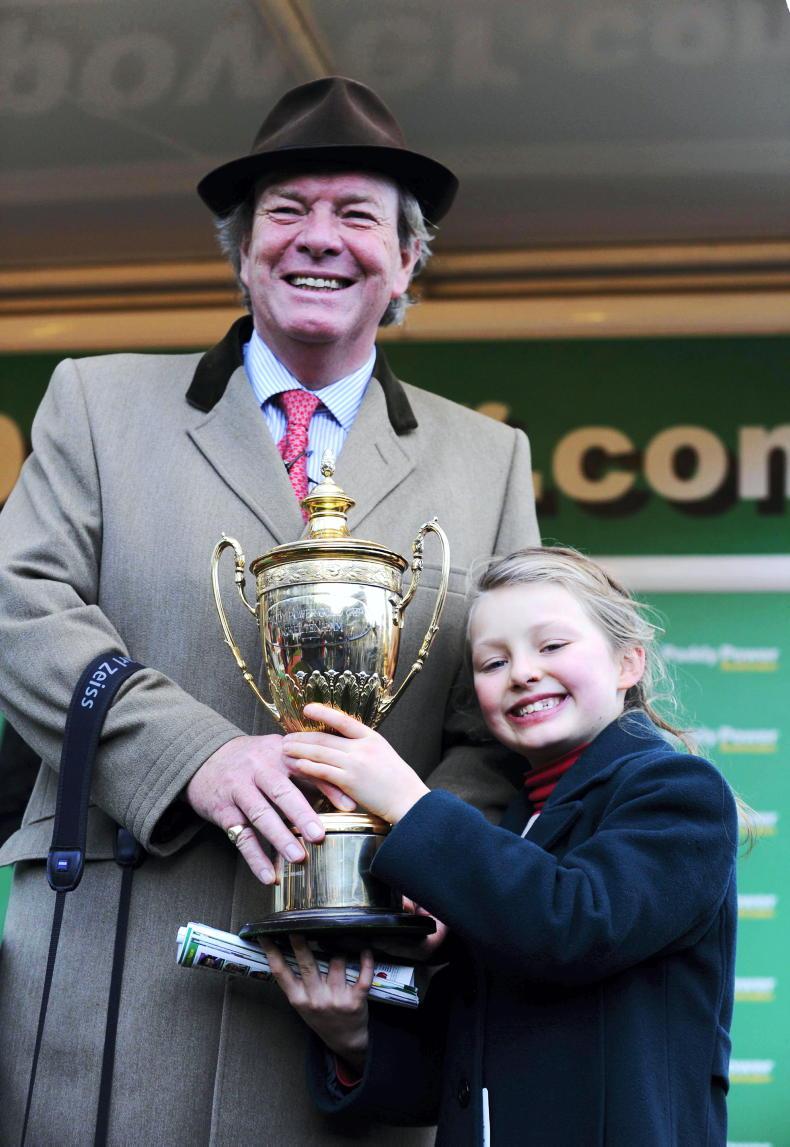
He brought Ireland back into the winner’s enclosure at Cheltenham. And in doing so, he lit a fire in a whole new generation of potential owners, The rest is history.
Edward, for all his greatness, was far from perfect. But he had an enormous capacity for life. He loved his family. He was fiercely loyal to his friends. And he was a master horseman.
More than anything, he pulled us all out of the mundane drudgery of day-to-day, and showed us how to live a fuller life.
Tally-ho, my friend. And kick on, regardless.



SHARING OPTIONS: