

 This is a subscriber-only article
 It looks like you're browsing in private mode



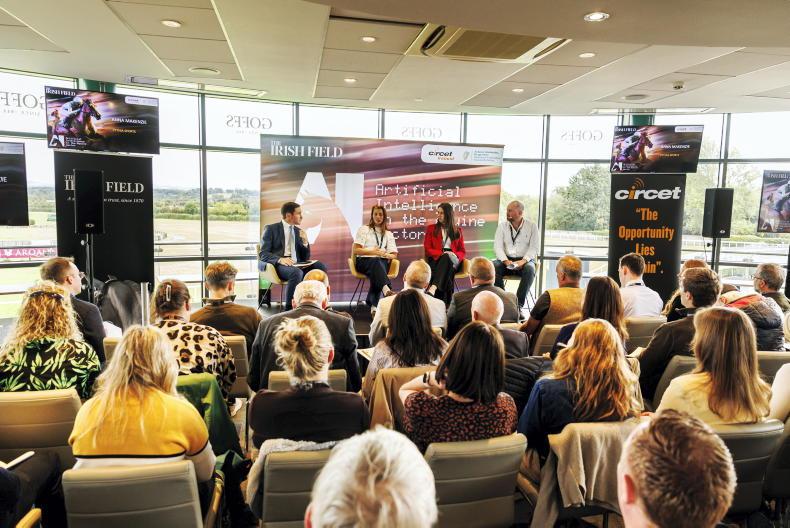
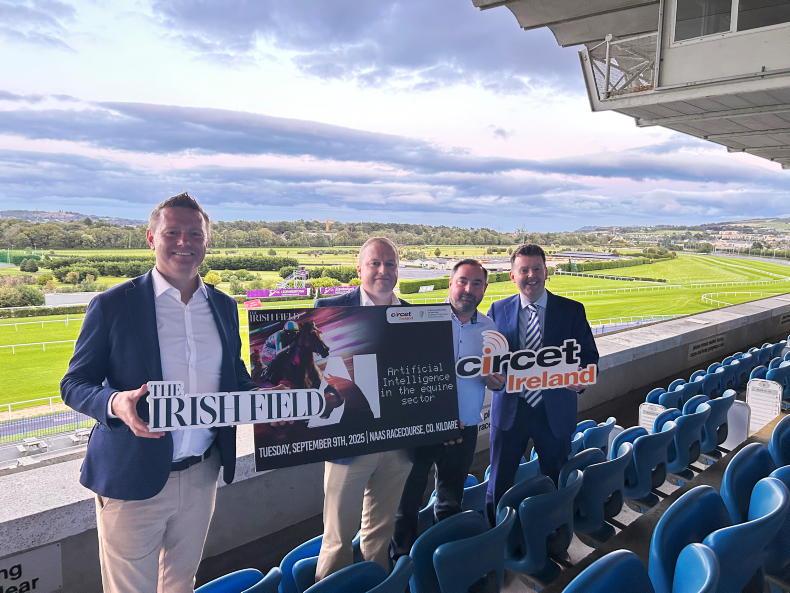
One of the most interesting sessions of the recent The Irish Field AI in Equine Conference at Naas was the one on Using Data to Beat The Market And Improve The Breed.
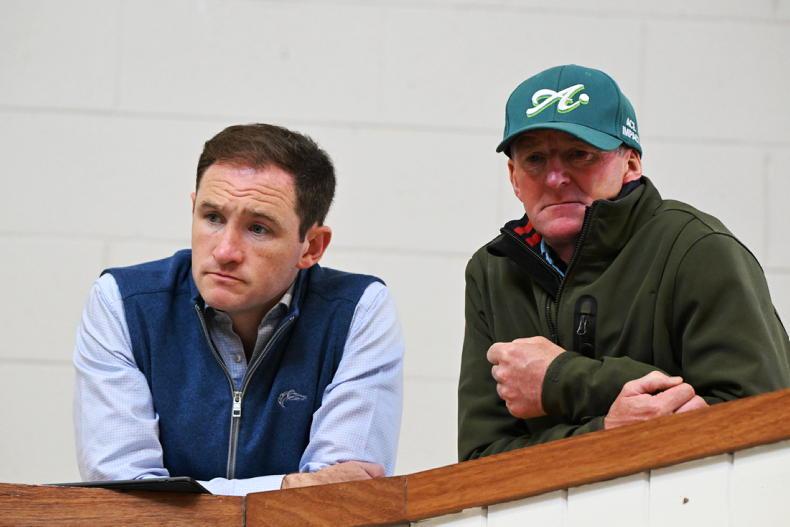
It was chaired by Kevin Blake, with a panel including Tom Wilson and Anna McKenzie, both of whom use data accumulation to access or try to predict sales ring and racecourse performances.
One line that stood out and gave me a bit of a surprise was when Kevin said: “I pulled a sample of 44,000 yearlings that were sold in Europe in a number of years. What percentage do you think went on to win a pattern race?”
Read about this session here or listen to the podcast on this session here.

Now we are talking about the best-bred horses, being scrutinised by the world’s leading sales professionals, who would proclaim to have ‘an eye for a horse’ over years of experience.
I was surprised when Kevin said the figure was 2.9%. And I was even more surprised when he asked the audience to guess what the figure would be, and they were right!
The informed audience simply expected an extremely low percentage of top priced yearlings to actually perform to the required level on the track, despite the judgements made on pedigree and visually.
Recent racetrack evidence backs up the precariousness of it all.
Last Friday saw the racing debut of the second top lot from the Tattersalls October Sale Book 1 of 2024. Poker, a son of Wootton Bassett bought by Amo Racing cost 4.3 million guineas.
He finished sixth in his maiden, looking like a lot of improvement would be needed.
The top lot, a son of Frankel named Partying, also bought by Amo Racing, cost 4.4 million guineas and has yet to race while the third top-priced lot, Act Of Kindness, who cost Godolphin 3.7 million guineas, finished third on his racecourse debut at Newmarket on Saturday.
Specific sale
To get a better grasp of that small percentage, a look at a specific sale makes it more real.
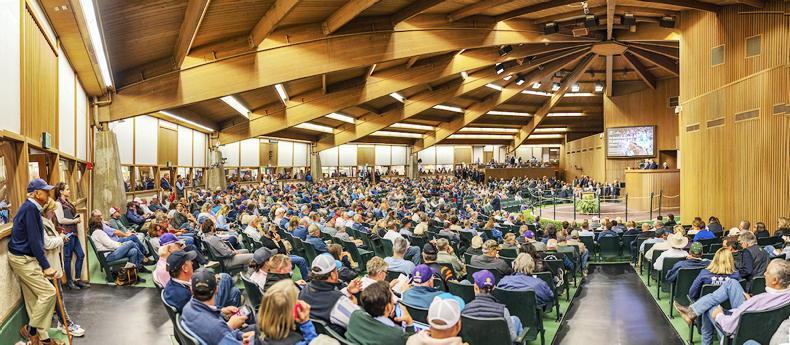
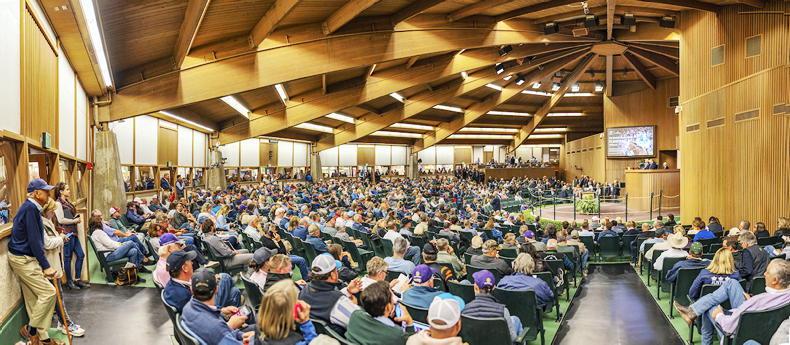
The Keeneland September Yearlings of 2022 had 30 lots sell for a $1 million or more. So, where are they now, what have they done?
We are three years on and they are coming to the end of their four-year-old season. Lots of time to develop, get over any setbacks and still get into action on the track.
The facts backed up the earlier stats. Of the 30 lots sold for over the million, and mostly from top sires, Quality Road, Constitution, Curlin, Gun Runner, Into Mischief, Justify etc.
And only two have actually won a Grade 1, Lesile’s Rose and Imagination
You will see trainers quoting the saying ‘train the horse not the pedigree’. But in selecting the horse, we use pedigree as the first elimination factor. What yer ma and da did tells a lot about you, does it?
Sometimes it looks easy, like in the US last week when Baeza became the third son in a row from the mare Puca to win a Grade 1 race. At three successive Keeneland September Sales, Mage cost $235,000 in the sale ring as a yearling, his sibling Dornoch cost $325,000 and Baeza fetched $1,200,000. What price her next foal?
Despite the ‘breed the best to the best’ mantra, we know that pedigree guarantees nothing on the racetrack. Passing on ability is taken on trust.
As the Arc weekend approaches, the dual winner Enable was one of the best mares of recent times.
At stud, she went to Kingman and three times to Dubawi. In the sales ring, you would expect that offspring to be worth millions. But to date, her three foals now of racing age have not even reached a racecourse.
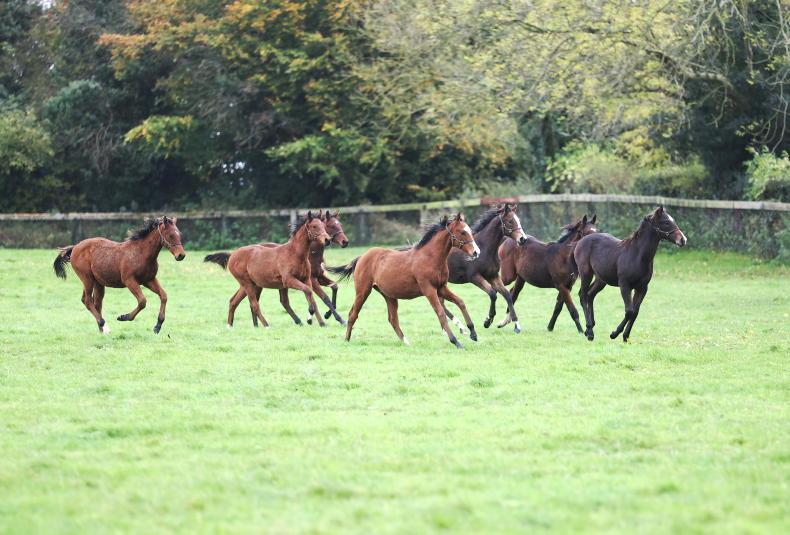
Human eye
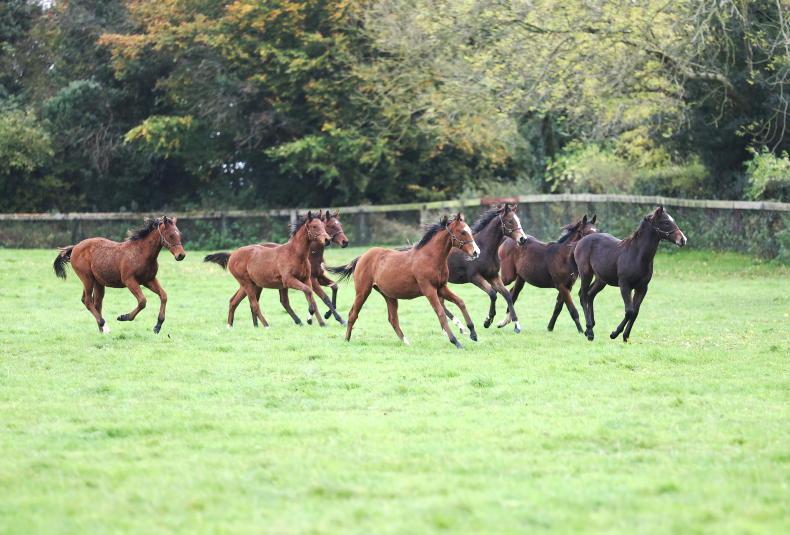
So ditching the pedigree, could that judgement on a young horse by the human eye be improved by data and AI?
Kevin Blake commented at the introduction to the session that after “30 odd generations of selective breeding… where we are with the thoroughbred now is very close to maxed out, when you look at race records, time records, progress over the decades, they have actually plateaued from quite a few decades ago, despite the huge advances in technology nutrition, training.”
It was amusing at the conference to hear how computer vision analysis of yearlings' conformation and their biomechanical movement was currently hit-and-miss but, going forward, the technology and analysis will surely improve and the margin of error will be reduced.
There may not be much ‘improvement’ to be made on the track but, in terms of using tech to select the best unraced horses, the race has probably only just begun. It makes me wonder, in this age of algorithms and big data, how long before AI becomes superior to the human eye at the sales?

SHARING OPTIONS: