Horse racing, like any sport, brings dizzying highs and crushing lows, and those involved ride the waves in the hopes of returning to cloud nine. Martin Hassett knows all about it, having reached a career best and suffered a cruel loss in the space of 24 hours, as he tells Amy Lynam
NO doubt, Martin Hassett has gone through many ups and downs since taking out a restricted licence in 2011, but the Dublin Racing Festival brought new extremes, six months after the Tipperary trainer switched to a full licence.
Hassett gained his first blacktype win on Sunday when Moonverrin landed the Grade 2 mares’ bumper, but reality wasted little time in reminding him of the cruel reality of racing when Battle Of Ridgeway was fatally injured 24 hours later in the listed handicap chase.
“Jaysus, the good has gone out of it now,” he said on Tuesday afternoon. “I was on a serious high there on Sunday evening, but then coming home yesterday and driving into the yard, and seeing an empty stable, it’s gut-wrenching.
“We’re all gutted. Going around the yard this morning, no one was talking.”
Trying to focus on the positive, I ask what Moonverrin’s win meant to Hassett, who says: “Aw Jesus, it was unreal, to do it at the Dublin Racing Festival, with the crowds that were up there. Sometimes at the races, people go away for the bumper, but I’d say they all stayed this time. It was special.
“This would be on par with Cheltenham; the Dublin Racing Festival is going from strength to strength. Fair play to everyone. Just the crowds that were there, and there were English people over as well. The atmosphere was unreal.”
It was a fascinating race to watch, with Moonverrin cruising past toiling rivals in the straight, only to drift towards the stands.
Then, having been out of contention before the straight, Stuart Crawford’s mare Royal Hillsborough powered alongside under Stephen Connor and, with a rival to eyeball, Moonverrin regained concentration under Finny Maguire’s urgings.
It looked like it might be too little too late for Hassett’s mare, until Connor dropped his hands at the 50-yard marker, having mistaken it for the winning post. Much of the attention has been on Connor in the aftermath, much to Hassett’s frustration.
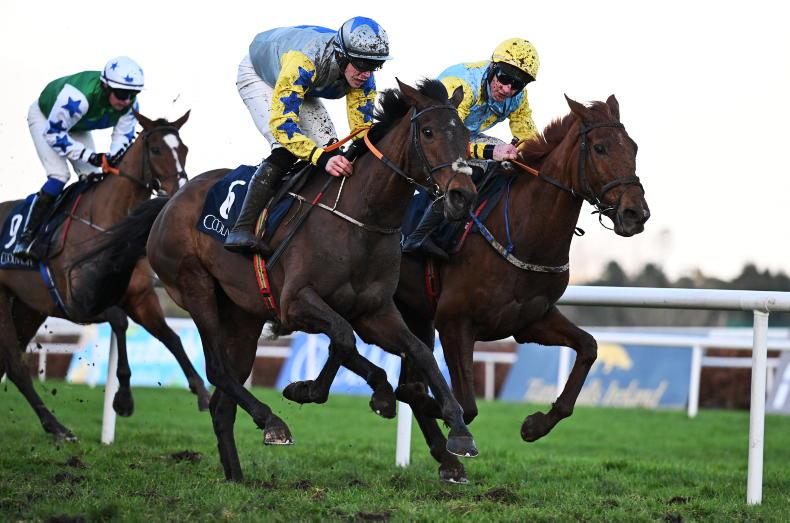
“I’m slightly pissed to be honest,” the trainer admitted. “We were given no credit the first day, the second day, and now all the talk is about what went wrong. Look, don’t get me wrong, I’m not badmouthing any jockeys, or anyone else’s horses; I think the Crawfords have a lovely horse, and they were fierce unlucky.
“I felt for that young fella; he’s not the first lad to miss the finish line. I hope he’s not listening to all that shite on social media. Once he keeps his head up and gets going again, he’ll be grand. But I do genuinely think the best mare won.”
Underdog
Despite returning 20/1, Moonverrin had shown plenty of ability on her two previous starts, with Ned Morris’ homebred finishing second on debut against the opposite sex, before going one better at Cork.
I suggest that if she hailed from a bigger yard, she would have been a much shorter price, and Hassett agrees. “I said that to Ned Morris (owner/breeder) here a couple days beforehand, and I said it to the boys - if Willie Mullins’ or Gordon Elliott’s name was beside that mare, she would have been second or third favourite, or maybe even favourite.
“There’s no doubt that if he (Stephen Connor) stayed riding, he would’ve won, but if our mare kept a straight line, she would’ve won. Or if there was another 50 or 100 yards, we would’ve won.
“If that mare was one of Willie’s, they’d be all raving about her; she’d probably be favourite for the Cheltenham bumper. I just think there’s a serious lack of respect for the filly; she’s done nothing wrong.”
Hassett is looking forward to silencing any doubters next time, which is unlikely to be at Cheltenham, he says. “We might just stick to the mares’ division and let everyone else go to Cheltenham and cut one another’s throats, and we might sit back and wait for Fairyhouse, Aintree, Punchestown.”
Whatever the daughter of Well Chosen does in bumpers is a bonus, Hassett adds: “She’s not a bumper filly; she’s a jumping mare. She’s absolutely brilliant to jump, dynamite to jump.”
Horses from Hassett’s Tipperary yard can always be expected to improve from experience, given his training methods, he continues. “They come up our hill three times, they come up on the steel most of the time - they’d never be off the bridle. They just got a good blow in.
“She’s effortless coming up [the hill], and I mean effortless. She just looks like she’s floating on air. So, I can’t tell you how good she is, but she is good, that’s all I can say.”
Yard graduate
Hassett has a fair benchmark to compare the mare, as he trained her half-brother Mulcahys Hill to win on debut, and the Brian Boru gelding went on to finish second in the Challow Hurdle, beaten a short head.
“There’s a story behind that,” Hassett informs me. “We had him in a maiden in Tallow, and there were three meetings on the same day, and we had three runners. We actually nearly made history; we had two winners and a second on the first four-year-old day of the year.
“We couldn’t get a jockey [for Mulcahys Hill], and we had to beg Ciaran Fennessy to ride him. Basically, he couldn’t do the weight. He handed me out a saddle, nothing else - no girths. The clerk of the scales didn’t want him to ride, but Jimmy said ‘look, the boys want him to ride’.
“He went back in and got the girth and the stirrups, and he absolutely sluiced in, giving 7lb to the second horse on bottomless ground.”
When asked to compare the siblings, Hassett responds: “There was a quirk in him, and I’d say he just fell out of love with racing. I think she’s better. Look, maybe all my geese are swans, but I think this one is special.”
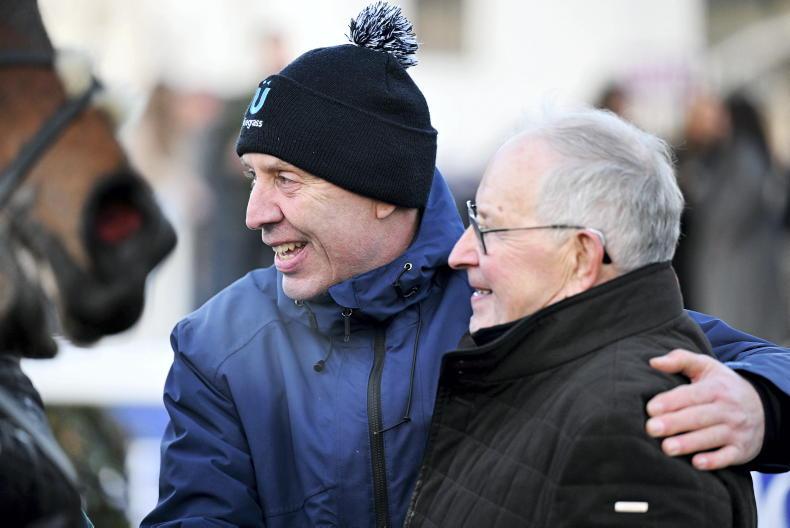
Ned Morris and his wife Christine were at Leopardstown to enjoy the win, which held special significance, Hassett explains. “Their grandchild, David Lahart, got killed in an accident just before Christmas, in a car crash. He was 19 years of age.
“They were broken, probably still to this day, they’ll never get over it. There was savage pressure on me in Cork, just to put a smile back on their faces.
“A couple of days after that, Ned rang me and said ‘she’s not for sale. Run her in David’s favourite colours’. Those were David’s favourite colours she wore on Sunday. I couldn’t see her getting beaten (at Leopardstown), and whether we had divine intervention behind us, I don’t know.”
Moonverrin had recently worked with Monday’s runner, Battle Of Ridgeway, leading to dreams of a big race double. “I actually think he would’ve won because he was flying it,” Hassett says ruefully. “He’s usually lazy, but coming down to the first two, he was actually lit up - that’s not like him.
“It could have been a special weekend, but look, that’s racing. Nobody wants to see a horse getting killed. We have to keep going. We’re all gutted here and it’ll take a while to get over it, but what do you do, just drive on.”
Trader
Battle Of Ridgeway had been something of a flagbearer for the yard, becoming their first runner in the UK when finishing third at Cheltenham in November. A €10,000 store, he sold to owner David O’Mahony after winning on handicap debut and remained in the yard, with trading an essential part of the business.
“Look, everyone knows it takes a few pounds to run this kind of operation, whether you’re big or you’re small, so if we have a horse of our own to sell, we sell it,” Hassett explains. “We haven’t sold one now in a while, but we’ve got a couple of nice horses here in the yard.”
One promising type who has yet to sell is Loch Gamhna, who finished third in a two-year-old maiden at the Curragh in October. Hassett has high hopes for the colt, who was bought for €6,000 and is owned by Clodagh Mitchell with Deirdre Hassett.
“I got very weak offers after that run in the Curragh,” the trainer reports. “He wasn’t a real two-year-old type; he’s a big, raw horse - he wouldn’t look out of place at the Land Rover (store sale). He might come out the first day of the flat, if he’s ready, but we think he’s special as well.”
Of their National Hunt youngsters, Hassett highlights a Berkshire four-year-old out of Mary Frances, who won four for the yard in her racing days. “He got a bit of a setback, but he’s a horse we like,” he notes.
Unlike most, Hassett hopes the wet weather returns in time for the flat season, saying: “Dmaniac is a certainty the first day back, if we get rain. He never got his ground last year until the last day at the Curragh, when he won. If there was a race at the Curragh in the morning, you’d love to bring him up there, because he wants bottomless ground.”
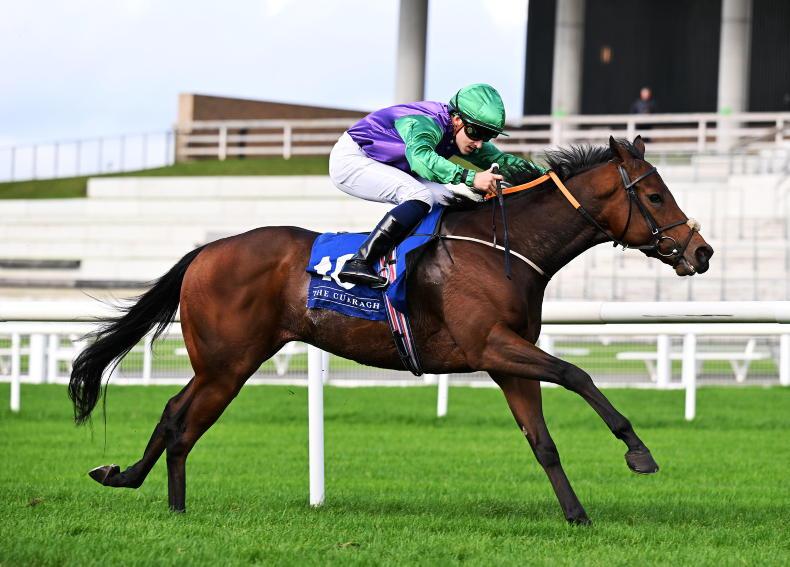
Rockingham Handicap winner Harry’s Hill is another stable stalwart and, having dropped down the ratings, Hassett believes there could be another big pot to win with the now eight-year-old.
“He just wants fast ground,” he comments. “I think maybe his last couple of runs, he might have just had enough of it, but we’re minding him now. We haven’t really started doing anything with him yet - we don’t want soft ground; we want to go back to the Rockingham again.”
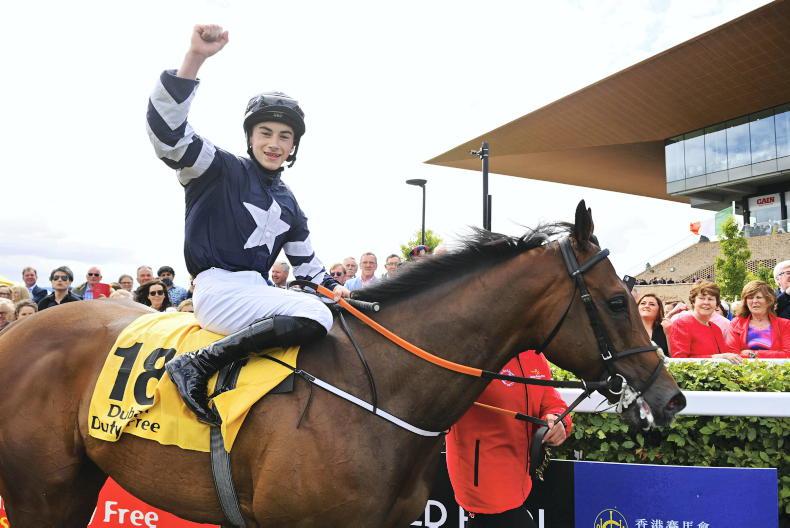
The likeable sprinter landed the valuable handicap when ridden by the trainer’s nephew Wayne, then a 10lb-claimer, and crowned champion apprentice last season. The young rider is a part of a team entirely made up of family members, as it has been since the beginning.
“There’s myself, my brother Michael, my daughter Megan, my son Jack, Michael’s son Michael Junior, or little Michael, as we call him. And then, of course, Wayne.
“They’re all well able to ride, which is a big bonus in the game. Michael spent 15 years in Ballydoyle with Vincent - he knows his stuff. The two of us spent over 40 years in Coolmore, while doing this part-time training. In the middle of last year, I took out the full licence.”
All in
A major health scare encouraged Hassett to follow his dreams, he explains. “It’s well documented that I got a triple bypass six months ago. When I was out sick, Coolmore always looked after me. I had some great times there - I couldn’t say a bad word about them, but I decided not to go back and to try this full-time. We’ll give it a right crack and see how it goes.”
While there might be more pressure on the operation to succeed now, the mornings have become a bit easier.
“We were getting up at 5 o’clock in the morning,” Hassett tells me. “I was probably one of the first in the country to put lights on the gallop.
“We were going from here to work, and then we were coming back here, riding a few at dinner time. Look, it’s a full-time job. We started at half seven this morning; we’re not getting up as early, but we’re having a good crack at this.”
When asked what could make life easier for trainers, Hassett immediately highlights prize money. While he welcomed increases recently announced by HRI, he believes there should be a focus on the lower grade races, so that all horses have a better chance of covering their costs, which continue to rise year on year.
“Any time there’s an increase in prize money, it’s a big boost,” he says. “But in a handicap hurdle, you might get a thousand euro for third, or something.
“I don’t think the bigger races need the bigger prize money. Does the Derby need an increase? Does the Gold Cup need an increase? Maybe they don’t. Give it down there to the lad who’s maybe in a 0-60, or a 0-100 in a National Hunt race.
“I would just love a horse to pay his way, that you’re getting a few pounds, and he’s just covering his costs. If you’re doing that, then you’re doing well.”