Willie Mullins has received a fine and Final Demand has been disqualified from a second placing in the Brown Advisory Novices Chase at the Cheltenham Festival in March.
The findings of an independent British Horseracing Authority disciplinary panel were published on Monday, following a fast-track referral for admitted rule breaches.
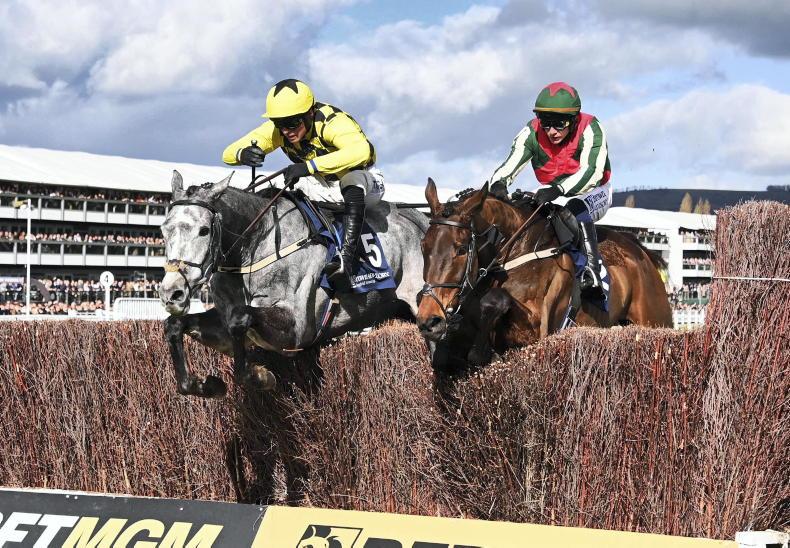
Final Demand had finished a three-quarter length second-place finish to stablemate Kitzbuhel.
But it has since been found in a BHA investigation that Final Demand, who was sent off 7/2 under Paul Townend, ran with a category B prohibited substance in his body.
The banned substance, mepivacaine is a local anesthetic widely used in horses for diagnostic nerve blocks, intra-articular, epidural, and minor surgical procedures. The BHA has published a detection time of 72 hours for mepivacaine.
The findings of a BHA Judicial Panel, published today, read: “Following a fast track referral for admitted breaches of Rules (K)2.2 (The Responsible person must ensure that prior to leaving the Racecourse, no Category B Prohibited Substance is present in their horse’s body on a day on which it is engaged to run in a Race) & (J)24.2 (A person must not provide any inaccurate information to the BHA) Mr Mullins has been fined £1,000 & £100 respectively for a global penalty of £1,100.
“Contrary to Rule (K)2.2, FINAL DEMAND (IRE) ran in the Brown Advisory Novices Chase (Grade 1) at Cheltenham Racecourse on 11 March 2026 with a Category B Prohibited Substance (mepivacaine) in its body.
“In breach of Rule (J)24.2 Mr Mullins had failed to declare use of mepivacaine on the horse in its medical declaration forms submitted prior to the Race. Subject to Rule (L) 47.4 the horse shall be disqualified from the race.”
In the investigations it was found that Final Demand had sustained a soft tissue injury to his lower jaw in an accident on March 3rd 2026 which had been stapled in the field under mepivacaine.
Part of the BHA Submissions read:
Rule (K)2.2 Charge
29. The BHA submits that the precise route as to how the Prohibited Substance entered the horse’s body is not established and therefore Mr Mullins cannot make out any defence under (K)14 of the Rules of Racing to the (K)2.2 breach. On the balance of probabilities, it was not the therapeutic use of mepivacaine on 3 March 2026 which led to the AAF (Adverse Analytical Finding) on 11 March 2026.
30. The BHA submits that neither Mr Mullins, nor any of his staff, were aware of the administration of mepivacaine, however, accepts that the yard does have in place a number of reasonable precautions to prevent contamination of horses with Prohibited Substances whilst travelling to race meetings as set out in the evidence of Mr Porter and Dr Bascop above.
31. It accordingly submits that the appropriate culpability is low. The entry point is £1,000. There is no recent disciplinary history, the only previous breach being in 2002 and the IHRB have confirmed that Mr Mullins does not have any disciplinary history relating to equine positives in the last six years.
FULL BHA REPORT
William Mullins - Rule (K)2.2, (J)24.2, fast-tracked
Disciplinary Panel - Fast-Tracked Decisions
12 Oct 26
SUMMARY
1. Mr Mullins is an Irish Horseracing Regulatory Board Licensed Trainer. He has admitted two charges under the Rules of Racing. First, he accepts that contrary to Rule (K)2.2, FINAL DEMAND (IRE) (“the horse”) ran in the ‘Brown Advisory Novices Chase’ (Grade 1) (“the Race”) at Cheltenham Racecourse with mepivacaine (a Category B Prohibited Substance) in its body. Secondly, he accepts that in breach of Rule (J)24.2 he had failed to declare use of mepivacaine on the horse in its medical declaration forms submitted prior to the Race.
2. I am invited to consider this matter using the fast-track protocol under the Rules of Racing. I am satisfied that it is appropriate for use of this procedure, because Mr Mullins has admitted both breaches, the material facts are not in dispute and the BHA and Mr Mullins have agreed the proposed sanctions, which in my judgment are appropriate having regard to the Table of Penalties. For the reasons given below, I approve the proposed sanctions as follows: -
a. A fine of £1,000 in respect of the breach of Rule (K)2.2.
b. A fine of £100 in respect of the breach of Rule (J)24.2.
3. Additionally, pursuant to Rule (L)47.4 the Horse is disqualified from the Race, and the prize money will be re-distributed on the basis that the Horse is not entitled to any position in the Race or any prize. These consequences follow from the presence of a Prohibited Substance in the Horse’s body on Raceday and do not reflect any assessment of Mr Mullins’ culpability.
4. This fast-track decision concerns the same factual matrix as the Cheltenham Racecourse decision which I have considered in separate reasons.
BACKGROUND
5. On 11 March 2026, the Horse ran in the Race, which was over 3 miles 1 furlong, finishing second and winning £43,672 in prize money. It was tested post-Race for blood and urine and on 26 March 2026 the BHA approved laboratory confirmed the presence of mepivacaine in the blood sample. Mr Mullins elected to have the B sample tested by a different BHA approved laboratory. On 10 April 2026, the presence of mepivacaine was confirmed. On 14 May 2026, the presence of mepivacaine was also confirmed in the urine sample, together with 3-hydroxymepivacaine.
6. Mepivacaine is a local anaesthetic used for analgesia or anaesthetic by local infiltration peripheral nerve blocking techniques in diagnostic analgesia and anaesthetic as well as central neural techniques including epidural and caudal blocks. It is effective in large doses, has rapid onset of action and is of intermediate duration of action. It is commonly administered to thoroughbred horses in the UK for therapeutic purposes but is a prescription only medicine.
7. The BHA has published a detection time of 72 hours for mepivacaine. It may have a pharmacological effect on multiple mammalian body systems and is classified in paragraph 12 of the Prohibited List Code of the BHA Rules of Racing in Category B.
THE RULES OF RACING
8. Rule (K)2.2 provides that the Responsible Person (in this case the Licensed Trainer) must ensure that prior to leaving the Racecourse, no Category B Prohibited Substance is present in their horse’s body on a day on which it is engaged to run in a Race.
9. Rule (K)14 provides a defence to a breach of Rule (K)2.2 if the Responsible Person establishes both (1) the precise route as to how the Prohibited Substance entered their horse’s body; and (2) that they had taken all reasonable precautions to avoid violating Rule (K)2.2.
10. In the case of Paul David Evans decided on 15 May 2025, it was held by this Panel that for the purposes of establishing the defence, the Responsible Person needs to demonstrate not only that ‘all reasonable precautions to avoid violating Rule (K)2.2’ had been taken with respect to the ‘precise route’ by which it was established that the Prohibited Substance had entered the horse’s body, but more widely, that all reasonable precautions to avoid contamination of horses with Prohibited Substances were taken, whether they were causative of the particular breach or not.
11. Rule (J)24.2 of the Rules of Racing states that a Person (here the Licensed Trainer) must provide accurate information to the BHA.
12. The Table of Penalties in respect of Rule (K)2.2. sets out a two-stage test, the first stage of which is to assess the culpability of the breach, low, medium or high. Low culpability is described as follows:
“No knowledge of administration and reasonable precautions taken or therapeutic dose administered close to withdrawal period. Satisfactory attendance at BHA/NTF seminars is a required precaution.”
Medium culpability cases are described thus,
“No knowledge of administration but significant failings at the yard or Panel is satisfied of an acceptable explanation for a significant therapeutic administration error.”
High culpability cases are not relevant to this case.
13. Stage Two requires the Panel to decide upon sanction, ‘on the basis of the factual circumstances’ of each case. Panels are cautioned against attempts to use previous ‘precedent’. Panels should start at the entry point and adjust for mitigating and aggravating features they have found as part of their consideration of the evidence and during the assessment of the level of culpability. Further circumstances including personal mitigation, credit for cooperation with the BHA and the previous history of disciplinary offences can then also be taken into account.
14. The sanction guidance is as follows:
Culpability: Low
Entry Point: Financial Penalty £1,000
Range: Financial Penalty Only (Caution - £5,000)
Culpability: Medium
Entry Point: 3 months' disqualification/withdrawal OR Financial Penalty £2000
Range: 1 month - 3 years disqualification/withdrawal OR £1,000 to £10,000
15. Additionally, the notes remind the Panel that where early admissions are made and reasonable precautions are present, there will be sufficient mitigation generally to apply a caution for a first breach.
16. In respect of (J)24.2, the Table of Penalties gives a range of £100 to £2,000 and has an entry point of £250.
THE INVESTIGATION
17. The Chief Medical Officer of the IHRB, Dr Lynn Hillyer, attended Mr Mullins’ yard and notified him of the Adverse Analytical Finding (“AAF”) on 30 March 2026. She had a conversation with Mr Mullins in which he was visibly shocked by the finding and was unable to think of any occasion when the Horse may have come into contact with mepivacaine. Dr Hillyer spoke with the yard’s Private Veterinary Practitioner, Dr Virginie Bascop, who informed her that the horse had sustained a soft tissue injury to his lower jaw in an accident on 3 March 2026 which had been stapled in the field under mepivacaine. A photograph of the horse’s injury is in my bundle of papers. The treating veterinary surgeon, from Anglesey Lodge Equine Hospital, confirmed use of a single dose of mepivacaine on the horse on 3 March 2026 in a written surgical report which I have seen.
18. There are two stages of submission of medication declaration for every runner at the Cheltenham Festival. The stage 1 declaration concerns short-acting medications administered within the 6 weeks prior to the deadline. By coincidence, the stage 1 deadline was 5pm on Tuesday 3 March 2026. This was shortly before the horse was administered mepivacaine following its accident that day.
19. The stage 2 declaration should include any long-acting medications administered to a runner in the six months prior to the deadline, together with any medications or treatments administered after submission of Stage 1. Therefore, the administration of mepivacaine on 3 March 2026 ought to have been included in the stage 2 submission for the Horse. It was not.
20. Dr Bascop was responsible for the declarations and gave evidence in a statement that she had been unaware that the horse had been administered mepivacaine in the field until Dr Hillyer had arrived with the AAF notification on 30 March 2026. She had spoken to the treating veterinary surgeon on 3 March 2026, but he had not mentioned mepivacaine. There were no other circumstances in which mepivacaine could have been administered to the Horse. She explained the precautions she takes on the yard both with respect to mepivacaine but also other medications including storing them offsite in a locked place and removing the sharps container to her car. She accepted that she did not check with Anglesey Lodge to ask what medication they had administered to the horse on 3 March 2026 or afterwards for completion of the stage 2 declaration. The medication record is computerised, and all medication is uploaded following reports from veterinary surgeons.
21. On 8 March 2026, the Horse arrived at Cheltenham and was stabled in the Charles Turner yard. Unfortunately, there was no CCTV footage available from Charles Turner yard until he was moved to the ‘Irish’ yard on 11 March 2026. The lack of CCTV footage is not something over which Mr Mullins had any control and is being dealt with as a separate matter falling within the responsibility of the racecourse.
22. The CCTV footage from the Irish yard has been reviewed in full and all individuals who can be seen have been identified and interviewed. They were all staff working for Mr Mullins. Those interviews and footage have not revealed any evidence which might assist in the determination of how mepivacaine came to be in the Horse’s system. In particular, the evidence of the travelling Head Lad, Mr David Porter, shows that there were precautions in place by the yard to avoid the risk of contamination of the Horse with Prohibited Substances, including the travelling team not carrying medications and the Horse having a muzzle placed to ensure that he did not eat any bedding or other materials prior to the Race. The muzzles were cleaned after each use. Mr Porter accompanied the Horse after his Race, taking him to the second-place spot in the winner’s enclosure and then to have his samples taken. He did not see anything out of the ordinary. His stable kit bag was inspected and nothing of note was discovered.
23. On 11 March 2026 at 11:55 Dr Bascop was at the horse’s stable at Cheltenham festival and can be seen on CCTV carrying a cloth. She told investigators that it was most likely a water or saline dressing which she had used to wipe discharge from the horse’s jaw wound. She stated that there was no mepivacaine in the water or saline or on the cloth; the cloth was not tested, but I accept her account. She did not bring any medication with her to Cheltenham.
24. Further investigations at Mr Mullins’ yard revealed no other possible source of contamination of the horse with mepivacaine. However, the evidence demonstrated that there was signage at various locations in the yard reminding stable staff of the risks of cross-contamination of substances posted in different languages. Employee training includes provision of an employee handbook and safety statements which refer to the requirement for substances to be kept away from horses. There were regular WhatsApp group post reminders of the need for vigilance on cross-contamination, including, for example, not bringing coffee cups or energy drinks onto the yard. There was evidence of precautionary systems, including disinfecting of tack and use of separate tack, which is cleaned weekly, changing and cleaning of water and feeding pots and buckets on a daily basis, which is supported by daily text message reminders, the employment of Dr Bascop as the sole person administering medication and the keeping of medication offsite.
THE EXPERT EVIDENCE
25. On 17 July 2026, Dr Tyler, the BHA Medication Control and Anti-Doping Manager prepared an expert report in respect of the AAF. The concentration of mepivacaine measured in the Horse’s blood sample was 0.19 ng/ml. In her opinion, the data did not support the contention that the AAF was due to the administration of mepivacaine on 3 March 2026, but that, “Instead, it suggests that the administration of this dose of mepivacaine would most likely give rise to a plasma concentration of 0.19ng/ml between 10 and 24 hours after administration.” I understand this to mean that a concentration of the order found in the horse’s sample would be expected within approximately 10 to 24 hours of a therapeutic dose, and not eight days later as in this case.
26. In her opinion, the most likely explanation was that a low dose of mepivacaine entered the horse very close to the time of sampling. Dr Tyler considered that, by way of example, 1/100th of a dose might be expected to give similar results to the ones obtained within 20 minutes of sampling. Dr Tyler considered that the presence of 3-hydroxymepivacaine in the urine sample was consistent with this explanation.
27. Dr Tyler also considered the possibility that the horse had a significantly delayed metabolism of the drug compared to the study-based literature. However, this is statistically much more unlikely, and she concluded that it would require specialist analysis of the horse’s metabolic system to establish this as a likely explanation. No such expert analysis has been put before me.
28. Dr Tyler opines that there is no evidence to suggest deliberate administration of mepivacaine whether as an attempt to improve performance or otherwise. The precise route of the AAF could not therefore be determined.
THE BHA SUBMISSIONS
Rule (K)2.2 Charge
29. The BHA submits that the precise route as to how the Prohibited Substance entered the Horse’s body is not established and therefore Mr Mullins cannot make out any defence under (K)14 of the Rules of Racing to the (K)2.2 breach. On the balance of probabilities, it was not the therapeutic use of mepivacaine on 3 March 2026 which led to the AAF on 11 March 2026.
30. The BHA submits that neither Mr Mullins, nor any of his staff, were aware of the administration of mepivacaine, however, accepts that the yard does have in place a number of reasonable precautions to prevent contamination of horses with Prohibited Substances whilst travelling to race meetings as set out in the evidence of Mr Porter and Dr Bascop above.
31. It accordingly submits that the appropriate culpability is low. The entry point is £1,000. There is no recent disciplinary history, the only previous breach being in 2002 and the IHRB have confirmed that Mr Mullins does not have any disciplinary history relating to equine positives in the last six years.
Rule (J) 24.2
32. The BHA submits that mepivacaine should have been included in the stage 2 medical declaration form submitted prior to the Horse’s run in the Race on 11 March 2026 which constitutes a breach of (J)24.2. It accepts that the failure was accidental, not least because the Prohibited Substance could usually be expected to have cleared the Horse’s system well before it was due to run. This was a ‘one-off’ issue because it was not a regularly used substance.
33. Mr Mullins has made submissions regarding the number of medical declarations which his yard, which has a string of approximately 250 horses, must make and points out that this was a purely administrative error from which lessons have been learned.
DISCUSSION
34. I am satisfied that the investigation into the Rule (K)2.2 breach has been adequate and that its conclusion is correct, namely that the source of the mepivacaine in the Horse’s body on Raceday on 11 March 2026 is unknown. I accept Dr Tyler’s evidence that the data do not support the AAF having resulted from the single therapeutic dose of mepivacaine administered on 3 March 2026, and there is no expert evidence before me to support the alternative explanation of significantly delayed metabolism. The precise route by which the Prohibited Substance entered the Horse’s body has therefore not been established and there is no defence available to Mr Mullins under Rule (K)14. It is accordingly unnecessary for me to decide whether all reasonable precautions were taken for the purposes of the second limb of that defence.
35. I am also satisfied that the culpability is low. There is no suggestion that Mr Mullins or any of his staff knew of any administration of mepivacaine, and the BHA accepts that reasonable precautions were in place. Those precautions, set out in paragraphs 22 and 24 above, include the travelling team not carrying medication, the use of cleaned muzzles before the Race, medication being kept offsite and administered only by Dr Bascop, and the yard’s signage, training and reminder systems.
36. I have considered whether Dr Bascop’s failure to check with Anglesey Lodge what medication had been administered on 3 March 2026 amounts to a significant failing at the yard such as would place this case in the medium culpability category. In my judgment it does not for the purposes of the Rule (K)2.2 breach, because on Dr Tyler’s evidence the 3 March 2026 administration was not the cause of the AAF. That failure is relevant to, and is addressed in relation to, the Rule (J)24.2 breach below.
37. Whilst the penalty guidance is only of limited relevance to this case, because its description of culpability focuses on contamination occurring whilst a horse is present in the trainer’s yard, I consider that the same considerations, namely knowledge of administration and the adequacy of precautions, apply by analogy to the period in which the Horse was at the racecourse, and that the low culpability category and its entry point remain the appropriate starting point. I accept the evidence of Dr Tyler that the most likely explanation is a low dose contact shortly before sampling. That places the likely contact on Raceday in the period between when the Race was run, and when the samples were taken, during which the Horse was accompanied by Mr Porter, who saw nothing out of the ordinary and whose stable kit bag contained nothing of note. The absence of CCTV footage from the Charles Turner yard between 8 and 11 March 2026 does not therefore bear materially on the likely period of contact, and Dr Bascop’s attendance at the Horse’s stable at 11:55 on 11 March 2026 falls outside it. Given the precautions in place, and the fact that a full investigation, including review of all available CCTV footage and interviews with all identified individuals, has not identified any source, in my view this was a one-off accident of a kind which it is difficult to foresee or forestall.
38. Turning to Stage Two, the entry point for low culpability is a financial penalty of £1,000. I have taken into account Mr Mullins’ early admissions and his cooperation with the investigation. I recognise that the notes to the Table of Penalties indicate that, where early admissions are made and reasonable precautions are present, there will generally be sufficient mitigation to apply a caution for a first breach. I do not, however, consider a caution appropriate in this case because this is not Mr Mullins’ first breach, there having been a previous breach in 2002. For the same reason, I do not attach much weight to the absence of recent disciplinary history, and in any event the entry point already reflects the lowest category of culpability. I therefore consider that it would not be appropriate to move from the entry point of £1,000 in respect of this breach.
39. As regards the Rule (J)24.2 breach, it seems to me that there is more mitigation available to Mr Mullins. Although Dr Bascop was responsible for completing the medical declarations, they were submitted on behalf of Mr Mullins as the Licensed Trainer, and it is for him under Rule (J)24.2 to ensure that accurate information is provided to the BHA. The timing of the Horse’s accident on 3 March 2026 coincided with the deadline for the Stage 1 declaration and I consider that it is likely that this contributed to the situation where the mepivacaine injection was overlooked on the Stage 2 declaration. I also accept that the fundamental cause was poor communication between Dr Bascop and the treating veterinary surgeon, who did not mention the use of mepivacaine when they spoke on 3 March 2026, and that Anglesey Lodge’s written surgical report was not received and uploaded to the yard’s medication record before the Stage 2 deadline. Dr Bascop has confirmed that she will in future expressly ask treating veterinary surgeons which medications have been administered, and I am confident that in future clarity on medications will be expressly sought.
40. I accept the mitigation evidence that this is one error made in the context of an extremely large and well-organised system for medical declarations covering a string of approximately 250 horses, and the BHA accepts that the failure was accidental and a one-off. I also take into account that, on the expert evidence, the undeclared administration was not the cause of the AAF. These matters justify a reduction from the entry point of £250 to the bottom of the range. I am therefore content to approve the proposed penalty of £100.
41. The disqualification of the Horse from the Race and the redistribution of the prize money under Rule (L)47.4 are not penalties imposed by reference to Mr Mullins’ culpability. They follow from the fact that the Horse ran in the Race with a Prohibited Substance in its body and are required by Rule (L)47.4 irrespective of fault. The findings above as to low culpability and mitigation therefore have no bearing on them.
CONCLUSION
42. Mr Mullins shall pay a fine of £1,100 in respect of the breaches of (K)2.2 and (J)24.2. The Horse is disqualified from the Race, and the prize money will be redistributed accordingly.
Sarah Crowther KC, Judicial Panel Chair