HOW interconnected is the global world of racing and breeding? My South African friend Ash Maharaj stays in touch when there is something happening that might be of interest to horse racing fans in Ireland.
Ash recently made contact after Special Wan won a Grade 3 at Kentucky Downs. The daughter of Belardo was bred by Jim Browne at Kilnamoragh Stud, a couple of paddocks away from where I live, and he wanted me to know about her future plans. Special Wan races for Team Valor International and part-owner Steven Rocco.
At the same time, Ash shared the news that Team Valor International (TVI) had purchased an Irish two-year-old who scored an impressive debut win at the Curragh. Thread Of Gold won a maiden for Willie Mullins in the colours of his wife Jackie.
The form of the race has worked out well, with the third-placed horse winning, while the fourth was Group 2-placed at the Irish Champions Festival. Bred by Ringfort Stud, Thread Of Gold sold as a foal for 100,000gns, but his purchasers did not have any luck when offering him for resale as a yearling. There was no problem selling him on after his Curragh win, and the son of Ghaiyyath, already gelded, will race for TVI. He is not the first horse to run in Ireland in their silks.
Success story
The Ruler Of The World filly La Petite Coco was a particular success story. Purchased after two starts in maidens, beaten two and a half lengths by the Group 1 Irish 1000 Guineas winner Empress Josephine when running fourth on her three-year-old debut, she would go on to capture the Group 1 Pretty Polly Stakes before selling for 1,000,000gns. A Group 2 juvenile victory for First Cornerstone, trained by Andy Oliver, wan another.
It struck me when I spoke with Ash Maharaj that TVI might well be worth profiling, and I was keen to find out how its principal, Barry Irwin, had established a connection with Ireland, and to learn more about his modus operandi. TVI sources runners worldwide, not always from the ‘usual’ places, and its roll of honour shows that they have an amazing success rate.
What I didn’t know was that my call with Barry Irwin would open a memory bank going back a few decades. Our paths had likely crossed, albeit briefly, as he was great friends with Fred Purner, the driving force behind Swordlestown Stud which my late father ran for many years. Purner died in 1983 at the age of just 51, and it was he who had introduced Irwin to Ireland. Barry takes up the story.
Enthralled
“My first job in racing was with the BloodHorse, and I had been a punter and fan ever since I was a little kid. I always liked international racing. My job at the BloodHorse came at the same time that Nijinsky was a young horse, and I was enthralled by him.
“The first time I came to Ireland was in about 1974, and I was invited by Fred Purner who owned a farm there with some other guys. Fred was a hell of a promoter, and brought a big group of people from California, where I live and grew up. There was enough to fill a big bus and I was the only guy there that didn’t have a spouse with him. I had absolutely no money at all; I think I came over with $60 in my pocket.
“Fred gave me a free trip on the basis that when I got home, I would help him promote his business, which I did. We went to Ascot and I never picked so many winners ever. I got back with a few thousand in my pocket. We got to see Ballydoyle, where Vincent O’Brien took a liking to me and invited me back the next day.
“I went to Ballydoyle a few times. One of the times was when The Minstrel was a two-year-old [1976]. Vincent showed me all the horses and asked me which I liked best. I said The Minstrel, and he said, ‘you’re kidding, really?’ I said yeah, and he replied ‘he’s pretty small though’. The next day he went out and won at Leopardstown [Group 3 Larkspur Stakes]. That’s how I got my yen for Irish people, Irish racing and Ireland itself.”
A LOOK at the list of horses raced by TVI and Irwin shows that he finds horses in the most unusual places sometimes, so I was keen to know how this happens. I was particularly interested in how Thread Of Gold came on to his radar.
“Well, there a couple of ways I find them. First is I watch the races and I read about the races. Then there’s a network of bloodstock agents out there. I would say six or seven different agents offered me Thread Of Gold. The first was a guy I won’t name for obvious reasons! He gave me a price that I thought was outrageous.
“I said, stop and listen to me. This is the reason I am the market on this horse. It’s a gelding, number one. Number two, it’s not trained by a regular person that people are used to buying horses from – he’s a National Hunt guy. Number three, the horse doesn’t weigh enough to be attractive to buyers in Hong Kong. So I am your market. Just tell them this is what I am willing to pay. He said he couldn’t.
“I called up the next guy on the list, told him what I wanted and he got the job done, and that was it.”
Irwin knows his clients and markets, and who would be interested in a gelding. “I have a partner, Gary Barber, and he’s been a partner in many of my horses since the mid-90s. A South African who moved to California and became a big movie producer, he was the CEO of MGM (Metro-Goldwyn-Mayer) and is CEO of Spyglass Entertainment. He made the Seabiscuit movie which horse people will know.
“We first sourced a gelding in South Africa, Delta Form, and did really well with him. He won the Del Mar Handicap, Grade 2, and we raced him in Hong Kong. He was a very nice horse. It’s very hard to believe, but I don’t think we ever bought a gelding that we didn’t make money on. We have had such good luck with geldings. The only reason for us to buy an entire horse is the resale value.
“We [Barber and TVI] have Facteur Cheval [Irish-bred son of Ribchester, Group 1 Dubai Turf winner with earnings of £3.9 million]. He’s made a lot of money, and we could have sold him several times. So, we don’t mind geldings.”
Irwin hopes that Thread Of Gold will line up for the Group 3 Eyrefield Stakes at Leopardstown, a race won in recent years by subsequent Group 1 winners Duke Of Sessa and Flag Of Honour. Is the plan to leave the gelding with Willie Mullins? “It is. There are many National Hunt trainers right now that are making an impact on the flat, so it shouldn’t be unusual to people.”
Lost the plot
La Petite Coco was bought after being fourth in a maiden. Irwin said: “I’ve bought a few horses like that. In fact, one over the past weekend was also fourth in a maiden and I bought him. He is a two-year-old and his name is Sirius A. I bought him off a fourth-place finish in a Newbury maiden, but I had a Dickens of a time syndicating him. Gary Barber wouldn’t do it [though he now is a partner]. He thought I had lost the plot.
“He said ‘what am I missing here?’ I don’t like to have to call people; I just like to say ‘here’s what I bought – are you in or out?’ In this one I had to actually get on the phone and become a salesman.” Irwin’s judgement has been justified as Sirius A, a 45,000gns yearling son of Palace Pier, won on his second start, was second to subsequent Group 3 winner Nighttime in a listed race at Deauville, and most recently was placed in the Group 3 Sirenia Stakes, passing the post a neck behind the winner.
The tale of La Petite Coco is similar to that of Sirius A, but worked in Irwin’s favour ultimately. “She has a German pedigree which I like, but my partners don’t. Her sire [Ruler Of The World] wasn’t that exciting, but I liked that she showed a tremendous turn of foot near the end of her race. Anyone can buy a horse that won by eight lengths rather than trying to ferret out a diamond in the rough.
Experience
“It’s just a matter of experience and whether you see something that you believe in. With La Petite Coco that’s what we did.
“I wound up having to keep a big chunk of her, which financially worked out great because I couldn’t sell all of her [she later sold for a million guineas].”
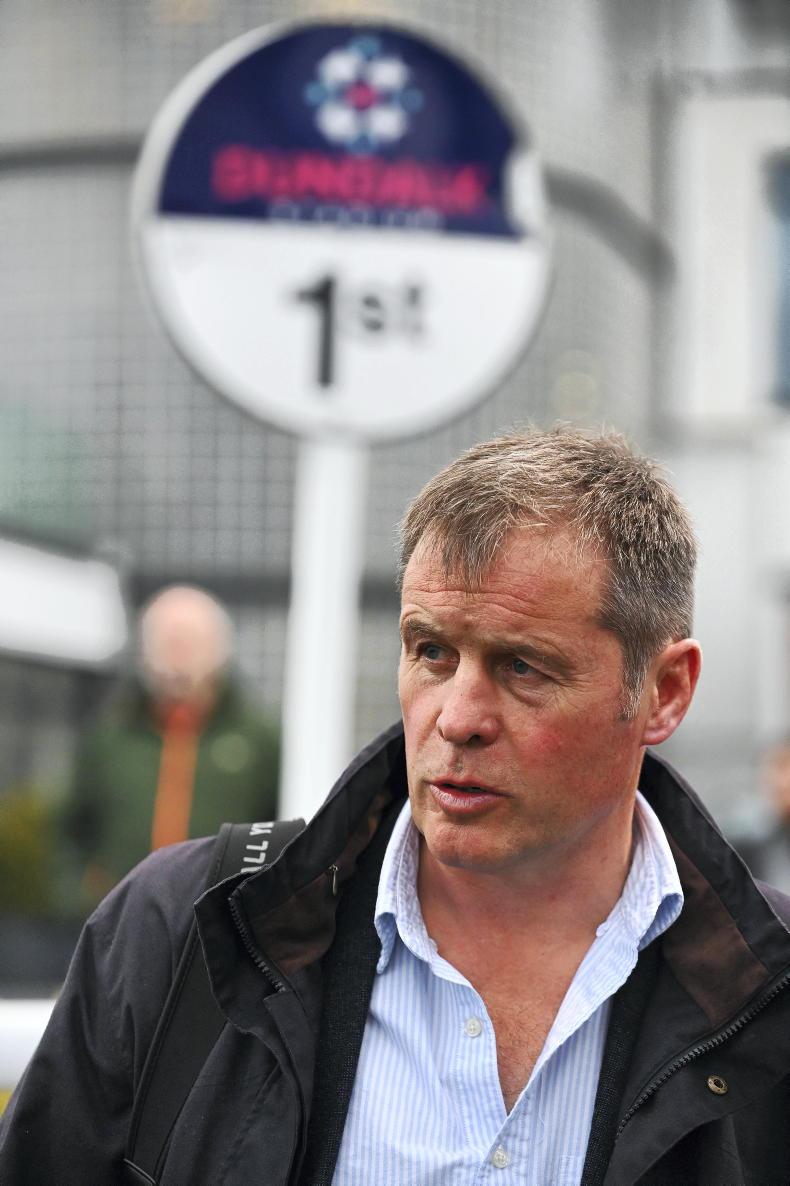 SOUTH Africa plays a role in the story of how Barry Irwin came across Andy Oliver.
The Irish trainer and veterinary surgeon spent time honing his knowledge in, among other places, South Africa.
When Oliver started training, Irwin became aware of this.
“I think I was attracted to one of his horses, I bought it, and then we kind of hit it off. I came to Goffs one year and bought a few yearlings, and I gave them to him. Three of them won, and one was Panama Hat [who transformed after being gelded]. Andy notably won a five-timer with him, three times in a week which kind of shocked us.
“Panama Hat won seven times in all, including a Group 3 and a listed race, and Andy brought him to the United States where he was second in our version of the St Leger at Arlington Park.
“I like Andy, he’s a good guy and dead honest. He’s got his own way of doing things you know, but we’ve done well together and he communicates great. He listens to me and I listen to him, so it works out well.”
Communication is key when it comes to using trainers for Irwin, and he has horses with young handlers such as Joseph O’Brien in Ireland and Tim Donworth and Jerome Reynier in France. About O’Brien, he said: “He’s a great guy to deal with, an excellent communicator. He’s very talented and keeps you in the loop.”
Irwin laughs when taking about Donworth, who saddled Saxon Girl to win a listed race this year for Team Valor. “I like him a lot because he is a bit on the verbose side, which I think is an affliction that the Irish are struck with!
“He talks a lot, but he’s a very smart guy. He thinks things out and he’s got a good opinion. I like him; he’s a fun guy to have a horse with and is obviously doing a very good job for us. He has a lot of supporters.”
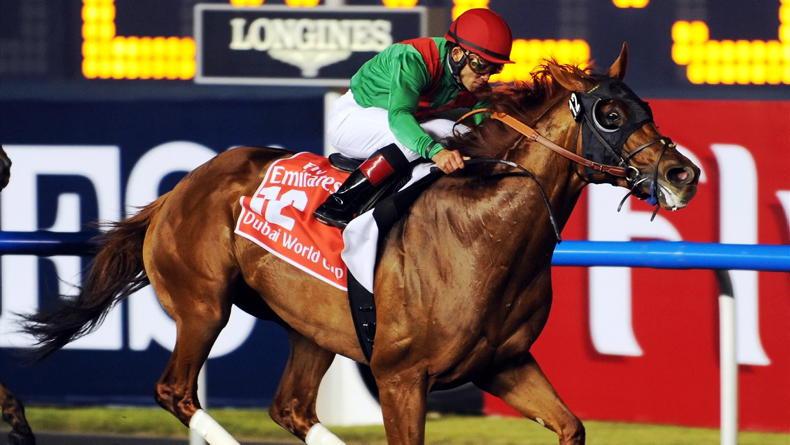
TEAM Valor International’s success story is truly amazing, and very consistent. They have raced stars such as Kentucky Derby winner Animal Kingdom, Facteur Cheval, Ipi Tombe, Irridescence, Breeders’ Cup winners Pluck and Prized, Star Of Cozzene. Technician, The Deputy and the Cartier award winner Torgau among a host of Group and Grade 1 winners.
While the number of horses in training once ballooned to 165 horses, it is now back to about 100. Irwin prefers quality over quantity, and plans going forward will see changes. “I told my people that we’re too heavy. I want to get down to less than 50, and we are selling 35 to 40 horses between now and the end of the year.
Low overheads
“Ideally, I’d like to have 22 horses in Europe and 22 in America. I like racing abroad much more than in the United States. We have low overheads; it’s just me, my wife Kathleen who does my research and the website, and a young lady Emily Ochterbeck, and she is the manager of operations. I focus on writing; I do a 25-to-30-page newsletter twice a week.
“So TVI members have their own newspaper guy and their own bloodstock agent. I want to shift my focus to Europe, and we’re planning to come over for a couple of weeks, and figure out where we’d like to spend half the year. We can’t decide which country. America has become commercial to the point of nausea – I mean its just all about money. There is very little sport involved anymore.”
TWO standout runners raced by Irwin and TVI had a special interest for me – Animal Kingdom and the Irish-bred The Deputy. I asked about the background to both.
“Most of our successes have come from horses we bought after racing a time or two. However, the biggest success we’ve ever had is with a horse that we bred, Animal Kingdom. I put him in a sale and bought him back [$100,000] and formed a partnership. He won the Kentucky Derby and the Dubai World Cup [and earned £5.2 million].
“He became special; he wasn’t born special. We had two horses in the same first crop sired by Leroidesanimaux which we sent to Wayne Catalano. After they ran, I asked jockey Robbie Alvarado ‘which one do you like better?’ He said ‘Animal Kingdom is not even a thoroughbred compared to the other horse – he is a Cadillac!’ The other horse wound up becoming a roarer, and Animal Kingdom’s main workmate.
“Animal Kingdom went from being an average sort of, narrow-looking two-year-old, to an incredible hulk at three. He just blossomed out of all proportion and became a physical monster. He took us on a wonderful journey. We won good races and sold him a couple of times. We sold half to Arrowfield, and them we sold a big chunk to Sheikh Mohammed. He brought in a lot of money.”
The Deputy, a son of Petardia, was bred by John McEnery and sold as a yearling for £14,000 to Gordian Troeller Bloodstock. The colt raced for John Hills, winning an Epsom maiden at the fourth attempt. “My main bloodstock agent in England for years has been Gordian Troeller; a good guy and a friend. He called me up one day and told me about The Deputy.
Turn of foot
“This horse had a tremendous turn of foot and he showed it at Epsom, which is a tricky place. I just happened to be going to England; we were running a filly in the Cheveley Park [Torgau was beaten a head by Seazun]. I had a driver pick me and a couple of my clients up, we stopped by and looked at The Deputy, and he was such a no-brainer to buy. They led him out of his stall, I looked at him for 45 or 50 seconds, and decided to buy him. He didn’t have long pasterns, he wasn’t slight, and he had a nice body, extremely athletic.
“Most horses when they get to the United States take a while to get the hang of it because we move in a different direction. We train on a different surface; the exercise riders have their irons different – everything’s different. I have had two horses this has happened to, and one was The Deputy. From the first moment they stepped on the track they acted like they’d been there their whole life.
“The first time both those horses had a workout it was eye-popping. The Deputy took to the place and it was a miracle.” The Deputy was a first Grade 1 winner for Gary Barber when he landed the Santa Anita Derby.