SINCE his appointment to the role of CEO of the Irish Horseracing Regulatory Board (IHRB) in June 2022, Darragh O’Loughlin has seemed to be fire-fighting more often than anything else.
The IHRB was in the news for the wrong reasons before O’Loughlin - an experienced senior executive and regulator - was brought on board, and a number of controversies have dogged his term of office.
Though he is perhaps not an instantly recognisable figure in the world of racing, his role does not demand that he should be. Heading for the fourth anniversary of his appointment, he agreed to sit down and talk openly about the body he runs.
What were your priorities when you joined the IHRB, and have they changed and evolved?
My main priority was to restore a sense of unity, so that we could lay the foundations for restoring the perception of us as a coherent and robust organisation. I felt our bona fide was being called into question. If you call someone’s bona fide into question, you can call their competence and judgement into question too.
I would like to think that while people might disagree with something we do, they understand we have made a decision for the right reason, based on evidence as we perceived it, and taken the decision fairly and objectively. We are never going to be venerated, praised or celebrated, but will be respected.
We are halfway through our four-year strategy. Although much of what we do is under the radar, we are a very different organisation to what we were when I started, and the staff feel that. I am most proud of the team I’ve built, and their commitment to delivering a strategy that will make us a fit for purpose, best in class 21st century regulator for an important industry.
How would you describe morale among IHRB employees?
Morale is good. People here get on very well together. They are professionals doing a job. People working here are very committed to the IHRB, and very loyal to each other.
Nobody likes to see the organisation they work for criticised, and they know how much work we do that just goes unnoticed. They know the scale of what we are regulating, and how small is the number of controversial incidents. They are not unaffected by controversy. The irregularity in our accounts in 2023 affected people. They felt they were under a shadow until we were able to resolve it.
At the launch of the IHRB’s strategic plan, 2024 to 2027, you spoke about “increased transparency”. What did you mean?
When I started here, there was a perception of opacity around decisions, what decisions were being taken, why they were being taken and so on. One of the transparency measures that we introduced was to invite the media to attend appeal hearings. We are very grateful when they take the time to come in and sit through a hearing and publish their observations.
We have more of our hearings chaired by independent people, retired High Court judges and such, who bring no baggage or preconceptions, and ensure we are adhering to proper procedure and rules of evidence. While it is not necessarily a transparency measure, it is a modernisation and a better governance one.
Then there are other forms of transparency. Since I came in we have been publishing an annual report every year, and we had some catching up to do. We had to publish a 2021 report, and now our ’25 annual report is in draft form. We just need the Comptroller and Auditor General (C&AG) to audit us before we can publish it.
On our website we are publishing, every month, integrity statistics showing what we do. We have our antidoping statistics. One of your questions, undoubtedly, will be about delays in processing samples. It is not only about broadcasting the bits you are proud of; transparency is about being consistent in issuing information, even when that’s uncomfortable.
Why do some disciplinary hearings take so long to be heard? The results of three Referral Committee hearings were published this week, two of them dating back to races run in October 2024.
I am not going to be glib; they take so long because that’s how long they’ve been taking us. Do they need to take that long? I would say no. We need to sharpen up, and have revised our procedures with defined decision dates.
We need timelines within the process from getting the lab result and confirming the lab result, through to the investigation, preparation of papers and the hearing. Everybody who deals with a regulator – I did in previous roles – says it takes too long. It is not fair to have it hanging over people while waiting for the case to be heard.
If we rush it, we’ll be told that’s not fair, because not enough time is given to prepare a defence. That said, over the course of 2025 we fell behind in how we processed cases, and we have recently been seeing cases where the sample was taken in late 2024 just coming to hearing. It is longer than it should take, and there was a very specific reason for that.
Resources go to it, but it is a very small team here, and we had some unscheduled absences, mostly though illness, in the first half of last year. We do not have any spare capacity, and when we lose key people to illness the work falls behind. That is the reality. We are making active efforts to catch up.
Any organisation to be effective all the time needs to have what looks like spare capacity, so when something unexpected arises, you have the ability to absorb it. There are external expectations, and we have our own as well. It is deeply frustrating and unsatisfying for us when we fail to meet the standards we set ourselves. In this case it happened for very clear reasons, and now there is a recovery underway.
The IHRB’s governance structure was publicly called into question in June 2023 when you revealed to an Oireachtas Committee that you had discovered a matter of “grave concern” in the IHRB accounts. An independent report subsequently found that the IHRB had ‘borrowed’ €350,000 from a charity account to fund a cashflow shortage. Have you made any progress on improving the governance and probity regime in the IHRB?
We committed to doing this when we published the strategy at the end of 2023. We were in the throes of - it would not be an exaggeration to call it - a crisis. From our perspective, it was a governance crisis. We had a lot of work to do to be seen to independently ascertain what happened, why it happened, what went wrong, and what we should have done differently. Auditors were brought in, we received the report and we submitted it immediately to the Department.
The day that we discovered this issue, we called a board meeting, had our legal advisors at it, and telephoned the Department of Agriculture to tell them what we had discovered. We telephoned the C&AG and Horse Racing Ireland (HRI), and made sure the trustees of the affected charity were aware. They informed the charities regulator.
That’s transparency that might not have been in a newspaper, but everybody that we could think of who needed to know was told what had gone wrong, even before we knew all the facts. When the Mazars report was published, we provided it to all those people as well, along with a commitment to implement all of their recommendations, and this has been done.
You said at the time the Mazars report was published that the IHRB would look into whether it should be involved in the administration of charities. Has anything changed?
Last year we worked with the charities and other benevolent bodies. They came together and ran a procurement process to secure an independent provider for the financial and banking administration we had been giving them. We have been working with them to manage the transitions, and a firm of chartered accountants in Naas is now managing it. We are completing the handover now.
I think it is appropriate for a state-funded industry regulator to focus only on regulation, and not allow its mandate to get confused. We inherited this situation and administered them for the best of reasons. There is an inherent risk in doing that, and a potential muddying of your mandate and objectives.
Some people who were IHRB board members at the time of those irregular transactions remain on the board today. Is that appropriate?
Our board, as any board, has a rotation of directors over time. You do not want an old board to leave and a new board come in in one go, and that is the case here.
Over time, more and more directors who are there at a particular point in time will no longer be around. I don’t find fault with any of the directors at that time. Something happened that they were not made aware of, and they had no way of being aware. What I can say is that they behaved entirely properly at the time, and were supportive of me as we worked our way through it, and very openly, transparently and robustly fixed the problem.
Who is the IHRB accountable to?
As chief executive here I have multiple accountabilities, primarily to my board of directors; they are my employer. I have an accountability to the Public Accounts Committee of the Oireachtas, and to the Committee on Agriculture and Food. That is enshrined in legislation.
We have governance accountability to the Department of Agriculture, Food and the Marine, but they exercise their oversight through HRI. Ultimately, we have accountability to the public, because we are funded with a budget allocation from HRI. The legislation requires them to fund the integrity services. We feel very much responsible to the state and taxpayer for how we use it.
We have a lot of accountabilities, even before you touch on the matters of accounting to the media, racing public and the stakeholders. By this I mean the trainers, riders, racecourses, valets, agents and everyone we licence.
The IHRB is effectively funded by Horse Racing Ireland, whose board consists of industry stakeholders, some of whom the IHRB regulate. Does that not muddy the waters of your independence?
In some ways, because the funding has to come through them, yes. We have a service level agreement with HRI in which they have committed to recognising our regulatory independence. We don’t have full independence from them because not only is our funding routed through them, we have to account to them for how we spend it.
In the world of regulation, it is an anomalous situation for the regulator to be funded by the largest commercial entity in the industry. However, it is enshrined in primary legislation. As I said to an Oireachtas Committee when I was asked the same question, decisions around the structure of the funding and the legislation are above my pay grade.
So we operate within the legislation we have, while acknowledging – because it would be dishonest not to – that it is an anomalous situation. Most regulators are funded by levies on the sector they regulate or direct funding from their parent department, or a combination of the two.
With no improved Government funding to HRI this year, but an increase of €500,000 from them for integrity services, does this mean that the IHRB is set to get a larger allocation?
As I sit here, we haven’t finalised our budget for 2026 with HRI. I am aware that they have allocated that increase, but all of HRI’s integrity spending is not for the IHRB. They provide some direct integrity services and fund stall handlers, integrity cameras, the cameras that feed into the television system that the stewards use.
Does the IHRB need more money?
We don’t have a multi-annual funding framework, most state-funded bodies don’t, and the absence does make proper strategic planning and investment difficult. One of my priorities when I came into this job was to ensure I had a good working relationship with HRI; that we collaborate effectively on any matter of mutual interest or concern.
I feel I have a good working relationship with Suzanne Eade. I can speak to her very openly, and she to me. That doesn’t mean we agree on everything, but we can have a respectful conversation that doesn’t get heated. Will we always agree on funding? No. We could do more with more money.
We are aware that in an inflationary environment, the allocation via the Horse and Greyhound Fund was flat in nominal terms. In real terms, it is a reduction. HRI has its financial and business pressures, and priorities. Integrity is one, I trust them on that, but it isn’t the only one. It is our only priority.
What areas require more investment?
We had the review of the equine anti-doping programme in 2022, which made 18 recommendations in all. We have done all we can within our current resource space, but some require more resources. We have communicated directly with the Department as well as with HRI, and everybody knows what we believe we need to deliver. I believe there is an appreciation that we can’t deliver if the resources are not available, and ultimately resourcing goes all the way back to the Department.
One of our key jobs is to assure public trust in horse racing, in the sport and in the industry, so that we reduce the threat of it being politically popular, if you like, to reduce funding. Politicians in a democracy such as ours are in tune with their base. As long as the base enjoys racing or is willing to tolerate it, they will continue to fund it.
How big an issue is equine welfare for the IHRB?
If the public doesn’t trust racing, there is a problem.
We have very controversial incidents from time to time; the Prime Time piece on Straffan abattoir was very bad for racing. When these things happen we have to show that we are above that, that it doesn’t define us. That’s one of the reasons why we publish welfare standards for thoroughbreds in Irish racing.
We went to public consultation. We showed the public that welfare is a priority here. We care about horses and we take care of horses. What we are trying to do as the regulator is codify, document and demonstrate what we know is the case, but what the public doesn’t know because they have no way of knowing. When questions get raised in future, we can say, ‘here is a published paper that sets out the standard to which we are holding our trainers and licensees accountable’.
How does Ireland compare with other racing countries when it comes to standards of regulation?
One thing I notice is how different the jurisdictions are, but we have made it a strategic objective to have best-in-class regulatory processes. Regulators have different legislative powers. The Horseracing Integrity and Safety Authority (HISA) in the USA employs investigators, including former FBI agents. We don’t have access to that.
The rules in some of the Australian states are actual legislation, so the police can assist them when enforcing the rules of racing. We don’t have that. However, our veterinary officials have authorised officer status under legislation here, so we have legal powers of entry, search and seizure in relation to veterinary medicinal products. That’s a power that other jurisdictions would envy.
How does our regulatory environment compare to others? We are up there. Our resource space is not the same as other big racing nations. We hold ourselves up as a major racing jurisdiction and we are, in scale, but our resource base doesn’t compare. We compare well to smaller racing nations, and happily share our experiences and expertise with them.
The Luke Comer case was particularly drawn out. It resulted in the respondent losing his trainer’s licence for three years and owing €840,000 in fines and legal costs. What did you learn from that case?
It was a very, very significant case, and a huge one for us to undertake. It took time because it was into a long legal process with solicitors, junior and senior counsels arrayed against each other, a hearing chaired by a High Court judge, and an appeals hearing chaired by another High Court judge. A lot of resources were consumed by both sides.
It did yield interesting and important learnings for us, and for the industry more broadly. It was the first case of its kind to be prosecuted on the basis of hair sample evidence, and demonstrated that this is as reliable and enforceable as blood or urine samples. That was a crucial element of it.
It showed that the chain of processes, from taking the sample, getting it to the lab, how it is analysed and the results delivered, were shown to be robust. Ultimately the respondent accepted that the process was as it needed to be, and that the samples tested positive. That was important.
To be challenged on that scale requires you to ensure that all your processes, procedures and the quality of your evidence meet a certain standard. We know what standard we have to meet, and try to meet it in all of our referral hearings, so there is great attention to detail.
We established the Racing Regulation and Integrity unit here less than two years ago, and Christine Traynor heads it up. She’s an experienced lawyer, a barrister and solicitor, and brings formality and structure to how cases are dealt with. Licensees can take comfort that there’s a fair and objective process that they go through. There is nothing arbitrary, capricious or personal about it.
More recently the Redwood Queen case involving Charles and Philip Byrnes grabbed global media attention. In light of the outcome, does the IHRB have any regrets about taking the case?
It was a high-profile case and, you are right, it attracted attention outside Ireland as a topic of conversation. I met international colleagues just a couple of weeks ago and it was raised. One of the things about racing is that it will from time to time throw up something very colourful and very controversial, as happened in this case. I don’t have any regret about taking the case.
Obviously, from a narrow, binary IHRB perspective, you could say we lost the case. We should lose the odd case; if we never did it would have to bring into question whether the thing was a setup from the start. In this instance, there was full justification for an examination of the incident followed by an investigation, and that happened. Because we are about demonstrating that racing is clean, fair and safe, and fair means trustworthy, it warranted investigation.
We gathered up all the evidence that was available, put it in front of a panel that was independently chaired, and left it in their hands to take into account the video, expert and betting evidence, and come to a decision. They made their decision, and we are satisfied that we did our job. We gathered up the evidence, put it in front of independent decision makers, and we accept the outcome.
Is there a plan to have professional stewards in the short or long term?
Twenty years ago, when Bertie Ahern was Taoiseach, I remember reading about a keynote speech he gave, talking about volunteerism and how difficult it is to sustain anything that depends on it. He was just commenting that, in the modern world, volunteerism isn’t as prevalent as it once was as people are very time poor nowadays.
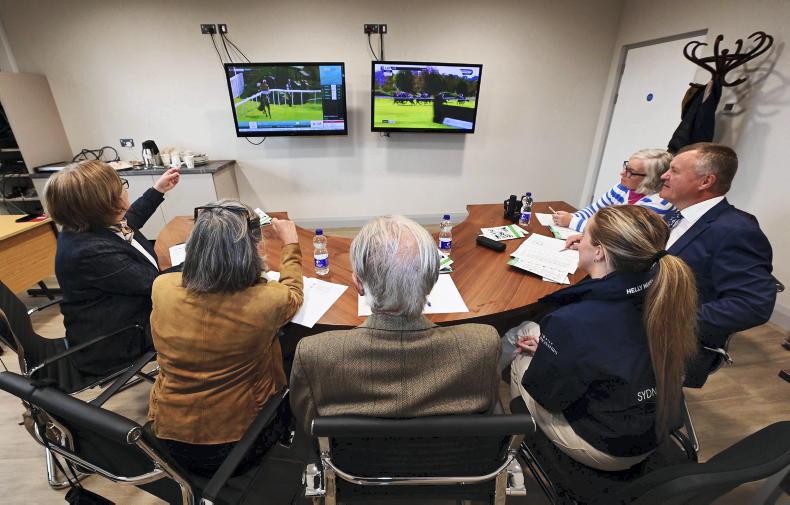
We have a reliance on about 140 raceday stewards on our panel.
We have four, occasionally three, who officiate at every meeting, supported by professional stipendiary stewards.
We have brought in regular training seminars for the raceday stewards, which is about achieving a level of consistency in terms of the interpretation and application of the rules.
We have no plans in our current strategic cycle to change this model. If your question is, ‘will that model last forever’, sure nothing lasts forever.
We are conscious of our dependency on a pool of volunteers, who are lending their professionalism and expertise to us. It is a finite pool and we are heavily reliant on them. I do not see us getting over that reliance anytime soon.
Anything else you would like to say?
Regulation is, by its nature, not the business to be in if you want to be liked.
It is not about popularity; it’s about fairness. If I had to summarise what we are about, in just three words, I would say we are about making sure that racing is fair, clean and safe. There will always be tension between the regulator and the people being regulated, because regulation impinges on, in some ways, freedom of movement, and can impinge on commercial activities or commercial results, but it is done for the greater good.
We are regulating the entire industry for the good of all, not the good of any one participant in it. We are all in this one ecosystem, and we need it to be seen as fair, clean and safe, and one that is trusted. We apply the rules even-handedly and proportionately, taking any element of arbitrariness or capriciousness out of it, in order to be fair to the participants.
ONE of the darkest days in Irish racing happened a year ago, with the death of Michael O’Sullivan. His passing robbed his family of a loved one, and the racing world of a huge talent. What impact did it have on Darragh O’Loughlin?
“Horror, simply devastating. I was here in the office when news came through that there had been a fall, and that it was worse than any fall anybody working there had seen. We were fortunate that we had our best team on the ground. Jennifer Pugh was there. Everyone who was present at Thurles were the best, including a medical officer with extensive experience of trauma who worked in the flying doctor service in Australia.
“Silence descended across the building here. People were devastated. We immediately commenced a critical incident review. We had contact from the Department asking whether there would be a review and who would be carrying it out. I was able to tell them we had commenced an examination of every shred of evidence, every factor in that day’s racing, to ascertain what happened, what could have been avoided or could have been changed.
“In terms of the IHRB, we have a sense of responsibility for the safety of everybody in racing. I think it demonstrates the importance of what we do, and that we do our very best all the time to ensure the safety, to the fullest possible extent possible, of all riders and horses.”
After this tragedy, a Racecourse Manual was published, work that was already in the pipeline. “We have committed to implementing what is a standards-based approach to regulation, The manual sets out what’s expected in terms of racecourse facilities, and we inspect against that.”
O’Loughlin further added: “We also accelerated the rollout of enhanced raceday safety training. More than 400 racecourse staff, IHRB officials, HRI staff and others have done it. It is making sure we optimise everybody’s ability to assess risk and manage incidents. This will continue.”
O’Loughlin on negative media coverage of the IHRB
It doesn’t frustrate me too much, because the job of a journalist is not the same as the job of a regulator, and public opinion is not static. It moves every day; it shifts and adapts. The public don’t universally agree with each other all the time. Nobody is above criticism, nor should they be. In the context of 390 days of racing a year, 3,000 races a year, and maybe 34,000 runners, there will always be incidents of note, something controversial and something to talk about. We are regulating this, and the 90 to 100 point-to-points. Will we get it right every single time? Nobody in the history of humanity has got everything right every single time.We do what we do in the interests of the sport and the interests of fairness. If we get something wrong, we put our hands up. Nobody will ever agree with everything we do all of the time.
On racing’s social licence
I think it is something that we will continue to have if we continue to earn it. It isn’t just granted in perpetuity. Society permits us to have it, but can withdraw it any time. There was a time the oil industry had a social licence to operate, and the tobacco industry. There was probably a time when the pharmaceutical industry’s social licence might have been in question.
The discovery of Covid vaccines and other medications helped them. They had to do a lot of work on the governance side to demonstrate their worthiness to have a social licence. We are not exempt from that requirement.
On Irish racing’s rule book
Another one of our strategic objectives is a complete rewrite of the rule book which has been under way for some time. I hope that by this time next year we will be working from an entirely new rule book. This doesn’t necessarily change what we do or how we do it, but it will be a much clearer, more easily read and understood rule book.