“
YOU get a taste of it and it goes down well, but the problem is, you want more of it.” Classic addict talk, but we’re not speaking about alcohol, drugs or gambling. No, Colm Murphy’s poison is winning.
Memories of the highs get us through the tough times, but things looked pretty rosy to outsiders when Murphy announced his shock retirement from training back in 2016. A qualified accountant, Murphy admitted the operation wasn’t making financial sense at the time, despite ending that season with five blacktype wins, one of them a Cheltenham Festival winner.
The pull of winning was too great, though, and Murphy returned to the training ranks three years later. Like many smaller yards, the Wexford man realised that selling horses would have to fund his dreams and, five years on, I ask him if he’s pleased with how it’s going.
“We’ve sold a lot more horses,” he says, suggesting that the numbers are now adding up. “Of course, you’d love to be holding on to more here. It’s what makes the wheel go around, unfortunately, you have to be selling. We were fortunate to sell the likes of Impervious and keep her in the yard.”
Bought by J.P. McManus, Impervious repaid her investment with three more graded chase wins and would remain unbeaten over fences. The €26,000 store originally carried the colours of Paul McKeon, who owns one of Murphy’s current flag bearers, Savante, and is a member of the well-named Winning Ways Reunion Syndicate.
The syndicate members are, essentially, those who owned the horse that launched Murphy’s career, Brave Inca, whose 10 Grade 1 wins included two at the Cheltenham Festival. Their next reunion could, appropriately, be at Prestbury Park, with the Albert Bartlett mentioned as a possibility for Zanoosh, following her impressive listed success earlier this month.
Managing expectations
On whether the progressive mare is confirmed for Cheltenham, Murphy relays: “It hasn’t been dismissed, but there’s also the Shannon Spray [Mares Novice Hurdle] in Limerick - it could actually be on the same day as well. And there’s the race, the mares’ Grade 1 (Honeysuckle Mares Novice Hurdle), at Fairyhouse also. They’re all possibilities.”
Following a hat-trick of wins, it would be easy to get carried away with big dreams, but Murphy’s been in this game long enough to keep a level head. When I ask how good she could be, he replies: “We’re probably realistic, I’d say. She started with a mark of 112 and we knew she was better than that.
“When she went to 127, we were hoping that’s not the ceiling. With every run she’s progressed and, with the way she raced the last day, the way she hit the line, you’d like to think there’s more to come.”
The daughter of Harzand is currently 33/1 for the Albert Bartlett, with some sceptics attributing her recent eight-length romp to a liking for the heavy ground, rather than outclassing her rivals.
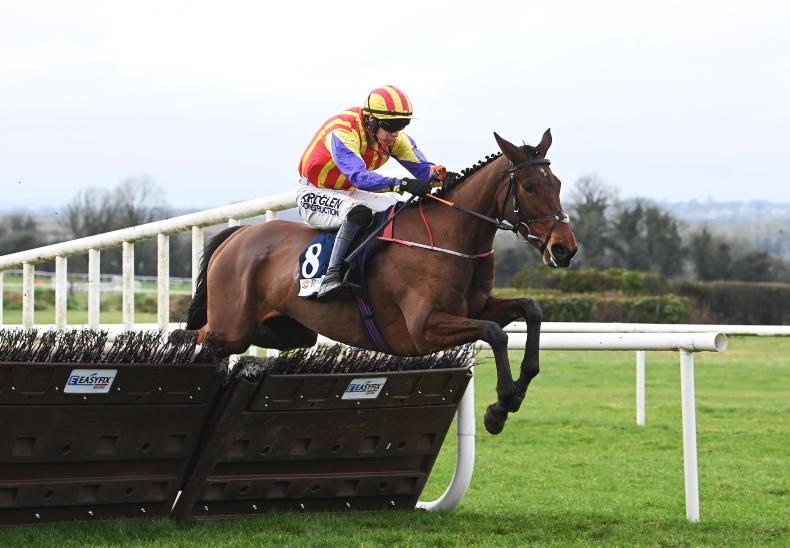
“You always worry a little bit when they handle the heavy ground so well that they might not be as effective on other ground,” Murphy admits. “But when she won her bumper, it was probably more yielding than soft.
“She ran too free the first day in the Land Rover Bumper, when it was good ground. I’ve no doubt she’ll go on better ground. We won’t really know what she’s better on until we run on it again, I suppose.”
I suggest that Zanoosh’s stylish success offered some consolation for Savante’s agonising defeat at the Dublin Racing Festival a few days earlier, when she was headed on the line in a listed handicap hurdle worth €100,000, the front two finishing 15 lengths clear of the remainder.
You need a really nice horse to be competitive in Ireland.
“I don’t think you can console me over that,” Murphy says ruefully. “It’s probably one that got away, that’s probably the best way of putting it. If you could run it again, I’m sure things would be done different, but we’re finished crying over spilt milk as such.
“It was a pity she didn’t win, especially for us, when we don’t have too many bullets to fire; she was the only bullet we had to fire at the Dublin Racing Festival. When you are firing, you have to spend a little bit longer taking aim and making sure you hit the dartboard.”
Madam
Unlike Zanoosh, future targets are less plentiful and rely on the weather remaining as wet as it has. “She’s more dependent on softer ground now,” her trainer explains. “She has a mind of her own; she knows what she does and doesn’t want, as such. She doesn’t seem to let herself down on the quicker ground.”
Savante’s stubborn attitude has had its benefits in the past, I realise, when Murphy explains how he nabbed the half-sister to two blacktype horses for €6,000. “Because no one could get near her to buy her!” he tells me.
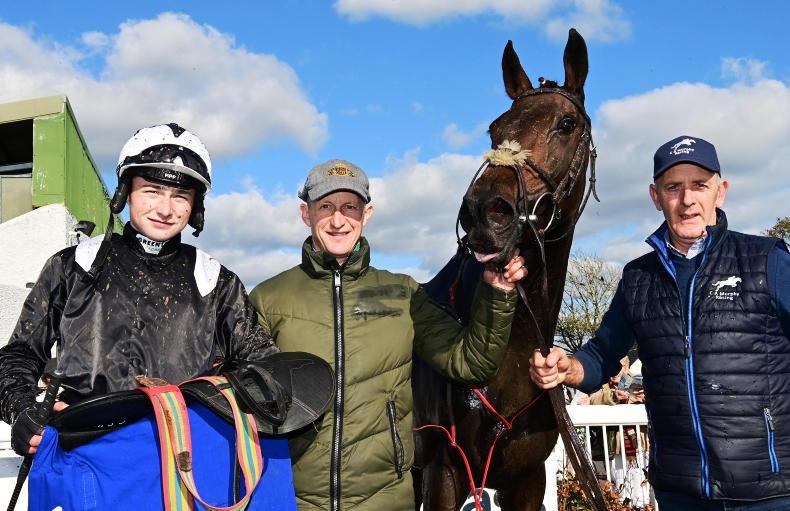
“The day I bought her, in fairness to the chap leading her up, he told me to mind her; she could kick you. She kicks and she bites. She’s a pure and utter madam. She’s caused plenty of scars, put it that way. But she also has plenty of ability as well. You don’t mind one when they have the other.”
Zanoosh cost considerably more at €41,000, but given what she’s achieved so far, it was money well-spent. As modest as ever, Murphy insists there’s no great secret to his selection process, with budget the determining factor, and all stallions considered.
“There’s no doubt they were value at the time,” he says of the blacktype stablemates. “On the back of Zanoosh, we put a good few mares in foal to Harzand. He was plenty value at the time, and we used Workforce as well on the back of Savante.
“As soon as they (sires) get desirable, they get expensive. we’ve been very fortunate to have a few by Walk In The Park but unfortunately, they’re hard to buy unless you have an open cheque book.”
Feathard Lady and Voler La Vedette are other Grade 1 winners on Murphy’s C.V. and, whether it’s modesty or reluctancy to be pigeonholed, he insists he has no special knack for training mares.
“We’re just fortunate that they all had plenty of ability,” he says. “You probably get labelled as one that can train mares, but then our best horses were geldings, so no, I think we’re just fortunate. I don’t really mind whether it’s a mare or a gelding, as long as they have some level of ability.
“Maybe we’re not as hard on the fillies, and some of them maybe take a little bit of figuring out. When you get the key to them, they’re straightforward; what works for one, doesn’t really work for the other.”
Lovely prospect
As Murphy mentioned, his greatest days in the sport came courtesy of geldings; the aforementioned Brave Inca and six-time Grade 1 winner Big Zeb. The highest-rated horse in his yard at the moment is also a gelding; Lovely Hurling.
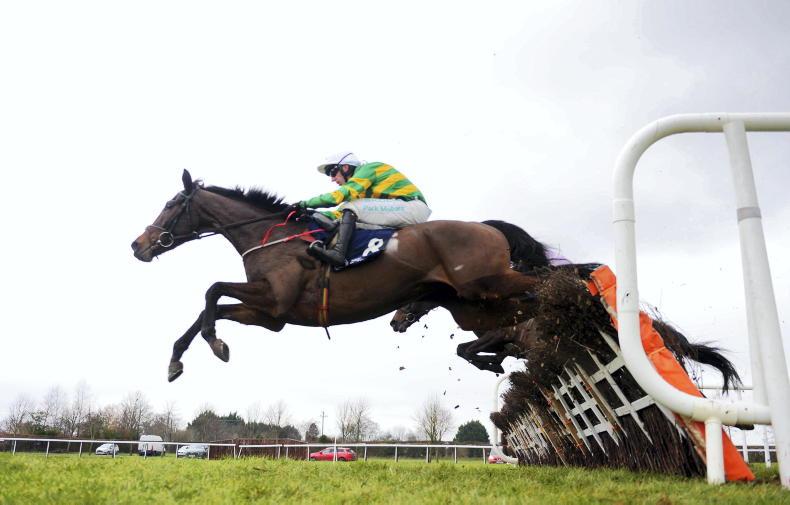
J.P. and Noreen McManus’ home-bred won in fine style on hurdle debut 12 months ago, before chasing home Final Demand in the Champion Novice Hurdle at Punchestown, and has been similarly unlucky in his opposition on his two starts over fences this term, finishing second to Kopek Des Bordes and Kargese.
“He’s been very unfortunate, when you think of the horses he has come up against,” Murphy agrees. “He’s a big chap; he’s probably taken longer in between his runs. He’s taking a bit of time, but he seems to be going the right way. He’s still relatively inexperienced; he hasn’t had many runs over hurdles either. So, hopefully, he’s one that we can look forward to over time as well.”
We seem to be breaking them earlier and doing plenty with them as youngsters
Lovely Hurling isn’t the only horse raising Murphy’s hopes at home, with plenty to look forward to among the 40 horses currently riding out. “There’s a bunch of yearlings - just turned two - riding out now, with a bunch of three-year-old jump horses for next year as well,” the trainer explains,
“So, plenty of youngsters. We seem to be breaking them earlier and doing plenty with them as youngsters, and then letting them off and getting them back in again.”
I ask whether the success of French-bred horses is an influence, to which Murphy replies: “I think the market demands that you’re getting them in and starting them younger. Everyone’s looking for that impressive four-year-old and, when you’re breaking them earlier, they seem to come to hand earlier, or they know their trade a little bit more.”
With selling horses now an essential part of the operation, Murphy and McKeon have also expanded into the flat market, he adds. “We have a few flat mares, so all the flat stuff is home-bred. Anything that doesn’t go to the sales, we throw a saddle on it.
“We’re looking for that little ruby, that little diamond or gem, and hopefully one will stick its head up somewhere. You’d be trying everything. There’s a limited market for the National Hunt - the UK and here, while on the flat it’s a worldwide market.”
The academy hurdles also present another option, Murphy continues. “We’ve a couple of horses in mind for them this year. Instead of running them on the flat now, I think with us being a jump yard, it’s very tempting now to keep them for the academy hurdles.”
All avenues
It’s clear to see that no stone is left unturned, no opportunity dismissed, when considering how best to display their produce - home-breds are sold as foals, three-year-olds or off the track.
“If we can get them into the premier sales, they’ll go to the sales, and if we can’t, we’ll throw a saddle on them,” Murphy explains. “It’s whatever way we think we get the optimum return on them. Everything is for sale. Listen, there’s no one more than myself would love to keep them, but unfortunately, selling is the aim of the game at the moment.”
Turning down offers can be particularly difficult when you compare them to prize money, though Murphy welcomed the prize money increases recently announced by HRI. “Without a doubt, it is more attractive,” he says.
“If you have a nice horse, they’ll more than likely stay in this country now, but you need a really nice horse to be competitive in Ireland. It’s very, very competitive, there’s a lot of very, very good trainers. Everyone has super facilities, everything is fit, everything is well schooled. So, it’s finding the nice horses.”
Before they take to the track, trainers and owners must first win in the ring, and the sales grounds have become just as competitive, according to Murphy. “The whole point-to-point scene is a massive business; you’re dealing with a lot of money now, at the moment,” he says.
“It’s probably fair to say that, in the last number of years, there’s not as many track trainers buying as there was probably 10 or 15 years ago, that were buying at the middle to the bottom end.
“I think you can buy a lot of value, but you can only buy for prospective owners. I know in our case, at one point, we probably had horses owned by 80% syndicates and 20% individual owners, while now we have very few syndicates.
“I think it’s trying to find the prospective owners to buy these horses. In fairness to Willie and Gordon, they’re attracting the big clientele, and it’s very hard for an owner, new into the industry, to put a horse anywhere else.”
That said, Murphy is not intimidated by the challenge, instead he’s focussed on succeeding, and how he can do that. “You have to be in the shop window, and you have to be training winners, but I do think there’s very good value in the placed horses in the point-to-points. There’s a lot of work gone into them and you can buy a horse that’s ready to go, that’s value.”
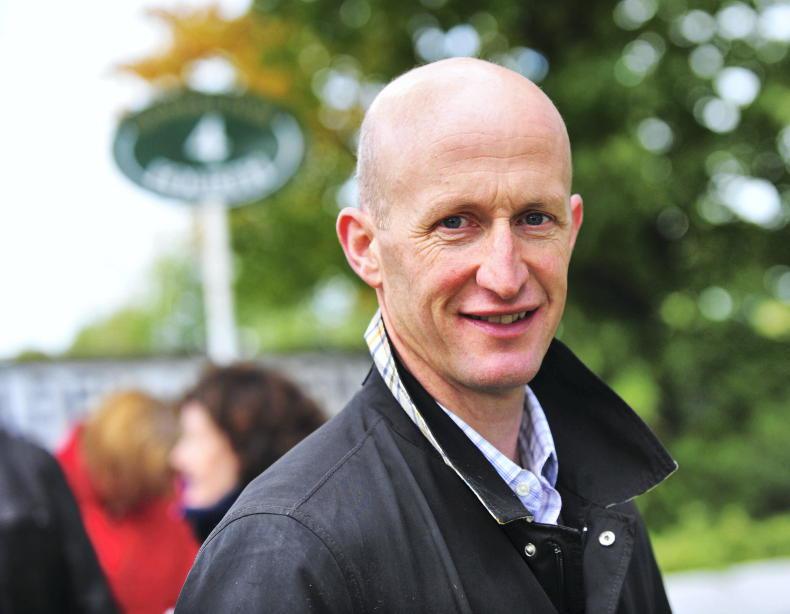
Seeing as it’s the highs that drive us, I end by asking Murphy what his favourite part of training is. “Definitely having a nice horse on the big day with a chance,” he says without hesitation.
“There’s plenty of satisfaction when it does go right. We’ve been very fortunate to have plenty of nice horses over the years and, probably because of it, you get greedy in that you want more of them. You get a taste of it and it goes down well, but the problem is, you want more of it.”