THERE was a bit of a paradox in the finishes of the Royal Ascot Group 1s over the opposite extremes of distance. The two miles, four furlongs Gold Cup was acknowledged by pretty much everyone as the race of the meeting.
Trawlerman, a son of the Derby winner Golden Horn, going head-to-head with Scandinavia, a son of the Kentucky Derby winner and US Triple Crown winner Justify, in a memorable battle between two top-class, courageous horses. It’s the extension of breeding the best to the best and how you think the sport should play out.
But, oh no, we don’t want to breed these type of horses. Derby winners are persona non grata in the breeding world, scrabbling to find homes as flat sires.
On the other hand, the sprint distances have been where the next crop of stallions have been emerging each year. They cover large books of mares and are in demand at sales and make significant profits for breeders.
With Royal Ascot being the worldwide showcase of the best of British racing, the Commonwealth Cup was even created to give a mid-summer target for those young prospective stallions, rather than initially having to go a Guineas route at three and take on elders or aim at the July Cup.
Little highlight
But last week at Royal Ascot, the sprints may have been good international contests, but they did little to highlight future stallions or advertise the younger sires at stud, siring similar quality stock. And British-breds took a bit of a beating.
The Group 1 King Charles III Stakes was won by an Irish-trained gelding, from a French-trained mare, with a seven-year-old Australian gelding in third. The Queen Elizabeth II was won by an entire horse, in the son of Dark Angel, though Almeraq was at 25/1.
Second was a seven-year-old Japanese-trained runner, third an Australian mare and fourth a French colt by a €3,000 standing sire.
The Commonwealth Cup had fillies taking the one, two, four and five placings. Is Division the best three-year-old sprinter in Britain? The 2025 running had also seen a filly winning from an Irish-trained colt with fillies in third and fourth place.
And to cap it all, a horse no one had heard of pre-Ascot - the Wesley Ward-trained Bacio, never raced in graded company - is Timeform-rated higher than Group 1 winners Mission Central (119) and Venetian Sun (113), after earning a lofty 120p for his victory in the Palace of Holyroodhouse on Friday.
Dark Angel and No Nay Never are well-established sires, though the nine-year-old Starman (stands €40,000) did get his Group 1 winner in Venetian Sun in the Commonwealth Cup. Is Royal Ascot just for the elite? It does seem that a bit more quality is needed to come to the fore, despite these being the type of horses that we are told are desirable.
THE most ‘incident-packed’ race of the week at Royal Ascot was the St James’s Palace, where two riders on Ballydoyle-trained horses were given suspensions and the favourite, Bow Echo, didn’t have the race run to suit.
Ryan Moore was suspended for three days for careless riding at the start for allowing Gstaad to “edge left-handed without correction in the first furlong”.
Christophe Soumillion on Puerto Rico has appealed his eight days “for riding his mount in such a way that intended to give an advantage to another horse from the same stable, in that he moved his mount away from the rail thereby ensuring a clear run for Gstaad on his inside”.
Earlier in the race, in the TV commentary, it was called: “Christophe Soumillion has a long look over his shoulder to see where Gstaad is positioned” before the six-furlong marker. On the bend, he moves a few horses off the rail, again noted in the TV analysis.
Kept tight
There were also some complaints by Saffie Osborne after the Coronation Stakes, where Wayne Lordan kept things tight early in the straight on True Love, while Precise went on to win - but it indicated nothing other than that he was just riding his horse to achieve the best possible position.
Of course, there is some history as ‘team tactics’ were in play from the Godolphin team when Fantastic Light famously beat Galileo in the Irish Champions Stakes in 2001 after the Godolphin pacemaker, Give The Slip, had left his stable companion a clear run through on the bend.
Both Godolphin and Coolmore ran ‘definite’ pacemakers in the Prince of Wales’s Stakes and the former used one to dictate the Juddmonte International last year.
But, currently, Ballydoyle are the only ‘team’ in a position to have high-quality horses in roles that could be determined as pacemakers, but those horses have Group 1 form, Lambourn in the Hardwicke another example.
Last season, when pacemakers came to the fore and brought some negativity in the Sussex Stakes and at York, John Gosden went public before the Irish Champions Stakes saying: “It would not be in Ombudsman’s best interest to race in September nor would the horse appreciate running against multiple entries from one stable on a track with a short straight.”
Whatever the outcome of the appeal, it will be interesting how the big Group 1s at Goodwood, York and Leopardstown play out among the leading contenders.
AT the Royal meeting of Kings, Queens, Lords and Ladies, the king of sires was undoubtedly the Kildangan Stud sire Night Of Thunder, who sired three Group 1 winners in Ten Bob Tony, Bow Echo and Ombudsman, two of those horses are the best in their age group.
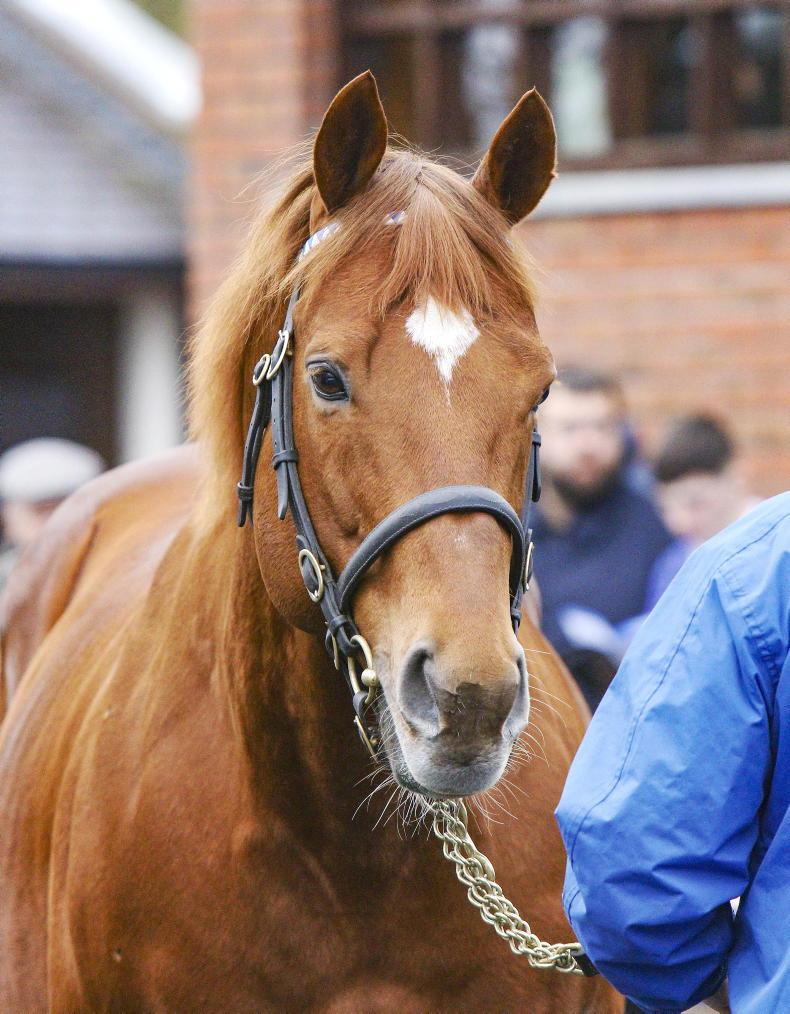 The chesnut son of Dubawi won the 2014 running of the 2000 Guineas, beating Kingman and Australia, but by mid-season, I probably was not the only one thinking he was a lucky horse going to stud with that 2000 Guineas victory to his name, Kingman having gained his revenge impressively at Royal Ascot and Australia winning two Derbys. Though he won the Group 1 Lockinge at four, Night Of Thunder’s career fizzled out somewhat, with defeats behind Solow at Royal Ascot and Goodwood, though he stood for €30,000 in his first season. Now, Night Of Thunder stands for €200,000, Kingman £125,000 and Australia €15,000.
Irish breeding
Overall, the meeting, one of the showcase weeks for the racing industry worldwide, was a massive success for Irish breeding, 24 of the 35 winners being Irish-bred and, even more notable, 28 of the winning sires, and seven of the eight Group 1 winners, are standing or stood in Ireland. Only four British standing sires had winners over the week - Havana Grey, Time Test, Expert Eye and Kameko.
It’s something to boast about when racing’s funding comes under the cosh, we are world leaders at this game, the IRE suffix moving with thoroughbreds on the big days all over the world.
Dash Grange Stud@DashStud
This - this race - is exactly what we all want to see. It’s why we all do what we do. It was epic. That is why we need to breed more horses that can do it. [On the Gold Cup at Ascot]
Richard & Peter Fahey@RichardFahey
Unbelievable meeting at Royal Ascot, fantastic races. The highlight for me was Ryan Moore’s riding Thought he brought race riding to next level
Michael Owen@themichaelowen
The most brilliant five days of Racing @Ascot this week. It really is something very special. However, there’s a sour taste in the mouth after such a huge track bias, yet again, on the straight course. Racing’s biggest week, which shapes the future of the breed, and on the straight track we can’t be sure the best horses won.
Richard Silverwood@ScoopSilverwood
The sad demise of the Derby was encapsulated at Royal Ascot yesterday, when last year’s winner of the once-great race was sent off as big as 28/1 and sacrificed as a pacemaker in a Group 2.