WE put Benvenuto Cellini on our cover last weekend and it proved the correct decision, as he was the talking horse of the weekend. Christmas Day can often be a bit of an anti-climax after all and by 4.30pm it was the rear-end of the favourite at the start that became the photo of the race!
The start of the 2026 Derby got much more attention than the finish, with the beaten favourite announced as a non-runner just as the winning presentation was going on.
Few, if any, had noticed why his chance was compromised. The decision seemed hasty, but there were enough interviewers on hand to get immediate reaction and explanations from the stewards of the day. This included interested parties, such as the chief executive officer of the Hong Kong Jockey Club, Winfried Engelbrecht-Bresges, also chair of the International Federation of Horseracing Authorities, who prompted the change in the rule which was introduced in May 2024 and allowed the BHA Stewards to declare a non-runner in any race beginning from starting stalls if they believe that a horse has been denied a fair start.
In a Nick Luck interview, he was asked: “How would it affect World Pool punters today?” Derby day being a big event for it.
“I think it is a fair result for the customer,” began the reply. Eh, not if you backed Christmas Day and had the 25p in the pound reduction.
“If the punter had bet the very heavy favourite and he was not ready, if he had not a fair start, how would he feel if 60, 50% of the pool would be practically kept?”
He continued: “For the integrity and fairness of the sport, horses have to have a fair start. If it doesn’t happen, the customer could be refunded the money bet on the horse.”
The decision
Listening in, you couldn’t but feel that the fact that this was a World Pool raceday did have an effect on the decision.
A BHA blog later addressed the aftermath: “It is being suggested in some places that the rule is not being applied consistently, that it has only been applied because this was a significant ITV race and that the World Pool somehow impacted the decision. This does not stand up to scrutiny,” citing a few incidents at other tracks.
The stewards did have another race to offer in defence, a race at Windsor that practically nobody cared about which involved an outsider also having a leg caught in the stalls and was last away.
The BHA non-runner Rule 6.2.2 is to be implemented “when a race is started, a horse is in such a position as to be denied the opportunity of starting on equal terms”.
The degree to which Benvenuto Cellini had his chance compromised (by his own actions) and was prevented from starting on equal terms and therefore, as a consequence, his chance in the race was materially affected, was a topic of debate. Not many were convinced he was hindered that much.
RaceiQ figures
This is one instance where data and the RaceiQ figures are a help. And I will quote the findings.They tell us how quickly all the runners in every race reach 20mph, and Benvenuto Cellini took 3.37sec to reach that speed.
The one horse among the 14 runners to be slower to hit 20mph was A Taste Of Glory, who took 3.6 seconds.
However, Too Soon was slowest to 20mph in the 13-runner mile and a half handicap run 80 minutes after the Derby (it took him 3.38sec to hit that speed) which was slower than Benvenuto Cellini. He still won.
Christmas Day had about a three-length advantage over Benvenuto Cellini plus a better early track position.
Ryan Moore might have wanted to be more prominent, but stayed calm and raced behind James J Braddock. He finished 10th to that horse’s third place, about 22 lengths behind him. No one thought it was because of the slow start.
And take a look at the first furlongs of the Oaks, when Thundering On swept from last to first up the straight on the bridle. She was further behind her field in the first two furlongs. Benvenuto Cellini just wasn’t good enough in the conditions.
The question was what happens next time a horse plays up or is slowly away?
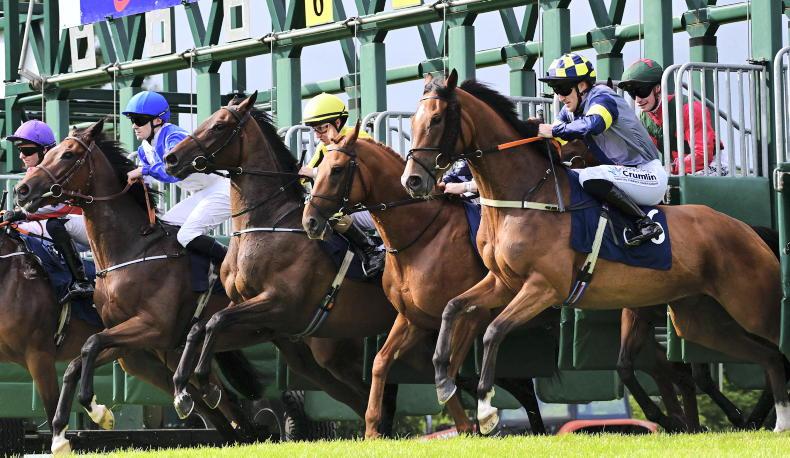
The subsequent BHA explanation blog made things less clear. A horse simply rearing up without becoming in any way entangled with the stalls would fall under the category of a horse’s own misbehaviour and therefore count as a runner. But did Benvenuto Cellini not also cause his own misfortune?
It took just five days for the conundrum to be highlighted, and not once but twice at Yarmouth on Thursday.
Travel Agent (14/1) in the third race finished last of five having “reared start and slowly away, in rear”. Some 90 minutes later Wrist Art (7/2) “as the start was effected, the gelding became unruly and reared unseating rider”, but he was still deemed a runner! This was a much worse case of punters not getting a run for their money than the Derby, but no refunds.
How about Lord North in the 2022 Prince of Wales’s Stakes under Frankie Dettori? “Blindfold off late and slowly away, lost many lengths start, (jockey said the blind had got caught in the bridle)”
And what are we going to see at Royal Ascot? In 20-plus runner fields? What if a horse rears and then gets his leg stuck as the stalls open? I fear we’re already poised for many of the talking points of the week being about the start.
Seeking Ireland’s top sales sires
TERRIFIC as the trade was for National Hunt prospects at Goffs this week, it might have been a little sobering for the National Hunt breeders and Irish studs. Of the top 22 horses sold (see page 46), those who sold for €150,000 or more, eight French-standing sires were responsible for 11 lots, while the UK-based Nathaniel (2) and Golden Horn had three in total. It left Walk In The Park with six of those top horses and the only other Irish-based living sire was Boardsmill’s Poet’s Word.
Tony Costello consigned one of the top lots in a Doctor Dino gelding for €265,000 and said afterwards: “It’s not easy. I have travelled so many miles all over France, Ireland and England sourcing these horses. I spent weeks in France to come up with just a bare handful for the top end of the market.” The time and effort has seemed to come up trumps.
If track success follows sales demand and prices, and in National Hunt racing that’s never a given, you would hope we find plenty of ‘racehorses’, as well as ‘sales horses’ among the home-breds.