AFTER four Guineas trials took place last week at Newmarket and Newbury, the early season classic picture is one of tarnished reputations, but perhaps our expectations were too high on account of early season excitement.
The first four in the betting for the 2000 Guineas will not run before Newmarket and it is highly unlikely that any of the trials have showcased a potential classic winner, but it is worth looking at the 2000 Guineas trials forensically in case post-race scepticism missed something.
The ground over the three days of the Craven meeting was good which is how it was described with the final times slightly enhanced by a tail wind. On Craven day, the average Race iQ Time Index value was 6.8 out of 10 with Oxagon producing a time of 1m 37.21s which gave him an Index of 5.9.
This was not a truly run race with Oxagon, in first time cheekpieces, making all the running having got an easy lead. In the absence of any other horse wanting to go forward, Oisin Murphy took the initiative and whilst he did not set a crawl through the first half-mile, he dictated steady fractions, with each of the first four furlongs rated as being slower than the Race iQ par. Thereafter he wound the pace up and his final three furlongs were faster than par at 11.31s 11.20s and 12.41s.
Strong finish
This relatively strong finish gave him a Finishing Speed Percentage FSP) of 102.93% (Par: 99.12%) which is a disappointing return given that he had been able to conserve energy for the first half-mile with an unhindered lead. This finishing effort was bettered by Avicenna who finished second and seemed not to handle the track.
Avicenna was unbeaten last season in two starts and was in last place after half a mile here 0.48s behind the leader. He then finished his race faster than Oxagon with an FSP of 103.42% and given Oxagon is relatively exposed, it is likely that Avicenna is the better prospect.
The way this race was run, Oxagon had every chance to run a very fast final furlong that would have taken him under 11.00s but he could not muster that much speed and never has.
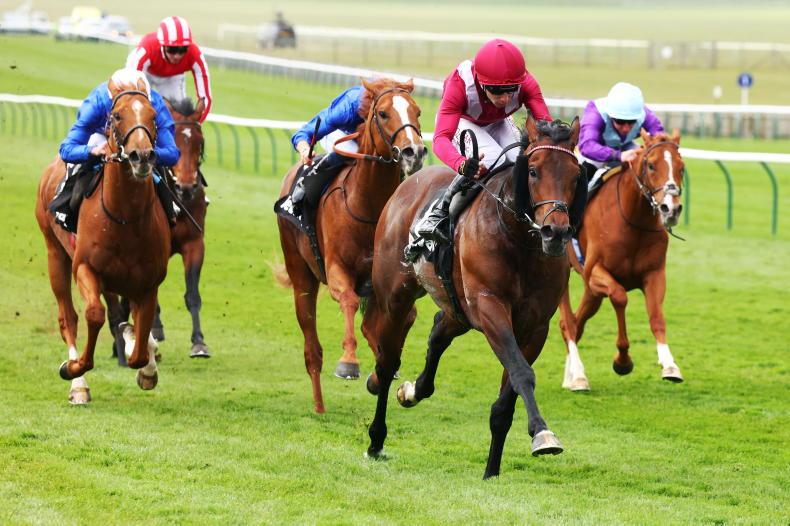
It should be noted that Avicenna, who has a lot of stamina on the dam’s side of his pedigree, has been able to run much faster, as he showed on his debut last season at Doncaster where he ran a rapid 10.76s penultimate furlong.
Nothing in the data suggests we saw a 2000 Guineas winner in the Craven Stakes, but we saw a smart prospect in Avicenna who may well take a big step forward after this and could make the frame at a big price in the 2000 Guineas.
THE other classic trial for colts last week was the Greenham Stakes at Newbury and rather like the Craven, it could pay to concentrate on the vanquished rather than the winner. The ground at Newbury was good (good to firm in places) with the good to firm bits few and far between given that the average Race iQ time index was 5.6. Alparslan won in a time of 1m24.92s which garnered a time index just above the average of 5.7.
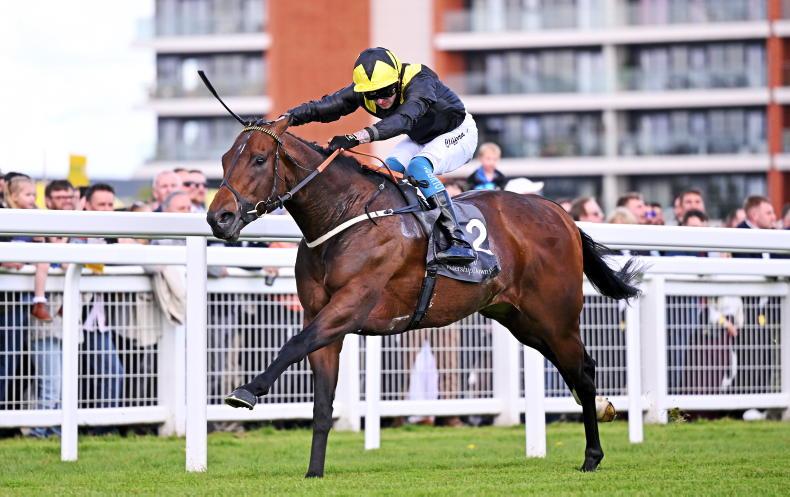
He made all of the running against the strongly favoured stands rail under a well-judged ride from Clifford Lee, who was able to rate his horse evenly through the first two furlongs before steadying the gallop through the next couple which were slower than the Race iQ par at 11.67s and 11.74s.
He then quickened the pace three furlongs out with his final quarter mile rated as faster than par at 11.47s and 12.20s. This resulted in him recording an FSP of 102.48% (Par: 99.58%). Alparslan showed plenty of speed as he had done as a two-year-old, but he was afforded a soft lead on the rail with Clifford Lee able to slow down and then accelerate as he wished.
This does not mean he is not a smart prospect, but his true worth is more likely to be seen at distances short of a mile given his style of racing and the fact that his sire is Dandy Man. It’s worthy remembering that both he and Oxagon were both beaten in the Group 1 Dewhurst Stakes last season.
Just in front of them in the Dewhurst was Zavateri who did not handle the track at Newmarket but shaped very well in defeat here. He recorded the highest FSP in the race of 103.16% having recorded the fastest final quarter mile in the race of 23.57s.
This strong finish came on the back of a patient ride where he was a bit keen when the pace steadied and then struggled for room whilst getting into a barging match with Albert Einstein. He is worthy of a sectional upgrade for this effort, and his two-year-old form puts him firmly in contention for the 2000 Guineas, the problem is the track and with his connections cognisant of that the Irish Guineas may be their favoured target.
THE ground was described as soft at the Curragh last Sunday with the average Race iQ Time Index being 5 which is suggestive that conditions were soft at best and probably closer to heavy. Great Barrier Reef recorded 4.7 in thrashing his rivals by six lengths in impressive fashion and given the acceleration he showed there is the potential for him to run faster when he encounters faster conditions.
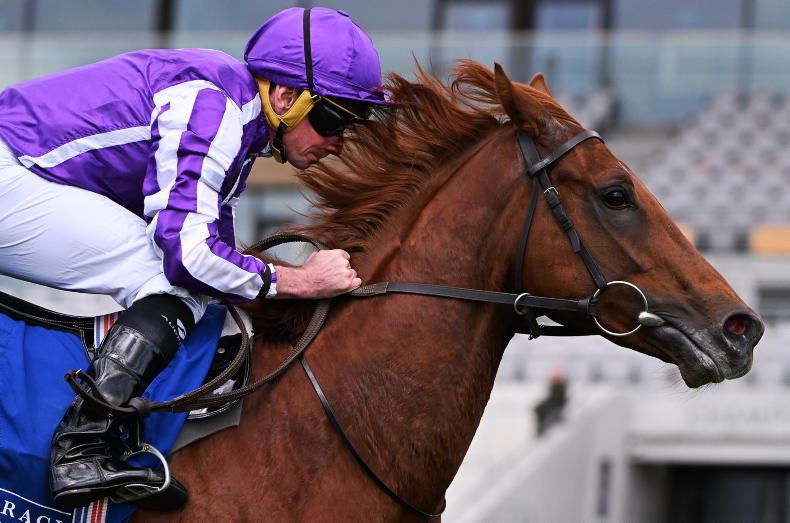
The race was slowly run through the first three furlongs which resulted in a fast finish with the winner recording an FSP of 105.84%. He raced close to the pace before quickening sharply into the lead with two faster than par furlongs of 11.87s and 11.81s. He then hit the line strongly with a faster than par final furlong of 12.88s and in so doing was the only horse in the race to dip under 13.00s for that final furlong.
The further he went, the better he looked which is in alignment with his pedigree which is full of stamina on the distaff side with his dam having won at 12 and 13 furlongs. He has been installed as the 4/1 favourite for the Norfolk at Royal Ascot with Star Prospect who also won at the Curragh on Sunday, the second favourite at 8/1.
Star Prospect won the first race on the card over five furlongs, finishing strongly between horses to win by a length and a quarter, but as strongly as he was able to see his race out, his final two furlongs of 24.82s was slower than Great Barrier Reef who recorded 24.69s. We may not have seen a 1000 or 2000 Guineas winner last week, but it’s very possible that in Great Barrier Reef we saw a Royal Ascot winning two-year-old.