IN the early 2000s, the European Union introduced policies and market incentives to encourage the production of biofuel crops, such as oilseed rape, as part of efforts to reduce greenhouse gas emissions.
Two decades later, the bright yellow crop has become one of the most profitable break crops for Irish tillage farmers, but a growing number of racehorse trainers believe it may also be making their horses seriously ill.
According to the Central Statistics Office, approximately 15,000 hectares of oilseed rape were grown nationwide in 2026, up from around 5,000 hectares in 2006. Wexford alone accounts for roughly 2,000 hectares, in a county synonymous with point-to-point racing.
“From the farmers’ point of view, it is the most profitable crop at the moment. That is driving production,” said Teagasc crops specialist, Shay Phelan. “It is worth €450 per tonne, compared to €250 for cereals.”
Oilseed rape is the second-largest source of vegetable oil globally and remains the most important biofuel feedstock in the European Union.
But, for a growing number of Irish trainers, the crop’s flowering season between March and May has become a source of dread.
Several point-to-point handlers claim that airborne pollen released during flowering is triggering severe respiratory issues in their horses, disrupting training schedules, destroying form, and, in some cases, leading to devastating and costly losses.
Research suggests that, while healthy horses may not develop clinical disease following exposure, animals with underlying respiratory issues may experience significantly worsened symptoms.
“These lads know their horses,” said Wexford veterinary surgeon, Paddy Merrigan. “But at the moment, there’s not enough evidence.”
A study currently being conducted by the Irish Equine Centre (IEC) may shed further light on the make-up of pollen from the increasingly popular crop, which trainers believe affected a considerable number of horses and disrupted training programmes in recent months.
As The Irish Field reported in 2023, the IEC have placed monitors in several yards where horses were reportedly being affected. Alan Creighton, head of environment and nutrition at the IEC, said the research is funded by the Department of Agriculture’s ETS fund and is being carried out in collaboration with the Irish Racehorse Trainers’ Association and the University of Limerick.
“Experts from UCC and DCU are also helping out. The research is ongoing, and we will have findings later this year,” he said.
The bright yellow flower of oilseed rape can be seen for miles across the south east (and across the wider island)between March and May each year. For winter oilseed rape, the most common variety grown in Ireland, harvesting typically occurs between mid-July and late August. This year, however, the flowering period coincided with mounting frustration among trainers, many of whom reported horses showing an alarming and unexplained loss of form.
Severe respiratory distress
Several horses, despite being primed to run and well-fancied, pulled up and failed to finish their races. Some scoped clear afterwards, while others were found to have blood in their lungs.
Although no definitive scientific link has yet been established, trainers believe airborne pollen from nearby crops is causing severe respiratory distress, with previously healthy horses struggling to breathe, even at rest.
Some horses have also displayed additional symptoms. In 2023, as detailed in these pages, Dublin trainer James McAuley said several horses in his yard had broken out in rashes, while blood tests showed their allergy levels were “through the roof”. He too believed oilseed rape was responsible. McAuley relinquished his training licence in 2024.
In a bid to relieve symptoms and continue operating this spring, several trainers have been forced to relocate horses to yards well away from tillage land. They said they were left with little choice: either move or effectively shut down for three months.
Second last fence
One such trainer was Enniscorthy-based Denis Murphy, who enjoyed a remarkable 2025/2026 season with 17 winners and a host of placings. He believes his late-season success may not have happened had he not moved his horses away from nearby crops.

“This problem all started in March,” he said. “We cantered a few, and they were just flat, but scoped clear. We went to Fairyhouse one weekend and one ran worse than the other. One had a chance, even at the third last, but by the second last fence it was all over.”
By late April, the situation had escalated considerably, prompting Murphy to move 25 horses approximately 30 kilometres to Jamie Codd’s yard at Mayglass, near Rosslare Harbour, where there was no oilseed rape in the vicinity.
“On a Monday, we started building paddocks, and horses were moved by the Friday. It was during a wet spell.”
Murphy says the horses’ improvements were remarkable within days. The results appeared to support his decision, with a five-timer at Ballysteen, Fairyhouse and Lisronagh that same weekend, along with three second-place finishes.
Walkonseas, an impressive four-length winner of the four-year-old geldings’ maiden at Lisronagh, was subsequently sold to J.P. McManus for €500,000 at the Goffs Punchestown Sale a few days later.
“I am on a hill, and I have worked with the wind up to this year. It is a hidden poison, and the fumes from it are sickening,” Murphy added.
The issue of pollen affecting horses is not new and has been documented previously in The Irish Field pages. However, with approximately 15,000 hectares of oilseed rape grown nationwide this year, trainers believe the scale of the problem has intensified significantly.
No escaping it
Among those affected was Wexford owner Pat Cloke, whose three-year-old gelding became seriously ill while out on a break in a field surrounded by crops.
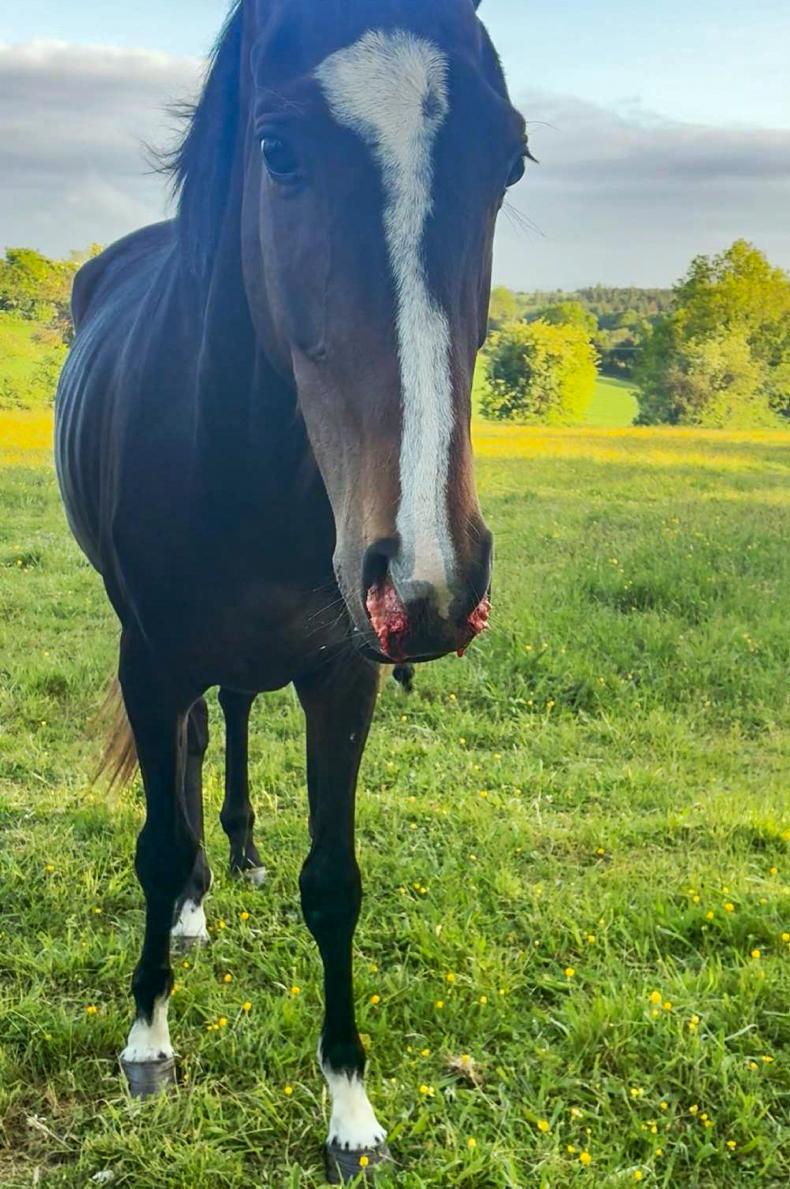
“My land is in three parcels, and I am surrounded by oilseed rape. There’s no escaping it,” he said. “I lost his half-sister from a reaction to the pollen four years ago, so I know all about it.”
Cloke said he had three horses resting in a field before the sales a few weeks ago, including a gelding he believed would command a substantial price.
“I went to see them at 12 noon one day, and they were all fine. I went back at 7pm and the gelding couldn’t walk. He was frothing at the mouth and had blood coming from his nose.”
Veterinary examination found no sign of infection, but Cloke said the horse’s blood platelets and ability to clot had been affected.
“The vet put him on steroids, but he lasted just 10 days,” Cloke said. “I went out to see him last Sunday morning. He lay down after eating and couldn’t get up. I called the vet, but he died in the meantime. His estimated price at the sales would have paid my mortgage for the year.”
Double the amount
Cloke said there are approximately 5,000 acres of tillage land in his locality, although he does not know how much is planted with oilseed rape.
“I also have over 800 point-to-pointers within 20 miles of my doorstep,” he added.
Earlier this spring, Carlow trainer William Murphy was also forced to relocate 19 horses from Rathoe to the yard of Francis Flood outside Grangecon, Co Wicklow.
“It was just after Easter when we moved. I ran three horses that weekend. Two of them won. Another pulled up and scoped with blood. A week after Johnny K won, he scoped badly too. We did everything and even tried lung washes.”
Murphy said the amount of oilseed rape surrounding his yard had increased dramatically.
“There’s double the amount of it this year. The nearest crop is just 10 yards on one side of the gallop. Another crop is 50 yards from the yard.”
Murphy said the consequences of moving horses had been enormous, both financially and emotionally.
“It is costing me a fortune. It’s the mental stress of it too. We can’t blame local farmers, but someone needs to step up,” he concluded.
Dr Joe Collins MVB PhD told The Irish Field: “Vets have long considered that the oilseed rape flowering season represents a high-risk period for horses prone to two conditions of significance, one affecting the upper respiratory tract and one the lower: the key clinical sign being head-shaking and breathlessness respectively. Vets are certainly interested in whether either is genuinely an allergy or simply an irritant, but the owners of afflicted horses just want relief from the irritating condition their horse(s) suffer.
“Pollen trapped in the sinuses and nasal cavities of susceptible equids irritates the sensitive lining and nearby nerves leading to a Tourettes-type head twitch - particularly disastrous if one is doing dressage. Pollen inhaled deeper down irritates the airways causing mucus production, breathlessness and loss of athletic performance - the galloping racehorse runs out of breath! Repeated exposure, year upon year, sets up the potential for an allergic rhinitis (‘hay-fever for horse’) or COPD (‘asthma for equines’) recurring every spring.”
Dr Collins suggests the common and logical approach to such conditions includes preventing exposure to the irritant: nasal masks, stabling at times of peak flowering, distancing and crop rotation, but admits that all are tried with varying success.
“Medication can be an option including cortisone and similar anti-allergy products applied locally (using an inhalational mask) or systemically (by injection or tablet); however, drug testing rules for competition horses may be an issue here. More drastic action has sometimes included directly targeting affected facial nerves and, as we’ve seen recently, moving away from regions with rapeseed production.”