IT often amazes me, and others, that the National Hunt market is even more selective with stallions than their flat counterparts, despite the wide spread of stallions siring top-class horses on the track.
For the increasingly expensive form horses, sires seem to become far less relevant, but it’s an entirely different story at the foal and store sales, much to the frustration of breeders. Last week, 20 stallions sired a winner and, 12 months earlier, it was even more varied, with 26 stallions on the board.
It’s the same story regarding the Grade 1s - just one stallion sired more than one last year, with two achieving the same result this time round. This is commonplace over jumps - at the Dublin Racing Festival, 14 stallions sired the winners of 16 races.
Frustratingly for breeders and stallion farms, this success doesn’t always guarantee commercial appeal. Looking at the sires whose progeny achieved the highest averages at last year’s Goffs Arkle Sale and Tattersalls Ireland Derby Sale, I selected the top 10 of those to have more than one horse sold.
Of the top 10 stallions at Goffs, just two had a winner at Cheltenham last week, with three featuring in the top 10 at Tattersalls Ireland.
Thankfully for Burgage Stud and their clients, the market gave Jukebox Jury the respect he deserves, with his final crops now holding an added rarity following the grey’s sad passing last year.
The top-class son of Montjeu was the leading sire of the 2026 Cheltenham Festival, his three winners including two Grade 1 victors, while Westerner’s three wins came in handicaps, three of them Grade 3 level.
Well Chosen
Four stallions enjoyed a double; Camelot, Doctor Dino, Great Pretender and Well Chosen. The now 27-year-old Well Chosen deserves special recognition for both of his wins coming in Grade 1s, from just five runners during the Festival.
Another particularly notable element about Well Chosen’s winners is how the Kedrah House Stud resident upgraded his mares. Neither Old Park Star nor The Mourne Rambler’s dams won, and neither are sisters to winners.
While Well Chosen himself was no star on the track (he peaked at a rating of 80), the now 27-year-old makes up for it in pedigree. The son of Sadler’s Wells is out of Hawajiss, whose group wins came in the Nassau Stakes, Musidora Stakes and May Hill Stakes, the latter two bookending placed efforts in the Epsom and Irish Oaks.
Well Chosen’s second dam was Cheveley Park Stakes runner-up Canadian Mill, herself out of Canadian champion two-year-old filly Par Excellence.
He’s not the first horse to prove a better stallion than he was a racehorse, something that occurs regularly under both codes. Of the 11 stallions responsible for Grade 1 winners last week, only four won at the highest level themselves. Three scored at listed level, four never earned blacktype and one didn’t even win.
Stallions’ pedigrees
Of the 11, just two began their careers in Ireland, with French studs more open-minded when it comes to the appeal of new stallion prospects, undeterred by unremarkable race records. Not that I can blame them - the stallion game is hugely competitive, and it takes a brave breeder to gamble on the less obvious stallions.
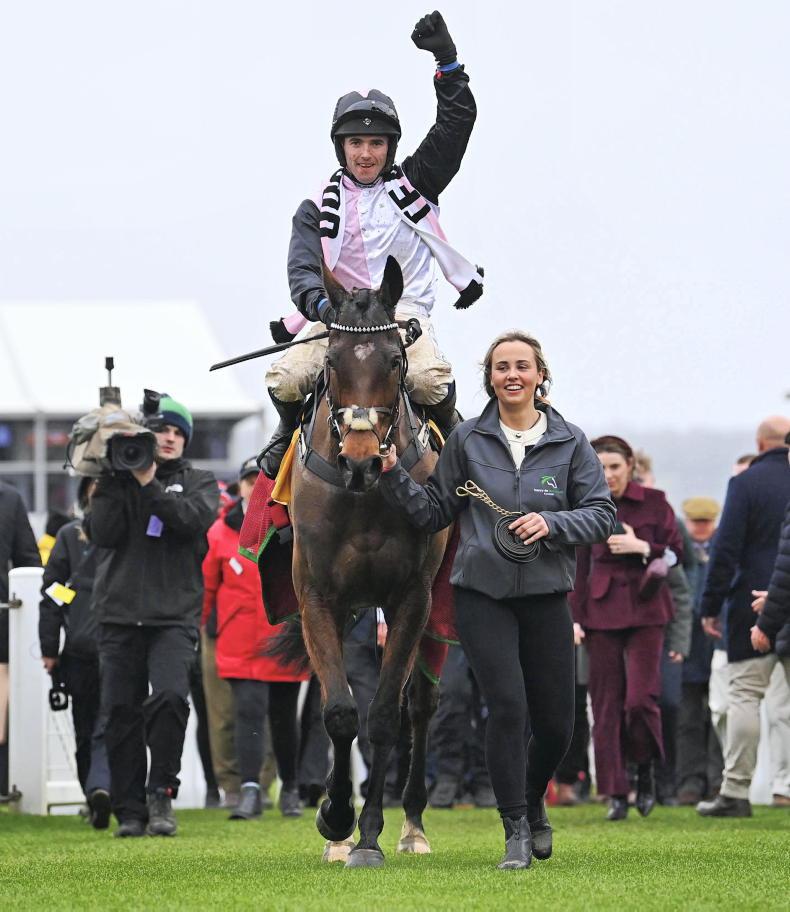 The common theme to last week’s Grade 1 sires, however, was quality pedigrees. Ten of the 11 stallions were siblings of, or out of, stakes performers. The exception was Heart Wood’s sire Choeur Du Nord, though his dam was runner-up in the Prix d’Iena, which is now listed grade.
Choeur Du Nord was also one of four of the Grade 1 sires to not earn blacktype themselves. However, his family was particularly successful last week. The son of Voix Du Nord is a half-brother to the dam of Cokoriko and Chanducoq (Voix Du Nord), sires of Kitzbuhel and Apolon De Charnie respectively.
A bit like Well Chosen, Choeur Du Nord has done it the hard way, starting his career at a fee of €1,500 and now commanding €8,500. Heart Wood is the only blacktype horse in his first two dams, the same applying to his Grade 2 winner Jeriko Du Reponet and Grade 1 second Heloy Delabarriere.
For breeders reluctant to travel, Choeur Du Nord’s progression is irrelevant, as is the Grade 1 success of the other five French stallions. Even more unfortunate is that two of five Irish stallions are no longer with us, and at 27 years of age, Well Chosen’s mares will be strictly limited.
Bright future
Thankfully, the best seems to be yet to come for Jeu St Eloi and Maxios, sires of Kargese and Gaelic Warrior. The Arkle Trophy heroine, who won last year’s County Hurdle, is one of nine blacktype performers from 53 runners in Jeu St Eloi’s six-year-old crop.
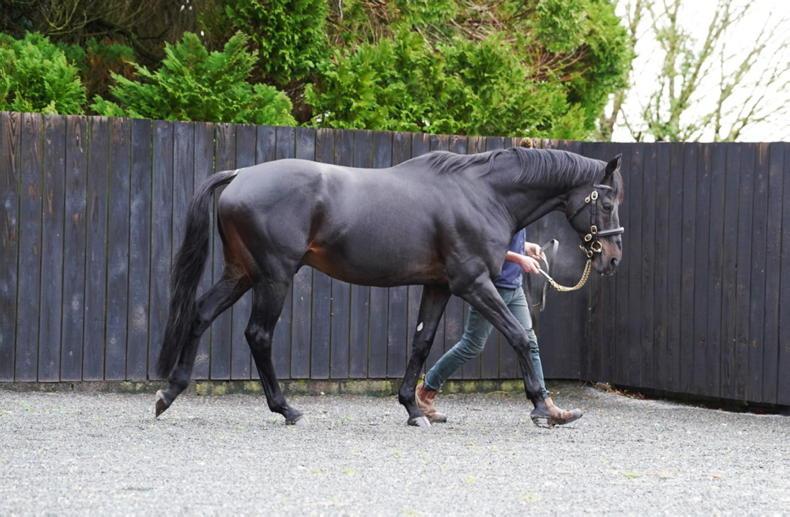 Jeu St Eloi’s latest five-year-olds have also made a bright start, including Francois Nicolle’s Grade 1 chaser Lecoeurdeshommes and George Mernagh Bumper runner-up Look Me, who made a smart start for Willie Mullins last month.
Since moving to the Cashman family’s Glenview Stud, Jeu St Eloi has covered his largest books of mares to date, with 118 foals reported in 2024 and 166 the following year. They have been well-received at the sales, too, with filly foals selling for up to €85,000 and €80,000.
Maxios also took a massive leap in numbers since moving to Ireland, and his first crop conceived at Castlehyde Stud are now five-year-olds. That crop features six blacktype horses to date, including Denis Hogan’s progressive listed winner Cousin Kate and Robert Tyner’s George Mernagh Bumper winner I’m Slippy.
Maxios was joint-second leading sire of four-year-old winners in Irish point-to-points last season, while his latest batch include £145,000 buy Soleretta. His current four-year-olds also include Nicky Henderson’s blacktype filly Manlaga.
With the market’s focus on stallions, the other half of the breeding often gets overlooked, but it’s interesting to note that the dams of last week’s Grade 1 winners share similar characteristics to the stallions, in that their pedigrees outshone their race records.
Of the 13 Grade 1 winners, six were out of winning mares, three dams had only placed, two didn’t manage to place, and two were unraced. None of the Grade 1 producers earned blacktype themselves, but stakes performers featured under the second dams of eight winners.
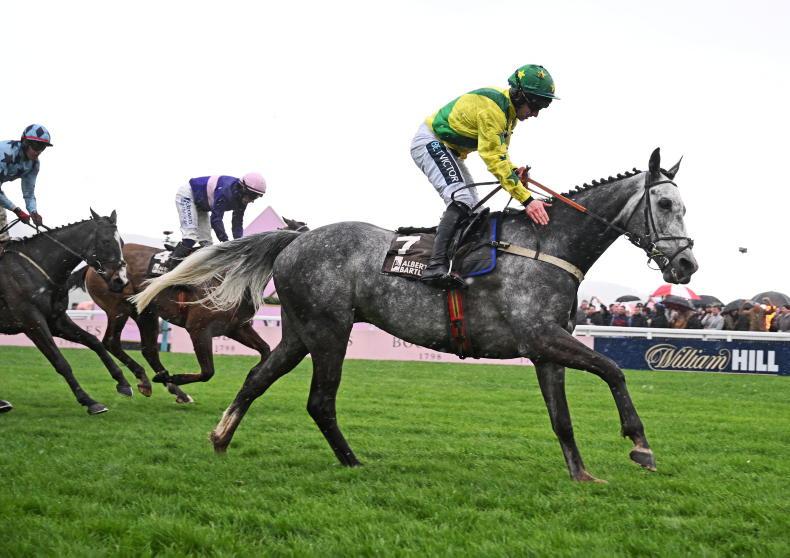 JUST two of the week’s Grade 1 winners were bought as form horses at public auction; Wodhooh and Johnny’s Jury. The majority were purchased privately off the track, with just two bought by their end users at the store sales; Old Park Star and King Rasko Grey.
At €120,000 and €250,000 respectively, they may not give hope to owners and trainers operating at a lower budget, particularly considered alongside Albert Bartlett winner Johnny’s Jury, who cost €150,000 as a three-year-old.
Just four Grade 1 winners last week were offered at the store sales, with all four bought at the Goffs Arkle Sale, a major coup for the sale following a rise in prices and statistics over the last number of years.
The other store sale graduate to score at the highest level - The Mourne Rambler - was, thankfully for the dreamers, bought for a more affordable €45,000.
The Goffs Arkle Sale was the leading store sale of Grade 1 winners, but the Tattersalls Ireland November NH Sale matched their tally as younger horses, with three bought as foals and one as a yearling. Overall, the sale provided eight of last week’s winners.
The cheapest Grade 1 winner of the week earns his title for his yearling price of €9,000 at BBAG, though it’s fair to say that Gaelic Warrior would have cost considerably more after placing in two three-year-old hurdles at Auteuil for Hector De Lageneste and Guillame Macaire.
All budgets
Bargain hunters will be relieved to hear that at least away from the Grade 1s, there were examples of bargain buys by end users. Final Orders was bought after four runs on the flat, costing Emerald Bloodstock 14,000gns at the Tattersalls Autumn Horse-In-Training Sale.
Ask Brewster was another sold with British form, albeit between the flags, with Bradley Gibbs’s debut scorer bringing £50,000 at the Goffs UK Aintree Sale.
Owner Jimmy Fyffe paid £24,000 for Dr Richard Newland and Jamie Insole’s offering Supremely West at the Goffs UK Spring Sale and, even when factoring subsequent spend on wind surgery, he looked well-bought when landing the Pertemps Network Final for the Skeltons.
Paul Holden, no doubt, was hoping to win an Irish point-to-point when giving €150,000 for Johnny’s Jury at the Goffs Arkle Sale, but had to switch to Plan B with the Jukebox Jury gelding.
After finishing third in a maiden hurdle at Ffos Las for Nicky Henderson, he resold at the Goffs UK January Sale for £75,000.
Ted Durcan, the subject of this week’s Big Interview, has focussed on the flat since beginning his second career as a bloodstock agent, but can be expecting more National Hunt orders off the back of Wodhooh’s sterling progression for Gordon Elliott.
The daughter of Le Havre has amassed over £300,000 over hurdles since being picked up by Durcan for 50,000gns at the Tattersalls July Sale, when she held a flat rating of 71.
She isn’t done yet, but when she is, The Sundowners Partnership can look forward to a big payday in the ring, because as well as an impressive race record, Wodhooh also boasts a fine pedigree, though she is the only National Hunt star on the page.
Bigger picture
Of the 28 winners overall last week, eight began their careers between the flags as four-year-olds, with seven debuting over hurdles as three-year-olds. The importance of four-year-old bumpers was evident, too, in five winners, with flat horses notching four wins.
The other four winners started in a three-year-old bumper, four-year-old hurdle, five-year-old hurdle and five-year-old point-to-point.
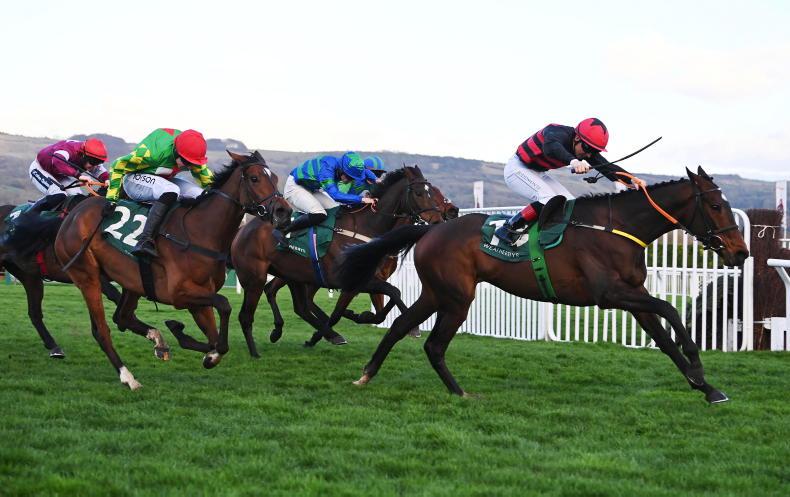 Unfortunately for the point-to-point sphere, just one of the Grade 1 winners started life between the flags, with The Mourne Rambler finishing second in a four-year-old maiden at Portrush on his sole start for Paddy Turley.
Five of last week’s Grade 1 winners debuted as three-year-olds over hurdles, however, a case can be made that this year’s firmer ground would not suit the vast majority of point-to-pointers.
This theory is not just wishful thinking, the figures also suggest the same. Five point-to-point graduates won Grade 1s in 2025, compared to just one three-year-old hurdler. Over the course of the last four Festivals, an equal number of Grade 1 winners began their careers over hurdles as three-year-olds and in point-to-points as four-year-olds.
With 10 Grade 1 winners, the four-year-old bumpers also stack up highly, but rather than rating starting point over another, to me, it suggests that a case can be made for various avenues, at different ages, depending on the horse in question.
Ireland’s academy hurdle winners have been gifted maiden status to make both the races themselves and their winners more attractive, but this has to detract from numbers in other disciplines.
However, history shows that while starting National Hunt horses earlier can be beneficial, it is not the only path to success, nor can it be declared the undisputed best method either.