This is your second year at the helm, can you tell us how you have settled into the role of director and describe some highlights, and perhaps some challenges, you have encountered thus far?
Yes, but in truth it not all that different, I’ve been in the RDS and working on the Dublin Horse Show for a long time, so stepping into the role was more of a continuation than a leap. I already knew the rhythms of the Show, the people, and the expectations, which made the adjustment quite natural.
One of the real benefits of the role is working closely with the Committee. It is a good structure that works well, and that relationship is hugely important - it broadens the RDS connection with the wider industry and ensures the Show is shaped by a range of perspectives and expertise.
For me, the best part of the job has always been the opportunity to make things better, to refine elements of the Show, introduce new features, and keep pushing for improvements that enhance and improve the wider industry. I feel the RDS has done that incredibly well over the years and that sense of progress is very rewarding.
The biggest challenge is meeting everyone’s expectations. The Show means so much to so many people - competitors, breeders, sponsors, families, and lifelong supporters - and naturally, each group has its own hopes for what the Show should be. Balancing all of that while staying true to the Show’s identity is a constant but worthwhile challenge.
We are presently two months out from the 2026 Dublin Horse Show, can you talk us through what your role involves at the moment and in what ways the focus shifts in the weeks to come?
Where to start - it’s different every single day. At this point in the campaign the role is incredibly varied and completely all consuming. One moment I’m meeting sponsors, the next I’m clarifying rules for one of our 160 plus competitions, at a qualifier or out on-site measuring space for new Tackrooms. I could be liaising with any of our 250 officials, working with industry stakeholders, progressing the new foal sale, or planning the centenary celebrations. No two days are remotely alike.
That’s the nature of the Show at this stage: every minute is accounted for, and its all-consuming. It’s a huge amount of work, but it’s also energising - you can feel the momentum building as we get closer. The focus will shift again in the coming weeks as we move from planning to physical build, checking everything is ready and in the right place, and the final layers of detail that make the Show what it is. It’s intense, but it’s also the part of the year when everything starts to come to life.
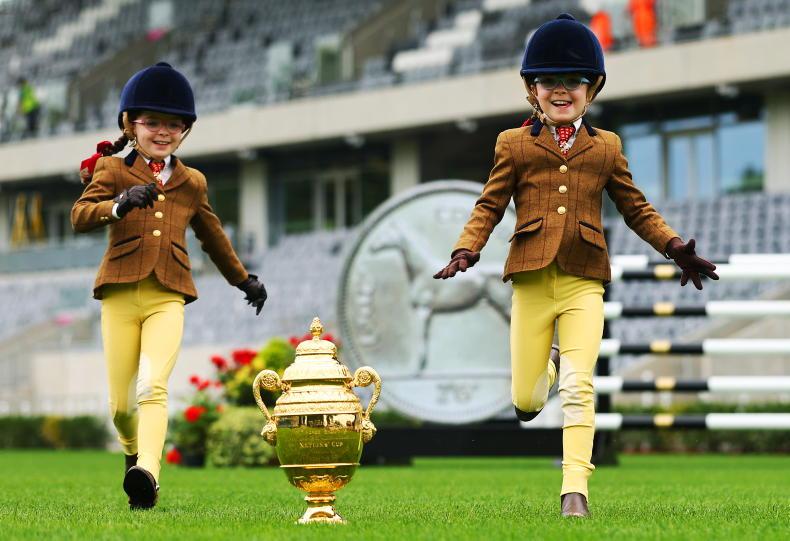
Esme and Georgia Durkan Watson, identical eight-year-old twins from Westport, Co. Mayo, at the launch of the Gallagher Dublin Horse Show 2026
Pulling together a show of this calibre so close to a bustling city must bring its challenges – can you tell us a bit about that aspect?
It really is a significant logistical undertaking, especially in the middle of a busy city. Everything has to be carefully choreographed - from finding workable parking solutions for exhibitors’ trucks and trailers near the RDS, to accommodating 1,600 horses in 1,200 stables and moving them efficiently through veterinary checks. That alone is a major operation.
Each entry group is assigned a specific arrival and departure time based on their competition schedule, and then you have exhibitors with multiple horses who need a different level of flexibility. On top of that come early arrival requests, special stabling needs, and all the individual circumstances that arise when you’re dealing with such a large and diverse group of competitors.
It’s certainly not straightforward, but I’m fortunate to have an exceptional team around me. Their instinct is always to find solutions and to support exhibitors wherever possible. The scale is enormous, but the commitment and problem solving mindset within the team are what make it all work.
Can you talk us through how you expect the new stand will impact the experience this year?
The new Anglesea Stand will be a great addition to the Show, the 360-degree views of the RDS and the Ballsbridge area from it are amazing. It’s a bit of a climb, but I think the best seats are at the top - you can see both show rings and the Laya Arena from such an incredible vantage point. We were just up there the other day and thought it was a pity that the seats at the very back don’t swivel so you can swing round easily to keep an eye on all three competition arenas!
From an increased spectator capacity, comfort and amenities point of view, it will be a wonderful addition and will bring a fresh energy to the Show. When you are in it and see its scale, it’s incredible to think the Elliott Group built it in just 18 months and did such a great job. It was a bit of a passion project for the Elliott Brothers, of course - they love their horses.
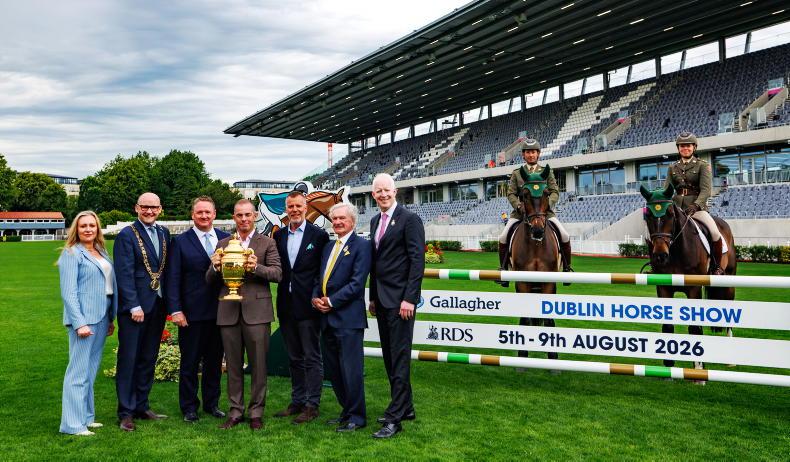
Fiona Sheridan, Dublin Horse Show Director, Lord Mayor Ray McAdam, Derek Henry, Interim CEO Gallagher Ireland, Cian O'Connor, Michael Rae, CEO GGB-UK and Ireland, Hilary Hough, RDS President, and Paul Kelly RDS CEO at the launch of the Gallagher Dublin Horse Show 2026
What other new offerings can visitors expect this year?
There’s so much new this year, where to start! The centenary of the Nations’ Cup is obviously our major celebration and we have a huge amount planned around it. There will be some very special moments in the Laya Arena just before the Aga Khan that people will not want to miss, along with a centenary exhibition curated by Louise Parkes that captures the history and significance of the competition.
On Wednesday at 1pm, we have the grand unveiling of the new Laya Arena – a milestone for the Show and for the RDS.
We are also bringing the Shetland Pony Grand National to the RDS for the first time, which will bring great energy, fun and excitement to the schedule.
Another major addition is the inaugural RDS Elite Show Jumping Foal Sale in partnership with Goffs. Sixteen foals will be selected by an expert panel based on pedigree, athleticism and future potential. The Sale will take place in the Laya Arena on Friday evening, immediately after the Nations’ Cup, giving these young horses a world class stage and their breeders an unprecedented platform to showcase the fruits of their efforts.
Sunday will see the first €1 million competition at the Show - the Rolex Grand Prix of Ireland - which is attracting the world’s top riders.
We introduced new Working Hunter Horse qualifiers this year to support higher standards at the Show and create more opportunities and a sense of community for riders and producers nationwide.
In addition, we are delighted to welcome a number of new sponsors and partners this year, each bringing added excitement, scale and prestige to the Show.
2026 marks the centenary of the equitation school, with whom the RDS has had a long and fruitful relationship – can you tell us why you believe the Horse Show and the Equitation School complement each other so well?
Louise Parkes is the woman best equiped to tell this story, and she does so brilliantly in the centenary exhibition she has curated for the Show. It will be in the RDS Library during the week of the Show, and I’d encourage everyone to take the time to go and see it.
It is an incredible history and relationship so completely intertwined. The Equitation School was founded in 1926 specifically so Ireland could field a team for the first international military show jumping competition at the Dublin Horse Show - a moment that helped a new Free State step onto the world stage with confidence.
The exhibition captures those early days, when the then RDS President, Judge Wylie met with two Swiss Colonels in the Shelbourne Hotel in 1925 leading to the rapid establishment of the Equitation School, and the first Irish team of Army officers who with hastily purchased horses, rode into the Main Arena that August and ignited a sense of national pride that has never faded.
From that point on, the Equitation School became one of Ireland’s greatest ambassadors - showcasing the Irish horse, raising standards, and helping to build the international reputation that still underpins the Show today.
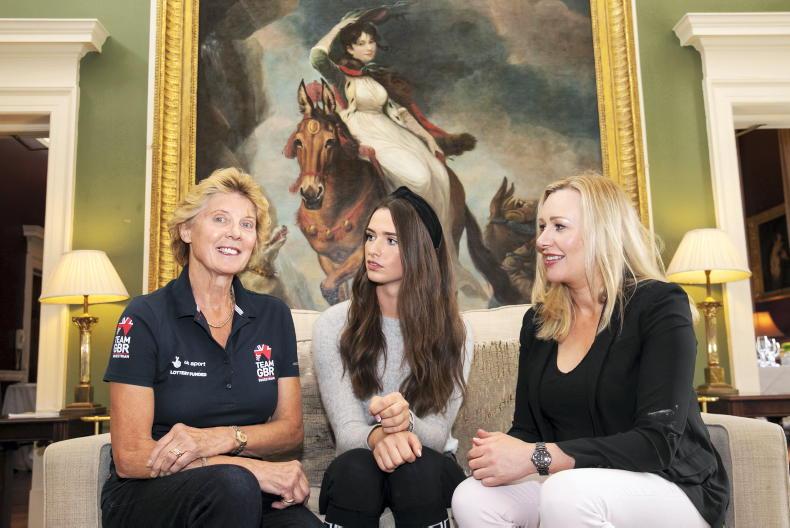
British chef d'equipe Di Lampard, Kilkenny, show jumper Susan Fitzpatrick and Fiona Sheridan at the RDS \ Courtesy of the RDS
Can you tell us about one or two behind the scenes roles that are critical to the preparation/success of the show that we ordinary punters would never be aware of?
I can tell you about so many people and groups of officials who are the backbone of the Show, it is actually hard to know with whom or where to start. We have about 250 voluntary Stewards and Officials and without them the Show simply would not be what it is. It is their interest, passion, and expertise - you can see how special the Dublin Horse Show is to them all.
There are incredible teams of people across the Showgrounds who make it all happen. From the small team of four Pocket Stewards in Simmonscourt who have the competitions running like clockwork all week, to the hardworking Arrivals Team, the ever present Safety Stewards and the super powered Show Ring Stewards, to name just a few. We are just incredibly lucky to have such dedicated and selfless people willing to give their time and energy to the RDS and the Show.
What I can say, above all, is that we are extraordinarily fortunate to have people who give so much of themselves to the RDS and to the Show. Their commitment, their knowledge and their sheer generosity of spirit are woven into every minute of the week. They uphold the character and tradition of the Dublin Horse Show in ways that most visitors will never see, and the event simply wouldn’t have the same heart without them.
As a community, we owe our officials genuine appreciation and respect - they are central to everything that makes this Show special.
Is there are an aspect of the show you feel is something of a hidden gem that warrants discovery?
There’s so much to do and see at the Show that it’s hard to get around everything and every corner of the place. The equestrian-minded attendees - well if they are anything like me and the ones I know - don’t tend to move far from the competition arenas, aside from maybe a bit of shopping. And I think that means they often miss the full scale of the Show.
The RDS Library, for instance, is open to the public during the Show and usually has a topical exhibition or display of interest. This year, it will host the Centenary Exhibition, which really shouldn’t be missed, and it’s also a lovely, quiet space to step away from the crowds for a few minutes.
Similarly, I’m not sure how many people make it over to the Grand Hall area and the Kidz Zone - there’s a whole other vibe going on there that people don’t always realise is happening.
And then there are the tucked away spaces like the Triple Bar, also known as Tommy Brennan’s Bar after the late, great TB, who left us 12 years ago on the 20th of July. It’s very much a hidden gem in its own right.
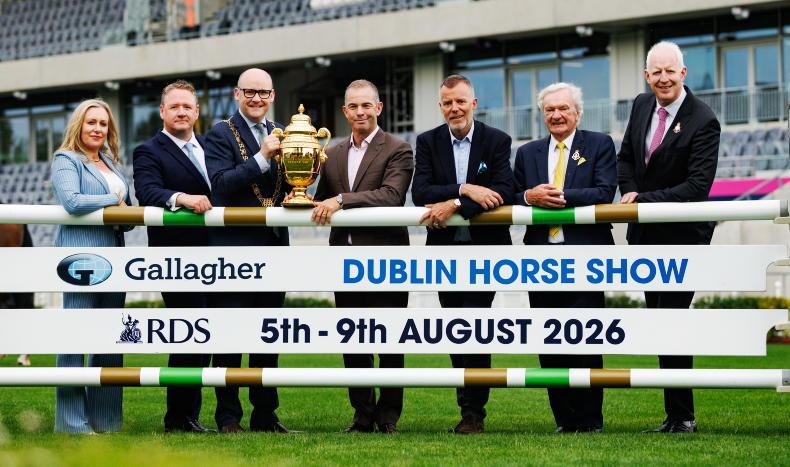
Fiona Sheridan, Dublin Horse Show Director, Lord Mayor Ray McAdam, Derek Henry, Interim CEO Gallagher Ireland, Cian O'Connor, Michael Rae, CEO GGB-UK and Ireland, Hilary Hough, RDS President, and Paul Kelly RDS CEO at the launch of the Gallagher Dublin Horse Show 2026
Your show days must be incredibly busy, but can you tell us your top five non-negotiable must-see/must-dos?
Show days are incredibly busy, but there are always the standout events that you try to catch at least a little of. From a sporting and competition perspective, the Rolex Grand Prix of Ireland is an absolute must see. It is a phenomenal display of top level show jumping and seeing those horses and riders perform is completely inspiring. The Nations’ Cup is another major highlight, rich in tradition, pageantry, atmosphere, and world-class competition. And especially this year, as we celebrate its centenary, and all the events we have planned around it, it should be on everyone’s non-negotiables to be there to see this once in a century celebration.
I also try to make it to the Four-Year-Old Final in Simmonscourt. Watching those young horses develop through the qualifiers and into the Show is very interesting. Similarly, the International 7 & 8-Year-Old classes are favourites of mine, as they are all about spotting the future stars of the sport.
There’s so much I’d love to see - the young in-hand horses, the Hunter Championship, and this year, I will be especially eager to see how the new Foal Sale unfolds in the Laya Arena after the Nations’ Cup, But it’s such a busy week, it hard to see everything and it goes by in a flash!
Are there any plans in the pipeline for the future of the Show you can share with us?
The Show is about continuous change and development, while always staying true to its core mission of supporting Irish breeders and the Irish sport horse industry. We have a great Equestrian Committee who are very focused on continued development at the grassroots level, and on building a strong foundation for the industry. Developing and maintaining a robust network of qualifiers, and working closely with other industry organisations, is central to that.
This year we worked very closely with Show Jumping Ireland and the Irish Pony Society to introduce the ‘Golden Ticket’ qualifier system, which has taken the work and stress out of the entry process, for both entrants and organisers and resolved almost all of the eligibility issues we used to face in those areas.
We’d like to continue that collaborative approach with other organisations and stakeholders.
Looking ahead, one area that needs attention is the development and support of Officials - Judges, Stewards and Course Designers - because without them, there simply is no sport.
On the international front, it would be fantastic to become one of the Rolex Grand Slam events and to ensure the Show’s international reputation remains right at the very top of the sport.
This article is taken from The Irish Field’s Dublin Horse Show Magazine 2026. Order your copy HERE