REELING in the years back to 2008 when Southwell Diamond Diva (Flagmount King - Golden Frigate, by Fast Frigate) , aka Chloe, arrived in our lives.
She was spotted by Sean Fitzgibbon at a Natural Horsemanship clinic, a good girl-gone-bad, misunderstood and heading for the ‘last chance saloon’.
I got sent a picture of this bay mare, didn’t hesitate and purchased her as she stood. “Nothing to lose” and “Sure, what’s the worst that can happen?” - famous last words!
Chloe arrived in Rathkeale, Co Limerick and a new journey began for us all. The decision was made to go the broodmare showing route, and it was in the Horse Sport Ireland class at Charleville Show that we were introduced to the late Michael Roche, who was judging on the day.
He always had kind words of encouragement and Michael had the same Flagmount King bloodlines in his Assagart foundation mares. The mares were replicas of each other, and we had that in common.
We were fortunate over the years to win broodmare championships at county shows, to qualify for the Breeders’ Championship and the highlight was winning the stinted class in Dublin, getting the elusive red rosette.
Chloe continued to place in the mare and foal classes as the years went on and, to round off, she bred a yearling champion at Dublin. I’m in no doubt that Chloe changed my life and educated me, a mare of a lifetime by most standards for what could have been a different story.
1. Proudest breeder moment?
Southwell Diamond Light (aka Lucy) by Kylemore Stud’s late Womanizer won the yearling filly class at the RDS in 2016 and went on to be champion yearling.
A big-moving, extrovert horse with presence, she had second-itis all that season in the lead-up to Dublin, plenty of showring mileage and peaked at the right time.
Adding our names to the champion yearling silverware was special and unforgettable. Almost as unforgettable as meeting Johnny Fennell on the way out of Ring 1, leaning over the barrier, a familiar face in the crowd saying, “All the way from Rathkeale, boy!”
2. How many broodmares do you have?
Currently, Chloe is semi-retired. Lucy has a filly by Kieran Kennedy’s Lagans OBOS Quality, so this continues the line and creates another opportunity. Since joining forces with my partner Loretta Hanley, the number of mares has increased, and sport horse breeding is our main focus.
Loretta’s family have a catalogue of broodmares and bloodlines which are well established. Her uncle Seamus [featured in last week’s Breeders’ 10] bred this year’s Balmoral supreme champion hunter. I have shown Loretta’s Traditional Irish Horse (TIH) mare Be In the Moment Elm in-hand, a very versatile and eye-catching mare.
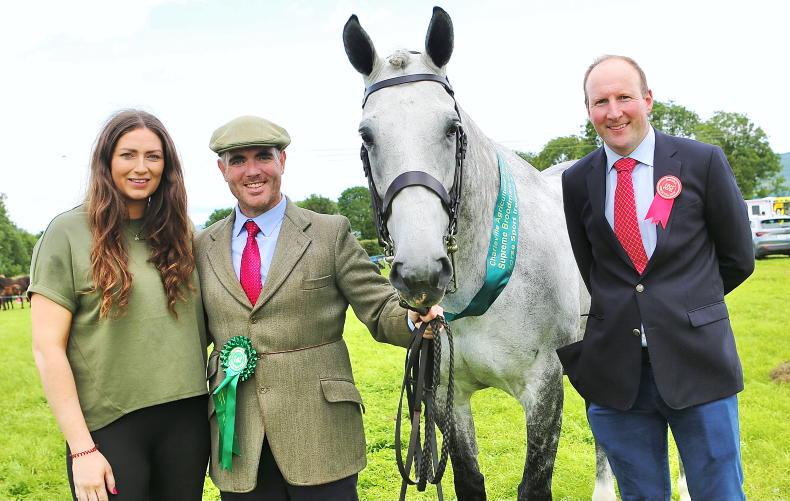
Loretta and Leonard Supple with the HSI broodmare champion at Charleville last year - Be In The Moment Elm - and judge Paddy Fleming \ Susan Finnerty
3. Your favourite broodmare?
Chloe was always straightforward, non-complicated breeding-wise, a great mare to rear a foal and made my job very easy. The agricultural shows have become a way of life and Chloe, an old-fashioned type, always held her own. There is something in all of them to like; essentially, they are the working mares on the showing circuit.
4. Greatest challenge(s) facing Irish breeders?
The million-dollar question. It’s almost a generational thing now. Usually, there is a foundation mare that creates the line, and suddenly the numbers are increasing, and everyone is trying to breed the next superstar.
If you like nice things, it’s going to cost you! There are so many levels in breeding, depending on which end you are at, a tough cycle, and you are really only ever as good as your last horse.
5. Southwell is yours, thoughts on prefixes?
The originality of the prefixes distinguishes between the different yards and breeders, which most can identify within all corners of the world. No more than naming a horse on a passport, you hope the prefix remains unchanged as it carries its own weight of individuality.
6. Internet: good or bad servant?
Social media is one of the new superpowers, it connects people instantly. Could there be concern for overexposure in some cases? Yes, but ultimately, with the introduction of AI, there is always an answer for any question.
7. What type of horse would you like to breed?
Ideally, I would love an old-fashioned National Hunt-type TB stallion: rangy, quality with plenty of bone, the type that traditionalists would always have promoted bringing the Draught mare to.
That way, you could produce a weight horse that was an all-rounder in most disciplines. The renowned traditional Irish-bred horse. Even if one was limited jumping-wise, but was a good-looking horse with an even temperament, they could be produced on the flat.
8. It takes a team. Who’s on yours?
My parents Aidan and Phil have always been on standby. Aidan is an avid racing fan, a regular at point-to-point and National Hunt race meetings.
He has an affinity with greyhounds and works with the Irish Greyhound Board (IGB), now Greyhound Racing Ireland and the Irish Coursing Club (ICC). It was always handy at a weekend show, when leading duties were required with mares and foals, as he would usually head off to the dog track afterwards, so it all tied in nicely with his day.
It should be noted that his home away from home is Powerstown Park in Clonmel, where he spends most of the winter season working with the ICC. My mother gets the obligatory daily phone call from work, ‘Did you feed the mare at lunchtime!’
Close friends Jodie Moran, James Braddish, Tony Purcell and Ann Moran and I have collaborated on a number of ventures with horses that invariably paid off over the years. We’d spend time sourcing and looking for show horses; comparing notes and completing checks to ensure we had the right type and the best route chosen for the horses.
Loretta and our families have started a new chapter with the arrival of our baby daughter, Georgia. A new life brings new goals and carries on the traditions, so we know that lead rein pony classes are on the horizon. Absolutely no pressure to get that right!
9. Breeding horses - would you do it all over again?
I don’t think anyone can describe that feeling of the connection when it comes to horses. It becomes a way of life and, if you’re lucky enough, you can quietly celebrate success in a corner of your mind.
10. Can the amateurs compete against the professionals?
Working full-time and keeping horses as a hobby, basically means you’re working two jobs. Even at an amateur level, but the good outweighs the sacrifice.
I’d often wonder if I were at home full-time, would it make life different? Certainly not easier, as the bills and overheads have to be paid, so do we keep it simple and keep the numbers down?
The breeding game has its challenges, but if you keep going, hopefully doing the right thing, it should pay off in some shape or form.