CURRAGHMORE is undoubtedely the finest private estate in Ireland and has been in the same family for over 800 years. It runs to almost 4,000 acres with roughly half of that being mature forests with many specimen trees. It hosts Ireland’s tallest tree, a Sitka spruce planted in 1820 which now standing at 175 feet.
It stands in a secluded and sheltered valley near the Clodagh river (a tributary of the Suir) which runs through the estate. Nearby is John’s Bridge over the Clodagh, built in anticipation of the visit of King John which, in the end, never happened. Completed in1200, it is Ireland’s oldest bridge and still in perfect order.
An estate can’t exist on history and, apart from forestry, it hosts a large commercial farm with over 600 acres of tillage. In addition, they run 180 suckler cows in calf to a Charolais bull. They lamb over a 1,000 ewes using Belclare Improvers rams and have an enviable lambing percentage.
Tourism is increasingly an important part of the estate with daily tours of the house and gardens. The estate now has a woodchip six-furlong uphill gallop and a mile and a half grass gallop on the glorious old turf, with the opportunity to school over Easy Fix hurdles, which is used extensively by local trainers. Shay Barry stables his string on the estate and uses the facilities.
A very successful commercial shoot runs during the winter for which two game keepers are employed and raise over 12,000 pheasants.
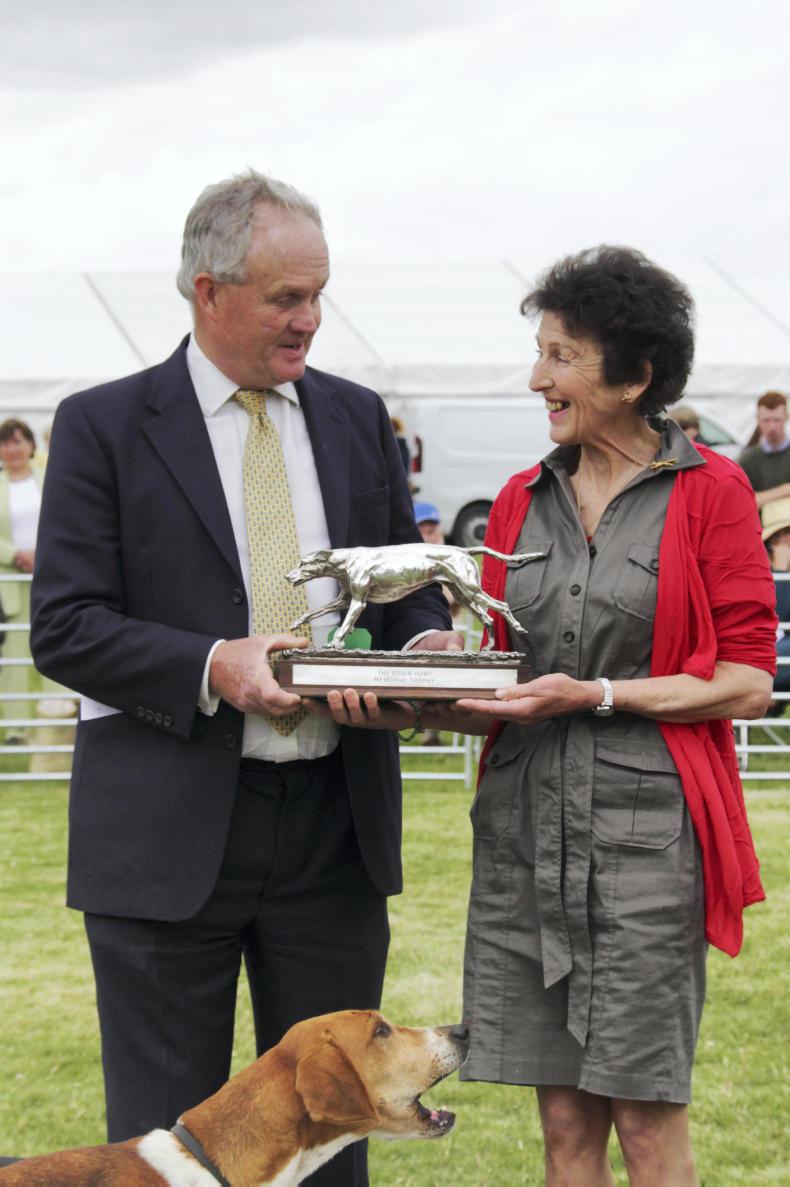
HUNTING
The family’s first recorded connection with foxhunting was 1843 when the third Marquess, Henry, having previously hunted the Tipps, returned home with his huntsman, one John Ryan, and set up the Curraghmore Hunt, later to be known as the Waterford Foxhounds. They were run entirely at the master’s expense and on the grandest of lines. However, Lord Henry didn’t spend all his time blocking earths and having 10-mile points.
On a trip to Leicestershire and having had a successful day at the races with some high-spirited friends, Henry painted the town’s toll gates and the toll keeper red and went on to paint the door of every public building he could find including an occasional policeman a similar hue, giving rise to the expression “Painting the Town Red”.
As master he never wore top boots or white breeches. His regalia consisted of a velvet cap with a red coat buttoned up to the chin. Neither did he carry a hunting crop but what now might be described as a dressage whip without lash, with the hunting horn bound to the handle where it could be blown with the whip attached.
His hunting diaries were published by his great nephew and I was lucky enough to receive a copy on my visit as well as seeing the famed hunting horn and whip combination.
During the famine, he came up trumps and proved a benevolent landlord, reducing rents and having all 16 miles of the estate wall built as famine relief.
UNTIMELY DEATHS
Sadly, at just 48, he was killed as a result of a fall when jumping off a road from the Gardenmorris meet. This was to set a pattern of sudden and untimely deaths for many of the succeeding heirs to Curraghmore.
While tradition has it that their untimely deaths were the result of a curse, it seems more likely that their lifestyle and quest for danger were more likely causes.
However, it was a couple of generations earlier when the pedigree got a major lift.
Catherine De La Poer, the only child of her family and while barely into her teens, married her distant cousin Sir Marcus Beresford. The Beresfords were an English family settled in Ireland. Catherine and Marcus went on to have no less than three sons and six daughters.
This prolific family went on to populate the great houses of England and Ireland and set many strategic alliances that have seen the family in good stead. It was her son George who became the first Marquess in 1789, a title granted by George III.
SET IN STONE
Everywhere you look in Curraghmore, Catherine is remembered. Along with her extensive family, her portrait hangs in the hall while her statue, in white marble, stands in the shell house which she built in the garden and is now the high point on the Curraghmore tour.
It was she who rebuilt the main house which is constructed around a much older tower which forms the centrepiece. Even in death, she is further immortalised in marble in the family chapel which stands on a hill overlooking the great house.
A visit to the chapel is something of an obstacle course as the chapel yard and cemetery is home to a herd of goats whose main purpose in life is to eat the ivy off the walls and keep the grass in some kind of manageable state. Their secondary purpose it seems is to puck and harry any visitors who dares enter their domain.
Plaques and statues abound in the old church to distinguished family members, many of whom died early and violent deaths. In the intervening centuries, they have produced admirals, generals and a couple of archbishops including Armagh who is laid to rest in the chapel.
William Beresford, illegitimate son of the first Marquess, was a Field Marshal in the British Army and was created Viscount Beresford in 1823.
Lord William Beresford, third son of the fourth Marquess, was a soldier and recipient of the Victoria Cross (VC) the highest and most prestigious award for gallantry in the face of the enemy that can be awarded to British soldiers.
During the battle of Ulundi in the Zulu Wars, one of William’s men had his horse shot out from under him and was in imminent danger of being taken by the Zulus when the intrepid Beresford, assisted by a Sergeant O’Toole under withering fire, dashed back and threw the semiconscious soldier, pillion style on the back of his horse, and made it back to their own lines. Sgt O’Toole, at Beresford’s instance, was also awarded the VC.
On returning to England and civilian life, he became a keen racing man and won the 1899 running of the 1000 Guineas with his filly Sibol who went on to be second in the Oaks.
Photographs taken, all good things come to an end and reluctantly we had to bid farewell to our host and glorious Curraghmore.
Hopefully good fortune will continue to shine on him and his family who could be said to hold Curraghmore in trust for the nation.
The Waterfords were never absentee landlords and they remain an intrinsic part of rural life in Co Waterford and the sunny southeast.