HE was like Frank Sinatra in New York,” says Joanne Sloan Allen about the celebrity status of Northern Ireland-based Egyptian rider Sameh El Dahan at the Longines Global Champions Tour of Cairo two weeks ago.
“He will come out of the ring in Cavan this weekend and wonder ‘where are the people who want my autograph?’,” she laughs as we chat following the show.
In reality, however, this conversation is far removed from the celebrity status of famous show jumpers. It is born from the welfare plight of horses in the Egyptian capital and the impact the visit from such a huge equestrian tour had and will have on it.
In his own words, for Sameh El Dahan, the first five-star in his hometown was a homecoming. The 41-year-old learned how to ride in Cairo, where he grew up. Sameh studied medicine, but made a choice to ride horses as a profession instead. He left Egypt in 2011 for Templepatrick, Co Antrim, where he joined Joanne’s team at Sycamore Stables.
“I hadn’t shown in my home country for a long time, so it was good to be showing in front of friends and family. Egypt doesn’t get these kind of shows, so the people were excited to watch, the stands were full. It was mentally draining and mentally exhausting, but it was so enjoyable,” Sameh tells Irish Horse World.
Fans were shouting his name as he entered the arena and asking for autographs on the way out. Sameh represented Egypt at the 2014 and 2018 World Equestrian Games, but switched nationality to Britain in 2021 following a dispute with Egypt’s federation. During his time riding for Britain, he made two Nations Cup appearances, at Spruce Meadows in 2023 and 2024, the same venue where he won the richest Grand Prix in the world in 2018 with Sumas Zorro.
In June 2026, Sameh announced he would return to compete for his home nation. The timing was perfect, as he returned to a championship team for Egypt at the 2026 FEI World Jumping Championships in Aachen and was able to lap up the hometown hero status at the GCT of Cairo, where he also won a class and heard his national anthem play out.
A new Egyptian Equestrian Federation was the catalyst for the move back. “They have been in charge now for the last three years, and they have been in discussion with me since they took over. From what I see, they’re just trying to push everything in the right way, and that’s what made me comfortable to make that change back.
“Obviously, it was an honour to ride for Britain for that long, and I learned a lot. Being anywhere around the gold medal team members is always good; you get a bit of insight into what’s going on. But I thought Egypt needs me and this is my home country, and I think it was the right time,” he explains.
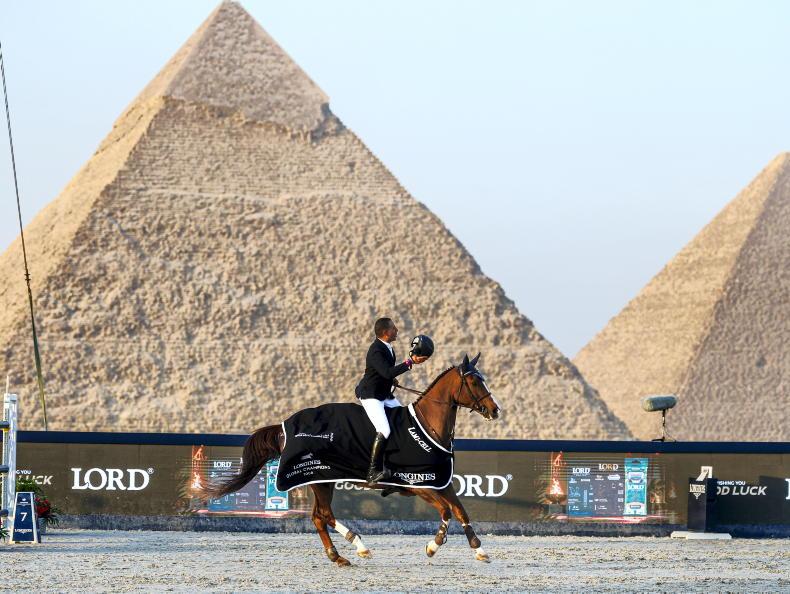
Sameh El Dahan after winning in Cairo in front of the pyramids aboard WKD Aimez Moi \ Stefano Grasso/LGCT
Highlighting the plight
The arrival of the Longines Global Champions Tour in Cairo sparked plenty of conversation and some outrage. The event took place in front of the Pyramids of Giza, one of the seven ancient wonders of the world, where the local equine population are used as work horses and are often in appalling condition.
The horses are part of the tourism industry and often encounter lameness, dental problems, inadequate nutrition, wounds from ill-fitting tack, while there is also limited preventative care like worming. The local horses are not microchipped or vaccinated, although that is beginning to happen now.
While in Cairo, Sameh and Joanne visited Egypt Equine Aid and are now on a mission to help in the best way they can. Joanne put out an appeal for dentists and vets and is organising to get them to Cairo in the New Year.
“In my opinion, bringing the show to Cairo is a positive thing,” Sameh says. “I went to visit the charities because, you know, horses is our livelihood, we love horses so we don’t want to see them in that state. Being an Egyptian, and knowing my people, we’re not mean people by nature, so it was a bit astonishing for me to see that it came to that stage. I’m not blind to it, and I’ve heard of it, but I didn’t know it had come to that stage,” Sameh explained.
“I went to see these charities and we have started taking some individual steps, alongside the entities themselves, because I think every little helps at the end of the day.
“Imagine all the kids that are watching a show like this growing up in Egypt. They will watch these horses and think all the horses have to look like this, not how the horses are looking in Egypt,” Sameh added. “Because you get used to a certain side also, and thinking that’s the normal.
“But just having a show like this and people looking at those sport horses, looking a million dollars, and thinking actually the working horses need to be looking like that. It will help change the perception and I think it is quite important that young people realise how important horses are and how important their health is; either for working horses or sport horses. It’s more or less the same that they have to look and feel very well to be able to do their jobs well.”
Sustainable solution
After the show, the LGCT, the Egyptian Equestrian Federation, the General Organization for Veterinary Services (GOVS), the Egyptian government, Orascom Pyramids and international equine welfare charity Brooke launched a five-year initiative aimed at improving the welfare of working horses and other animals in the Pyramids area.
The programme will focus on sustained improvements in animal health, care and working conditions, including registration, microchipping, vaccinations and veterinary examinations. It will initially focus on approximately 700 horses, with a second phase intended to extend support to approximately 2,000. A detailed roadmap is being developed.
Sameh explained that the working horses are part of the tourism industry in Egypt, “you can’t take a scooter around the Pyramids, so horses or camels are used like in other countries but, in my opinion, there has to be like a working schedule that horses aren’t overworked and that their tack is all fitting correctly.
“I hope in the next five years, there will be big improvements, step by step. What I’m wishing for is to find a sustainable solution that it stays after that. You don’t want a situation where you do so much or a lot in a short space of time, and then it dies down.
“I said it in a few interviews at the show that I am a proud Egyptian and it was amazing to see the show set up. I am not doing it for PR; I just want to be able to help to get the picture fixed, because it is my country and I love my country.”
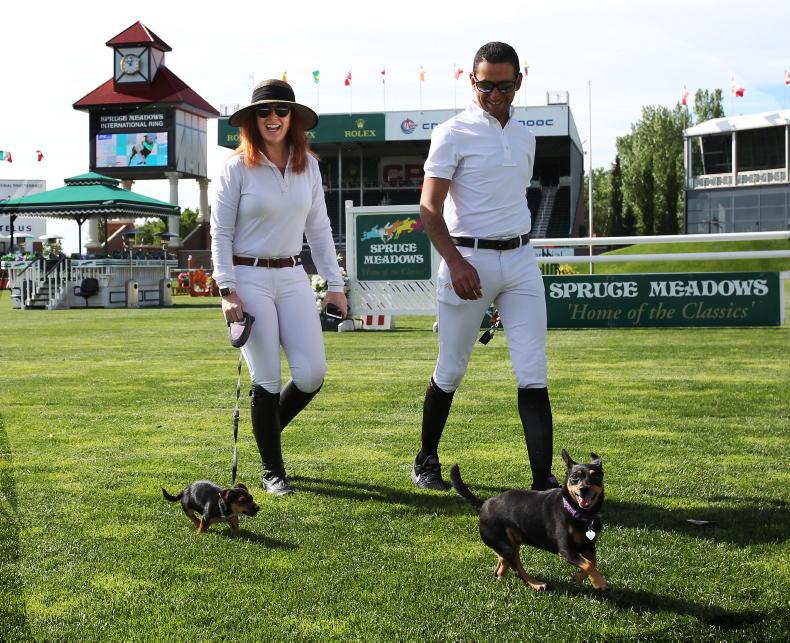
Joanne Sloan Allen and Sameh el Dahan at Spruce Meadows \ Spruce Meadows Media
Make a difference
Joanne was in contact with the small charity Egypt Equine Aid since the LGCT location of Cairo was announced. “I said to Sam, this is a really good chance for us to actually use our voice in a good way. So, when I knew we were going there, I said, ‘okay, this is actually something I really want to get involved in’. I want to see for myself the charities. I want to meet them, and I want to see what we can do to help,” Joanne explained. “And that’s not financial. It’s not a question of just throwing money at it, because that’s easy. I wanted to see what they need and how we can use our contacts to help, because that’s the most valuable thing we have.”
Joanne, her daughter Arielle and Sameh visited Egypt Equine Aid’s main veterinary clinic, which offers free vet care to horse owners. “The problem is there’s a trust thing,” Joanne said. “They have to build up trust or else the owners won’t bring their horses, because they think that every horse they bring there is going to get taken off them or get put down…
“I mean, you have to realise also this is people’s livelihoods, and these people are so poor. I always say it’s easy for us to criticise from the outside, but we’re not in that scenario. We’re not worried about feeding our kids, or God forbid, knowing where the next meal is coming from. You have to be a little bit aware of the environment as well. And we didn’t go in with the attitude that we were going to criticise them. We actually went ‘how can we help them?’
“Some of the states of the horses were awful, but there was also a positive side that you could see how they’ve helped. You could see how they’re really trying to make a difference in the community. And I always tend to try to focus on the positive rather than negative, because the negative is already done.”
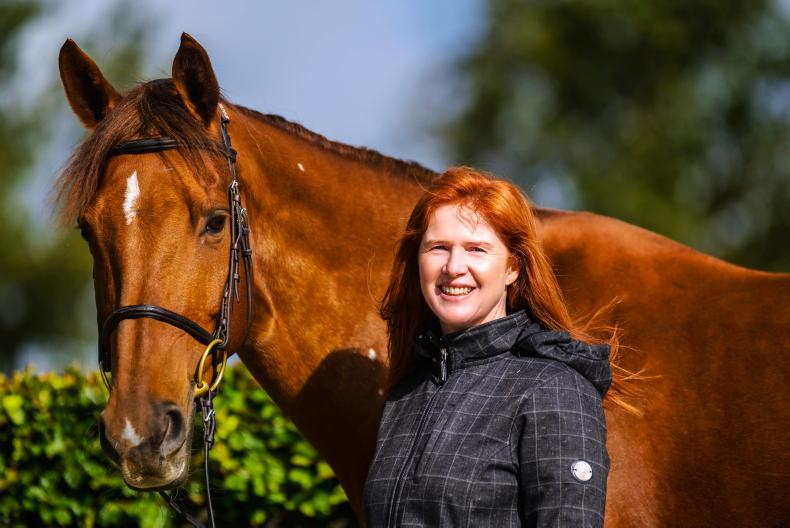
Joanne Sloan Allen with Sumas Zorro at home at Sycamore Stables \ ICL
Call for help
Now, Joanne is in the middle of trying to organise for a group of farriers, dentists and vets to travel to Cairo and help educate, train and make a difference, in collaboration with the Egyptian federation. “The idea is to try and get our vets and farriers to train the local people and maybe it can be a little bit of a holiday as well. The Egyptian federation have said that they’ll cover all the houses and the hotel costs.
“Once I get numbers and see that dates suit, then we will see if we can get sponsorship from Egypt Air or one of the airlines, so that basically the trip can be paid for and those people can go and give their time and make a difference.”
She added: “If this trip goes well in January, what I really want to do then is work with the federation that we can do [a] similar thing before the next show, so that they can come out, do the delegation and help again before the next show.”
Mirroring what Sameh said, Joanne also believes if people see, they can believe. “It’s about the next generation. And Egypt is, technically, a developing country. Developing countries are where our sport needs to be looking towards. We need to be making sure that the level keeps up, because there are people that want to end our sport. We kind of have to justify our horses’ existence.”
Looking forward
For now, it’s on to the Cavan Winter Horse Festival this weekend, before Joanne and Arielle spend a month in Wellington. For Sameh, he takes in the World Cup qualifier in Stuttgart next week, followed by the Global Champions Tour playoffs in Verona.
“That’s the glamour of show jumping. You are in Cairo with two horses, like a rockstar and everyone wants photos with you… then you go to Cavan and fall in the metre! That’s how it is; but being serious, you have to produce the horses if you want to compete at the top level,” Sameh said.
The long-term aim is to compete at his first Olympic Games in Los Angeles in 2028. The qualification for Egypt’s region is in February or March next year with two qualification spots available. “That is my main aim, to help Egypt qualify a team for LA.”
Any horse he has earmarked? “At the moment, I have Oscar-A as my main horse and he is more than capable to do that, but with horses, things change, so we will see where we are at with everything come the time.”