DUBLIN’S North Wall quays have been a hub of activity for centuries. It was the departure point for thousands of emigrants or where four-legged exports, from cavalry remounts to factory horses and cattle, were loaded up on ships.
The Dublin Convention Centre, a stone’s throw away, was the hub of this week’s European Union Summit. A.I (the Artificial Intelligence variety) was set to top Thursday’s agenda for the EU Heads of State amidst extremely challenging times for the 27 member countries.
The longest-standing and most familiar EU policy for farmers here is the Common Agricultural Policy (CAP), established in 1962.
Under various CAP Rural Development and Investments schemes, funding was made available for horse-breeding farms, such as upgrading stabling, dispersed by the Department of Agriculture, Food and the Marine. Member states can integrate equine support, agri-tourism for example, into their national CAP plans.
However, serious concerns have been raised about the proposal to cut €2.54 billion from the next CAP budget (2028-2034) and the Irish Farmers Association (IFA) are spearheading a campaign to increase this allocation.
Farmer-breeders were and are the backbone of the Irish bloodstock and sport horse industry. Coincidentally, today’s Breeders’ 10 feature (page 97) is from Longford farmer Tom Whyte, who mentions how horses worked their family farm for generations and how the family has since diversified into breeding for the performance market. A pattern repeated countrywide by farming families.
Red tape
It’s a similar story across other EU member states, each with their variety of draught, light horse and pony breeds. Most have a history of famous state studs and cavalry schools, driven in previous centuries by the need for cavalry remounts.
The role of horses on the battlefield is thankfully consigned to history. A positive legacy from the cavalry era are the famous instructors and cavalry school graduates who left their mark in sport, such as Caprilli, de Némethy and the D’Inzeo brothers.
EU member states excel in equestrian sport, (Germany tops the Olympic medal winners’ tables in equestrian sports) and Ireland, the latest summit host country, punches above its weight in its strike rate of successful show jumping riders per head of population.
The EU landscape changed considerably following the departure of our nearest neighbour and largest equine export market - the United Kingdom - from the Union in 2020. This exit followed the Brexit referendum four years previously.
Both the UK and the USA are two of Ireland’s largest international tourist markets, although continental Europe is another important sector.
Brexit meant logistical problems for UK competitors. Nick Skelton, for example, moved much of his business to Holland in 2021, along with the Quick Star breeding stallion Big Star, his Gary Widdowson-owned Rio Olympics gold medal winner.
Red tape and EU regulations can be problematic. However, the need for traceability, for example, recently reemerged.
In September this year, Europol reported that 200 local officers carried out two dozen raids in Belgium, France and The Netherlands and here in Ireland (by An Garda Síochána members).
An estimated 1,000 horses with falsified identities were the focus of this latest investigation, including the issue of leisure and racehorses that had been treated with medications banned from entering the human food chain.
Keeping track
This recent reminder of the damage, both financial and reputational, from the 2013 horsemeat scandal is one reason why equine traceability is paramount. It’s one of the key initiatives of the European Horse Network (EHN), co-chaired by Nina Carberry, the Fine Gael MEP and a hugely successful National Hunt jockey.
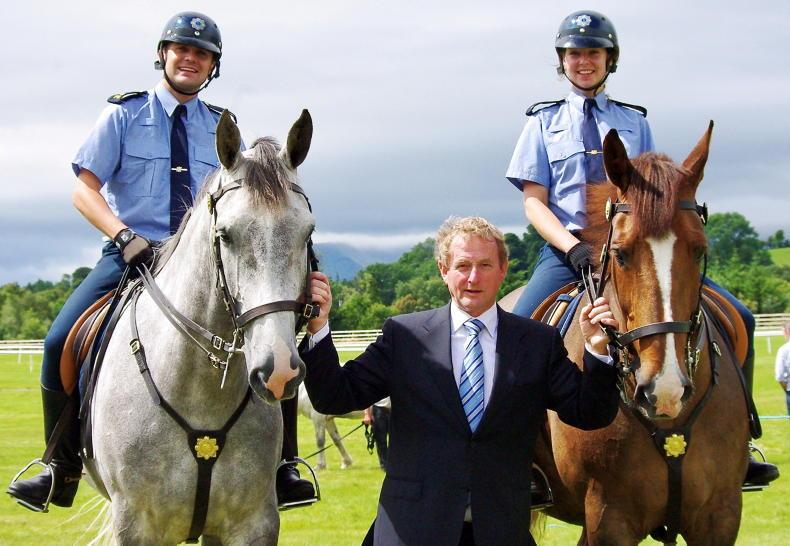
Former Taoiseach Enda Kenny, who attended several EU Summits, getting to grips with Garda Mounted Unit members. The Unit was part of this week’s high security measures in the city centre \ Susan Finnerty
The EHN is described as a broad umbrella coalition linking “34 equine organisations across Europe to coordinate policy, research, and environmental contributions of equids.”
Carberry has formally requested that the European Commission re-include equines in official EU agricultural statistics (omitted since 2018) to boost Europe-wide traceability and market transparency. Another of her key issues is a unified EU-wide digital system that links microchip data directly to trusted central records for tracking horses.
The Midlands North-West MEP has also been working on scrapping the £200 health certificate, needed for Irish-UK horse exports. The latest agreement will be formally signed off on next week which is welcome news.
Multiple challenges lie ahead for the horse industry, including EU and knock-on domestic budget cutbacks, social license, animal welfare and climate change issues.
Ireland’s admission to the then European Economic Union in 1973 was a gamechanger. Just one example of that storied history was told by Clover Hill’s breeder, Matt Page. He and a group of Galway farmers went on a tour of their new compatriots in France that same year, visiting farms and marts, “right up to the Belgian border”. All for the princely sum of £36.
Everything has changed since: passports, costs, sport horse breeding patterns, paperwork, even buying a worm dose. What we do know, in the week the EU Summit came to town, is that the contribution made by equines and sportsmen in each EU member state is both significant and storied.
Meet the 27 EU members
Austria (Horse: Pferd):
Known globally as the home of the Spanish Riding School in Vienna, where Lipizzaner stallions perform “Airs Above the Ground”, a throwback to cavalry tactics on the battlefield. The daring rescue of Lippizaner horses by Allied troops during World War II was the inspiration for the Disney movie, Miracle of the White Stallions.
Belgium (Paard):
Small in acreage but makes up for it with big horses, including Big Ben (180cms), a two-time World Cup final champion and winner of 40 Grand Prix classes with ‘Captain Canada’ Ian Millar. Belgian draught horse Big Jake held the record as the world’s tallest living horse, standing at an astonishing 20hh (203cms).
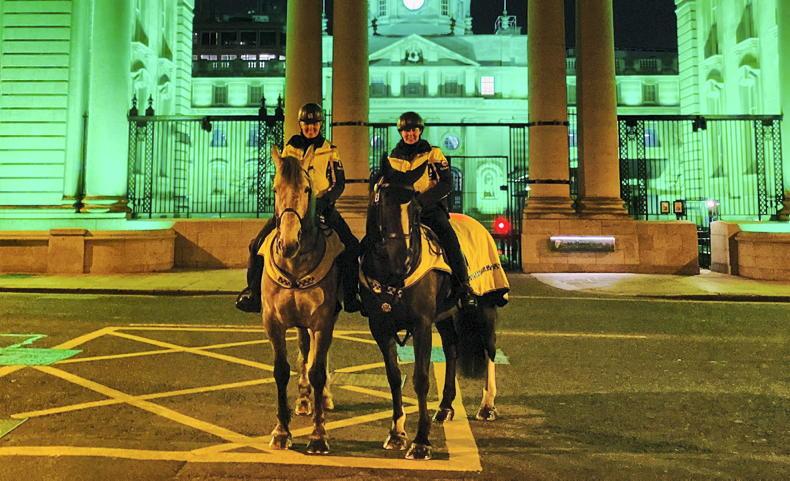
Irish Draught Garda mounts Tadgh (left) and Donnacha (right) patrolling Dublin on St Patrick's Day \ An Garda Síochána
Bulgaria (Koh):
St. Theodore is their patron saint for horses and his feast day (Todorovden) is known as “The Horse Easter” in Bulgaria. Any horse that wins one of the kushia (traditional horse races) is traditionally never sold.
Croatia (Konj):
Another area known for breeding Lippizaners and four years ago, UNESCO included Lipizzan horse breeding traditions to its Intangible Cultural Heritage of Humanity list.
Cyprus (Apparos):
Has just one racecourse, compared to Ireland’s 26.
Czechia (Czech Republic) (Kun):
Home of both Heraldik, the Czech-foaled thoroughbred stallion that produced eventing household names, and the famous Velká Pardubická, or Grand Pardubice Steeplechase. Run over 6.9km (4.2 miles) each October, this year’s race was won by the Gavin Cromwell-trained Final Orders, ridden by Keith Donoghue.
Denmark (Hest):
Approximately 100,000 hectares of Danish land are dedicated to equestrian activities, mostly for pasture and forage production.
Estonia (Hobune):
Estonia’s first cloned foal, Wodan M Alpha, was born in April this year. A genetic copy of the KWPN stallion Wodan M (Quidam de Revel x Cantus), the foal is the result of a collaboration between the Estonian University of Life Sciences and Luunja Stud OÜ.
Finland (Hevonen):
Every pedigree of the all-round Finnhorse can be traced back to one of four foundation sires:
Jaakko, Kirppu, Eino, or Uljaanpoika.
France (Cheval):
On his 2018 visit to China, President Emmanuel Macron presented his Chinese counterpart President Xi with a nine-year-old Selle Français gelding, named Vesuve de Brekka. The Normandy-bred had taken part earlier that year in the Bastille Day parade along the Champs-Elysees.
Germany (Pferd):
The German Equestrian Federation, the overall national association of equestrian sports, is the world’s largest horse sport association. Germany, between East, West and united forms, holds the record of winning the most equestrian medals at the Olympic Games.
Greece (Álogo):
Home of the Olympic Games, where the equestrian sport consisted of chariot racing and now replaced by dressage, eventing and show jumping. Greek heiress Athina Onassis has made headlines recently with her new €1.2 million purchase, Cossinelle (Cascadello I x Quebec 19), who competed at this year’s World show jumping championships with Austria’s Felix Coller.
Hungary (Ló):
The aptly-named Kincsem (or My Treasure) was a legendary 19th-century racehorse who won all 54 races of her career.
Ireland (Capall):
Land of the Horse. Simple as that.
Italy (Cavallo):
Double world champion Raimondo D’Inzeo was the first equestrian to compete at eight consecutive Olympic Games. A two-time Dublin Grand Prix winner (1969, 1975) with the Irish-bred Bellevue, he won the 1960 world championships title, held in Venice, with another Irish horse, Gowran Girl.
Latvia (Zirgs):
The Latvian Harness Horse and the Latvian Riding Horse are known collectively as the Latvian Horse. When pure-bred Latvian Harness numbers dropped after farms were mechanised, they became a protected breed and are listed as endangered-maintained.
Lithuania (Arklys):
Also facing near-extinction after farming changes, inbreeding and two world wars, the Žemaitukasis is one of Europe’s oldest breeds, originating from 5,000 years ago. These pint-sized war horses of the Northern Crusades were trained to bite and kick the enemy’s horses on the battlefield and Lithuania’s historical flag features a silver knight riding a white Žemaitukas charger.
Luxembourg (Päerd):
Luxembourg, (the country), is one of the six founding members of the original European Communities in 1951.
Malta (Ziemel):
Home to Clifden’s Maurice O’Scanaill, vet and author, who previously oversaw the Sultan of Oman’s collection of Appaloosas, Akhal-Tekes, Arabians, Argentinian Falabellas, Welsh ponies and sport horses during his years working in the Middle East.
The Netherlands (Paard):
A country with a range of impressive programmes (and the most successful studbook in the history of the World Breeding Federation for Sport Horses (WBFSH) ranking), from grassroots to Olympic level. The Jeugsportfonds youth scholarship offers up to €300 per child (up to 18 years old) from low-income families for membership fees or tuition while the N.O.P programme supports Olympic calibre horses.
Poland (Kon):
The Konik, or “Little Horse” is one of nine horse breeds in the country. Like the Žemaitukais, they originated from the Tarpan breed from the Steppes region and were also used extensively during wartime as transport and cavalry horses. Konik foals, born at Polish state studs, are named with the same initial letter as their dam.
Portugal (Cavalo):
The country’s most famous horse breed - the Lusitano - is named after Lusitania, the ancient Roman name for Portugal and was purpose-bred for to be cavaleiros (riders) mounts for bullfighting.
Romania (Cal):
10 years ago, there were half a million working horses in Romania. By 2020, this had dropped to 390,000.
Slovakia (Kôn):
Home to the world’s tallest horse statue. Made of 20 tonnes of stainless steel, the eight-metre statue is located at the x-bionic sphere arena in Šamorin, where the Longines EEF Nations Cup semi-final was held last July.
Slovenia (Konj):
The origin of the famous Lippizaner horses, named after Lipica village in the southwest region and where a studfarm was founded in 1580 by Hapsburg Archduke Charles II. On St. Stephen’s Day, horses are blessed as part of a longlasting traditions.
Spain (Caballo):
Andulasians, known as the “Horse of Kings” have a long and colourful history. Formally established as a breed in 1570, the death penalty applied for anyone daring to export one of these horses abroad without government approval. The Spanish brought the horse to the New World in the 1500s, mustangs today are often known as Spanish mustangs and horses were also traded with Ireland in that era. ‘A Spanish grey’ Irish Draught is said to refer to their fleabitten grey colour, a relic of such Spanish imports. And then there’s the legend of how Spanish horses swam ashore on the west coast after the Armada shipwrecks and became one of the Connemara pony ancestors.
Sweden (Häst):
After football, horse riding is the second-most popular sport amongst youths in Sweden. Less IKEA, more iconic souvenir is a Dala wooden horse. Often painted a distinctive orange-red shade, the hand-carved ornaments became popular worldwide after a three-metre Dala horse was placed outside the Swedish pavilion at the 1939 New York World Fair.
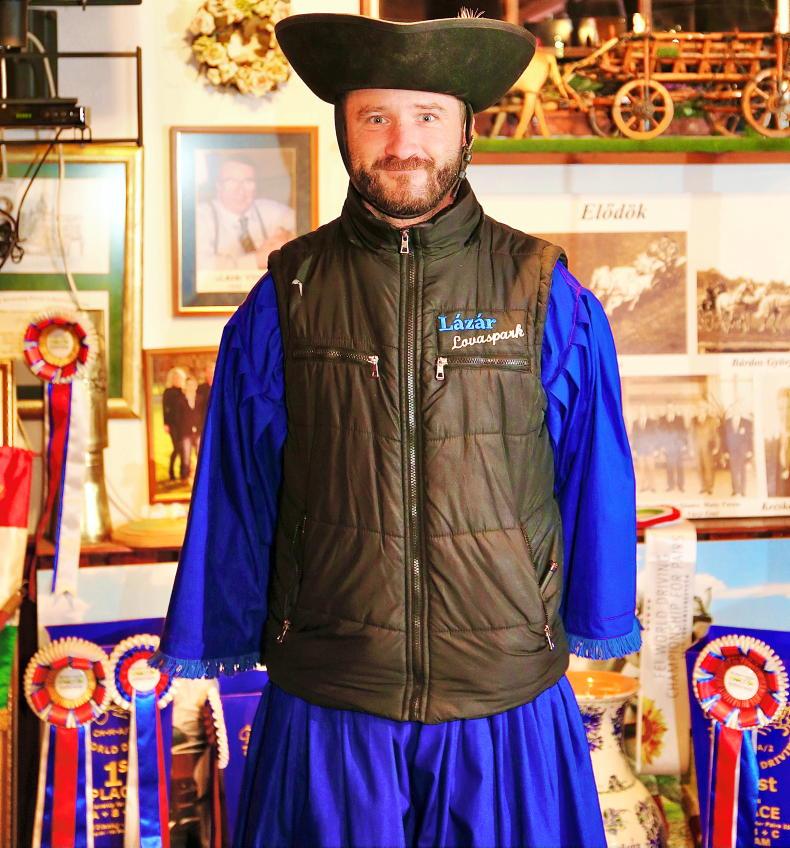
Traditional Hungarian Csikos horseman attire \ Susan Finnerty
By the numbers
Did you know?