TO say he is a living legend is not an exaggeration. Along with [wife] Anneke they have a vision and understanding of breeding that few people have.”
Kylemore Stud’s Olive Broderick is speaking about Jan Greve, the Dutch vet and stallion master, who has given the sport horse world such household names as Voltaire and Guidam.
Never one to shy away from expressing his viewpoints, Greve’s opinions are worth hearing. They’re built on his years in veterinary practice - he also had the responsibility of being the Dutch team vet at Olympic and championship level.
“It’s the top of the business, it’s what it’s all about if you could do that. I liked it a lot and you know, it was on two sides: you had to be the vet and you have to do a good job for the team. Yeah, I liked it,” Greve told The Irish Field.
His career could have gone in a different direction from the vet role though. “I had three interests after school; farming or a vet or a human doctor. And I chose farming in the beginning, but then after a year in agricultural college, I thought I’d better go to the army.”
Jan’s first stroke of luck during his national service was being based near Soestdijk Palace, one of the Dutch royal palaces and stables. “I was very lucky, I was not in the military but they needed someone to help with the horses and that is how I met Mr Offereins, one of the best vets we ever had.”
That experience led to a career change when Jan decided to study Veterinary Medicine at Utrecht, the sole veterinary college in The Netherlands. He later worked with his mentor Evert Offereins at his Bosch and Duin clinics.
“My father had a farm, as everybody had at that time, with some horses, cows, pigs and some corn, a little bit of everything.
“The farm had been in our family since 1880, so when my father wanted to stop farming, I had to make a choice: either I go back and try to make something from the farm or I stay where I was in practice at Offereins place, which was a very, very good clinic, very famous. I learned a lot there.
“I decided to go back to the farm where I was born.”
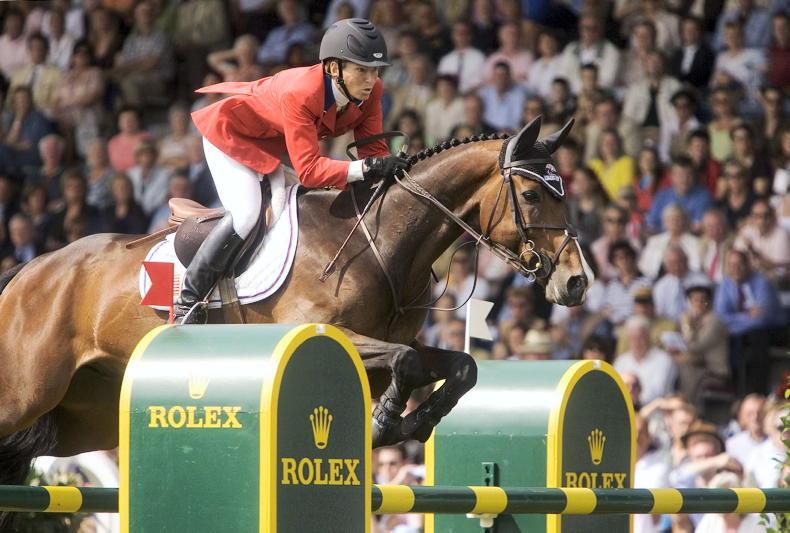
Beezie Madden and Authentic on their way to winning the Aachen Grand Prix in 2007. The legendary gelding is by Guidam was was reared at Jan Greve Watermolen Stud
The influence of Voltaire
After he returned to his family farm near Haaksbergen, Jan set up his own De Watermolen clinic in 1982, while building up the sport horse breeding side of the business.
His instinct of what makes a world-class horse came into play the previous year when he and Henk Nijhof had bought a two-year-old colt in France: Voltaire.
It’s a well-known story by now of how Voltaire - small (163cms), large hoof crack - was not a picture-perfect stallion prospect. What was it about him that Jan, known for his forensic-like conformation evaluation, spotted?
Surprisingly it was one initial feature. Then performance. And commerce.
“He had very big, bright eyes, very ‘looking into the world’. He knows everything, he saw everything. He jumped very well and one thing the wife of the stud manager said... she said it was a very good family that he came from. That there were several brothers and sisters from his mother, or in that bloodline, that were sold to the southern part of Germany where the money was.
“So I thought his family must be very good, otherwise there wouldn’t have been so many horses sold to that area for the money.”
Ranked an inauspicious 14th of 14 at the KWPN inspections, Voltaire was then approved by the Oldenburg studbook. After a successful international career, the Furioso grandson proved a revelation at stud, producing over 40 stallion sons, including Concorde and rankings constant, Kannan.
Voltaire’s influence is also seen in Olympic medalist damlines, such as Chris Kappler’s Athens silver medalist Royal Kaliber and Charlotte Dujardin’s London-Rio dual gold individual medallist Valegro.
“Later on, he proved to have very high potential as a broodmare sire too. It’s unbelievable that, still nowadays, if you go to a show, the name of Voltaire comes up as the father of the grandmother. It’s very unusual in this age.”
Lucky story
Guidam was the sire of Beezie Madden’s 2006 USEF Horse of the Year, Olympic and world championship medallist horse Authentic (reared at Watermolen). Another is Luidam, Billy Twomey’s team horse and a well-regarded sire.
Guidam was sold to Knightfield Stud’s Tom Rowland in 2005. “Yeah, that was a lucky story for Tom! But that’s no problem. I owned Guidam in a partnership and when we split the partnership, he was sold. We [partnership] also had Julio Mariner together, that’s the one I kept.”
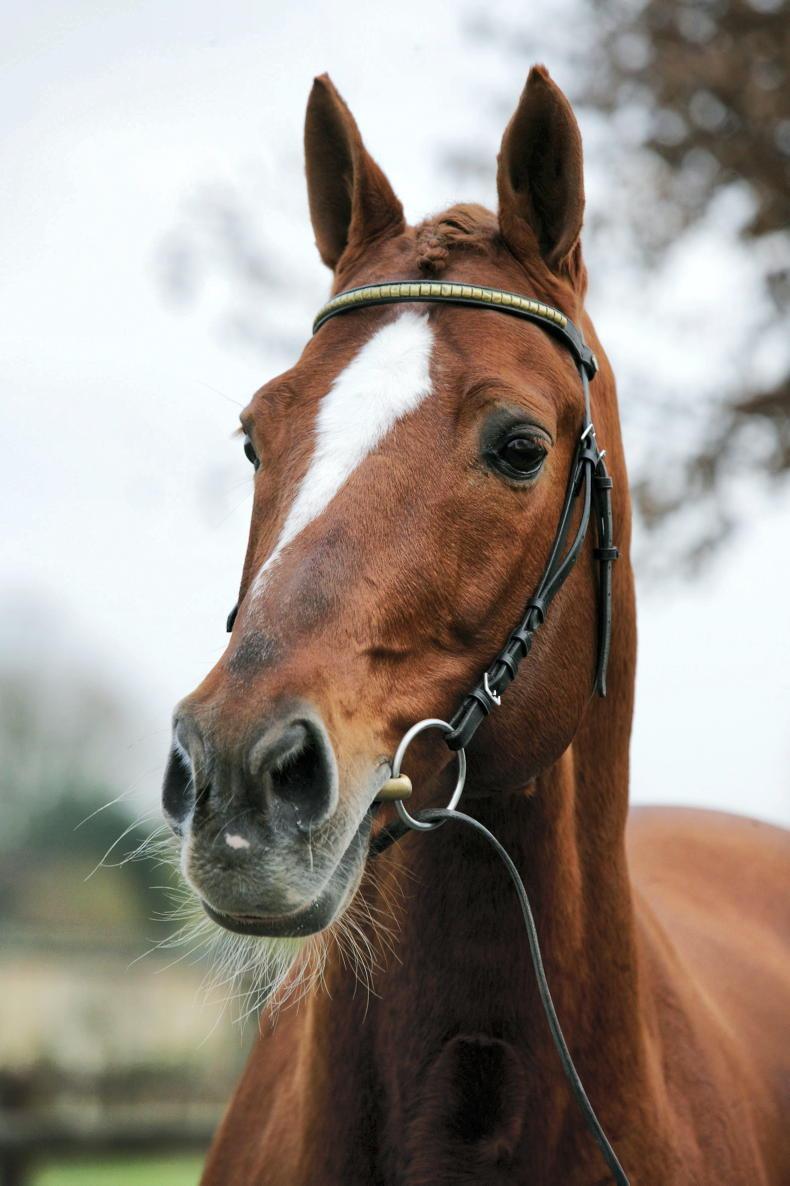
Guidam stood at Jan Greve's Watermolen Stud before being sold to Tom Rowland in Ireland in 2005
Unusually for a continental stud owner, Jan is quite a fan of thoroughbreds. “I was into racing a little bit. I had 10, 15 of my own horses that I rode and that we went to the track every week, every month. I was very interested in thoroughbreds.”
His son Willem was another racing fan before switching to show jumping, a career move that brought him to the Tokyo Olympics with Zypria S N.O.P and this weekend he will start in the Longines FEI World Cup final in Basel, Switzerland.
Two ex-Watermolen thoroughbred stallions - Ivor and Olive Broderick’s Watermill Swatch (2008) and Ray Cahalane’s Painters Row (2009) - created an unusual double with back-to-back Croker Cup wins at Dublin Horse Show.
Where does he see the role of the thoroughbred sire in current sport horse breeding? “I think you still need the influence of the thoroughbred for blood, elasticity, for the mind.
“The body of the thoroughbred horse must have the ability to get his hindlegs far before his front legs, so the body comes together and stretches out again. So that’s their ability. If he has that ability, they can run, they can make speed.
“And also in the sport horses, you need it, so that they can have elasticity in the body. If not, then it’s a warmblood, not a thoroughbred and you need the thoroughbred blood for that elasticity.”
Improving fortunes
“I compare it sometimes to cooking,” Jan continues. “You cannot eat salt. But if you eat something, a nice dinner without a little bit salt into it, it’s not edible. There’s no taste, there’s nothing special.
“And that’s the same with the thoroughbred. You know, you don’t need thoroughbred blood because of the jumping, but you need it for the elasticity and also for the brain.”
Irish sport horse breeding has undergone multiple changes, including the fact that Irish-bred show jumping horses are now consistently performing at top level.
James Kann Cruz, EIC Up Too Jacco Blue and Pacino Amiro are just three examples of the improving fortunes of Irish show jumping breeding.
“Yeah, it has improved. You also breed to the best stallions you can find and they import some very good mares to Ireland. And this is very important if you want to step forward. The mare.
“That is more important, more than anything. Semen, you can buy everywhere... it’s not so easy to buy the best mare, the best producing mare. To find her and buy her, that is very important.”
For Jan, it is better to have an ‘average’ mare from a good family than a superstar freak from a weak family. The Greve family’s most famous four-legged family is the Twiggy-line and he has bred many international performers, including Kyraleen, a line that started on the farm in his father’s time.
“My father bred horses on the farm, not so many but a few. And he bought a mare as a yearling, I took it over later on and then she [Kyraleen] was a European young rider champion with Caroline Müller. That was a highlight.”
Müller and the Quidam de Revel mare won a vintage championship in 2003 as in that line-up too at Le Touquet was Ben Maher (Clouds Away, fourth), Willem Greve (Karandasj, seventh) and Carl Hanley (Avalon, eighth).
Kyraleen’s damsire? Who else but Voltaire. Karandasj was yet another Watermolen stallion resident, as was Scandic, Patrik Kittel’s Swedish team horse, bought as young foal by Jan.
Knowing what to do
As well as his involvement in show jumping and dressage - resulting in a host of awards including the KWPN’s 2023 Breeder of the Year award presented at Ermelo - Jan has a keen interest in eventing.
He has produced such recent young event horse champions and prizewinners as Watermill Intentie W and Iso Kwik W.
Eventing breeding has undergone a sea change, particularly in the short format era, four-star Olympics and cross-country course changes. Continental studbooks and jumping lines are prevalent nowadays. What is Jan Greve’s perfect event horse model?
“For me, for eventers... its the elasticity in the body and the brain, that’s what, for me, makes the better eventer perfect. They must be very clever, very, very clever.
“A show jumper is a very clever horse. And an eventer is an even more clever horse that has to make his own decisions somewhere down the road. You cannot control it as you want to control the dressage. You know, the dressage is totally controllable. The horse has to obey the one that asks him.
“But in eventing and in show jumping, there are situations sometimes that the horse has to think in the minute, in a second and that’s why these sports need a clever horse that knows what to do.”
Avant-garde
Three years ago, the Dutchman and Jean-Luc Dufour judged a number of classes at Dublin Horse Show including The Irish Field Breeders’ Championship.
Split into eventing and show jumping sections for the first time that year, it was a unique family double for the Wafer clan from Carnew. Linda Wafer owned the winning show jumping combination: Hot To Touch (Lancelot) and her Quality Time foal, shown by husband Maurice and son Conor.
Then, in the following eventing section, Maurice and brother Seamus showed the top pair of Parkmore Evita (Ghareeb) and Parkmore Tyra, by Tyson for their uncle Patrick.
“They’ve changed in type from what they were years ago,” Greve commented after the championships.
“They were nice types and correct but I think you need a bit more elasticity in some,” he recalls about his impression of the mares in the 2022 finals.
“It was very nice to go there, everything is the horse. You breathe horses in Dublin, in Ireland and I hope to go there again this year.”
No doubt to observe further changes and to meet up with Irish contacts, including Ivor and Olive Broderick, who sing his praises.
“He is, as is Anneke and Willem, a true horseman. We are honoured to know them all and enjoy soaking up the knowledge he shares, along with the fun and craic we have had over many years of friendship.
“They are not swayed by fashion, but by knowledge and understanding of in-depth pedigree, type, and requirements for sport. Take, for example, our new stallion United Spirit vd Watermolen,” said Olive, who points out that Greve was once again ahead of the pack in spotting the potential of United Touch S.
“Now everyone is talking about United Touch S, but Jan was in there five years before everyone else, with Ramozotti, his three-year-old champion in 2024 and now United Spirit in 2025.
“Jan understood that foundation mares are required in stallion pedigrees, and didn’t worry about having all the 1.60m family on the dam side, if the solid foundation was there.
“He also understands completely the conformation and soundness requirements for top sport, and how to get those horses to that level.”
A Dutch genius.