WE live for the breed.” This remark encapsulates the essence of Cathy Snow and Martin Coyne. Passionate promoters of all things Connemara, the region this pair hail from has fostered a lifelong dedication to the Connemara pony through both their own breeding programme at Moorland Connemara Ponies and their professional work at the newly opened Connemara Pony Heritage Centre in the Connemara National Park. Growing up, “ponies were part of the family” for Cathy. Weekends would be spent driving the roads of Ireland with her mother Bridget Snow, the esteemed breeder and judge, in search of a nice pony. In the summer of 1990, the pair came across a bay mare with a foal at foot and a yearling. The yearling filly captivated them immediately with her length of rein and movement.
“We tracked down her owner and made an offer to buy her.” Upon the successful purchase, the filly came home to the Snows who spent the winter developing and preparing her to pass the CPBS filly inspections. “We named her Moorland Juliet and in her two-year-old year she won every single show she went to,” Cathy remembers.
On this winning streak, the road to the Dublin Horse Show was paved. At the time Connemara in-hand classes were a core part of the competition schedule with a trip to the RDS firmly planned into native pony exhibitors’ calendars. “My brother Colin showed her on the day and she won her class to put her forward for the In-Hand Championship. I remember a lady ringside grabbing my arm saying she was going to go on unbeaten and win the Championship. And she did!”
Joy with Moorland Juliet
The filly by Murphy Rebel out of an Abbeyleix Owen mare became the 1991 Dublin Horse Show Supreme Champion In-Hand Connemara and recipient of the prestigious RDS Silver Medal. The family continued to enjoy showing success with Moorland Juliet winning at the Connemara Pony Show in Clifden later that summer.
“We were approached then by Joan Dolan as she wanted to start breeding Connemaras and wanted Juliet as a foundation mare.” With the promise of a forever home the difficult decision was made to sell Juliet but, as is the case with so many Connemara ponies’ sales, it was not the end but the beginning of the next chapter for the Moorland breeding.
During her life with Joan, the mare bred the European show jumping pony Kilpatrick Fionn (Abbeyleix Fionn) and her daughters made the return trip to Connemara to be covered by Cathy and Martin’s stallion Moorland Snowy River. “I talked about Juliet so much that after Martin and I got married he said we should try to get the bloodline back.”
The decision was made to pursue the purchase of Juliet’s progeny and the couple set their sights on a granddaughter of Juliet, Kilpatrick Snowdrop, who was a daughter of Snowy River. “After a lot of back and forth we bought Snowdrop and she went on to be an All Ireland Broodmare Champion, she won in Clifden and has been an exceptional broodmare for us.”
The full sister to Kilpatrick Cascade - who won the 8-15 Year Old Connemara Performance Hunter Championship at the Dublin Horse Show in 2021 with Aoife Kirby - Snowdrop is mother of Moorland My Oh My and Moorland Snowdrift. As testimony to the type and quality of the progeny Juliet and her daughter line produced, both My Oh My and Snowdrift excelled in their junior years in the show rings across Ireland.
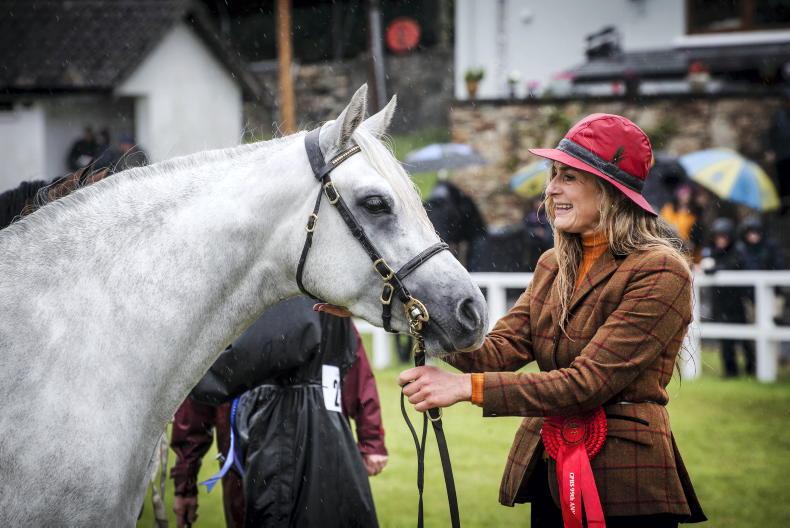
Moorland My Oh My and Cathy Snow winning the three year old filly class at the 2024 Connemara Pony Show in Clifden \ Rynes Walker
Golden ticket
Thirty-five years on from when Juliet stood champion at the RDS, Cathy and Martin’s homebred great granddaughter Moorland Snowdrift has secured her golden ticket for this year’s 4 & 5 Year Old Ridden Connemara Class with Kitty Concannon. “Juliet started all that and this qualification is a symbol of everything that she has brought together.”
The couple’s commitment has always been to breeding true-to-type Connemara ponies.”We believe that if they are correct in their limbs and in their movement that they should go on to compete with the best at the RDS. The traditional pony with a lovely sloping shoulder and plenty of rein can do anything.”
Competitive in-hand exhibitors themselves who spend much of the summer showing young stock across the national show circuit, they have a keen appreciation for ponies being prepared and flourishing under saddle. “The ridden classes have always been important to us,” explained Martin.
Moorland ponies have achieved countless successes across a variety of disciplines both at home and abroad, including Moorland White River (Moorland Snowy River x Grey Rock Misty) who won the Working Hunter Championship at Royal Windsor in May of this year.
“You can’t have one without the other, we think. Every section needs the other section, in-hand and breed stock needs ridden and performance opportunities, and I hate to see friction between any aspects of the Connemara. It has been incredible to see the popularity of the ridden classes at the Dublin Horse Show grow and the qualifiers are a huge reflection on how popular they are now. Dublin is a shop window for the breed, and it is good to go there and get a sense of where the breed is at.”
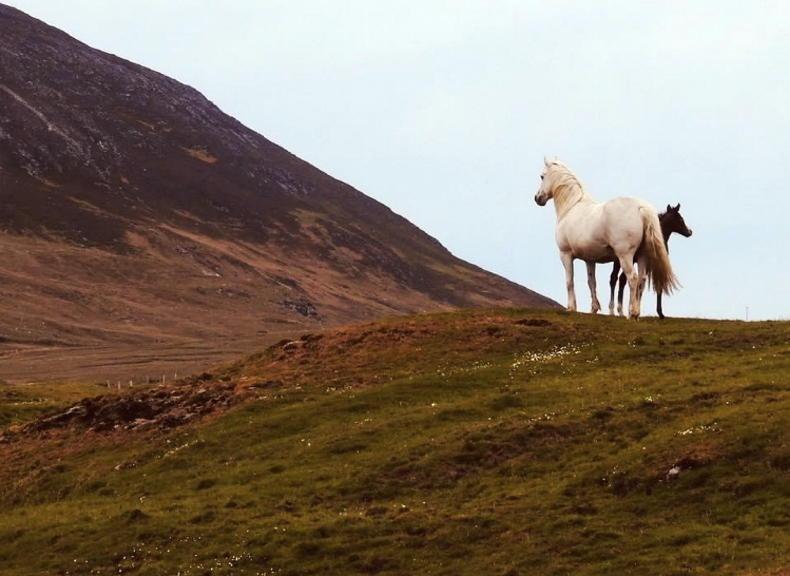
Connemara Ponies in the Connemara National Park \ Susan Finnerty
Retaining the region’s qualities
While the grass of Ring 2 might be a career goal for the Moorland ponies, retaining the traits and qualities the Connemara region has etched into the breed for the past century is at the root of what drives Cathy and Martin. This drive began from an early age in Cathy’s vision to create a dedicated resource to educate a wider audience on the uniqueness of Ireland’s native breed.
Whilst still in school, she originally pitched the concept for a Connemara Pony visitor’s centre. She applied and won the LEI Award for her business plan - recognised by the Brussels based judges committee. “Then college started, and I went and did my BA, before veterinary college where I did equine science. And then life got away. Martin and I met here at the National Park. We got married and we had kids.
“But recently, we started discussing the idea for the Centre again. We began to think if we don’t do it now, we’ll never do it. It was in our head that we’d do it ourselves but then the opportunity came up to have it as part of the National Park. We discussed the idea with Eugene Finnerty, NPWS Regional Manager. He was brilliant, and really, really supportive.”
The development of the Connemara Pony Heritage Centre at the Connemara National Park was the ideal location given the historical ties with the pony. In 1974 President Erskine Childers sought to ensure the preservation of Ireland’s native pony by presenting a selection of true-to-type ponies to the State.
This group formed the Park’s foundation herd when it was established in 1980 in the landscape surrounding Diamond Hill. In 2019 the herd was integrated into a biodiversity and rare breed exchange programme. The Centre’s opening date was set for October 31st last year, just six months after the idea was agreed.
“It was an incredibly short turnaround and many said it wouldn’t be possible but we knew that if we didn’t pick a date it would never get done,” Martin remembers, “Two days before the launch we had an empty shell of the stable area that is there now.”
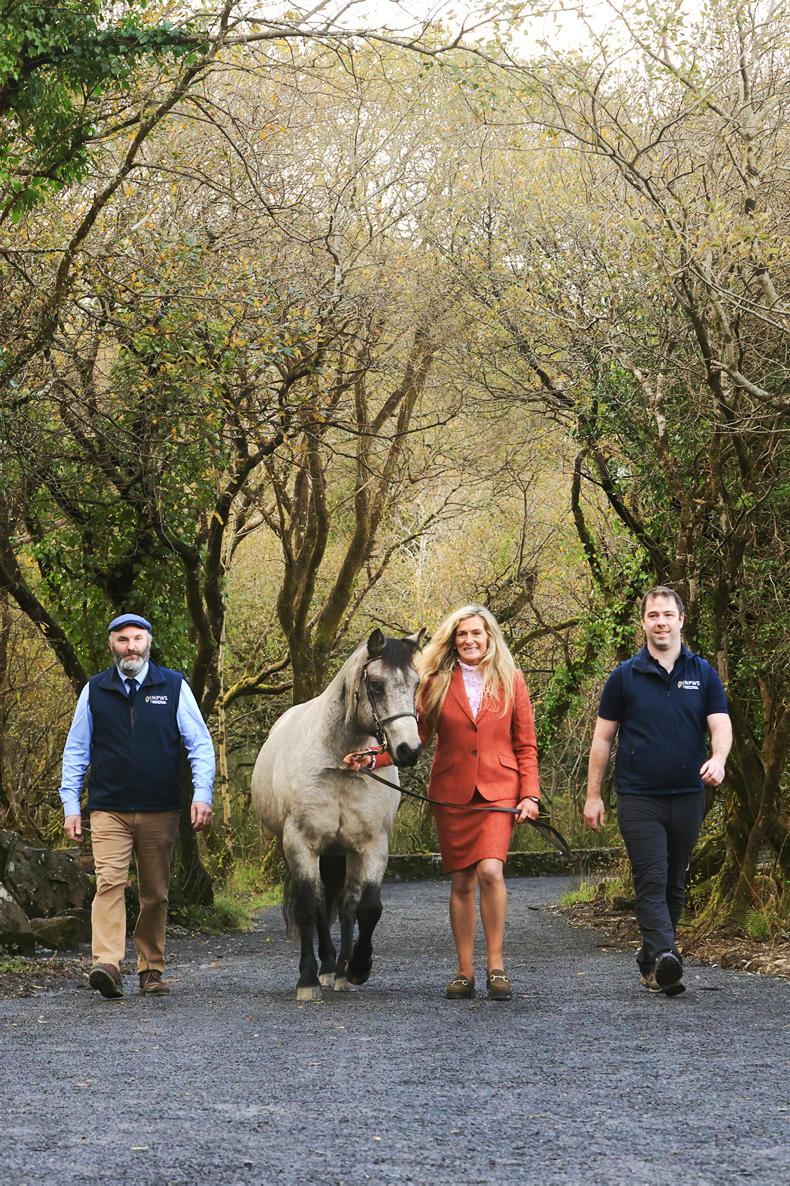
Martin Coyne, Connemara National Park, Connemara Pony Honey Bee, Cathy Snow and Eugene Finnerty, National Parks Manager, at the official opening of the Connemara Pony Heritage Centre \ Martina Regan
Celebrating the origin story
A testimony to what can be achieved when willing and like-minded people come together, the Centre is now a fully accessible, permanent interactive exhibition that celebrates the pony’s origin story, breed history and milestones while providing real life access to engage with ponies.
Combining visual, audio and video elements in a bright, airy indoor environment, a stable with a see-through wall and half-door allows visitors to get up close and personal with Connemara ponies while the paddock adjacent offers the opportunity to witness them grazing in the park’s landscape.
“We have so many visitors coming here each month, many of them come here especially to see the Connemara pony. Some of them might be meeting a Connemara pony for the first time, seeing what the Irish native breed is like, while others may have their own experience of ponies. We wanted to create a place where they can learn about these ponies from a very basic level, to having different levels of information available to breeders and pony enthusiasts.”
The Centre was designed so that a tour can either be self-directed by guests who wish to engage with the materials in their own time or else they can book more detailed educational time slots with Cathy for more information and tailored talks. Six months since the opening of the Connemara Pony Heritage Centre, they have received significant praise from both national and international visitors. Already there have been several stand-out moments for Cathy and Martin as they have seen this dream being realised.
“A lady contacted us about her grandfather Paschal Scanlon who is 97. He had worked with the Connemara ponies in the original Park herd many years ago. She said he often talked of the ponies here. When he heard about the Centre he was so delighted and was curious to know if there were any of the original bloodlines still in the present herd. Martin and I worked hard over the years to protect the bloodlines of the ponies that formed the original herd so it was a joy to be able to share we have a great, great, great, great granddaughter of the original ponies, Park Terra Nova,” Cathy shared.
A tribute to Paschal
In a touching tribute, one of this year’s filly foals has been named after him, Park Paschalina. For Martin it was witnessing one of this summer’s foals interacting with a young visitor. “The perspex side of the stable was designed to allow everyone to be able to see inside. Having a half-door or a half-wall limits visibility to visitors and this is something we worked hard to achieve.
“Recently one of the foals was sleeping in the stable and a little boy stood by the glass. The foal got up and started pressing his mouth up to the glass towards the little boy like the foal was smiling. It was the most amazing thing and it really showcased the temperament of the Connemara pony: their curiosity and friendliness. The child was able to interact with the foal in a completely safe environment.
“The visitor interactions so far really reflect how the Connemara pony affects every age. From young to old they find a way into the heart and can stay there forever,” Cathy added. As the couple continue to drive better promotion of the pony, be it in their own breeding or in their work at the Connemara National Park, the next phase of development for the Heritage Centre is clearly stamped on the horizon.
At the base of Diamond Hill, a new exhibition centre is steadily progressing and set to open in the coming months. “Here we hope to expand our educational activities with the goal to be able to host workshops, seminars and exhibitions dedicated to the Connemara pony,” Cathy explains.
Additionally, an all abilities trail will link walking paths that meander through the Park to link access to the Heritage Centre from a variety of points to complement the various ways visitors may choose to explore the wider area.
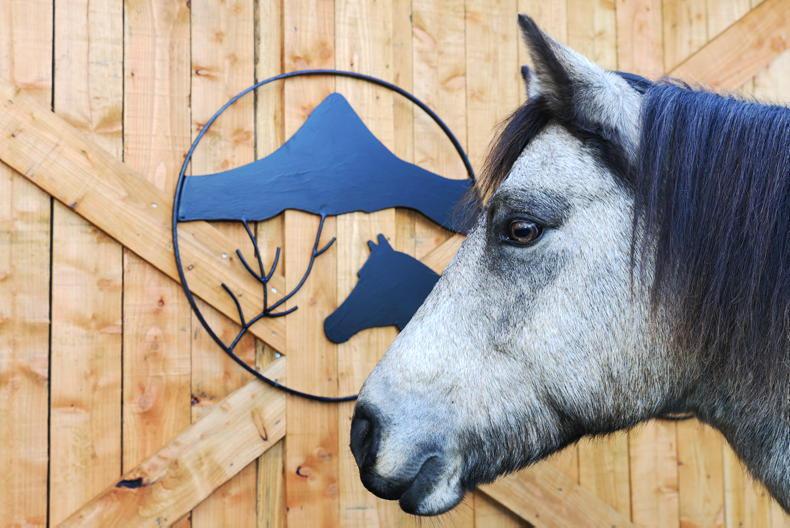
Connemara Pony Honey Bee pictured at the official opening of the Connemara Pony Heritage Centre \ Martina Regan
Generations of Juliet
As the summer visitor count grows at the Connemara National Park, some of the ponies in the current herd they will meet are direct descendants of RDS Champion Moorland Juliet. “As well as leaving her mark on the Moorland ponies, her progeny are here at the Park.” For Cathy and Martin, it is about the safeguarding of our true-to-type pony for future generations.
“We are very passionate about the Connemara in Connemara. These ponies helped a lot of people here over the decades, and they’re still helping people today. The fact they’ve been successful at the Dublin Horse Show, that’s very important to us. We always want to keep that original pony that has been shaped by this landscape, this region’s environment. That is what has moulded the pony and we want to showcase that here at the Park or wherever our Moorland ponies go.”
Martin’s passion for Connemara extends to all aspects of the pony, the other native breeds in the Park and developing the experience for visitors of all types across the ongoing initiatives. For Cathy, her hope for the future is that an in-hand class dedicated to Connemara pony breed stock would return to the Dublin schedule.
“If I had one wish it would be to bring back the in-hand classes. The Dublin Horse Show is the place that you have so many different types of horse enthusiasts, and many of them probably had a beginning with a Connemara pony. It would be lovely for them to see broodmares, responsible for producing the ponies that are being shown, and their foals with them. I really think that’s so important to bring back those in -hand classes.”
As Cathy prepares for a busy summer season, the Centre is about celebrating a pony that has defined the region for generations. “I want the centre to act as a base for breeders, societies and anyone interested in the pony to be able to come, enjoy, and to learn from. It has been created to celebrate our pony and it is a mark of how important the pony has been to our past, our present and our future.”
This article is taken from The Irish Field’s Dublin Horse Show Magazine 2026. Order your copy HERE